Mutrasangrahaniya Mahakashaya: The 10 Herb Mixture for Diabetes

Mutrasangrahaniya Mahakashaya is a classical Ayurvedic formulation described in the Charaka Samhita. It is composed of a group of herbs that help reduce excessive urination. This makes it especially useful in managing Madhumeha (diabetes), where frequent urination is one of the key symptoms.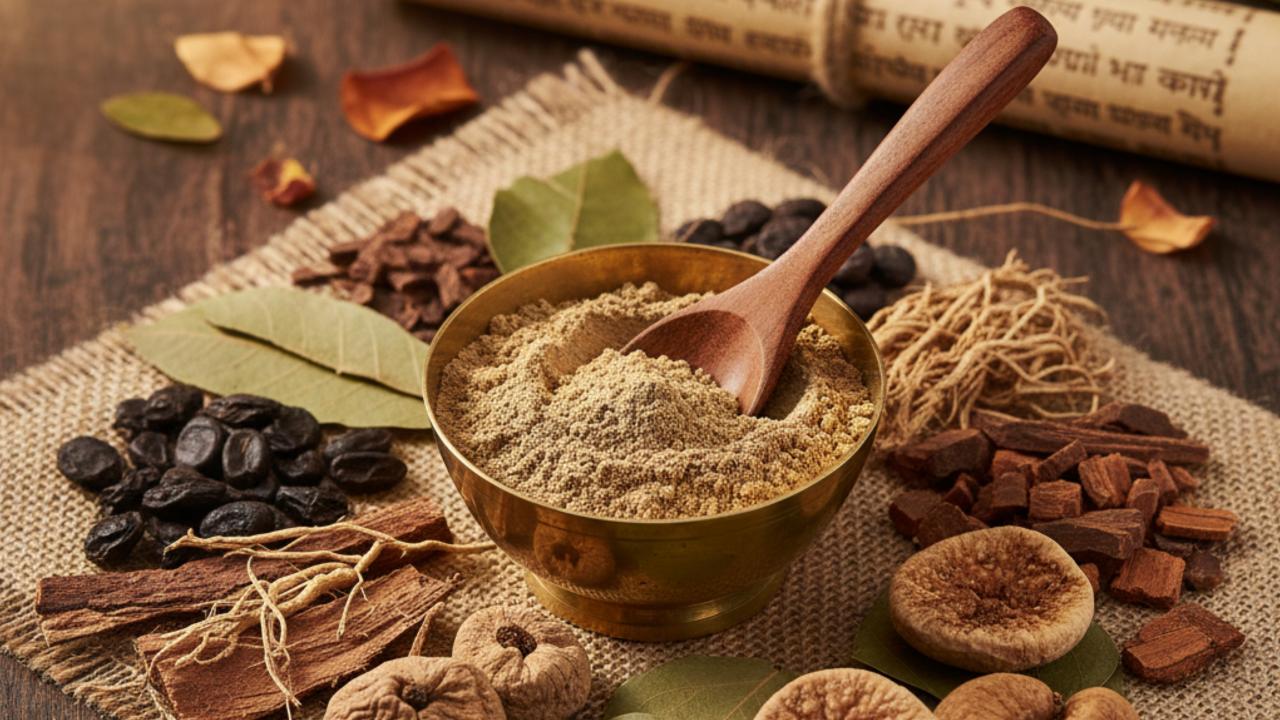 The herbs in this formulation, such as Bilva, Lodhra, and Ficus species, have astringent and absorbent properties. They help regulate urinary output, balance Kapha and Meda (fat tissue), and support healthy blood sugar levels. It works by addressing both symptoms and root imbalances in diabetes.
Used under Ayurvedic guidance, Mutrasangrahaniya Mahakashaya can be part of a holistic diabetes management plan. Along with diet, lifestyle changes, and detox therapies, this herbal decoction helps restore balance naturally. However, it should not replace conventional treatment in advanced or insulin-dependent diabetic conditions.
Ayurvedic View: From Prameha to Madhumeha
To appreciate the role of the Mutrasangrahaniya Mahakashaya, we must first understand how Ayurveda perceives diabetes.
Ayurveda describes a spectrum of urinary disorders under the broad term Prameha. The word itself is revealing: “Pra” means excess or beginning, and “Meha” means turbid urine. Acharya Madhava defined Prameha by its cardinal symptoms: Prabhoota Mutrata (excessive urination in quantity) and Avil Mutrata (turbid urine).
There are twenty types of Prameha, classified based on the predominant imbalanced dosha (Vata, Pitta, or Kapha) and the nature of the urine. However, when the condition progresses and becomes severe, primarily vitiating the Vata dosha, it culminates in Madhumeha—literally, “honey-like urine.” This condition, where the urine is sweet, both in taste and smell, closely mirrors the clinical picture of Type 2 Diabetes Mellitus in modern medicine.
The fundamental pathology in Prameha is an impairment of the body’s metabolic channels (srotas) and an accumulation of excess moisture or unprocessed fluid, known as Kleda. This excess Kleda, aggravated by factors like a sedentary lifestyle and improper diet, overwhelms the system and is expelled through urine, leading to the characteristic polyuria.
The Modern Management Conundrum
Conventional diabetes management relies heavily on oral hypoglycemic drugs (like metformin), insulin therapy, and lifestyle modifications. While effective in controlling blood sugar, this approach often focuses on the symptom—hyperglycemia—and can come with a suite of side effects.
This includes weight gain, gastrointestinal issues, and the risk of hypoglycemia. In more serious cases, some medications have been linked to liver damage or cardiovascular concerns.
This is where Ayurveda presents a compelling, complementary paradigm. Its management of Madhumeha is not a mere chemical suppression of blood sugar. It is a holistic strategy involving:
- Nidanaparivarjan: Avoiding the causative factors (diet and lifestyle).
- Shodhan Chikitsa: Purification therapies to cleanse the body of accumulated toxins.
- Aushadi: Herbal and mineral formulations to restore balance.
- Pathya-Apathya: A disciplined diet and lifestyle regimen.
Within this framework, the Mutrasangrahaniya Mahakashaya emerges as a powerful group of Aushadi (medicines).
What is the Mutrasangrahaniya Mahakashaya?
In the Charak Samhita, Acharya Charak classifies medicinal herbs into fifty Mahakashayas, or groups of ten herbs. Each group shares specific therapeutic actions. Mutrasangrahaniya Mahakashaya is one such group focused on regulating urinary function.
“Mutrasangrahaniya” combines “Mutra” (urine) and “Sangrahaniya” (to restrain). The herbs in this group have anti-diuretic properties. They help restore normal urine flow and composition, making them useful in conditions with excessive urination, such as Prameha.
Using anti-diuretics for polyuria seems obvious, but Ayurveda sees deeper. These herbs don’t just reduce urination—they address the core imbalance by counteracting Prabhoota Mutrata, a key symptom of Prameha, or diabetic-like urinary disorders.
By reducing abnormal fluid loss, Mutrasangrahaniya herbs help reabsorb excess Kleda (moisture) in the body. This supports dhatu (tissue) strength and aids in correcting the underlying metabolic disturbances responsible for conditions like Madhumeha.
The ten herbs that constitute this elite group are:
1. Jambu (Syzygium cumini)
2. Amra (Mangifera indica)
3. Plaksha (Ficus lacor)
4. Vata (Ficus bengalensis)
5. Kapeetana (Albizzia lebbeck)
6. Udumbara (Ficus racemosa)
7. Ashvattha (Ficus religiosa)
8. Bhallataka (Semecarpus anacardium)
9. Ashmantaka (Ficus rumphii)
10. Somavalka (Acacia catechu)
A striking observation is the dominance of the Ficus genus (fig family) in this list, suggesting a powerful shared phytochemistry that Ayurvedic sages had identified millennia ago.
Let’s now explore each of these herbs in detail, understanding their traditional properties and the modern scientific validation for their role in managing diabetes.
Top 10 Medicinal Plants Used for Diabetes in India
Here are the top 10 medicinal plants commonly used in India to help manage diabetes. These plants are known for their natural properties that may help regulate blood sugar levels and improve overall metabolic health.
1. Jambu (Syzygium cumini / Java Plum)
Ayurvedic Properties: Rasa (taste) – Kashaya (astringent); Guna (qualities) – Laghu (light), Ruksha (dry); Virya (potency) – Sheeta (cooling); Vipaka (post-digestive effect) – Katu (pungent).
Traditional Use: Jambu is a cornerstone of Prameha treatment. The powder of its seed kernel (beej majja) is specifically mentioned for its potent Mutra Sangrahaniya properties, making it a primary remedy for Madhumeha. Its fresh juice is also used in other types of Prameha.
Modern Research: Jambulan is one of the most extensively researched Ayurvedic herbs for diabetes. Studies dating back to the 1960s have consistently confirmed its antihyperglycemic effects. Different parts of the plant—fruits, seeds, and stem bark—have shown promising activity.
Research indicates that tea made from its leaves can lower blood glucose. One remarkable study found that the stem bark could even stimulate the regeneration of insulin-producing cells in the pancreas of treated animals, pointing to a potential restorative action beyond mere sugar control.
2. Amra (Mangifera indica / Mango)
Ayurvedic Properties: The bark and seed are Kashaya (astringent). It is Laghu (light) and Sheeta (cooling), with a Katu (pungent) Vipaka.
Traditional Use: Similar to Jambu, the seed kernel of the mango tree is used for its urine-consolidating effect in Prameha and Madhumeha.
Modern Research: A 50% ethanolic extract of mango leaves has demonstrated significant hypoglycemic effects in both normal and streptozotocin-induced diabetic animals. The proposed mechanism is the stimulation of pancreatic beta-cells to release insulin.
Other studies on aqueous extracts suggest the antidiabetic action may also be due to reducing the intestinal absorption of glucose. Research on mango flour ingestion has also shown promising results in helping manage blood sugar levels in diabetic rats.
3. Plaksha (Ficus lacor)
Ayurvedic Properties: Kashaya (astringent) in taste, Ruksha (dry) and Guru (heavy) in quality, with Sheeta (cooling) potency and Katu (pungent) Vipaka.
Traditional Use: Its inherent Mutra Sangrahaniya property makes it a direct choice for treating Prameha.
Modern Research: Modern studies have classified Plaksha as having antibacterial, antifungal, and antidiabetic properties, validating its traditional use in metabolic and infectious disorders.
4. Vata (Ficus bengalensis / Banyan Tree)
Ayurvedic Properties: Dominated by Kashaya (astringent) taste, it is Guru (heavy) and Ruksha (dry), with Sheeta (cooling) potency.
Traditional Use: The bark powder of the mighty Banyan tree is used for its urine-restraining action in Prameha and Madhumeha.
Modern Research: The banyan tree’s bark has been a focal point of research. A water extract has demonstrated significant hypoglycemic effects. Furthermore, it has shown hypocholesterolemic and hypolipidemic effects, crucial for managing the common co-morbidities of diabetes.
Its antioxidant activity has also been documented. Scientists have isolated several active compounds from its bark, including a leucocyanidin derivative and a glycoside of leucopelargonidin, both of which have demonstrated confirmed antidiabetic activity.
5. Kapeetana (Albizzia lebbeck / Shirish)
Ayurvedic Properties: Kashaya (astringent), Laghu (light), Ruksha (dry), Sheeta (cooling), Katu (pungent).
Traditional Use: The bark of Shirish is utilized in Prameha and Madhumeha due to its Mutra Sangrahaniya capabilities.
Modern Research: (While the provided paper focuses on its traditional use, Albizzia lebbeck is widely known in Ayurveda for its anti-allergic and anti-inflammatory properties, which can be beneficial in managing diabetic complications related to inflammation.)
6. Udumbara (Ficus racemosa / Cluster Fig)
Ayurvedic Properties: Kashaya (astringent), Guru (heavy), Ruksha (dry), Sheeta (cooling).
Traditional Use: The bark, in the form of a decoction or powder, is administered for Prameha and Madhumeha.
Modern Research: A methanolic extract of the stem bark, at doses of 200 and 400 mg/kg, effectively lowered blood glucose levels in both normal and alloxan-induced diabetic rats. The potency of this effect was comparable to the standard antidiabetic drug glibenclamide, providing strong scientific backing for its folklore claim.
7. Ashvattha (Ficus religiosa / Sacred Fig or Peepal)
Ayurvedic Properties: Kashaya (astringent) and Madhura (sweet), Ruksha (dry), Guru (heavy), Sheeta (cooling).
Traditional Use: Due to its urine-consolidating nature, both the bark and fruit of the Peepal tree are used in Prameha.
Modern Research: A compound called Beta-sitosterol-D-glycoside, isolated from the root bark, has documented peroral hypoglycemic activity. In experimental models, an aqueous bark extract of F. religiosa significantly reduced blood glucose levels in normal, glucose-loaded, and streptozotocin-induced diabetic rats.
Beyond glycemic control, it also increased serum insulin, body weight, and glycogen content in the liver and muscle, while reducing serum triglycerides and cholesterol. It also exhibited a strong antioxidant effect, protecting the pancreas from lipid peroxidation damage.
8. Bhallataka (Semecarpus anacardium / Marking Nut)
Ayurvedic Properties: A complex mix of Katu (pungent), Tikta (bitter), Kashaya (astringent) tastes. It is Laghu (light), Tikshna (sharp), Snigdha (oily), with Ushna (hot) potency and Madhura (sweet) Vipaka.
Traditional Use: Bhallataka is a powerful, albeit potent, medicine. Its sharp, absorbent qualities (Katu, Kashaya Rasa and Ushna, Tikshna Guna) are key. It helps absorb excess Kleda from the body. It is specifically indicated in Kaphaja Prameha and diabetes arising from over-nourishment (Santarpana Janya Prameha).
Modern Research: An ethanolic extract of the dried nuts showed both hypoglycemic (in normal rats) and antihyperglycemic (in diabetic rats) activity, comparable to the drug tolbutamide.
It is also a key component in a modified Siddha preparation called Kalpaamruthaa, which has shown remarkable effects in normalizing lipid profiles in diseased states, an effect highly relevant to diabetic dyslipidemia.
9. Ashmantaka (Ficus rumphii)
Ayurvedic Properties: Kashaya (astringent), Ruksha (dry), Laghu (light), Sheeta (cooling).
Traditional Use: Sushruta, another founding father of Ayurveda, specifically mentioned the utility of Ashmantaka fruit in Prameha Chikitsa (treatment of Prameha). Its Mutrasangrahaniya quality is the basis for its antidiabetic action.
Modern Research: (This herb is a prime example where classical textual evidence is strong, and modern research is an area for further exploration to fully elucidate its mechanisms.)
10. Somavalka (Acacia catechu / Catechu Tree)
Ayurvedic Properties: Kashaya (astringent), Tikta (bitter), Ruksha (dry), Laghu (light), Sheeta (cooling).
Traditional Use: The dominant astringent taste is responsible for its urine-restraining property, making it useful in Prameha.
Modern Research: Acacia catechu is a common ingredient in traditional antidiabetic formulations. Its hypoglycemic activity is attributed to flavonoids and other antioxidant principles. Studies show that both polar and non-polar components are active, with the water-insoluble fraction of an ethanolic extract being particularly effective, comparable to glibenclamide. An ethyl acetate extract was also found to significantly decrease blood glucose levels in normal and diabetic rats.
Research on Traditional Anti-Diabetic Herbs
| Sanskrit Name | Botanical Name | Evidence | Mechanisms | Key Study / Link |
|---|---|---|---|---|
| Nyagrodha | Ficus benghalensis | Animal, In Vitro | α-glucosidase inhibition, antioxidant, insulin sensitization | PubMed: Network Pharmacology |
| Udumbara | Ficus racemosa | Animal, Human (pilot) | DPP-IV inhibition, insulin secretion, glucose uptake | Wiley: Clinical Study |
| Ashvattha | Ficus religiosa | Animal | Stimulates insulin, glycogen storage, antioxidant | PubMed: Antidiabetic Potential |
| Plaksha | Ficus lacor | New Research (Animal) | Improved glucose tolerance, antioxidant properties | ResearchGate (2023 Study) |
| Shalmali | Bombax ceiba | Animal, In Vitro | Insulin secretion, glucose uptake, antioxidant | Bangladesh Journal of Pharmacology |
| Ikshu | Saccharum officinarum | Limited / Mixed | Varies by extract (juice may raise glucose) | PubMed: Musa vs Cynodon |
| Ikshumula | Saccharum bengalense (root) | Ethnobotanical / New | Traditionally similar to sugarcane; possible renal protection, hypoglycemic in tribal reports | Ethnobotany Research Appraisal (2022) |
| Kasha | Saccharum spontaneum | Animal | Lowers glucose, improves liver/kidney markers | JPRI: Antidiabetic Study |
© 2025 – Compiled from peer-reviewed research (PubMed, Wiley, JPRI). Use for educational purposes only.
Ayurvedic Pharmacology Vs Modern Science
Analyzing these ten herbs reveals a profound pattern that bridges ancient wisdom and modern science.
1. The Dominance of Kashaya Rasa (Astringent Taste): Almost every herb in this group has a dominant astringent taste. In Ayurveda, Kashaya Rasa is inherently absorbing, consolidating, and binding. It acts to “scrape” away excess moisture and compact tissues. This is the fundamental action that helps absorb the excess Kleda in the body, tackling the root cause of Prameha and reducing the overflow into urine.
2. The Prevalence of Sheeta Virya (Cooling Potency): Most of these herbs are cooling in their energy. This helps pacify the Pitta dosha, which is often involved in the inflammatory processes and tissue damage associated with chronic diabetes.
3. Synergy of Action: While the primary action is anti-diuretic, the herbs work through multiple pathways confirmed by modern research:
- Stimulating Insulin Secretion: Herbs like Jambu and Amra have been shown to stimulate beta-cells to release insulin.
- Improving Insulin Sensitivity: The action of many herbs suggests they help peripheral tissues utilize glucose more effectively.
- Reducing Intestinal Glucose Absorption: Herbs like Amra may slow down the breakdown and absorption of carbohydrates in the gut.
- Antioxidant Effects: Diabetes is a state of high oxidative stress. Herbs like Vata, Ashvattha, and Somavalka provide powerful antioxidants that protect pancreatic cells and other tissues from damage.
- Improving Lipid Metabolism: Several herbs, including Vata and Bhallataka, demonstrate hypolipidemic effects, addressing the common issue of diabetic dyslipidemia.
This multi-targeted, holistic approach is the hallmark of Ayurveda. Instead of a single molecule for a single target, it offers a symphony of phytochemicals that work in concert to restore systemic balance.
FAQ’s
1. What is Mutrasangrahaniya Mahakashaya?
Mutrasangrahaniya Mahakashaya is one of the classical Ayurvedic groupings of ten herbs (a Mahakashaya) traditionally used to promote urine retention, reduce excessive urination (polyuria), and support blood sugar balance—particularly in conditions like Madhumeha (diabetes mellitus).
2. Which herbs are included in Mutrasangrahaniya Mahakashaya?
The ten herbs typically included are:
- Nyagrodha (Ficus benghalensis)
- Udumbara (Ficus racemosa)
- Ashvattha (Ficus religiosa)
- Plaksha (Ficus lacor)
- Shalmali (Bombax ceiba)
- Ikshu (Saccharum officinarum)
- Ikshumula (Saccharum bengalense root)
- Kasha (Saccharum spontaneum)
- Kasha-mula (Root of Kasha)
- Mocha-rasa (Possibly Musa paradisiaca juice or plantain sap)
Note: Variations may occur depending on source texts or practitioner tradition.
3. How does it help in managing diabetes?
These herbs are traditionally known for their astringent, cooling, and stabilizing properties. In Ayurveda, they are believed to:
- Reduce excessive urination (a symptom of diabetes)
- Tone the urinary and reproductive systems
- Support the regulation of kapha and pitta, which are involved in the pathology of Madhumeha
- Some of the herbs also show antioxidant and hypoglycemic activity in preliminary studies.
4. How is Mutrasangrahaniya Mahakashaya prepared?
It is commonly prepared as a decoction (Kashaya):
- Ingredients: Equal parts of the 10 herbs (usually dried)
- Method: Boil ~10g of the mixture in 200ml of water, reduce to 50ml
- Dosage: Usually taken once or twice daily, under the guidance of an Ayurvedic practitioner
5. Are there any side effects?
Generally considered safe when used properly, but:
- May not be suitable for pregnant or lactating women
- Avoid in dehydrated individuals or those with urinary retention issues
- Always consult a qualified Ayurvedic practitioner before use
6. Is there scientific evidence supporting its use?
While some of the individual herbs have been studied for antidiabetic effects, full clinical trials on the entire Mahakashaya blend are limited. Research is ongoing, and most evidence is currently traditional and experiential.
7. Can it replace modern diabetes medication?
No. It should not be used as a replacement for prescribed diabetes medication unless advised by a licensed healthcare provider. It may be used as a complementary support under supervision.
8. Who should use Mutrasangrahaniya Mahakashaya?
It is traditionally recommended for:
- People experiencing excessive urination
- Those with early-stage or borderline blood sugar imbalance
- Individuals interested in natural diabetes support through Ayurveda
9. Where can I buy it?
You can purchase it from:
- Reputed Ayurvedic pharmacies (e.g., Arya Vaidya Sala, Baidyanath, Himalaya – if available)
- Online Ayurvedic stores
- Ayurvedic clinics that prepare custom formulations
- Always check for purity, certification, and authentic sourcing.
10. Is it safe for long-term use?
When taken under the guidance of a qualified Ayurvedic physician, it can be used long-term. Regular monitoring of blood sugar levels and urinary function is advised.
The Mutrasangrahaniya Mahakashaya is far more than a simple list of anti-diuretic herbs. It represents a sophisticated Ayurvedic understanding of metabolic pathology. By identifying a group of plants that can restrain excessive urination and absorb systemic excess moisture, Acharya Charak provided a therapeutic strategy that directly addresses the core pathology of Prameha and Madhumeha.
Disclaimer: This article is for informational purposes only and is based on a specific research paper and Ayurvedic principles. It is not a substitute for professional medical advice, diagnosis, or treatment. Always seek the advice of your physician or another qualified health provider with any questions you may have regarding a medical condition. Never disregard professional medical advice or delay in seeking it because of something you have read in this article.