
Janu Basti: Ayurvedic Treatment for Knee Pain (Osteoarthritis)

It often begins subtly—a faint twinge while climbing stairs or a mild ache after a long walk. Over time, this discomfort evolves into persistent stiffness, swelling, and pain after sitting or resting. For many, these early signs quietly signal the onset of knee osteoarthritis, affecting daily movement and comfort.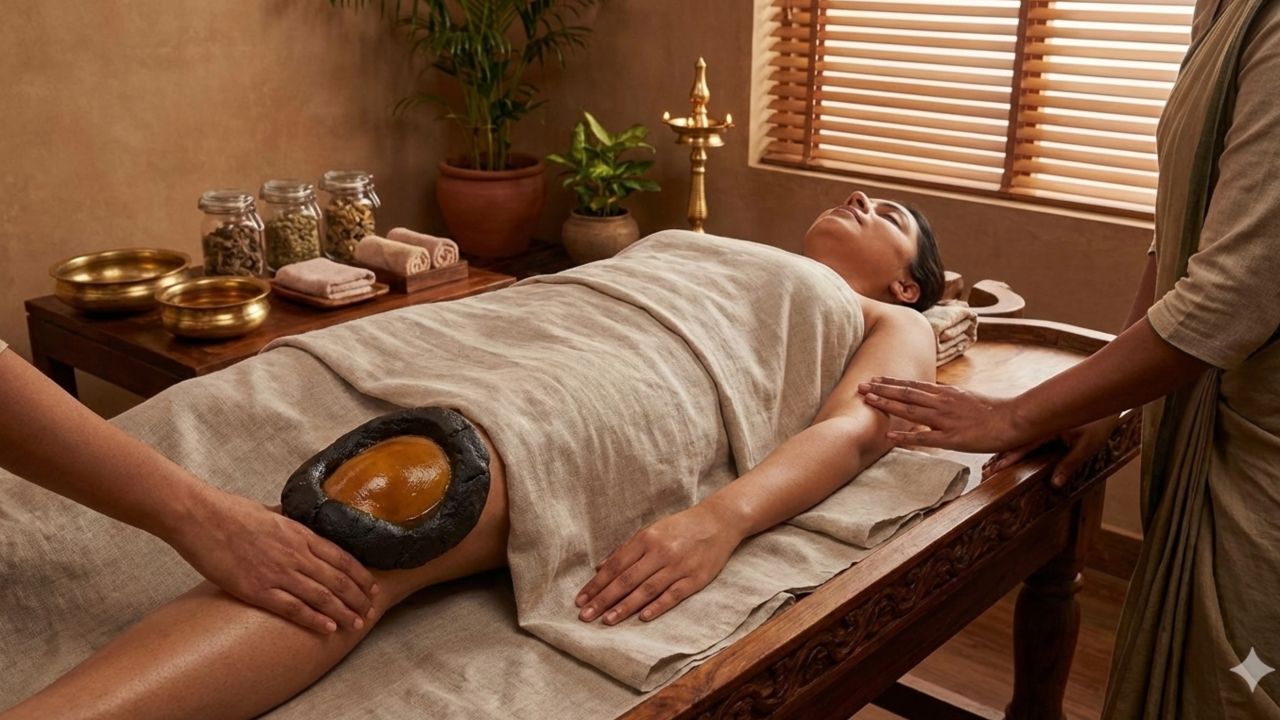 Osteoarthritis is a degenerative joint disorder marked by the gradual loss of protective cartilage. The knee, bearing body weight with every step, is especially vulnerable. As cartilage wears down, bones rub together, leading to inflammation, reduced mobility, and chronic pain that interferes with independence and overall quality of life.
Globally, knee osteoarthritis is a leading cause of disability, particularly among aging populations. It significantly contributes to years lived with disability, impacting mental health, work capacity, and economic productivity. The condition places a growing burden on healthcare systems, families, and individuals seeking long-term pain relief and functional recovery.
Conventional medicine often addresses osteoarthritis through painkillers, anti-inflammatory drugs, injections, or surgery. While effective, these methods may focus on symptom control and carry risks. In contrast, Ayurveda offers holistic, non-invasive therapies like Janu Basti, aiming to nourish joints, reduce pain, and restore balance naturally.
Sandhigatavata: Ayurvedic Understanding of Osteoarthritis
To understand Ayurvedic treatment, it is essential to first understand the Ayurvedic diagnosis. Ayurveda, the 5,000-year-old science of life from India, defines health as a balance among three functional energies, known as Doshas—Vata (Air & Ether), Pitta (Fire & Water), and Kapha (Earth & Water).
Vata Dosha governs movement in the body, including circulation, respiration, nerve impulses, and joint mobility. Its qualities are dry, light, cold, rough, mobile, and subtle.
Sandhigatavata is a type of Vatavyadhi (disorders caused by aggravated Vata). Classical Ayurvedic texts such as the Charaka Samhita describe symptoms that closely resemble modern knee osteoarthritis:
- Sandhi Shoola – Joint pain, aggravated by movement and relieved by rest
- Shotha – Swelling around the affected joint
- Vatapurnadritsparsha – A sensation of air in the joint, presenting as crepitus (cracking or clicking sounds)
- Prasaranakunchanapravritti Savedana – Pain during bending and straightening of the joint
According to Ayurveda, factors such as aging, trauma, excessive physical activity, and improper diet aggravate Vata Dosha. Its dry and cold nature localizes in vulnerable areas of the body, especially large joints like the knees—a process called Sthanamshraya.
When aggravated Vata settles in the joint, it leads to Dhatu Kshaya (degeneration of tissues). This results in pain, stiffness, swelling, and restricted movement, closely corresponding to cartilage degeneration seen in osteoarthritis.
Ayurvedic management of Sandhigatavata focuses on pacifying Vata, nourishing depleted tissues, and restoring joint mobility. Warm, unctuous therapies help counter dryness and cold, improve circulation, reduce pain, strengthen joint structures, and support long-term functional recovery.
Janu Basti: Healing Therapy for Knee Pain
Knee pain caused by osteoarthritis is increasingly common due to aging, lifestyle factors, and joint degeneration. In Ayurveda, this condition is described as Sandhigatavata, a Vata-dominant disorder. One of the most effective Ayurvedic treatments for knee pain and stiffness is Janu Basti, a localized oil-retention therapy that nourishes and strengthens the knee joint.
What Is Janu Basti in Ayurveda?
Janu Basti is an external Ayurvedic therapy where warm, medicated oil is retained over the knee joint using a dough ring. The word Janu means knee, and Basti refers to a container or reservoir.
This therapy is based on classical Ayurvedic principles of Snehana (oleation) and Swedana (fomentation). Although not described verbatim in ancient texts, Janu Basti is a refined clinical application used widely for Vata disorders affecting the knee joint.
How Janu Basti Helps in Knee Osteoarthritis
According to Ayurveda, osteoarthritis occurs due to aggravated Vata Dosha causing dryness, degeneration, and pain in joints. Janu Basti works by applying warm, oily substances that counteract these qualities.
Key Benefits of Janu Basti for Knee Pain
- Reduces knee pain and inflammation
- Improves joint lubrication and flexibility
- Decreases stiffness and crepitus
- Enhances blood circulation around the knee
- Nourishes cartilage and joint tissues
The prolonged contact of warm oil allows deep penetration into the joint, promoting tissue regeneration and mobility.
Janu Basti for Sandhigatavata (Knee Joint Disorders)
In Sandhigatavata, aggravated Vata localizes in the knee joint, leading to Dhatu Kshaya (tissue depletion). Symptoms such as pain during movement, swelling, and restricted motion closely resemble modern osteoarthritis.
Janu Basti directly pacifies Vata at the affected site, supports tissue nourishment, and helps slow down degenerative changes. It is often combined with internal herbal medicines, dietary adjustments, and lifestyle guidance for long-term relief.
Mahanarayana Taila: Ayurvedic Oil for Joint Health
The selection of the medicated oil is critical. For this case, the practitioners chose Mahanarayana Taila, a renowned classical Ayurvedic oil formulation.
Mahanarayana Taila is a polyherbal preparation containing a wealth of medicinal herbs known for their Vata-pacifying, analgesic, anti-inflammatory, and rejuvenating properties. Key ingredients often include:
- Bala (Sida cordifolia): A premier rejuvenative for muscles and nerves, it strengthens and nourishes the tissues.
- Ashwagandha (Withania somnifera): A renowned adaptogen that reduces stress and inflammation while strengthening the musculoskeletal system.
- Shallaki (Boswellia serrata): A powerful anti-inflammatory herb, often compared to modern NSAIDs, specifically beneficial for joint pain and swelling.
- Bilwa (Aegle marmelos), Agnimantha (Premna integrifolia), and others from the Dashmoola group: These ten roots are famous for their deep action on the nervous system and musculoskeletal pain.
This combination makes Mahanarayana Taila an ideal medium for Janu Basti, as it directly addresses the pain, inflammation, and degeneration characteristic of Janusandhigatavata.
Knee Osteoarthritis Relief with Janu Basti: A Case Study
Osteoarthritis of the knee is a degenerative condition that significantly affects mobility and quality of life in older adults. Ayurveda describes this condition as Sandhigatavata, a disorder caused by aggravated Vata Dosha. This case study highlights the practical application and effectiveness of Janu Basti therapy in managing chronic knee pain and degeneration.
Patient Profile and Clinical History
The case involved a 62-year-old male who presented with chronic pain in the left knee joint for a duration of two years.
Presenting Complaints
- Persistent knee pain
- Audible crepitus during movement
- Difficulty in walking
- Pain aggravated by movement and relieved by rest
A significant contributing factor was a history of local trauma to the same knee following a car accident two years earlier, a well-known trigger for degenerative joint disease.
Previous Medical Findings
X-ray showed:
- Degenerative joint changes
- Narrowed joint space
- Presence of osteophytes (bone spurs)
The patient was dependent on anti-inflammatory and pain-relief medications for symptom control.
Clinical Examination Findings
On physical examination, the following signs were observed:
- Antalgic gait indicating pain-related limping
- Audible and palpable crepitations in the knee joint
- Visible swelling, confirmed by a positive Patellar Tap Test
- Tenderness on the medial aspect of the knee joint
Based on Ayurvedic assessment, the condition was diagnosed as Janu Sandhigatavata.
Ayurvedic Treatment
The patient was advised two sessions of Janu Basti therapy, each followed by Nadi Swedana.
Therapies Administered
- Janu Basti with Mahanarayana Taila
- Nadi Swedana using Dashmoola Kwath
Materials Used in the Procedure
- Masha Pisti (black gram flour dough) for oil reservoir
- Mahanarayana Taila – 500 ml, warmed
- Dashmoola Kwath – 2 litres for steam therapy
- Supporting materials: spatula, sponge, water, and Nadi Swedana apparatus
Step-by-Step Janu Basti Procedure
1. Preparation of the Reservoir (Basti Yantra)
- Masha Pisti was prepared using black gram flour and water
- The patient was seated comfortably with the knee extended
- Gentle Abhyanga (oil massage) was done on the knee
- A circular dough wall (about 4 Angulas high) was constructed around the knee
- The structure was allowed to settle for 5–10 minutes to prevent leakage
2. Main Therapy – Janu Basti
- Warm Mahanarayana Taila was poured into the reservoir (2 Angulas depth)
- Oil temperature was maintained comfortably warm for 30 minutes
- As the oil cooled, it was replaced with fresh warm oil
- This allowed deep penetration into joint structures such as ligaments, synovial membrane, and joint capsule
3. Follow-Up Therapy – Nadi Swedana
- After removing the oil and dough ring, the knee was gently cleaned
- Localized steam therapy using Dashmoola Kwath was applied for 15–20 minutes
- The heat helped open bodily channels (Srotas), reduce inflammation, and enhance oil absorption
Therapy Schedule
Two treatment sessions
Each session:
- 6 consecutive days of therapy
- Followed by a 6-day gap before the next session
Assessment of Results
Subjective Improvement (Patient-Reported Symptoms)
- Significant reduction in joint pain
- Swelling completely resolved after the second session
- Crepitus reduced from audible to only palpable
- Improved comfort during flexion and extension
Objective Improvement
- Serum uric acid levels reduced from high to normal range after treatment
Analysis of Results: Remarkable Transformation
The results speak volumes:
1. Dramatic Reduction in Swelling: The most notable improvement was the complete resolution of joint swelling (Shotha). This is largely attributed to the powerful Shothahara (anti-inflammatory) properties of the Dashmoola Kwath used in the Nadi Swedana. The combination of heat and herbal decoction effectively reduced inflammation and fluid accumulation in the joint.
2. Significant Pain Relief: The patient’s severe joint pain (Sandhi Shoola) dropped to a mild level after just the first session and remained there. The pain during movement also improved significantly, moving from a level where he would visibly wince to a more tolerable discomfort. This points to the potent analgesic and muscle-relaxant effects of Mahanarayana Taila and the soothing nature of the sustained heat.
3. Improvement in Joint Sounds: The constant, audible crepitations reduced to being only palpable. This suggests an improvement in the joint’s internal environment—likely increased lubrication and reduced friction between the joint surfaces.
4. Normalization of Serum Uric Acid: This was a critical objective finding. Elevated uric acid is often associated with gout, but it can also be a marker of systemic inflammation and is sometimes seen in conjunction with osteoarthritis. The significant reduction to a normal level indicates that the therapy had a systemic anti-inflammatory and detoxifying effect, correcting a metabolic imbalance. The patient was reportedly so surprised by this change that he repeated the test to confirm it.
Why Janu Basti Works: An Ayurvedic Perspective
The success of this protocol can be explained through core Ayurvedic principles:
1. Opposites Balance: Vitiated Vata is dry, cold, light, and mobile. The treatment employed substances and procedures that are unctuous (Sneha), hot (Ushna), heavy (Guru), and stable (Sthira). The warm, medicated oil used in Janu Basti is the perfect antagonist to the pathological Vata residing in the knee joint.
2. Srotas Shodhana (Channel Cleansing): The combination of Snehana (oleation) and Swedana (fomentation) is a classic preparatory step in Panchakarma (Ayurvedic detox). It helps to loosen impurities stuck in the body’s channels and move them toward the gastrointestinal tract for elimination. In this localized context, it helped clear the micro-channels around the joint, improving nutrition and waste removal.
3. Dhatu Poshana (Tissue Nourishment): The therapeutic herbs in Mahanarayana Taila are not just pain relievers; they are nourishers (Brimhana). They help replenish the depleted joint tissues, potentially slowing the degenerative process.
3. Breaking the Pathological Cycle: Chronic pain and stiffness lead to reduced movement, which in turn worsens stiffness and weakness. Janu Basti breaks this cycle by reducing pain and increasing flexibility, enabling the patient to engage in gentle, therapeutic movement, which is crucial for long-term joint health.
FAQ’s
Q1: What is Janu Basti?
A: Janu Basti is a traditional Ayurvedic therapy where warm medicated oil is poured and retained over the knee joint using a dough ring. It is used to relieve knee pain, stiffness, and improve joint flexibility.
Q2: How does Janu Basti work?
A: The warm medicated oil penetrates the knee joint tissues, improving blood circulation, reducing inflammation, and lubricating the joint. This helps relieve pain and stiffness naturally.
Q3: What are the benefits of Janu Basti?
A: Benefits include pain relief, reduced inflammation, improved joint flexibility, better mobility, and support for conditions like osteoarthritis and chronic knee pain.
Q4: Is Janu Basti good for knee pain or arthritis?
A: Yes, it is widely used for osteoarthritis, chronic knee pain, and stiffness. It helps reduce pain, improve movement, and maintain joint health.
Q5: How many Janu Basti sessions are needed?
A: The number of sessions depends on the severity of the condition. Typically, 7–14 sessions are recommended, but a practitioner may adjust based on individual needs.
Q6: Is Janu Basti painful or safe?
A: Janu Basti is generally safe and painless. The therapy is soothing, as it involves warm medicated oil applied gently to the knee.
Q7: Are there side effects of Janu Basti?
A: Side effects are rare when performed by a trained practitioner. Some people may experience temporary warmth or mild skin sensitivity to the oil.
Q8: What oils are used in Janu Basti?
A: Various Ayurvedic medicated oils are used, such as Mahanarayan oil, Bala oil, or Ksheerabala oil, depending on the patient’s condition and dosha type.
Q9: Can Janu Basti help with mobility and flexibility?
A: Yes, it can improve knee joint movement, flexibility, and overall mobility, especially for people with stiffness or age-related joint issues.
Q10: Who should avoid Janu Basti?
A: People with open wounds, severe infections, or acute knee injuries should avoid Janu Basti. A practitioner should evaluate individual suitability before treatment.
References:
- Lata, S., Mishra, V., Singh, A. P., & Tiwari, S. K. (2024).
Role of Janubasti on Janusandhigatavata (Osteoarthritis). AYUSHDHARA, 11(3), 20–23. (1) - Charaka Samhita, Chakrapani Commentary, Chikitsasthan, Chapter 28. (Classical Ayurvedic reference – multiple editions available) (2)
- Global Burden of Disease Study 2010. Disability-adjusted life years (DALYs). The Lancet.
(General access to GBD publications by The Lancet)(3) - Kasper, D. L., et al. (2008).
Harrison’s Principles of Internal Medicine (17th ed.). McGraw-Hill. (Subscription-based access via McGraw-Hill / AccessMedicine)(4)
Disclaimer: This article is for informational purposes only and is not a substitute for professional medical advice. Always consult with a qualified healthcare provider before starting any new treatment.


















Very informative post! The best oil for knee joint pain in India often combines traditional ingredients for natural relief.