Koshatakyadi Vasti: Ayurvedic Enema Therapy for Kapha Disorders

In Ayurveda, Panchakarma is the ultimate approach for detoxification and rejuvenation, and Vasti (medicated enema) holds a special place as a cornerstone therapy. Known as Ardha Chikitsa or “half the treatment,” Vasti delivers medicine directly to the colon, the seat of Vata Dosha, promoting systemic cleansing, Dosha balance, and overall health. Among the diverse Vasti therapies, Koshatakyadi Vasti stands out as a potent Niruha (decoction-based) enema specifically designed to address Kapha disorders. It provides an effective alternative when Vamana (therapeutic emesis) is not suitable, supporting Kapha reduction, improved digestion, metabolism, and gentle rejuvenation of body tissues.
Classical Ayurvedic texts underline its significance. The Charaka Samhita, Siddhi Sthana, Chapter 3 (Vasti Siddhi), verses 56–57, lists Koshatakyadi Vasti as the 10th Niruha Vasti, reflecting its longstanding role in classical therapy. Its inclusion highlights its therapeutic relevance in Kapha-pacifying Panchakarma treatments and overall Ayurvedic wellness.
Name Significance & Mechanism of Action
The nomenclature follows the classical Ayurvedic tradition of naming a formulation after its primary or first ingredient.
- Koshataki: Refers to Luffa acutangula (Ridge Gourd or angled loofah), the lead herb.
- Adi: A Sanskrit suffix meaning “and others,” indicating a group of herbs.
- Vasti / Basti: Translates to enema or bladder (the apparatus used historically).
Thus, Koshatakyadi Vasti literally means “the enema prepared with Koshataki and other herbs.”
Phalashruti (Therapeutic Promise):
The verses themselves proclaim their excellence. Acharya Charaka states it is to be administered “to one suffering from Kapha disorders, to one having weak digestive fire (Mandagni), and to one who has an aversion to food (Annadwesha).” This direct indication positions Koshatakyadi Vasti as a premier therapy for a complex of symptoms and conditions stemming from aggravated Kapha and depressed Agni (digestive/metabolic fire).
Type of Vasti:
Koshatakyadi Vasti is classified as a Niruha (Asthapana) Vasti. It is primarily a non-unctuous enema prepared using a herbal decoction (Kashaya) as the main base, along with herbal paste (Kalka), honey (Madhu), salt (Lavana), and a small quantity of oil or ghee (Sneha).
This type of Vasti has a predominantly Shodhana (purificatory) action. It helps mobilize aggravated Doshas from the Shakha (peripheral tissues and body channels) and directs them toward the Koshtha (gastrointestinal tract), facilitating their effective elimination from the body.
Koshatakyadi Asthapana / Niruha Vasti (Basti): The Classical Shloka
Let us examine the original verses to understand the formulation in its authentic form:
कोषातकारग्वधदेवदारुशार्ङ्गेष्टमूर्वाकुटजार्कपाठाः |
पक्त्वाकुलत्थान्बृहतींचतोयेरसस्यतस्यप्रसृतादशस्युः||५६||(Koṣātakāragvadhadevadāruśārṅgeṣṭamūrvākuṭajārkapāṭhāḥ |
paktvākulatthānbṛhatīṃcatoyerasasyatasyaprasṛtādaśasyuḥ||56||)
“Decoction should be prepared from Koshataki, Aragvadha, Devadaru, Sharngeshta, Murva, Kutaja, Arka, and Patha boiled with Kulattha and Brihati in four times water. The final decoction obtained should be ten Prasruta.”
तान्सर्षपैलामदनैःसकुष्ठैरक्षप्रमाणैःप्रसृतैश्चयुक्तान्|
फलाह्वतैलस्यसमाक्षिकस्यक्षारस्यतैलस्यचसार्षपस्य||५७||
दद्यान्निरूहंकफरोगिणेज्ञोमन्दाग्नयेचाप्यशनद्विषेच|(Tānsarṣapailāmadanaiḥsakuṣṭhairakṣapramāṇaiprasṛtaiścayuktān|
phalāhvatailasyasamākṣikasyakṣārasyatailasyacasārṣapasya||57||
dadyānnirūhaṃkapharogiṇejñomandāgnaye cāpyaśanadviṣeca||)
“To that (decoction), add a paste made from Sarsapa, Ela, Madana, and Kustha —each in one Aksha quantity— and combine it with one Prasruta each of Madanaphala Taila, honey, alkali, and Sarsapa Taila. The wise physician should administer this Niruha Vasti to a patient suffering from Kapha disorders, weak digestive fire, and aversion to food.”
Kashaya Vasti Formulation Ingredients
The formulation is a sophisticated blend of herbs, oils, and adjuvants, each playing a specific role. Understanding their individual properties illuminates the collective action of the Vasti.
1. For the Preparation of Kashaya / Kwatha (Decoction):
Final Quantity: 10 Prasruta (1 Prasruta ≈ 96 grams, so ~960 ml). The herbs are taken in equal quantities (Samabhaga).
- Koshataki (Luffa acutangula): The primary ingredient. It is Tikta (bitter), Katu (pungent), Laghu (light), Ushna (hot). It is a renowned Kapha-Vata Shamaka and Pittakara. It promotes digestion (Dipana), reduces swelling (Shothahara), and cleanses the channels.
- Aragvadha (Cassia fistula): Indian Laburnum. Madhura (sweet), Guru (heavy), Shita (cold). A strong Vata-Pitta Shamaka laxative (Rechana), it also reduces Kapha. It clears the gut and supports detoxification.
- Devadaru (Cedrus deodara): Himalayan Cedar. Tikta, Katu, Kshara, Ushna, Laghu. Potently Kapha-Vata Shamaka. Its penetrating (Tikshna) and hot qualities break down deep-seated Kapha and Ama (toxins), alleviating pain and stiffness.
- Sharngeshta / Gunja (Abrus precatorius): Indian Licorice (used only in specific purification processes under expert guidance). Madhura, Snigdha, Guru. Traditionally used for its cleansing and scraping (Lekhana) properties on morbid Kapha and Meda (fat).
- Murva (Marsdenia tenacissima): Tikta, Kashaya, Ushna. A powerful Kapha-Vata Shamaka herb known for its Deepana (appetizer) and Shula-prashamana (pain-relieving) properties, especially in abdominal disorders.
- Kutaja (Holarrhena antidysenterica): Tikta, Kashaya, Laghu, Ruksha. A premier herb for intestinal health (Atisahara), it mitigates Kapha and Pitta, treats diarrhea, dysentery, and cleanses the Annavaha and Purishavaha Srotas.
- Arka (Calotropis gigantea): Milkweed. Katu, Tikta, Ushna, Tikshna. An intense Kapha-Vata Shamaka and Virechaka (purgative) herb used in minute quantities for its strong scraping (Lekhana) and cleansing action on severe Kapha blocks.
- Patha (Cissampelos pareira): Tikta, Kashaya, Ushna. Kapha-Vata Shamaka. It is a digestive (Dipana), anti-helminthic (Krimighna), and is particularly useful in cleansing the urinary and digestive channels.
- Kulattha (Dolichos biflorus): Horse Gram. Katu, Kashaya, Ushna, Laghu, Ruksha. A quintessential Kapha-Pitta Shamaka legume. It is highly Deepana, reduces fat (Medohara), and alleviates swelling (Shothahara).
- Brihati (Solanum indicum): Often used interchangeably with Kantakari (Solanum xanthocarpum). Katu, Tikta, Ushna, Laghu. A potent Kapha-Vata Shamaka herb that clears respiratory channels (Shwasahara, Kasahara), is digestive, and diuretic.
2. For Preparation of Kalka (Paste):
Quantity: 1 Aksha (≈12 grams) of each ingredient, mixed to form a paste.
- Sarsapa (Brassica juncea/campestris): Mustard Seeds. Katu, Tikta, Ushna, Tikshna. Intensely Kapha-Vata Shamaka. They are deeply penetrating, stimulant, and help break up congestion and Ama.
- Ela (Elettaria cardamomum): Cardamom. Madhura, Katu, Sheeta, Laghu. A superb Tridosha pacifier, with a strong emphasis on Vata-Kapha reduction. It is a carminative (Deepana, Pachana), aromatic, and enhances the action of other herbs.
- Madana / Madanaphala (Randia dumetorum): The prime emetic fruit. Madhura, Amla, Ushna, Snigdha, Guru. While famous for Vamana, in Vasti it stimulates peristalsis, loosens Kapha, and aids in the downward evacuation of doshas.
- Kustha (Saussurea lappa): Costus Root. Tikta, Katu, Ushna, Laghu. A premier Kapha-Vata Shamaka and Pittakara herb. Its hot, sharp, and light qualities make it excellent for dissolving stubborn Kapha and clearing the micro-channels (Srotoshodhana).
3. For Sneha (Unctuous/ Oily Component):
Quantity: 1 Prasruta (≈96 grams) each of two oils.
- Madanaphala Taila / Phalahva Taila: Oil processed with Madanaphala. It carries the properties of the fruit, aiding in the evacuation process and providing mild unction to prevent excessive dryness from the strong decoction.
- Sarsapa Taila: Mustard Oil. Katu, Tikta, Ushna, Tikshna, Sukshma. Its hot, penetrating, and Kapha-Vata reducing properties are crucial for driving the medicine deep into the tissues and loosening adhered Kapha.
4. Other Essential Components (Avapa & Samyoga):
- Saindhava Lavana (Rock Salt): Lavana, Sheeta, Snigdha, Sukshma, Laghu. Tridoshahara, but especially Vata-Kapha reducing. It acts as a Vishyandi—it helps in the osmosis and penetration of the enema solution into the tissues and also stimulates peristalsis.
- Madhu / Makshika (Honey): Madhura, Kashaya, Sheeta, Ruksha, Sukshma. Kapha-Vata Shamaka, Pittavardhaka. Its Yogavahi (vehicle) property carries the properties of other ingredients deep into the tissues. Its Ruksha (dry) and Sukshma (subtle) qualities counteract the Guru (heavy) and Sthira (static) nature of Kapha.
- Kshara (Alkali – likely Yavakshara or Svarjikakshara): Katu, Ushna, Tikshna, Sukshma. Intensely Kapha-Vata Shamaka. It is a powerful Srotoshodhaka (channel cleanser), Lekhana (scraping agent) that cuts through thick Kapha and Meda, and a Deepana.
Kashaya Vasti in Ayurveda Preparation
The classical formulation of Koshatakyadi Vasti presents a practical challenge, as highlighted by Ayurvedic commentators. The total quantity of ingredients—10 Prasruta Kashaya + 1 Prasruta Kalka + 4 Prasruta of oils, honey, Kshara, and salt—exceeds the classical maximum limit of 12 Prasruta for a single Niruha Vasti dose.
Solution – Proportional Reduction (Pramanika)
An experienced physician (Yukta Chikitsaka) does not prepare the full quantity literally. Instead, the proportions prescribed by Charaka are carefully maintained, while the total quantity is scaled down proportionately. This ensures that the final Vasti formulation for administration stays within the classical limit of 12 Prasruta (~1152 ml), preserving both therapeutic efficacy and classical accuracy.
Step-by-Step Process:
Kashaya Preparation: Take coarse powders of Koshataki, Aragvadha, Devadaru, Sharngeshta, Murva, Kutaja, Arka, Patha, Kulattha, and Brihati in equal quantities by weight. Mix them thoroughly. Take 1 part of this mixed herb powder, add it to 8 parts of water, and boil on a medium flame. Reduce the decoction to one-eighth of the original volume (i.e., until only the water equivalent to the original herb quantity remains). Strain through cloth. This is Koshatakyadi Kashaya.
Kalka Preparation: Separately, take Sarsapa, Ela, Madana, and Kustha in equal quantities. Grind them together into a fine paste using a small amount of the prepared Kashaya or water.
Final Mixing (Samyoga): In a clean vessel, combine the prescribed/calculated quantities of:
- Koshatakyadi Kashaya (warm, not hot)
- Madhu (Honey)
- Saindhava Lavana
- Kalka paste
- Madanaphala Taila and Sarsapa Taila
- Kshara
Stir thoroughly in one direction until a homogenous, smooth emulsion is formed. The consistency should be like that of Takra (thin buttermilk). This is the final Koshatakyadi Vasti Dravya.
For Practical Purposes: Modern Calculations & Administration
In contemporary practice, administering 1152 ml of liquid in a single enema is often not tolerable or necessary. The capacity of the colon and the patient’s comfort are primary considerations. Therefore, the dose is further customized.
A Practical Calculation Model (for a standard 12 Prasruta dose, then halved for administration):
This model maintains the proportions of the ingredients relative to the 12 Prasruta total.
- Saindhava Lavana: 1 Karsha = 12 g
- Madhu (Honey): 3 Prasruta = 288 g
- Sneha (Oils – combined): 1.5 Prasruta = 144 g (72g each of Madanaphala & Sarsapa Taila)
- Kalka (Paste): 1 Prasruta = 96 g
- Kashaya: 5 Prasruta = 480 ml
- Avapa (Kshara): 1.5 Prasruta = 144 g
- TOTAL: = 12 Prasruta (~1152 g/ml)
Actual Administration Dose: For most adults, half of this total quantity (approx. 500-600 ml) is administered in one sitting. The ingredients for the Kashaya, Kalka, etc., are thus scaled down from the beginning to yield this final volume.
Freshness is Key: It is always recommended to prepare the Vasti liquid fresh for each administration to ensure maximum potency and avoid fermentation.
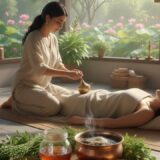
Administration Protocol: The Vasti is administered by a trained therapist under strict Panchakarma guidelines—after preliminary oleation (Snehana) and fomentation (Swedana), to an empty colon, in the left lateral position, using a traditional Vasti apparatus or a modern enema bag/kit. The patient is instructed to retain it for the prescribed time (as tolerated, ideally 15-30 minutes) before evacuation.
Benefits of Koshatakyadi Niruha Vasti & Therapeutic Effects
The classical indications are a gateway to understanding its vast therapeutic potential.
1. Kapha Roga Shamaka (The Supreme Pacifier of Kapha Disorders): This is its flagship action. It is unparalleled for a wide spectrum of Kapha pathologies. Vamana is first-line for Kapha, but when Vamana is contraindicated, ineffective, or when Vata is co-aggravated (a common occurrence), Koshatakyadi Vasti becomes the treatment of choice. Conditions include:
- Respiratory: Shwasa (dyspnoea, asthma, COPD), Kasa (chronic bronchitis, cough), Peenasa (sinusitis), excessive mucus production.
- Digestive: Agnisada (loss of digestive power), Aruchi (taste anorexia), Chhardi (vomiting), Udara (ascites, abdominal disorders).
- Metabolic: Sthoulya (obesity), Prameha (diabetes/metabolic syndrome), Hypothyroidism (concept of Jatharagni-Mandya and Dhatvagni-Mandya).
- Musculoskeletal: Gouravam (heaviness in body), Angasada (body ache), stiffness, Ama accumulation in joints.
- Neurological/Mental: Alasya (lethargy), Tandra (drowsiness), Atinidra (excessive sleep), Avasada (depression), cognitive fogginess.
2. Mandagni Chikitsa (Therapy for Weak Digestive Fire): Mandagni is the root of most diseases (Rogasaram). This Vasti directly kindles Jatharagni. By clearing Kapha and Ama that coat the gastric mucosa and dampen the digestive fire, it re-ignites core metabolism. This is a profound systemic correction, not just a local colonic action.
3. Annadwesha Pratyanika (Remedy for Aversion to Food): Annadwesha can stem from physical causes (Ama, Gulma), psychological causes, or as a side effect of treatments (chemotherapy). By correcting Mandagni, clearing Ama, and stimulating the digestive and nervous systems via the gut-brain axis, this Vasti can help restore the natural desire for food. It is particularly relevant in conditions like anorexia, convalescence, and chronic debilitating illnesses.
4. Srotoshodhana (Deep Channel Cleansing): The combination of Tikshna (sharp), Sukshma (subtle), and Ushna (hot) ingredients like Kustha, Sarsapa, Arka, and Kshara gives it a powerful Srotoshodhaka property. It clears blockages in the Rasavaha (nutritional), Medovaha (fat), Shleshakavaha (synovial), and Majjavaha (nervous) channels.
5. Lekhana Karma (Scraping Action): The Vasti has a pronounced Lekhana effect, helping to scrape off excess Kapha and Meda (adipose tissue) from the walls of the gut and the Dhatus. This makes it a critical component in managing obesity and hyperlipidemia.
Action on Doshas (Tridoshic Impact)
- On Kapha: Pradhana Karma (Primary Action). It is Kapha Shamaka, Kapha Vilayana (liquefies), and Kapha Rechaka (expels). It directly counteracts the Guru (heavy), Sheeta (cold), Snigdha (oily), and Sthira (stable) qualities of Kapha with its Laghu (light), Ushna (hot), Ruksha (dry), and Tikshna (sharp) properties.
- On Vata: Saha Karma (Ancillary, yet vital). Being a Vasti, it inherently pacifies Vata in its main seat, the colon. By cleansing the Purishavaha Srotas, it removes the source of Vata aggravation. Many Kapha disorders are complicated by Avarana (encasement of Vata by Kapha), which this Vasti effectively treats.
- On Pitta: Uddharana Karma (Stimulatory Action). It does not suppress Pitta; rather, by removing the Kapha blanket that smothers Agni, it allows the inherent Pitta and Agni to function optimally. Thus, it stimulates a healthy Pachaka Pitta.
Action on Dhatus (Tissues) and Srotas (Channels)
- Rasa Dhatu: Clears excess Kapha and Ama from the plasma, improving nutrient delivery and alleviating symptoms like heaviness, malaise, and excess salivation.
- Meda Dhatu: Its Lekhana and Kleda-Shoshana (drying dampness) actions are crucial for reducing pathological fat (Medas) in obesity and lipid disorders.
- Majja & Shukra Dhatu: By cleansing the Shleshak Kapha in the joints and the Tarpaka Kapha in the nervous system, it positively impacts bone marrow and reproductive tissue health, indirectly supporting Majja and Shukra Dhatu.
- Srotas: It has a direct cleansing effect on the Annavaha (digestive), Purishavaha (excretory), Mutravaha (urinary), Rasavaha, and Medovaha Srotas. This Srotoshodhana is the basis of its systemic detoxification effect.
Action on Malas (Waste Products)
- Purisha (Feces): As an enema, its most direct action is the evacuation of accumulated feces, gases (Adho Vata), and Kapha toxins from the colon. This reset of the gut environment is fundamental to its benefits.
- Mutra (Urine): Ingredients like Patha, Kulattha, and Brihati have diuretic properties. By cleansing the Mutravaha Srotas, it promotes proper urine formation and elimination.
- Sveda (Sweat): By kindling Agni, it also normalizes the sweating mechanism, which is often impaired in Kapha conditions (either excessive clamminess or lack of sweat).
How Koshatakyadi Vasti Works: An Integrative Ayurvedic View
The genius of Koshatakyadi Vasti lies in its strategic approach:
1. The Alternative Pathway for Kapha: Instead of upward expulsion (Vamana), it uses the downward route (Adhobhaga). When Kapha is dense, sticky, and mixed with Vata or located in the lower gut, downward evacuation via Vasti is more logical and effective.
2. The Gut as the Control Center: Ayurveda identifies the colon (Pakvashaya) as not just an excretory organ, but a key site for the manifestation of all Doshas, especially Vata. By administering strong Kapha-reducing medicines here, it:
- Corrects Vata: Pacifies Apana Vayu, normalizing downward movement.
- Kindles Agni from Below: The Ushna and Tikshna drugs stimulate Jatharagni via a reflex action and by clearing Ama.
- Systemic Absorption: The Sukshma particles of the medicine are absorbed through the colonic mucosa into the Moola Srotas (root channels) and circulated systemically, akin to modern concepts of colon hydrotherapy and nutrient absorption.
3. Synergistic Pharmacology: The formula is a masterpiece of synergy. The Kashaya herbs provide the bulk therapeutic action. The Kalka offers sustained-release and binding. Madhu is the Yogavahi carrier. Sneha prevents excessive irritation. Lavana ensures penetration. Kshara provides the cutting edge to dissolve the toughest blocks. Together, they create a multi-pronged, deep-acting detoxifying and stimulating agent.
4. Metabolic Reboot: By simultaneously reducing Kapha, stimulating Agni, and cleansing the Srotas, it performs a “hard reset” on the entire metabolic system (Agni-Mandya). This addresses the root cause of numerous chronic lifestyle disorders—poor tissue metabolism (Dhatvagni Mandya).
FAQ’s
1. What is Koshatakyadi Vasti in Ayurveda?
Koshatakyadi Vasti is a traditional Ayurvedic enema therapy used to cleanse the colon and balance Kapha dosha, improving digestion and overall health.
2. How does Koshatakyadi Vasti treat Kapha disorders?
It removes excess Kapha from the body, addressing issues like congestion, lethargy, digestive problems, and obesity, while promoting metabolic balance.
3. Who is eligible for Koshatakyadi Vasti therapy?
People with Kapha imbalances, constipation, indigestion, respiratory issues, or sluggish metabolism may benefit, as determined by an Ayurvedic practitioner.
4. How is Koshatakyadi Vasti performed?
The therapy involves administering herbal oils and decoctions rectally, often in a series of sessions, under professional supervision, followed by dietary and lifestyle guidance.
5. How long does it take to see results from Koshatakyadi Vasti?
Results vary, but some individuals notice improved digestion, energy levels, and relief from Kapha-related symptoms within a few sessions, while a full course ensures optimal benefits.
6. Are there any side effects of Koshatakyadi Vasti?
When done correctly, side effects are minimal. Mild abdominal discomfort or temporary loose stools may occur, which are part of the natural cleansing process.
7. Can Koshatakyadi Vasti be done at home?
No, it should only be performed by a qualified Ayurvedic practitioner, as improper administration can lead to complications or reduced effectiveness.
8. How many sessions of Koshatakyadi Vasti are recommended?
The number of sessions depends on the severity of Kapha imbalance and individual health. Typically, a series of 7–14 sessions is recommended for noticeable results.
9. Can Koshatakyadi Vasti be combined with other Ayurvedic treatments?
Yes, it is often combined with Panchakarma therapies, herbal supplements, and Kapha-balancing diets for enhanced detoxification and overall wellness.
10. What dietary changes should be followed during Koshatakyadi Vasti therapy?
A light, Kapha-pacifying diet with warm, easily digestible foods, minimal oily and heavy meals, and adequate hydration is recommended to support the therapy and its effects.
Koshatakyadi Vasti is far more than a simple enema for Kapha. It represents a profound Ayurvedic therapeutic principle: the treatment of a Dosha from the seat of another Dosha for enhanced effect. It exemplifies Yukti (clinical reasoning) over mere textual prescription.
Disclaimer: This article is for educational purposes only. The treatment mentioned is a specialized Ayurvedic procedure and should not be attempted without the direct supervision of a qualified Ayurvedic practitioner.