Ashtang Ayurveda: The 8 Branches of Ayurvedic Science

Ayurveda comes from the Sanskrit words Ayus (life) and Veda (knowledge or science), meaning the Science of Life. More than a medical system, it is a holistic philosophy that promotes physical, mental, and spiritual well-being through balance and harmony.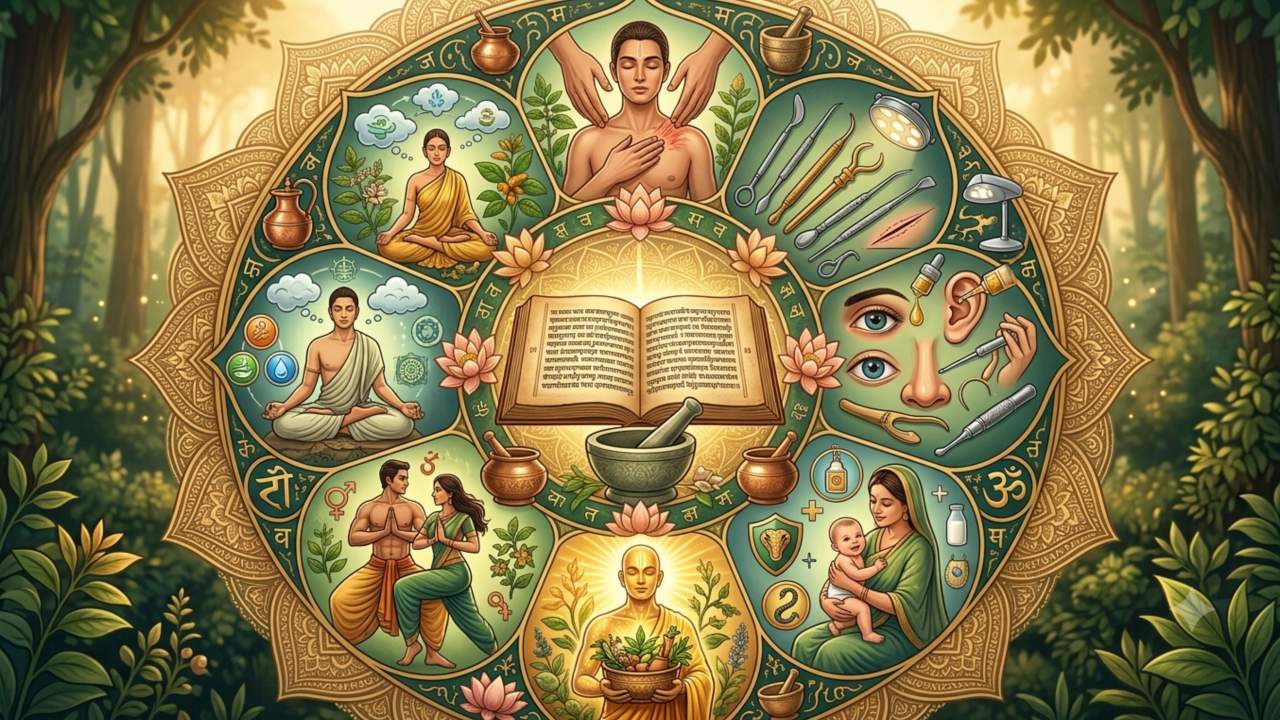 Originating in ancient India over 5,000 years ago, Ayurveda was first preserved through oral traditions before being recorded in classical Sanskrit texts. The Charaka Samhita and Sushruta Samhita remain its most influential works, covering medicine, surgery, diet, and preventive healthcare.
Ayurveda emphasizes treating the root cause of illness rather than only relieving symptoms. It focuses on maintaining harmony between the body, mind, spirit, and environment through personalized nutrition, herbal remedies, daily routines, and natural healing practices.
To address diverse health conditions effectively, Ayurveda is divided into Ashtang Ayurveda, or the eight branches of Ayurvedic medicine. Each branch specializes in a distinct field, together forming a comprehensive system for promoting health, preventing disease, and restoring overall well-being.
The Philosophical Foundation of Ashtang Ayurveda
Before delving into the eight branches, it is essential to understand the foundational philosophy that makes this division possible. Ayurveda is built upon the concept of the Panchamahabhutas, comprising five great elements governing life and health in perfect harmony always.
These elements are Earth (Prithvi), Water (Jala), Fire (Tejas), Air (Vayu), and Space (Akasha). Together they combine within the human body to form the three Doshas: Vata, Pitta, and Kapha, regulating movement, metabolism, structure, growth, vitality, balance, resilience, naturally throughout.
Every individual possesses a unique constitutional balance called Prakriti. Disease develops when this equilibrium becomes disturbed into Vikriti through unhealthy diet, lifestyle, stress, or environmental influences, affecting physical, mental, and emotional wellbeing simultaneously across every stage of life maintaining vitality.
Ayurveda explains that seven Dhatus sustain the body: plasma, blood, muscle, fat, bone, marrow, and reproductive tissue. Proper nourishment of these tissues supports strength, immunity, longevity, healthy development, cellular repair, functional stability, and overall physiological efficiency throughout daily living naturally.
Equally important are the Malas, or bodily waste products, whose efficient elimination prevents toxin accumulation. Impaired excretion disrupts normal physiological processes, weakens immunity, disturbs Doshic balance, and increases susceptibility to numerous diseases over time without appropriate care and prevention measures.
Recognizing human complexity, ancient Ayurvedic physicians established eight specialized branches covering internal medicine, surgery, pediatrics, psychiatry, ENT, toxicology, gerontology, and reproductive medicine. This systematic classification encouraged focused expertise, improving diagnosis, treatment, research, education, innovation, and patient care across generations successfully.
The Eight Branches of Ashtang Ayurveda
The following are the Eight Branches of Ashtanga Ayurveda, collectively representing the specialized fields of classical Ayurvedic medicine. Each branch focuses on a specific area of healthcare, ensuring comprehensive diagnosis, treatment, disease prevention, and the promotion of overall well-being.
1. Kayachikitsa – Internal Medicine
Kayachikitsa is the branch of Ayurveda that focuses on internal medicine. The word Kaya refers to the physical body formed from nourished tissues, while Chikitsa means treatment. Together, Kayachikitsa emphasizes diagnosing, preventing, and managing systemic diseases through holistic therapeutic principles.
Kayachikitsa is regarded as the most important of Ayurveda’s eight branches because it treats the body as a complete system. The Charaka Samhita serves as its principal classical text, providing comprehensive guidance on disease diagnosis, treatment, preventive healthcare, and patient management.
A central concept in Kayachikitsa is Agni, the digestive and metabolic fire responsible for maintaining health. According to Ayurveda, weakened Agni leads to incomplete digestion and the formation of Ama, a toxic substance believed to contribute to the development of many diseases.
Kayachikitsa manages a wide range of disorders, including Prameha (diabetes), Tamaka Shwasa (asthma), digestive diseases, liver disorders, and autoimmune conditions. Treatment is individualized, considering each person’s dosha, disease stage, lifestyle, dietary habits, and overall physical and mental health.
Lifestyle modification is an essential aspect of Kayachikitsa. Patients are advised to follow personalized dietary plans (Ahara), regular exercise (Vyayama), yogic practices (Yogasadhana), and appropriate physical activity (Gati). These measures help restore balance, improve digestion, and support long-term health and wellness.
Kayachikitsa also incorporates Panchakarma, a group of five purification therapies including Vamana, Virechana, Basti, Nasya, and Raktamokshana. These therapies aim to eliminate accumulated Ama, balance the doshas, strengthen body functions, and promote overall physical, mental, and physiological well-being.
2. Shalya Chikitsa – Surgery
Shalya Chikitsa is the Ayurvedic branch dedicated to surgery. The term Shalya means a foreign body or sharp object, while Chikitsa means treatment. This discipline includes both major and minor surgical procedures for managing various diseases, injuries, and traumatic conditions effectively.
Ancient India achieved remarkable progress in surgery through Ayurveda. Shalya Chikitsa became one of the most advanced medical sciences of its time, demonstrating exceptional knowledge of anatomy, surgical techniques, wound care, and patient management, centuries before many other civilizations worldwide.
The great sage-physician Sushruta, widely known as the Father of Surgery, made extraordinary contributions to this branch. His renowned text, the Sushruta Samhita, describes over 300 surgical procedures, 120 surgical instruments, and numerous operative techniques with remarkable precision and detail.
Shalya Chikitsa includes the removal of foreign bodies such as arrows and splinters, treatment of fractures, ulcers, abscesses, traumatic injuries, and amputations. It also provides surgical care for complicated conditions requiring careful planning, skilled execution, and effective postoperative management.
One of Sushruta’s greatest achievements was the detailed description of rhinoplasty, or reconstructive nose surgery. Using a forehead skin flap, damaged noses were successfully rebuilt. This innovative technique later influenced European surgeons after being documented by British physicians during the eighteenth century.
Shalya Chikitsa also includes obstetric and gynecological surgeries, reflecting an advanced understanding of human anatomy and operative care. Despite the absence of modern anesthesia and antiseptics, ancient Ayurvedic surgeons demonstrated remarkable precision, innovation, courage, and exceptional surgical expertise throughout their practice.
3. Bala Chikitsa / Kaumara Bhritya – Pediatrics
Bala Chikitsa, also called Kaumara Bhritya, is the Ayurvedic branch devoted to child healthcare. Bala means child, Chikitsa means treatment, Kaumara refers to childhood, and Bhritya signifies nurturing. This specialty emphasizes comprehensive care from conception through childhood development.
Kaumara Bhritya extends beyond pediatric care by beginning before birth. It includes preconception health, prenatal care, labor, delivery, and postnatal management. Ayurveda emphasizes healthy parents and proper maternal care to promote fetal growth and reduce risks of developmental disorders.
During pregnancy, Ayurveda recommends Garbhini Paricharya, a specialized regimen for expectant mothers. This includes balanced nutrition, appropriate herbal preparations, healthy daily routines, and positive behavior. These measures support maternal well-being, fetal development, and the birth of a healthy child.
After birth, Kaumara Bhritya focuses on neonatal care through proper umbilical cord management, breastfeeding practices, and timely introduction of complementary foods. These measures help establish healthy growth, improve nutrition, strengthen immunity, and support the infant’s physical and mental development.
This branch also manages childhood disorders such as digestive disturbances, teething problems, rickets, epilepsy, and infectious diseases. Ayurvedic physicians provide individualized treatments using herbal medicines, dietary modifications, and supportive therapies aimed at restoring health while promoting normal growth and development.
Kaumara Bhritya places great importance on strengthening natural immunity, known as Vyadhikshamatva. Traditional formulations such as Dhanvantari Ghrita and selected herbal preparations were administered to newborns to support resistance against diseases and encourage lifelong health according to Ayurvedic principles.
4. Graha Chikitsa / Bhoot Vidya – Psychiatry and Demonology
Graha Chikitsa, also known as Bhoot Vidya, is the Ayurvedic branch concerned with mental health. Although traditionally associated with spirits, it primarily addresses disorders affecting the mind, emotions, behavior, and consciousness through holistic therapeutic approaches and supportive care.
Historically, conditions without obvious physical causes were often explained using concepts such as Graha or Bhoota. These terms symbolized unseen influences affecting mental well-being. Today, they are commonly interpreted as representing psychological disturbances, infections, environmental factors, or neurological disorders.
Graha Chikitsa addresses conditions including Unmada (insanity), Apasmara (epilepsy), psychosomatic disorders, cognitive impairment, anxiety, and emotional disturbances. Ayurvedic physicians evaluate physical, mental, and environmental influences before selecting individualized treatments aimed at restoring psychological and neurological balance.
An important therapeutic approach in Graha Chikitsa is Satvavajaya, a form of psychotherapy emphasizing counseling, emotional regulation, positive thinking, and mental discipline. This method helps patients overcome harmful thoughts, strengthen resilience, improve emotional stability, and support overall psychological well-being.
Treatment also includes Medhya Rasayanas, herbal formulations traditionally believed to enhance memory, concentration, and cognitive function. Dietary regulation, healthy routines, meditation, yoga, breathing exercises, and calming practices are incorporated to promote mental relaxation and support nervous system health.
Graha Chikitsa reflects Ayurveda’s holistic understanding of mental health by integrating psychological guidance, herbal medicine, lifestyle modification, and spiritual practices. This comprehensive approach aims to restore harmony between the body, mind, and consciousness while improving overall quality of life.
5. Urdhvanga Chikitsa / Shalakya Tantra – ENT and Ophthalmology
Urdhvanga Chikitsa is the Ayurvedic branch that treats diseases affecting structures above the neck. It includes disorders of the eyes, ears, nose, throat, mouth, and teeth, emphasizing diagnosis, prevention, prognosis, and comprehensive management through specialized medical and surgical techniques.
This branch is commonly known as Shalakya Tantra. The name originates from Shalaka, a slender surgical instrument specially designed for delicate procedures involving the sensitive organs of the head and neck. These instruments ensure greater precision and safety during treatment.
Shalakya Tantra has made significant contributions to ophthalmology. Classical Ayurvedic texts describe numerous eye disorders, their causes, clinical features, and treatments. Detailed medical and surgical methods were developed to preserve vision, relieve symptoms, and improve the patient’s quality of life.
One remarkable achievement of this branch is the management of cataracts. Sushruta described a surgical procedure called Jinganasha or couching, in which a specialized needle displaced the opaque lens, allowing partial restoration of vision in selected patients during ancient times.
Shalakya Tantra also manages ear infections, hearing impairment, nasal polyps, sinusitis, tonsillitis, oral diseases, and dental disorders. Comprehensive treatment combines herbal medicines, local therapies, dietary guidance, and preventive measures to restore function and maintain the health of sensory organs.
Specialized therapies include Nasya, the administration of medicated oils through the nose, Karna Purana, medicated oil application into the ears, and Gandusha, therapeutic gargling or oil pulling. These treatments support cleansing, nourishment, symptom relief, and overall head and neck health.
6. Damstra Chikitsa / Agad Tantra – Toxicology
Damstra Chikitsa, also known as Agad Tantra, is the Ayurvedic branch dedicated to toxicology. It studies poisons, their effects on the body, methods of prevention, and treatments using antidotes, detoxification procedures, and supportive therapeutic measures for restoring health.
Ayurveda emphasizes maintaining harmony among the body’s natural elements for healthy living. According to its principles, toxins, known as Visha, disturb this balance and may cause disease. Agad Tantra focuses on recognizing, neutralizing, and eliminating these harmful substances from the body.
The term Agad refers to an antidote that counteracts poison, while Tantra means a systematic science. Damstra signifies the fangs or stingers of venomous animals, highlighting this branch’s expertise in treating poisonous bites, stings, and toxic exposures effectively.
Agad Tantra includes the diagnosis and treatment of poisoning caused by snakes, scorpions, spiders, insects, and rabid animals. It also addresses plant-based toxins, helping identify poisonous herbs and providing appropriate therapeutic measures for safe recovery and effective poison management.
This branch also studies Sthavara Visha, or inanimate poisons, including heavy metals, contaminated food, and environmental toxins. It recognizes cumulative poisoning, called Garavisha, resulting from improper diet, prolonged medication use, or harmful environmental exposures affecting overall health.
Treatment methods in Agad Tantra include herbal antidotes, detoxification therapies, Raktamokshana (therapeutic bloodletting), and emetic procedures to eliminate toxins. These principles resemble aspects of modern toxicology and emergency poison management while emphasizing prevention, early intervention, and holistic patient care.
7. Jara Chikitsa / Rasayana – Gerontology and Rejuvenation
Jara Chikitsa, also known as Rasayana, is the Ayurvedic branch dedicated to healthy aging, rejuvenation, and preventive healthcare. Jara means old age, while Rasayana refers to nourishing the body’s essential tissues, promoting vitality, longevity, and overall well-being throughout life.
The primary objective of Rasayana therapy is not simply to increase lifespan but to improve healthspan. It encourages healthy aging by maintaining physical strength, mental clarity, emotional balance, and independence, allowing individuals to enjoy an active and fulfilling life for longer.
Rasayana Chikitsa promotes longevity, enhanced memory, improved intelligence, youthful appearance, radiant complexion, strong immunity, and healthy sensory functions. It also aims to preserve physical endurance, mental resilience, and overall vitality while reducing the effects of aging and degenerative changes.
According to Ayurveda, Rasayana primarily nourishes Rasa Dhatu, the first body tissue responsible for supporting and sustaining all subsequent tissues. Proper nourishment of Rasa Dhatu contributes to healthy growth, efficient metabolism, tissue regeneration, and balanced physiological functions throughout life.
Another important goal of Rasayana therapy is strengthening Ojas, considered the essence of immunity, vitality, and resistance to disease. Enhanced Ojas supports physical endurance, mental stability, faster recovery, and improved capacity to maintain health under changing environmental conditions.
Rasayana Chikitsa combines balanced nutrition, herbal formulations, healthy lifestyle practices, yoga, meditation, and proper daily routines to promote rejuvenation. This holistic approach supports graceful aging, reduces degeneration, enhances quality of life, and helps maintain optimal health throughout advancing years.
Rasayana is divided into two main types:
- Kutipraveshika Rasayana: An intensive, inpatient rejuvenation protocol. The patient is housed in a specially constructed, isolated cottage (Kuti) and undergoes a strict regimen of internal oleation, purgation, and the administration of potent, often mineral-based, herbo-mineral compounds under strict supervision.
- Vatatapika Rasayana: An outpatient, daily rejuvenation protocol that can be practiced by anyone. This includes the consumption of daily rasayanas like Chyawanprash (an herbal jam), Triphala, milk processed with herbs, and the integration of rejuvenating lifestyle practices like yoga, meditation, and adequate sleep.
8. Vrishya Chikitsa / Vajikarana – Aphrodisiacs and Reproductive Medicine
Vrishya Chikitsa, also known as Vajikarana, is the Ayurvedic branch devoted to reproductive health and vitality. Vrishya promotes Shukra Dhatu, while Vajikarana signifies enhancing strength, fertility, and reproductive capacity through comprehensive medical, dietary, and lifestyle interventions for overall wellness.
Vajikarana extends beyond sexual health by emphasizing healthy conception and the birth of healthy offspring. Ayurveda teaches that the physical, mental, and emotional well-being of both parents significantly influences reproductive success and the healthy development of future generations.
This branch addresses reproductive disorders including male and female infertility, erectile dysfunction, premature ejaculation, reduced libido, and weakened Shukra Dhatu. Treatment aims to improve reproductive tissue quality, fertility potential, vitality, and overall reproductive function through individualized therapeutic approaches.
Vajikarana therapy incorporates balanced nutrition, herbal formulations, medicated oils, and rejuvenating practices. Traditionally recommended foods include milk, ghee, honey, and herbs such as Ashwagandha, Shatavari, and Musali, which are believed to support reproductive health and vitality.
Ayurveda emphasizes that successful Vajikarana therapy depends upon overall health and balanced living. Patients are encouraged to maintain a calm mind, follow healthy routines, and undergo appropriate cleansing therapies, including Panchakarma, before beginning specialized reproductive treatments for optimal benefits.
Vrishya Chikitsa integrates physical medicine, mental well-being, and healthy lifestyle practices to support reproductive health. Its holistic approach seeks to strengthen fertility, enhance vitality, encourage responsible parenthood, and promote the continuation of healthy future generations according to Ayurvedic principles.
Ashtang Ayurveda in the Modern World
Ashtang Ayurveda has gained worldwide recognition as a comprehensive traditional healthcare system. Today, it is widely practiced as a form of complementary and integrative medicine, attracting increasing interest for its holistic philosophy, preventive approach, and emphasis on maintaining long-term health and well-being.
The eight branches of Ayurveda closely resemble many modern medical specialties. Internal medicine, surgery, pediatrics, psychiatry, ophthalmology, toxicology, gerontology, and reproductive medicine all have corresponding disciplines within Ashtang Ayurveda, demonstrating its systematic and comprehensive approach to healthcare and disease management.
Despite these similarities, Ayurveda differs by viewing the body, mind, and spirit as interconnected. Rather than treating isolated symptoms, Ayurvedic physicians evaluate digestion, lifestyle, mental health, immunity, and environmental influences to identify underlying causes and restore overall balance.
This holistic approach is especially valuable in addressing chronic diseases, stress-related disorders, metabolic conditions, and lifestyle illnesses. Preventive care, personalized nutrition, herbal medicines, detoxification therapies, and healthy daily routines work together to improve long-term health and enhance quality of life.
Growing interest in natural and integrative healthcare has encouraged scientific research into Ayurvedic principles and therapies. Studies continue to explore the safety, effectiveness, and potential applications of traditional practices alongside evidence-based modern medical treatments in diverse healthcare settings worldwide.
International organizations, including the World Health Organization, recognize the importance of traditional medicine in supporting global health. Continued research, education, quality standards, and responsible integration can help Ayurveda complement modern healthcare while preserving its rich heritage and holistic principles.
Ashtang Ayurveda is not merely a historical relic; it is a living, breathing science of life that continues to heal and guide millions. Its division into eight distinct branches demonstrates a profound understanding of human anatomy, physiology, psychology, and pathology that was millennia ahead of its time.