Bhang: How To Make An Ancient Ayurvedic Cannabis Drink

Bhang isn’t just a cannabis drink—it’s a part of India’s history, culture, and spirituality that goes back thousands of years. Made from the leaves and flowers of the cannabis plant, it’s been woven into festivals, religious rituals, and traditional medicine, carrying stories of gods, healing, and celebration.
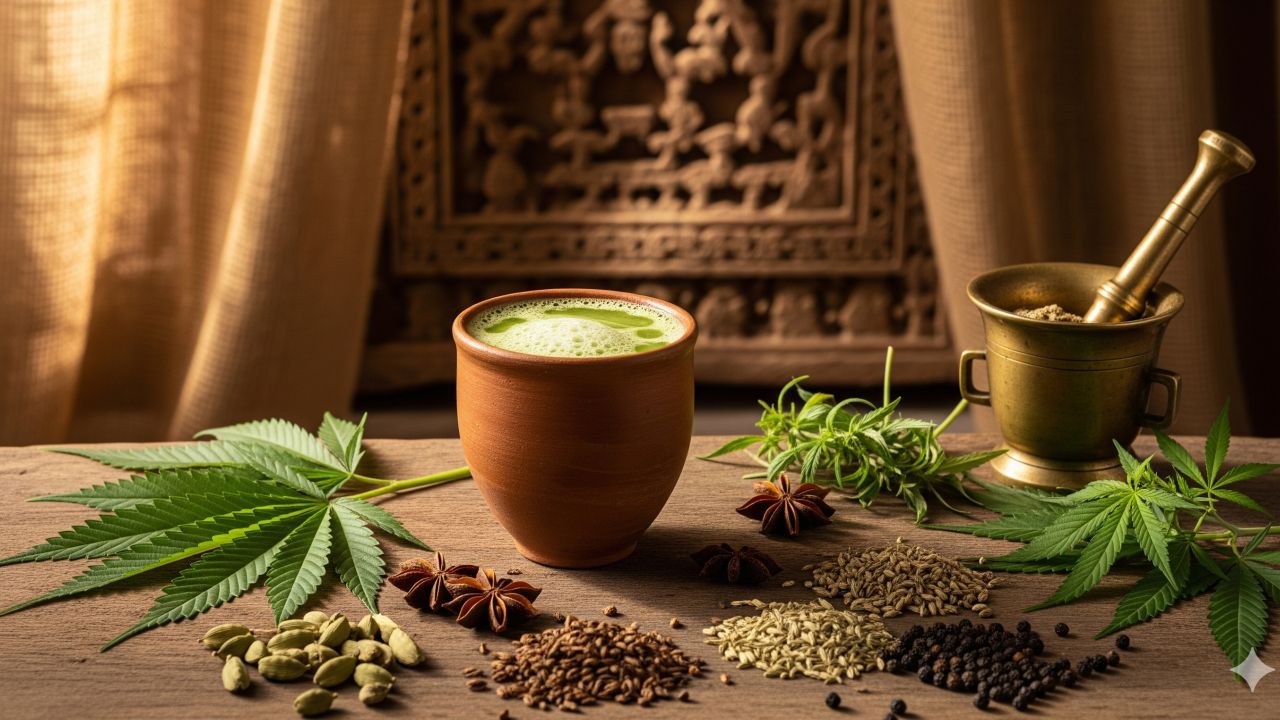 Unlike how cannabis is viewed in many places today, bhang holds a special, respected spot in India. People openly enjoy it during lively festivals like Holi, and it’s even used in Ayurveda to help with various health issues. It’s also a way for people to come together, share joy, and feel connected.
To really get bhang, you have to appreciate how deeply it’s tied to nature, spirituality, and well-being. This guide will take you through its history, how it’s made, different types, how it affects the body, and answer common questions about this fascinating traditional drink.
What is Bhang?
Bhang is more than just a cannabis-based preparation—it’s a deeply embedded part of Indian culture, spirituality, and traditional medicine. Derived from the leaves and flowers of the female cannabis plant (Cannabis sativa), bhang holds a unique position in the Indian subcontinent as a ritual offering, medicinal remedy, and festive indulgence.
Traditional Preparation of Bhang
The making of bhang is both an art and a ritual:
- Harvesting: Leaves and buds of the cannabis plant are carefully selected.
- Grinding: Using traditional stone grinders (silbatta or kharlal), the plant matter is ground into a fine green paste.
Blending: This paste is mixed with:
- Milk or yogurt
- Ghee (clarified butter)
- Spices: Cardamom, rose water, pepper, poppy seeds, almonds, pistachios, and more.
The resulting drink is potent and often enjoyed chilled.
Cultural and Religious Significance
Bhang is widely consumed during key Indian festivals:
- Holi: The festival of colors, where bhang adds to the spirit of joy and uninhibited celebration.
- Maha Shivratri: A sacred night dedicated to Lord Shiva, who is mythologically associated with cannabis consumption.
In both contexts, bhang serves as a symbol of spiritual liberation, social unity, and divine connection.
Medicinal Uses in Ayurveda
In Ayurveda, bhang is not classified as a recreational drug but as a powerful herbal medicine with multiple therapeutic applications.
Key Ayurvedic Benefits of Bhang:
- Analgesic: Alleviates pain from headaches, migraines, and chronic conditions like arthritis.
- Antispasmodic: Eases muscle spasms and helps manage convulsions.
- Digestive Aid: Acts as a deepana (appetizer) and pachana (digestive), stimulating the digestive fire (agni).
- Anti-inflammatory: Reduces internal inflammation and swelling.
- Calmative & Sedative: Helps relieve anxiety, stress, and insomnia by promoting a sense of calm.
- Natural Coolant: Traditionally used to beat the heat during hot Indian summers.
How Bhang Works in the Body
Bhang’s effects stem from cannabinoids, especially:
- THC (Tetrahydrocannabinol) – Produces psychoactive effects
- CBD (Cannabidiol) – Known for therapeutic, non-intoxicating benefits
These compounds interact with the endocannabinoid system (ECS) in the human body, influencing mood, appetite, pain response, and overall balance.
In Ayurvedic terms, bhang is said to:
- Balance Doshas: Especially reduces Vata (air/space) and Kapha (earth/water) imbalances.
- Promote Clarity: Used in spiritual practice to calm the mind and open consciousness.
The History Behind Bhang: A Gift from the Gods
Bhang is more than a herbal preparation—it is a sacred symbol deeply rooted in India’s spiritual and cultural traditions.
Its history stretches back thousands of years, where it was revered not only for its medicinal properties but also for its divine connection.
Vedic and Scriptural Origins
References to cannabis appear in the Vedas, ancient Sanskrit scriptures written between 2000 and 1400 BCE. The Atharva Veda names cannabis as one of the five sacred plants, calling it a “source of happiness,” “joy-giver,” and “liberator.”
It was believed to have descended from the Himalayas, gifted by the gods to relieve suffering and promote joy. The Rajavinod, a text on statecraft, mentions bhang being used by warriors to calm fear before battle.
The Dhanvantari Nighantu, a classical Ayurvedic text, describes its medicinal applications in detail, showing how it was used to treat a variety of conditions.
Lord Shiva: The Divine Patron of Bhang
Bhang’s most enduring mythological association is with Lord Shiva, the god of transformation and asceticism. One popular legend tells of Shiva discovering cannabis while wandering in the forest.
After consuming it, he felt refreshed and calm, adopting it as his sacred herb. Another legend comes from the Samudra Manthan, the churning of the cosmic ocean.
When Shiva drank the deadly poison to save the world, the gods offered him bhang to cool its burning effects. This act solidified its divine status.
A Legacy That Endures
To this day, bhang is consumed during religious festivals like Maha Shivratri, not as intoxication but as prasad—a sacred offering to Lord Shiva.
Its legacy continues through a blend of mythology, medicine, and spiritual practice, making it a lasting symbol of divine connection.
How can I make Bhang? The Art of Traditional Preparation
Making bhang is a ritual in itself, often performed with care and respect for tradition. The process can vary from household to household and region to region, but the core principles remain consistent. Here, we break down the traditional method in extensive detail.
Ingredients and Tools:
- Cannabis: Approximately ¼ to ½ cup of dried cannabis leaves and buds (known as ganja in this context). The potency can vary greatly, so starting with a smaller amount is always advised.
- Liquid Base: 2-3 cups of whole milk, yogurt (for lassi), or water. Milk is preferred as its fat content (especially when combined with ghee) efficiently binds with the fat-soluble THC, creating a more potent and bioavailable concoction.
Spices & Flavors:
- 1 tbsp Melon Seeds (magaz) or Almonds: Soaked and peeled, they add body and a nutty flavor.
- 1-2 tbsp Poppy Seeds (khus khus): Soaked, they contribute to the texture and have mild sedative properties.
- 1 tbsp Fennel Seeds (saunf): Aid digestion and add a sweet, licorice-like note.
- 1 tbsp Whole Black Peppercorns: Enhance bioavailability and add a sharp, spicy kick.
- 10-12 Green Cardamom Pods (elaichi): The quintessential spice for Indian sweets, providing a fragrant, citrusy aroma.
- ½ tsp Nutmeg (jaiphal): Adds warmth and has calming effects.
- A few strands of Saffron (kesar): For color, aroma, and prestige.
- Rose Water or Gulab Jal: 1-2 tbsp for a floral fragrance.
- Sweetener: Sugar, jaggery, or honey to taste. Traditionally, a rich, unrefined cane sugar is used.
- Ghee (Clarified Butter): 1-2 tbsp, crucial for extracting cannabinoids.
Tools: A large stone grinder (silbatta), a mortar and pestle (kharlal), or a modern blender (though purists argue the stone grinders produce a superior, more authentic paste). You will also need a muslin cloth or a fine strainer.
Step-by-Step Process:
1. Cleaning and Soaking
Begin by carefully inspecting the cannabis, removing any thick stems. Lightly toast the leaves and buds on a warm griddle for a few seconds.
This process, known as decarboxylation, activates the THC-A into psychoactive THC, making the bhang significantly more potent.
Once slightly cooled, place the cannabis in a mortar and add a few teaspoons of warm water or milk. Grind it vigorously into a smooth, green paste. This initial paste is called the bhang ka goli (ball of bhang).
2. Preparing the Spice Base (Masala)
In a separate pan, lightly dry roast the spices—cardamom, fennel, pepper, poppy seeds—until they become fragrant. Be careful not to burn them. Transfer these roasted spices to your grinder or blender.
Add the soaked melon seeds or almonds. Grind them into a fine, thick paste, adding a small amount of milk or water to facilitate the process.
3. Combining the Pastes
In a large bowl, combine the cannabis paste and the spice paste. Mix them thoroughly. At this stage, add the ghee.
The fat in the ghee will begin to bind with the cannabinoids. Using your hands to mix is traditional and allows you to feel the consistency.
4. Extraction and Straining
Pour the mixed paste into a large bowl. Add 2-3 cups of cold milk (or water). Using your hands, vigorously rub and squeeze the paste against the sides of the bowl for 10-15 minutes.
This labor-intensive process is essential for extracting the maximum potency and flavor from the plant material into the liquid.
5. The Final Strain
Place a muslin cloth or a very fine strainer over another clean bowl. Slowly pour the milky mixture through the cloth.
Gather the edges of the cloth and squeeze tightly to extract every last drop of the precious, infused liquid. The solid residue left behind is discarded.
6. Finishing Touches
To the strained liquid, add your sweetener (sugar, jaggery, or honey) and flavorings like rose water and saffron strands. Stir well until everything is dissolved and combined.
For a frothy, chilled drink, you can churn it using a hand-held whisk (mathani) or simply pour it into a blender with a handful of ice.
7. Resting (Optional but Recommended)
For the flavors to meld and the effects to become more uniform, traditional practitioners often let the bhang rest in a cool place for a few hours before serving.
A Word of Caution:
The potency of homemade bhang is highly variable. The strength of the cannabis, the efficiency of your grinding, and the extraction time all play a role.
The golden rule is “start low and go slow.” Consume a small portion (e.g., ¼ cup) and wait at least 60-90 minutes to fully gauge the effects before considering more.
The effects of ingested cannabis are delayed but are also stronger and longer-lasting than smoked cannabis.
Types of Bhang: A Diverse Culinary Tradition
The bhang paste is a versatile base that can be transformed into a wide array of consumables, each with its own occasion and purpose.
1. Bhang Thandai
This is the classic festival drink, especially ubiquitous during Holi. Thandai itself is a cooling summer beverage made from milk infused with a signature mix of nuts and spices. Bhang Thandai is simply this delicious base amalgamated with the bhang paste. It is sweet, spicy, fragrant, and powerfully potent.
2. Bhang Lassi
More common in North India, particularly in pilgrimage cities like Varanasi and Pushkar, Bhang Lassi is a yogurt-based drink. The bhang paste is mixed with whipped yogurt (lassi), water, and spices. It has a tangier, creamier profile compared to Thandai and is often consumed for both recreation and medicinal relief from the heat.
3. Bhang Goli
This refers to small, pill-sized balls of the pure, uncut cannabis paste. They are often swallowed with water like a tablet. This is a very direct and potent method of consumption, typically used for medicinal purposes to treat pain, insomnia, or lack of appetite, as it avoids the sugars and dairy of the drinks.
4. Bhang Sweets (Mithai)
The bhang paste can be incorporated into traditional Indian sweets. Bhang Laddu or Bhang Barfi are popular examples. These are made by mixing the paste into the gram flour or condensed milk base of the sweets. They offer a discreet and long-lasting way to consume cannabis.
5. Bhang Chutney
A less common but traditional preparation, especially in rural areas. The cannabis leaves are ground with mint, coriander, green chilies, and other chutney ingredients to create a savory, herbal condiment eaten with flatbreads (roti) or snacks.
How Does Bhang Work? The Science of the Spirit
Bhang creates its effects by interacting with the body’s endocannabinoid system (ECS), which regulates key functions like mood, sleep, appetite, memory, and pain.
Key Compounds in Bhang:
THC (Delta-9-tetrahydrocannabinol):
- The main psychoactive component.
- Mimics the natural endocannabinoid anandamide (“bliss molecule”).
- Binds to CB1 receptors in the brain.
- Triggers dopamine release → euphoria, altered perception, relaxation.
CBD (Cannabidiol):
- Non-psychoactive.
- Doesn’t bind directly to CB1 receptors.
- Can reduce THC’s psychoactive intensity.
- Provides therapeutic effects—lessens anxiety, pain, inflammation.
How the Body Processes Bhang:
- Ingested bhang is absorbed via the digestive system.
- Processed by the liver, where THC becomes 11-hydroxy-THC.
- This metabolite is more potent and longer-lasting than inhaled THC.
- Effects last 6–8 hours, often deeper and more body-centered.
The Role of Traditional Ingredients:
- Black pepper contains beta-caryophyllene, which may ease THC-induced anxiety.
- Cardamom and fennel support digestion of the heavy dairy base.
Benefits of Consuming Bhang: More Than Just a High
The consumption of bhang, when done responsibly, is associated with a multitude of perceived benefits:
- Spiritual Enlightenment: Used as a sacrament to quiet the mind, enhance meditation, and facilitate a deeper connection to the divine during religious ceremonies.
- Therapeutic Relief: A cornerstone in Ayurveda for treating a wide spectrum of ailments, from pain and muscle spasms to digestive disorders and sleep problems.
- Social Lubricant: During festivals like Holi, it breaks down inhibitions and fosters a sense of communal joy, unity, and equality.
- Mental Relaxation: Provides a temporary escape from stress, anxiety, and the pressures of daily life, promoting a state of mental calm and euphoria.
- Physical Cooling: Serves as a traditional remedy to combat heatstroke and exhaustion during India’s blistering summers.
FAQ,s
1. What is bhang?
Bhang is a traditional Indian preparation made from the leaves and flowers of the cannabis plant. It is usually consumed as a drink during festivals and religious ceremonies.
2. Is bhang legal?
The legality of bhang varies by region. In many parts of India, bhang is legally sold and consumed during specific festivals, but cannabis products may be regulated or prohibited elsewhere. Always check local laws before use.
3. How is bhang consumed?
Bhang is most commonly consumed as a milk-based drink called bhang thandai, mixed with spices, nuts, and sweeteners. It can also be eaten in edible forms.
4. What are the effects of bhang?
Bhang can induce relaxation, euphoria, altered perception, and increased sociability. Effects vary depending on dosage and individual tolerance.
5. Is bhang safe?
When consumed responsibly and in moderation, bhang is generally safe for most people. However, overconsumption can cause dizziness, nausea, or anxiety. Pregnant women, people with mental health conditions, or certain medical issues should avoid it.
6. How long do the effects of bhang last?
Effects typically begin within 30 minutes to 1 hour after consumption and can last anywhere from 2 to 6 hours depending on the amount consumed.
7. Can bhang cause addiction?
Bhang has a lower risk of addiction compared to other substances, but habitual use can lead to psychological dependence in some users.
8. What is the cultural significance of bhang?
Bhang is deeply tied to Indian culture, spirituality, and festivals like Holi and Mahashivratri, where it symbolizes joy, devotion, and community bonding.
9. How is bhang different from marijuana?
Bhang is a traditional preparation made from cannabis leaves and flowers, often consumed as a drink mixed with spices. Marijuana usually refers to the dried flowers and is often smoked or vaped.
10. Can bhang be used medicinally?
Yes, in Ayurveda, bhang has been used to treat various ailments including pain, digestive issues, and insomnia. However, modern medical use should be approached cautiously and under professional guidance.
Bhang isn’t just a drink—it’s a part of India’s rich culture and tradition. Used carefully, it can help you relax, feel connected, and even support your health. Just remember to enjoy it responsibly and respect its roots.
References:
- BHANG (CANNABIS SATIVUS L.): REVIEW OF THE DRUG WITH SPECIAL EMPHASIS ON SINGLE USE AND COMPOUND FORMULATIONS AND ITS PHARMACOLOGICAL STUDIES RELEVANT TO UNANI SYSTEM OF MEDICINE(1)
- Bhang – beyond the purview of the narcotic drugs and psychotropic substances act(1)
- Bhang (cannabis sativus l.)(3)
- The Medicinal Natural Products of Cannabis sativa Linn.: A Review(4)
- Significance Of Cannabis (Bhanga) As Nutrition Rich Plant For Wellness: A Review(5)