Ayurvedic Body Massage Oils: Benefits, Uses & How to Choose

In today’s fast-moving world of quick fixes and chemical products, Ayurveda offers something beautifully simple and grounding. Its rituals focus on balance, prevention, and natural healing. One of its most cherished practices is Abhyanga, the daily self-massage with warm oil. Abhyanga is more than a skincare routine; it is a deeply nourishing act of self-care. This gentle ritual supports circulation, calms the nervous system, and keeps the skin soft and resilient. With regular practice, it promotes vitality, clarity, and emotional balance.
Yet many people wonder which Ayurvedic oil is right for them. The answer is not universal. Ayurveda teaches that each person has a unique constitution, or dosha, which influences how their body and mind respond to different oils.
Choosing the right oil begins with understanding your dominant dosha and your current imbalances. From there, you can select an oil that restores harmony and supports overall wellness. With the proper choice and technique, Abhyanga becomes truly transformative.
The First Step: Understanding Your Dosha
Ayurveda, meaning “the science of life,” is a holistic healing system that began in India thousands of years ago. It teaches that true health is a balanced harmony between body, mind, and spirit, not simply the absence of disease.
Central to Ayurveda is the concept of the three doshas: Vata, Pitta, and Kapha. These are vital energies that govern all physical and mental functions. Every person is born with a unique blend of these forces, known as their natural constitution.
When your doshas remain balanced, you feel energetic, focused, and emotionally steady. However, stress, poor eating habits, lack of sleep, or seasonal changes can disturb this balance. Over time, such imbalances may lead to discomfort, fatigue, or illness.
Choosing the right Ayurvedic oil begins with understanding which dosha needs calming or support. Each oil carries specific qualities that either pacify or stimulate certain energies. By identifying your dominant dosha, you can select an oil that restores harmony.
The Three Doshas
1. Vata Dosha: The Energy of Movement
Composed of the elements Air and Ether (Space) , Vata is the principle of movement. It controls all bodily functions related to motion, including breathing, blinking, blood circulation, and the movement of thoughts across the mind.
- Physical Traits: People with a dominant Vata constitution tend to be slim, light-boned, and graceful. They often have dry skin, thin hair, and cold hands and feet. Their frame is typically long and lean, with narrow hips and shoulders. Weight gain is difficult for them, and they often have a variable appetite and digestion.
- Personality & Mind: Vata individuals are creative, enthusiastic, and quick-witted. They are full of energy and love to talk, travel, and experience new things. However, when imbalanced, this energy can turn into anxiety, fear, and restlessness. They are known for “starting like a rocket and fizzling out like a stick,” having bursts of energy followed by exhaustion. They have irregular routines and can be prone to insomnia.
- Signs of Imbalance: Dry or rough skin, constipation, anxiety, insomnia, racing thoughts, feeling ungrounded, weight loss, and joint pain.
2. Pitta Dosha: The Energy of Digestion & Metabolism
Composed of the elements Fire and Water, Pitta governs all forms of transformation in the body. It controls digestion, metabolism, body temperature, and the processing of thoughts and perceptions into intelligence and understanding.
- Physical Traits: Pitta-dominant individuals have a medium, athletic build with well-developed musculature. Their skin is warm, prone to freckles and moles, and may be sensitive or prone to rashes. They have a sharp, penetrating gaze and often have premature graying or thinning hair. Their body temperature is naturally warm, and they have a strong appetite and efficient digestion.
- Personality & Mind: Pitta people are ambitious, intelligent, and focused. They are natural leaders, punctual, and love order and discipline. They are excellent speakers and have a sharp, critical intellect. When out of balance, their fiery nature leads to irritability, anger, impatience, and judgmental behavior.
- Signs of Imbalance: Heartburn, acid reflux, skin rashes (like hives or acne), excessive body heat, irritability, anger, perfectionism, and inflammation.
3. Kapha Dosha: The Energy of Lubrication & Structure
Composed of the elements Earth and Water, Kapha provides the body with its physical form, structure, and lubrication. It holds the cells together and forms muscles, fat, and bones. It governs immunity, stability, and growth.
- Physical Traits: Kapha types have a strong, sturdy, and well-developed build. They tend to have large, “soft” eyes, smooth, oily skin, thick hair, and strong teeth. Their frames are often broad with heavy bones. They have a slow metabolism, which can lead to a tendency for weight gain, and they have deep, restful sleep.
- Personality & Mind: Kapha individuals are calm, patient, grounded, and loving. They are the “rocks” of their communities, providing stability and support. They are compassionate, forgiving, and not easily ruffled. When imbalanced, this stability turns into lethargy, stubbornness, attachment, and resistance to change. They can become complacent and overweight.
- Signs of Imbalance: Weight gain, water retention, sluggishness, depression, excessive sleep, congestion (sinus or chest), and possessiveness.
You can determine your dominant dosha by taking numerous online quizzes or, ideally, by consulting with an Ayurvedic practitioner who can assess your pulse (nadi pariksha).
Once you have a general idea of your constitution, you can move on to selecting the oils that will help you maintain balance.
The Second Step: Selecting Your Oils
In Ayurveda, oil is more than just a lubricant for the skin; it is a powerful vehicle for herbs and a substance with its own unique qualities (gunas) that can either aggravate or pacify the doshas.
The goal of an Ayurvedic massage is to use these qualities to bring the body back into balance. For example, a person with too much dry, light, cold Vata energy needs the opposite qualities: heavy, unctuous, and warm oils.
Oils are broadly categorized into two types used in tandem: Base Oils (Carrier Oils) and Essential Oils.
The Foundation: Choosing Your Base Oil
Base oils, or carrier oils, are cold-pressed vegetable oils that form the bulk of your massage blend. They are rich in nutrients and have the ability to penetrate the deep layers of the skin, carrying therapeutic properties with them. Here are the most popular base oils in Ayurveda and their effects on the doshas.
1. Sesame Oil
Often called the king of oils in Ayurveda, sesame oil is the primary choice for Abhyanga. It deeply nourishes, warms, and grounds the body, making it ideal for pacifying Vata. Rich in antioxidants, it supports dry skin, strengthens tissues, and promotes deep, restorative sleep.
2. Coconut Oil
Naturally cooling and soothing, coconut oil is ideal for calming Pitta dosha. It helps relieve inflammation, rashes, and heat-related skin issues while cooling the body and mind. Best used in warm climates, it should be applied cautiously by Kapha types, especially during colder seasons.
3. Almond Oil
Almond oil is rich, warming, and deeply nourishing, making it excellent for balancing Vata. It absorbs well without excessive greasiness, improves skin tone, supports muscle health, and combats dryness. Generally neutral for Pitta, it may increase Kapha if overused regularly.
4. Olive Oil
Olive oil is heavy, dense, and moisturizing, suitable for calming Vata and mildly soothing Pitta. However, its thick texture can feel overly occlusive. Because of its heaviness, it may aggravate Kapha dosha and is less commonly used in traditional Ayurvedic massage practices.
5. Mustard Oil
Mustard oil is sharp, warming, and stimulating, making it effective for reducing Vata and Kapha. It enhances circulation, eases stiffness, and supports joint health. Its heating potency helps with cold conditions but may aggravate Pitta due to its intense warmth.
6. Avocado Oil
Avocado oil is rich, heavy, and highly nourishing, ideal for dry or mature skin. It effectively pacifies Vata and supports skin repair. Generally neutral for Pitta, it may increase Kapha when overused. It also promotes hair strength and protects against dryness.
7. Castor Oil
Castor oil is extremely heavy, penetrating, and cleansing. Rarely used alone for full-body massage, it is best for targeted treatments like warm compresses on joints or the abdomen. Primarily used to pacify Vata, it supports detoxification and relieves discomfort.
8. Corn Oil
Corn oil is light and mildly warming, making it suitable for balancing Vata and Kapha. It offers moderate nourishment without excessive heaviness and works well for general massage. Considered fairly neutral, it can be used across various skin types.
The Enhancers: The Role of Essential Oils
Essential oils are the highly concentrated essences of plants. They are incredibly potent and should never be applied directly to the skin. They must be dissolved in a base oil to be safe and effective.
A general guideline is to add 10-20 drops of essential oil per 100 ml of base oil. The choice of essential oil depends on the dosha and the specific therapeutic goal.
1. For Vata Pacification (Calming, Grounding, Warming):
Choose oils with sweet, warm, and heavy scents.
- Sandalwood: Deeply calming and grounding, it helps quiet the mind and promote restful sleep.
- Lavender: Its relaxing properties ease anxiety and nervous tension.
- Sweet Orange or Geranium: Uplifting yet grounding, they help combat feelings of fear and instability.
- Clove: A warming oil excellent for relieving deep joint and muscle pain common in Vata imbalances. Also antiseptic.
2. For Pitta Pacification (Cooling, Soothing, Sweet):
Choose oils with sweet, cool, and calming scents.
- Sandalwood: Its cooling nature is perfect for soothing an overheated, irritable Pitta mind and inflamed skin.
- Lavender: Calms the heat of anger and frustration and soothes skin irritations.
- Rose or Rosewood: Sweet, cooling, and nurturing, they open the heart and soothe the spirit.
- Mint (in very small amounts): A cooling scent that can help clear a hot head, but use sparingly as it can also be stimulating.
- Chamomile: Its soothing properties calm both skin inflammation and mental irritability.
3. For Kapha Pacification (Stimulating, Warming, Invigorating):
Choose oils with sharp, warm, and invigorating scents to counter sluggishness.
- Eucalyptus or Peppermint: Clearing and stimulating, they help open the sinuses and energize the mind and body.
- Rosemary or Lemon: Uplifting and invigorating, they help shake off lethargy and mental fog.
- Clove or Cinnamon: These warming, stimulating oils help get the circulation moving and break up congestion.
- Juniper or Cypress: Their astringent, diuretic properties help move stagnant fluids and reduce water retention.
Ghee: The Liquid Gold of Ayurveda
No discussion of Ayurvedic oils is complete without mentioning Ghee, or clarified butter. Known as the final step in many cooking recipes, Ghee is considered one of the most sattvic (pure, harmonious) substances.
It is said to contain the concentrated energy of the sun, earning it the name “liquid gold.” Remarkably, Ghee is one of the few substances that balances all three doshas.
Ghee has profound healing properties. It is a powerful Rasayana (rejuvenative) that nourishes all the body’s tissues (dhatus).
It cools and soothes Pitta inflammations, lubricates dry Vata tissues, and, when used in moderation, its lightness can even help balance Kapha by improving digestion.
Benefits of Massage:
- Deep Penetration: Its molecular structure allows it to penetrate the deepest layers of the skin and tissues, carrying nutrients with it.
- Skin Health: It is unmatched for relieving skin inflammation, dryness, and promoting a healthy, natural glow.
- Joint Support: Rubbing warm Ghee into the palms, feet, and joints is a traditional remedy for stiffness, hypothermia, and a weakened immune system. It is especially beneficial to apply to the feet before bed to promote deep, grounding sleep.
How to Make Ghee at Home:
Making your own Ghee is simple and ensures its purity.
- Start with Quality: Use 1 pound (450g) of high-quality, unsalted butter with at least 80% fat content. Grass-fed is best.
- Melt: In a heavy-bottomed saucepan, melt the butter over medium-low heat.
- Simmer: Once melted, reduce the heat to the lowest possible setting. You’ll see a white foam rise to the top.
- Skim and Watch: Let it simmer uncovered. Do not stir. After about 10-15 minutes, the milk solids will begin to sink to the bottom and turn golden brown. The butter will become translucent and emit a sweet, nutty aroma.
- Strain: Remove from heat and let it cool for a few minutes. Line a fine-mesh strainer with several layers of cheesecloth and place it over a clean, dry glass jar. Carefully pour the oil through the strainer. The golden liquid in the jar is your Ghee. The browned milk solids left in the strainer can be discarded or used for cooking.
- Store: Allow the Ghee to cool to room temperature before sealing the jar. It can be stored in a cool, dark cupboard for several months. It does not require refrigeration.
The Third Step: The Art of Abhyanga (Self-Massage)
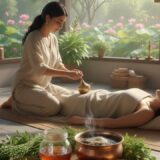
The true magic of Ayurvedic oils is unlocked through the practice of Abhyanga. This is not just a mechanical rubbing of oil onto the skin; it is a meditative, loving ritual of self-care.
It is believed that daily oiling of the body can prevent the aging process (Jara) and bestow a long, healthy life.
Preparation:
- Warm the Oil: Place your chosen oil (a base oil, or a blend with a few drops of essential oil) in a small, squeezable bottle. Place this bottle in a cup of hot water for a few minutes to warm it. Warm oil penetrates the skin much more effectively than cold oil.
- Prepare Your Space: Ensure your bathroom is warm and draft-free. You will need your warm oil, a cleansing paste (ubtan), and a towel. You can also play some calming music.
- Timing: The best time for Abhyanga is in the morning before your shower or bath. It invigorates the body for the day ahead. It can also be done in the evening to promote deep sleep, but ensure you do it at least an hour before bed to allow the oil to absorb.
The Technique:
The massage is performed with the open hand, using varying strokes. The general rule is to use long strokes on the long bones (arms and legs) and circular strokes on the joints.
- Head and Scalp: Using your fingertips, apply oil to the crown of your head and massage your entire scalp in small, firm, circular motions. This is incredibly stress-relieving.
- Face and Ears: Gently massage your face and ears with soft, upward and circular strokes. Be careful to avoid getting oil in your eyes. Massaging the ears is particularly important as they are a hub for vital energy points.
- Neck and Shoulders: Use gentle, downward strokes on the front and sides of your neck. On your shoulders, use circular motions to release tension.
- Arms and Hands: Using long, sweeping motions, massage from the shoulder down to the wrist. Then, use circular motions on the elbow joint before continuing down to the hand. Massage each finger and knuckle.
- Chest and Abdomen: On your chest, use gentle, wide, clockwise circular motions. On your abdomen, use larger, gentle clockwise circles, following the path of the colon. This aids digestion.
- Back and Spine: As far as you can reach, massage your back and spine with up-and-down strokes. Use a long-handled massage brush if you have trouble reaching the middle of your back.
- Legs and Feet: Similar to the arms, use long, firm strokes on the thighs and calves. Use circular motions on the knees and ankles. Finish by paying special attention to your feet. Massage the soles thoroughly, each toe, and the ankles. The feet contain reflex points for every organ in the body.
Finishing the Ritual:
After massaging for 10-20 minutes, allow the oil to absorb for another 10-15 minutes. This is a perfect time for a short meditation or gentle stretching.
To wash off the oil, you do not need harsh soaps. In India, this is traditionally done with ubtan—a cleansing paste made from a mixture of finely ground grains, herbs, and chickpea flour.
You can make your own simple version by mixing oatmeal flour or chickpea flour (besan) with a little warm water or milk to form a paste. Apply this paste to your body and gently scrub in circular motions.
The flour absorbs the excess oil and provides a gentle, exfoliating polish. Rinse off with warm water. You may need to use a small amount of mild, natural soap on very oily areas.
For your hair, apply shampoo to your dry, oiled scalp before wetting it, then lather and rinse. You may need to do this twice.
When Not to Massage
There are times when Abhyanga is not recommended. These include:
- During acute indigestion or diarrhea.
- If you have a fever, cold, or flu.
- If you are feeling nauseous.
- During menstruation, take a rest for the first few days.
- If you have just eaten a heavy meal.
- If you are experiencing a skin infection or severe rash (consult a practitioner first).
Choosing the right Ayurvedic massage oil starts with understanding your Vata, Pitta, and Kapha energies. Select a base oil that balances your dosha—warming sesame for Vata, cooling coconut for Pitta, or stimulating oils for Kapha—and enhance it with supportive essential oils. The right blend brings balance, clarity, and vitality.