Safflower (Kusumbha): Benefits, Uses, and Side Effects

Safflower, or Kusumbha in Sanskrit, is a plant of historical and medicinal importance. Traditionally valued for its bright dye and edible oil, it has been cultivated for centuries. In Ayurveda, it is considered both potent and precise—used with care due to its strong, targeted properties.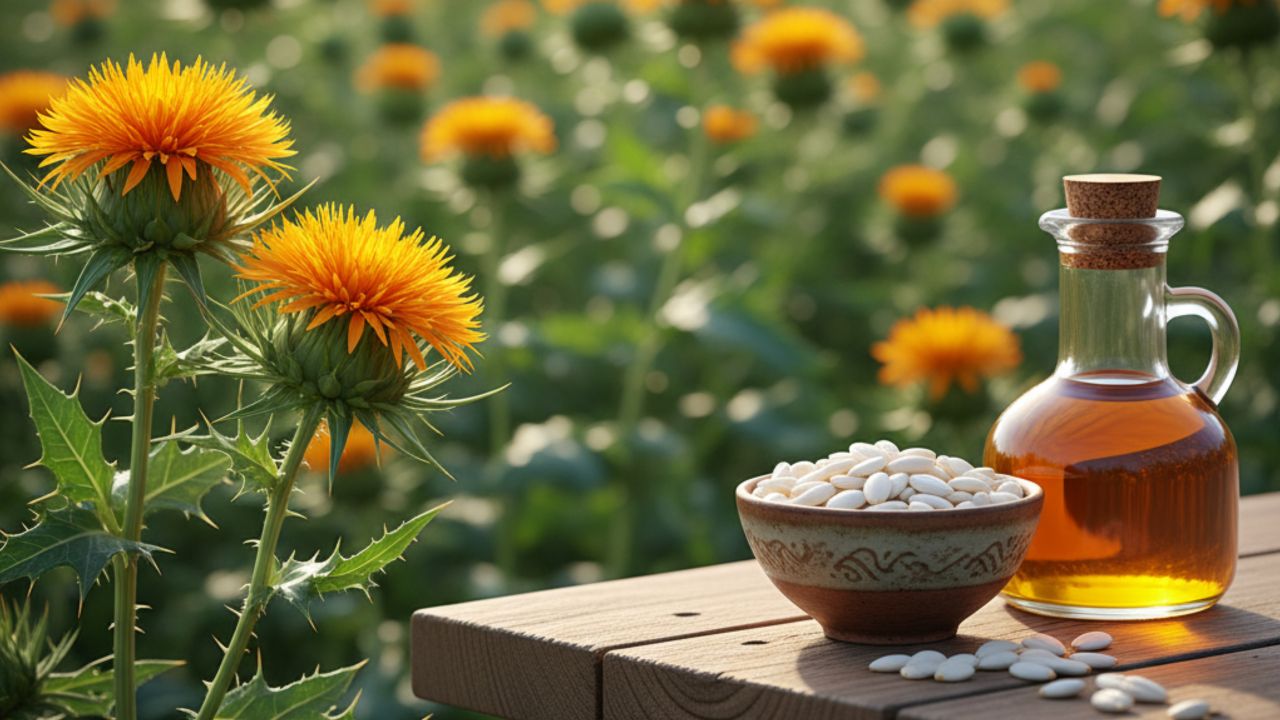 This thistle-like plant, Carthamus tinctorius, exemplifies how a single herb can embody diverse qualities. While its oil is commonly used today for culinary purposes, Ayurvedic texts highlight its therapeutic roles in managing pain, menstrual issues, and detoxification—always emphasizing cautious use tailored to individual constitution and condition.
The multifaceted nature of safflower extends into modern science, which confirms many of its traditional uses. Researchers explore its anti-inflammatory, antioxidant, and heart-supportive compounds. However, its powerful effects also come with contraindications, making education and mindful application essential in both traditional and contemporary wellness practices.
Historical and Botanical Lineage
Scientific Classification
- Kingdom: Plantae
- Order: Asterales
- Family: Asteraceae (Daisy family)
- Genus: Carthamus
- Species: C. tinctorius
A Plant of Many Names:
The vernacular names of Safflower reflect its diverse uses and appearances across different cultures.
- Sanskrit: Kusumbha, Vahnishika (resembling fire), Vastraranjaka (cloth dyer), Padmottara, Rakta, Lohita (all indicating red color).
- Hindi: Kusumb
- English: Safflower, Dyer’s Saffron, False Saffron, Parrot Seed (referring to its seeds as bird feed)
- Tamil: Kusumba, Chendurakam
- Manipuri: Kusumlei
- Urdu: Gul rang
- Bengali: Surjomukhir, Kusuphul
- Gujarati: Kusum, Kabri, Kusumbi
- Kannada: Kusube, Kushubi
- Telugu: Rushumba
- Punjabi: Kardi
- Arabic: ‘Asfur, Usfur
- Chinese: Da hong hua (大紅花)
- Persian: Kazhirah
Morphology and Cultivation
Safflower is a highly branched, herbaceous, thistle-like annual plant that typically grows to a height of 30 to 150 cm. It thrives in arid environments with seasonal rainfall, making it a resilient crop in drought-prone areas.
The plant boasts globular flower heads, which can be a brilliant yellow, orange, or deep red. Each branch produces one to five flower heads, with each head containing 15 to 20 seeds—the primary source of safflower oil.
Oil Varieties and Uses
There are two distinct commercial varieties of safflower, differentiated by the type of oil their seeds produce:
- High-Linoleic Acid: Rich in polyunsaturated fatty acids (up to 75% linoleic acid). This type is liquid at room temperature and is used in salad oils and for its cholesterol-lowering potential.
- High-Oleic Acid: Rich in monounsaturated fatty acids (up to 80% oleic acid). This oil is more stable for cooking at high temperatures and is used in a similar fashion to olive oil.
Cultivation in India
India cultivates safflower widely across dryland zones. Major producing states include Maharashtra, Karnataka, Andhra Pradesh, and Madhya Pradesh. Its ability to withstand dry conditions and offer economic value through oil and petals makes it a valuable crop in semi-arid agricultural systems.
Ayurvedic View on Safflower (Dravyaguna Vignyan)
Ayurveda provides a detailed framework for understanding any substance based on its inherent properties. For Safflower, these properties are nuanced and vary between its different parts (leaves, flowers, seeds, and oil).
Classical Categorization
Safflower is mentioned in several classical Ayurvedic texts, including:
- Bhavaprakasha: Hareetakyadi varga, Dhanya varga
- Dhanvantari Nighantu: Suvarnadi varga
- Kaiyyadeva Nighantu: Dhanya varga, Drava varga
- Raja Nighantu: Ksheeradi varga
Properties (Guna) and Taste (Rasa)
- Rasa (Taste): Primarily Katu (Pungent). The leaves are also described as Svadu (sweet) and Amla (sour) in the Bhojana Kutuhalam.
- Guna (Qualities): Guru (Heavy), Ushna (Hot), Tikshna (Sharp, Penetrating). The oil is specifically noted for its Tikshna and Vidahi (burning sensation) properties.
- Virya (Potency): Ushna (Heating). This heating quality is central to its actions and its potential side effects.
- Vipaka (Post-Digestive Effect): Katu (Pungent). This indicates that after digestion, it continues to exert a sharp, transforming effect.
Effect on Doshas (Tridosha)
This is where Safflower’s complexity is most apparent. It is often described as Sarvadosha prakopaka—meaning it can potentially aggravate all three doshas if used improperly or in excess.
- Vata Dosha: The oil, due to its Sara (mobilizing) property, is a strong laxative and can pacify Vata in conditions like constipation and bloating. However, its lightness and dryness in other forms can aggravate Vata.
- Pitta Dosha: Its hot potency and pungent taste are inherently Pitta-aggravating. It can cause Raktapitta (bleeding disorders) like epistaxis and menorrhagia. However, some classical texts mention its leaves as being useful in urinary conditions, which are often Pitta-related, suggesting a context-specific action.
- Kapha Dosha: Its pungent taste and hot, sharp qualities make it excellent for pacifying Kapha. It helps in clearing respiratory congestion, productive cough, and asthma by liquefying and expelling mucus.
Parts Used and Dosage
Part Used: Dried leaves, Seeds, Seed Oil (Kusumbha Taila).
Dosage:
- Dried Leaf Powder: 3-6 grams per day, often taken as a decoction.
- Safflower Oil: 10-15 ml for internal use (as a laxative); 5-10 ml for external application.
Chemical Composition of Safflower: The Basis & Actions
The therapeutic and nutritional properties of Safflower stem from its rich and diverse phytochemical profile.
1. Fatty Acids: The seeds are the primary source of oil, which is rich in essential fatty acids—linoleic acid (Omega-6) and oleic acid (Omega-9). These are crucial for cardiovascular health, brain function, and reducing inflammation.
2. Flavonoids and Phenolic Compounds: The flowers are a rich source of bioactive compounds like Carthamin (the red pigment), Hydroxysafflor Yellow A (HSYA), and luteolin glucosides. These are potent antioxidants that scavenge free radicals, protecting the body from oxidative stress.
3. Serotonin Derivatives: Safflower contains unique compounds like N-(p-Coumaroyl)serotonin and N-Feruloylserotonin, which have demonstrated significant antioxidant and anti-inflammatory effects.
4. Polysaccharides: Specific polysaccharides found in Safflower have been shown to stimulate the immune system in preclinical studies.
5. Other Constituents: The plant also contains lignans, coumarins, and sterols, all of which contribute to its overall medicinal value.
Therapeutic Uses and Health Benefits of Safflower
The traditional uses of Safflower are now being validated and expanded upon by modern scientific research. Its applications can be divided into internal and external uses, and further into traditional Ayurvedic and modern evidence-based benefits.
1. Cardiovascular and Metabolic Health:
This is one of the most well-researched areas for Safflower oil.
- Cholesterol Management: The high linoleic acid content in traditional safflower oil helps reduce Low-Density Lipoprotein (LDL) or “bad” cholesterol levels. It promotes the production of prostaglandins, which aid in vasodilation and reducing blood pressure.
- Improved Lipid Profile: Studies have shown that daily consumption of high-linoleic safflower oil can significantly improve overall lipid profiles, making it a valuable dietary adjunct for managing hyperlipidemia.
- Blood Sugar Control and Insulin Sensitivity: Emerging research indicates that safflower oil, particularly the linoleic acid-rich variety, may improve insulin sensitivity and help in managing blood sugar levels in individuals with Type 2 Diabetes. It is believed to influence adiponectin, a hormone that regulates glucose and fatty acid breakdown.
2. Musculoskeletal and Inflammatory Disorders:
The anti-inflammatory properties of Safflower, primarily attributed to compounds like HSYA, make it highly effective.
- Joint Pain and Arthritis (Amavata): The Ushna and Tikshna properties of Safflower oil make it an excellent medium for external application in painful joint conditions. It can be used as a base for massage oils (Abhyanga), often infused with other anti-arthritic herbs like Nirgundi or Shallaki. The oil’s penetrating nature helps reduce pain, swelling, and stiffness.
- Sports Injuries and Sprains: A poultice made from Safflower leaves or a warm oil massage can enhance local blood circulation, reduce inflammation, and promote the healing of damaged tissues.
3. Gynecological and Women’s Health:
Menstrual Regulation (Artavakshaya): Safflower’s emmenagogue properties (stimulating menstrual flow) are well-documented in Ayurveda. A decoction of the flowers is traditionally used to alleviate amenorrhea (absent periods) and dysmenorrhea (painful periods) caused by Kapha and Vata imbalances.
- Post-Partum Care: In some traditions, Safflower is used after childbirth to help cleanse the uterus and promote recovery, but this should only be done under strict medical supervision.
4. Respiratory Health (Kasa-Shwasa):
As a Kaphahara herb, Safflower is beneficial in managing respiratory conditions marked by excess mucus.
- Bronchitis and Asthma: Its expectorant properties help in loosening and expelling phlegm from the bronchial tubes, providing relief from congestion, chronic cough, and breathing difficulties.
5. Dermatological Applications:
- Wound Healing and Anti-Aging: The antioxidant properties of Safflower flower extracts help protect the skin from oxidative damage caused by UV rays and pollution. Topical application can promote collagen synthesis, improving skin elasticity and reducing the appearance of wrinkles.
- Anti-inflammatory for Skin: Its anti-inflammatory action can soothe skin conditions like eczema and psoriasis when applied topically in the form of medicated oils or creams.
6. Gastrointestinal and Hepatic Support:
- Constipation and Intestinal Worms: Safflower oil is a potent, yet mild, laxative. A dose of 20-30 ml acts as a purgative, helping to cleanse the bowels and expel intestinal worms. Its Sara property promotes smooth downward movement of Vata.
- Liver Protection (Yakrit Raktashodhaka): Compounds like HSYA have shown hepatoprotective effects in animal studies, shielding the liver from damage caused by toxins and improving its function.
7. Neurological and Cognitive Function:
- Hysteria and Nervous Disorders: Ayurveda traditionally used Safflower oil for its mild sedative action in conditions of hysteria and physiological disturbances related to the nervous system.
- Cerebral Ischemia: Modern research is exploring the neuroprotective effects of HSYA, suggesting it may help protect brain cells during strokes or other ischemic events by improving blood flow and reducing oxidative damage.
8. Hair Health (Kesha Ropana):
- Hair Growth Promotion: As highlighted in the provided research, Hydroxysafflower Yellow A-rich extracts have demonstrated a significant ability to promote hair growth. The extract stimulates hair follicles, both in laboratory cultures and in animal models, leading to increased hair length and density. This makes Safflower a promising ingredient in hair oils and serums for conditions like alopecia.
Safflower Seeds: Nutrition Profile and Health Benefits
| Nutritional Component (per 100g) | Amount | Health Benefit |
|---|---|---|
| Calories | 517 kcal | Provides high energy; ideal for boosting stamina. |
| Protein | 16.2 g | Supports muscle growth and repair. |
| Total Fat | 38.5 g | Rich in healthy fats for heart and skin health. |
| Polyunsaturated Fat | 21.4 g | High in linoleic acid — supports cholesterol balance. |
| Fiber | 7.9 g | Aids digestion and supports gut health. |
| Magnesium | 353 mg | Helps regulate nerves and blood sugar levels. |
| Potassium | 687 mg | Supports heart function and fluid balance. |
| Iron | 4.7 mg | Improves hemoglobin levels and energy. |
| Vitamin E (Tocopherol) | 34.5 mg | Powerful antioxidant for skin, immunity, and cells. |
Note: Nutrient values are approximate and may vary depending on source, variety, and processing.
Home Remedies and Formulations
It is crucial to remember that these remedies are for minor ailments and should not replace professional medical advice, especially for chronic conditions.
1. For Joint Pain and Inflammation:
- Safflower Leaf Poultice: Take a handful of dried Safflower leaves, soak them in warm water for 10 minutes, and grind them into a coarse paste. Apply this paste directly to the affected joint, cover with a cloth, and leave it on for 20-30 minutes. Wash off with warm water.
- Safflower Massage Oil: Warm 100 ml of high-oleic safflower oil and infuse it with a tablespoon of dried Nirgundi leaves. Heat gently for 15-20 minutes without boiling. Strain and use this medicated oil for daily massage of painful joints.
2. For Respiratory Congestion:
- Safflower Tea: Steep 1-2 grams of dried Safflower flowers in a cup of hot water for 5-7 minutes. Add a teaspoon of honey and drink this tea twice a day to help loosen phlegm and relieve cough.
3. For Mild Constipation:
- Laxative Dose: Take 10-15 ml of high-linoleic safflower oil with a glass of warm milk or water before bedtime. This should provide gentle relief by the next morning. Do not use this remedy regularly as it can lead to dependency.
4. For Skin Health and Glow:
- Safflower Face Pack: Mix 1 tablespoon of powdered Safflower flowers with 1 tablespoon of yogurt and a few drops of honey to form a smooth paste. Apply to the face and neck, leave on for 15-20 minutes, and rinse with lukewarm water. This pack helps cleanse, exfoliate, and impart a natural glow.
5. For Hair Growth:
- Safflower Hair Oil: Heat 200 ml of coconut oil and add 2 tablespoons of powdered Safflower flowers. Let it simmer on low heat for 15 minutes. Allow it to cool, then strain. Massage this oil into the scalp 2-3 times a week, leaving it on for at least an hour before washing.
Pharmacological Research and Evidence-Based Insights
Modern science has taken a keen interest in validating the traditional claims about Safflower. Here is a deeper look into some key research areas:
| Effect / Activity | Observed Findings | Reference |
|---|---|---|
| Anti-inflammatory | Safflower petal extract reduced IL‑6, TNF‑α in vitro; reduced edema in animal models. | 🔗 Study |
| Antinociceptive (Pain relief) | Kaempferol glycosides from petals reduced formalin-induced pain in mice. | 🔗 PubMed |
| Antioxidant | Safflower seed oil scavenges free radicals; upregulates HO‑1 and NQO1 enzymes. | 🔗 PubMed |
| Metabolic Effects | Reduced insulin resistance, body fat, and triglycerides in human and animal studies. | 🔗 PubMed |
| Immunomodulatory | Extracts reduced NO production and modulated innate immune responses. | 🔗 DOAJ |
| Antibacterial / Skin | Topical emulgel with safflower oil inhibited skin pathogens and reduced inflammation. | 🔗 PubMed |
Side Effects, Contraindications, and Critical Safety Notes
Despite its benefits, Safflower demands respect and caution. Its strong, heating, and penetrating properties make it unsuitable for many.
Primary Contraindications:
- Pregnancy and Lactation: Safflower is strictly contraindicated in pregnancy due to its emmenagogue and potential abortifacient properties. It can stimulate uterine contractions, leading to miscarriage. Its safety during breastfeeding is not well-established.
- Bleeding Disorders (Raktapitta): Due to its Ushna Virya and Tikshna Guna, it can aggravate Pitta and worsen bleeding tendencies. It is contraindicated in conditions like menorrhagia (heavy periods), nasal bleeding, bleeding piles, and in patients on anticoagulant therapy (e.g., Warfarin).
- Gastric Disorders: Individuals with hyperacidity, gastritis, peptic ulcers, or GERD should avoid Safflower, as its Vidahi (burning) property can severely aggravate these conditions.
Other Adverse Effects:
- Aggravation of Pitta: Overuse can lead to symptoms of Pitta imbalance, such as skin rashes, excessive thirst, acidity, and irritability.
- Laxative Dependency: Using the oil regularly as a laxative can weaken the colon’s natural peristaltic action, leading to dependency.
- Allergic Reactions: As a member of the Asteraceae/Compositae family (which includes ragweed, chrysanthemums, and marigolds), it may cause allergic reactions in sensitive individuals.
Interaction with Medicines:
Allopathic Medicines:
- Anticoagulants/Antiplatelets: Safflower may potentiate the effect of blood-thinning drugs (e.g., Warfarin, Aspirin, Clopidogrel), increasing the risk of bleeding.
- Antidiabetic Drugs: Since it may lower blood sugar, combining it with diabetes medication could lead to hypoglycemia. Blood sugar levels should be monitored closely.
- Hypertension Drugs: Its potential blood pressure-lowering effect could compound the action of antihypertensive medications.
Homeopathic Medicine: As per the original text, it is generally considered compatible, as it does not directly antagonize the energetic principles of homeopathy. However, consulting a practitioner is always wise.
Dietary Supplements: It generally goes well with most supplements. However, caution is advised when taking it with other supplements that have blood-thinning (e.g., high-dose Vitamin E, Omega-3s) or blood sugar-lowering effects.
FAQ’s
1. What is Safflower (Kusumbha) used for in Ayurveda?
Safflower is used to relieve joint pain, improve blood circulation, regulate menstruation, and clear respiratory congestion. Its oil is also applied externally for inflammation and dryness.
2. Is safflower oil good for skin and hair?
Yes. Safflower oil nourishes dry skin, improves elasticity, and supports hair growth by enhancing scalp circulation. It’s especially beneficial when infused with Ayurvedic herbs like Brahmi or Bhringraj.
3. Can safflower help with menstrual irregularities?
Yes. Decoctions made from safflower petals are traditionally used to promote healthy menstrual flow and ease cramping, especially in delayed or scanty periods.
4. Does safflower increase Pitta or heat in the body?
Yes, safflower has a heating (Ushna) virya and pungent post-digestive effect (Katu vipaka), which can aggravate Pitta dosha if used excessively.
5. How is safflower different from saffron?
Safflower (Kusumbha) is often confused with saffron (Kesar), but they are entirely different plants. Safflower is more affordable and primarily used medicinally, while saffron is aromatic and used in food and luxury formulations.
6. Can safflower be used daily?
Not usually. Due to its strong action, it’s best used under guidance or in moderation. Overuse may lead to Pitta aggravation, digestive upset, or heavy bleeding in sensitive individuals.
7. Is safflower safe during pregnancy?
No. Safflower is contraindicated during pregnancy, especially in early stages, due to its uterine-stimulating properties which may increase the risk of miscarriage.
8. What part of the safflower plant is used in medicine?
Different parts are used:
- Flowers – for blood and respiratory health
- Seeds/Oil – for skin, joints, and laxative use
- Leaves – in poultices and decoctions for inflammation
9. How do I make safflower tea for cough or cold?
Steep 1–2 grams of dried safflower petals in hot water for 5–7 minutes. Add a bit of honey and drink twice a day to relieve congestion and loosen phlegm.
10. What is the correct Ayurvedic dose for safflower oil?
For internal use as a laxative, 10–15 ml with warm milk or water before bedtime is suggested. For external use, 5–10 ml can be massaged on joints or the scalp.
Safflower, or Kusumbha, is a plant of striking contrasts in Ayurveda. It’s not a gentle tonic but a potent tool requiring precise knowledge and discernment. It can pacify Kapha and Vata in specific contexts while strongly aggravating Pitta in others. This dual nature perfectly illustrates the Ayurvedic principle that the dose and context determine whether a substance acts as a remedy or a poison.