18 Minor Skin Diseases (Kshudra Kushta): Causes & Treatment

In Ayurveda, the skin (Twacha) is regarded as a vital organ that reflects the body’s internal physiological and pathological state. It is not merely a protective covering but an indicator of overall health and balance.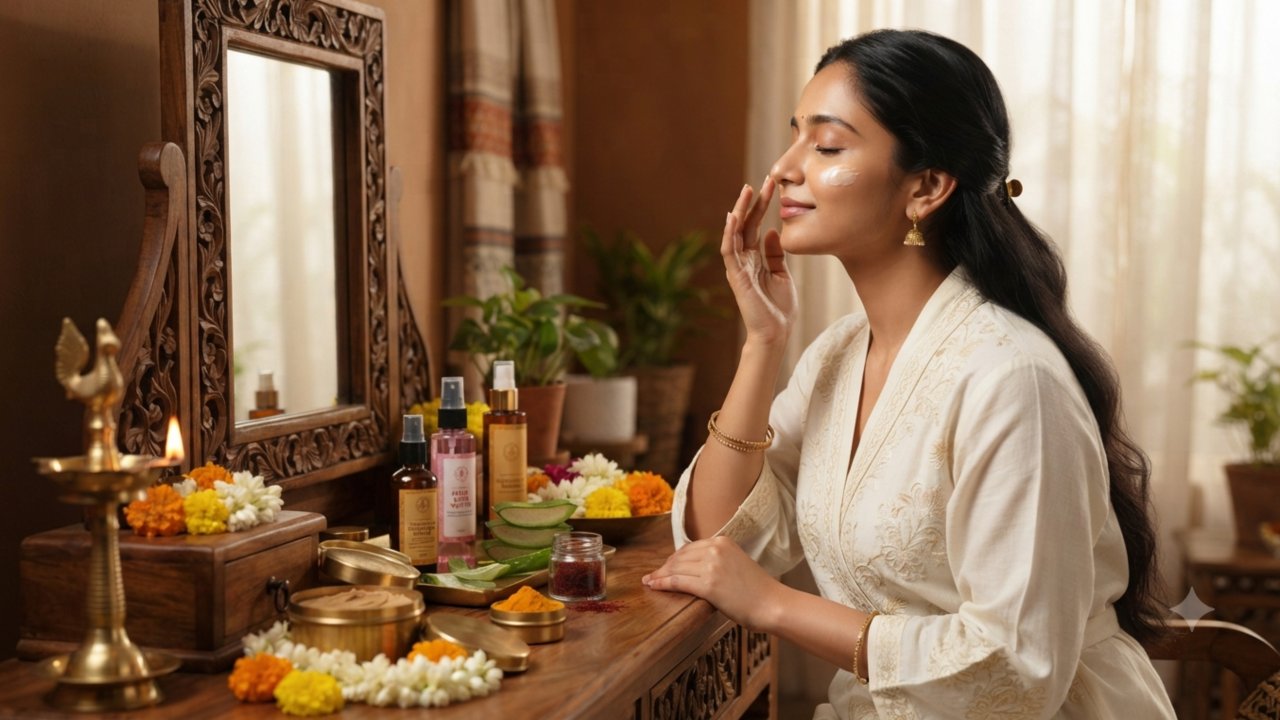 The skin is considered the seat of Bhrajaka Pitta, the subtype of Pitta responsible for complexion and temperature regulation. Its nourishment depends on the Rasa (plasma) and Rakta (blood) dhatus, which maintain healthy skin and proper function.
When the fundamental bio-energies of the body—Vata, Pitta, and Kapha—become imbalanced due to improper diet, lifestyle, or genetic predispositions, they begin to vitiate these tissues, leading to a broad spectrum of dermatological disorders collectively termed as Kushta.
The classical Ayurvedic texts, including the Charaka Samhita, Sushruta Samhita, and Ashtanga Hridaya, classify Kushta into 18 distinct types based on their clinical characteristics and disease presentation.
This classification considers the nature of symptoms, severity, tissue and pathological involvement, disease complexity, prognosis, and the appropriate treatment approaches for each type of Kushta.
The 18 Major Skin Diseases (Maha Kushta)
The classical Ayurvedic texts, notably the Charaka Samhita, Sushruta Samhita, and Ashtanga Hridaya, classify Kushta into 18 distinct types. This classification is based on careful observation of the nature of disease manifestation and the severity of its clinical presentation.
It also considers the extent of tissue and pathological involvement, the complexity of the condition, its prognosis, and the treatment approaches recommended for each type of Kushta.
These 18 types are systematically sub-grouped into two main categories:
- Maha Kushtas (Major Skin Ailments): Comprising 7 types, these are severe, deep-rooted, and complex conditions that involve multiple tissues (including muscle, blood, and lymph) and are notoriously difficult to treat.
- Kshudra Kushtas (Minor Skin Ailments): Comprising 11 types, these are relatively superficial conditions that primarily affect the skin and superficial blood tissue.
The term Kshudra associated with Kushta translates to “minor,” “lesser,” or “small.” However, it is crucial to understand that “minor” does not mean the patient is free from suffering.
The term reflects a prognostic dimension: the Kushtas mentioned in this category are easier to treat, manage, and cure in comparison to the Maha Kushta types. They have a better prognosis because the pathology has not penetrated deeply into the vital dhatus.
In Ayurveda, Kushta refers to a broad group of skin disorders, not just what modern medicine calls leprosy. Classical Ayurvedic texts divide Kushta into 18 types: 7 Maha Kushta (major skin diseases) and 11 Kshudra Kushta (minor skin diseases). The Maha Kushta are considered more severe because they tend to involve deeper tissues, are more chronic, and are more difficult to treat.
The 7 Major Skin Diseases (Maha Kushta)
1. Kapala Kushta
- Characterized by lesions resembling fragments of a broken clay pot.
- The lesions are blackish or reddish in color, rough, hard, and irregular.
2. Udumbara Kushta
- Presents with lesions that are reddish, resembling the fruit of the udumbara (cluster fig) tree.
- Common features include burning sensation, redness, and loss of hair over the affected areas.
3. Mandala Kushta
- Characterized by large, circular, thick lesions with white and red discoloration.
- The patches gradually enlarge and merge with one another, forming extensive plaques.
4. Rsyajihva Kushta
- Features rough, elongated lesions resembling the tongue of a deer.
- The lesions are typically hard and uneven in texture.
5. Pundarika Kushta
- Characterized by lesions resembling the petals of a white lotus.
- They have pale centers with raised, reddish borders and are often associated with burning and itching.
6. Sidhma Kushta
- Presents as small, thin, dry, scaly patches resembling lotus pollen.
- The lesions are usually superficial and may appear whitish or copper-colored.
7. Kakanaka Kushta
- Characterized by reddish-black lesions resembling the seeds of the kakananti plant.
- This type is considered one of the most difficult forms of Kushta to treat due to its chronic and severe nature.
Note: These descriptions come from classical Ayurvedic literature and are based on traditional diagnostic concepts. They do not correspond directly to specific modern dermatological diseases.
Although researchers have proposed possible similarities for some conditions. Diagnosis and treatment should not be based solely on these descriptions, as many different skin diseases can appear similar.
The 11 Minor Skin Diseases (Kshudra Kushta)
Below is an exhaustive exploration of the 11 types of Kshudra Kushta, detailing their shape, appearance, signs, predominant symptoms, and doshic involvements.
1. Maha Vaastu Kushta
Shape and Appearance In Maha Vaastu Kushta, the term Maha signifies large or great, and Vaastu refers to an object or area. True to its name, the lesion in this condition is spread over an extended area of the skin, forming a massive lesion.
The most distinguishing feature of its appearance is Matsya Shakala Upamam, meaning the afflicted skin remarkably resembles the scaly, rough texture and appearance of a fish’s skin.
Signs and Symptoms
- Matsya Shakala Upamam Mahaa Sthaanam: The primary sign is the presence of a large lesion that looks exactly like the skin of a fish in both appearance and contour. The scales are clearly visible, and the skin appears heavily keratinized and scaly.
- Aswedanam: There is a distinct absence of sweating (Aswedanam) around the lesion. Because the skin’s texture and pore structures are severely altered by the thick scaling, the sweat glands in that localized area become functionally obstructed.
Modern Correlation and Clinical Insight Maha Vaastu closely resembles severe forms of Ichthyosis (fish-scale disease) or extensive, highly scaly presentations of Psoriasis.
The absence of sweating points toward the hyperkeratotic (thickening of the outer skin layer) nature of the disease, which blocks the sweat ducts. Treatment usually focuses on softening the scales (using Snigdha/unctuous herbs) and clearing the blocked pores.
2. Charma (Charmaakhya) Kushta
Shape and Appearance Charma translates to leather or hide. In Charma Kushta, the skin around the lesion loses its normal, soft, human texture and begins to resemble the thick, tough, leathery skin of an elephant (Hasti Charmavat).
Signs and Symptoms
- Bahalam: The afflicted part of the skin becomes exceptionally thick (Bahalam). It loses its normal pliability and elasticity.
- Apatralam: The skin becomes devoid of its normal, delicate microscopic layers. It becomes a solid, homogenous, thickened mass.
- Hasti Charmavat: The visual and tactile resemblance to an elephant’s skin is the hallmark of this disease.
Modern Correlation and Clinical Insight. This condition can be correlated with Lichenification of the skin, which occurs due to chronic scratching or friction (as seen in chronic eczema or lichen planus).
It may also resemble early stages of Elephantiasis (where the skin becomes thickened due to lymphatic obstruction) or severe scleroderma. The lack of normal skin folds (apatralam) indicates chronic fibrotic changes in the dermis.
3. Kitibha Kushta
Shape and Appearance Kitibha Kushta presents a highly distinct visual and tactile profile. The part of the skin afflicted by this condition changes color to a dark, blackish-brown hue and takes on an abnormal texture that gives the sensation of touching a healed wound scar.
Signs and Symptoms
- Shyaavam: The skin takes on a Shyaavam color, which is described as blackish-brown, blackish-blue, or grey. This indicates a deep-seated vitiation of the blood (Rakta dhatu) and Pitta dosha.
- Kina Khara Sparsham: On touch, the skin feels rough and coarse, specifically giving the feel of touching the scar of a dried, healed wound (Kina).
- Parusham: The skin becomes exceedingly dry, rough, and hard (Parusham), lacking any natural moisture or oiliness.
Modern Correlation and Clinical Insight Kitibha is one of the most commonly diagnosed Kshudra Kushtas in modern clinical Ayurvedic practice. It bears a striking resemblance to chronic Plaque Psoriasis, where plaques are dry, thick, silvery-scaled, and hyperpigmented (dark brown/grey).
It can also resemble chronic eczema that has undergone lichenification and hyperpigmentation. The dryness points heavily toward a Vata and Kapha imbalance.
4. Vaipadika or Vipaadika Kushta
Shape and Appearance Vaipadika Kushta is uniquely localized. Unlike the previous conditions that can appear anywhere, Vaipadika specifically presents with cracks, fissures, and splitting of the skin strictly limited to the palms (Paani) and soles (Paada).
Signs and Symptoms
- Paani Paada Sphutanam: The cardinal sign is the presence of cracks, fissures, and eruptions (Sphutanam) on the palms and soles.
- Teevra Vedanam (Predominant Symptom): The most distressing feature of Vaipadika is Teevra Vedanam—severe, excruciating pain. Because the palms and soles are richly innervated with nerve endings, any crack that exposes the deeper layers of the skin causes immense pain, especially upon walking or grasping objects.
Modern Correlation and Clinical Insight Vaipadika is the classical Ayurvedic equivalent of Palmoplantar Psoriasis or chronic Palmoplantar Eczema.
It may also correlate with severe “cracked heels” (Xerosis) that become fissured and painful. The excruciating pain highlights the involvement of Vata dosha, which governs pain and nerve sensations, often combined with dryness.
5. Alasaka Kushta
Shape and Appearance Alasaka Kushta presents in the form of itching boils or eruptions scattered over the skin. The term “Alasaka” implies a certain laziness or slowness, which may refer to the sluggish nature of the underlying digestion or the slow, lingering healing process of these eruptions.
Signs and Symptoms
- Kandu (Predominant Symptom): The defining symptom of Alasaka is Kandu, an intense, maddening itching sensation. The boils themselves might not be highly painful or highly raised, but the itch compels the patient to scratch continuously.
- Dosha Predominance: This condition is caused by the dual vitiation of Vata and Kapha Doshas. Vata causes dryness and scaling, while Kapha causes the formation of boils (Pidaka) and localized sluggishness.
Modern Correlation and Clinical Insight Alasaka can be correlated with conditions like Prurigo Nodularis, Strophulus (a pediatric eruptive condition), or chronic folliculitis, where itching precedes the formation of boils.
The Vata-Kapha pathology explains the dry, itchy, and slightly raised nature of the lesions.
6. Dadru Kushta
Shape and Appearance Dadru is one of the most easily recognizable skin disorders in Ayurveda. It presents with elevated, circular patches comprising of itching eruptions or boils. The margins of these patches are distinctly raised, creating a ring-like appearance.
Signs and Symptoms
- Udgata Mandalam: The lesions form circular patches (Mandalam) with raised, elevated margins (Udgata). The center of the patch may appear relatively clearer than the borders.
- Raaga: There is noticeable redness (Raaga) spreading around the lesion and the elevated borders.
- Pidakaa: The elevated borders are made up of small eruptions or boils.
- Kandu (Predominant Symptom): Intense itching sensation over and around the patches is the primary complaint of the patient.
- Dosha Predominance: Dadru is predominantly caused by the dual vitiation of Pitta and Kapha Doshas. Pitta causes the redness, inflammation, and itching, while Kapha causes the raised, circular, hardened borders and the oozing of fluids.
Modern Correlation and Clinical Insight Dadru Kushta is the exact equivalent of Tinea (Ringworm) infections, such as Tinea corporis, Tinea cruris, and Tinea pedis.
The raised, red, itchy, circular rings are pathognomonic (characteristic) of fungal infections. It may also resemble Pityriasis Rosea. Treatment involves potent anti-fungal and Pitta-Kapha pacifying herbs.
7. Charmadala Kushta
Shape and Appearance Charmadala presents as highly active, inflamed boils that are surrounded by prominent redness. The term Charmadala literally translates to “pieces of skin,” indicating the erosive nature of the boils that cause the skin to peel or flake off in layers.
Signs and Symptoms
- Raktam: Intense, angry redness around the boils, indicating significant local inflammation and blood vitiation.
- Sphotam: The presence of distinct boils or vesicles that may rupture.
- Dalati: A highly specific symptom where the skin undergoes erosions or cracks, peeling off like pieces of leather.
- Rujaa: Pain accompanies the boils and erosions.
- Samsparsha Asaha (Predominant Symptom): This translates to “intolerance to touch” or tenderness. The afflicted skin becomes so highly sensitive and painful that the patient does not allow anyone to touch the area, nor do they wear tight clothing over it.
- Dosha Predominance: Pitta and Kapha Doshas. Pitta drives the heat, redness, and tenderness, while Kapha creates the boils and fluid-filled eruptions.
Modern Correlation and Clinical Insight Charmadala closely mirrors conditions like Impetigo (a highly contagious bacterial skin infection causing red sores that rupture and form honey-colored crusts, though here it is described as red and tender).
It can also be correlated with severe contact dermatitis, acute eczema with secondary infection, or bullous disorders where the skin is highly tender and erosive.
8. Pama (Paama) Kushta
Shape and Appearance Pama Kushta is characterized by itchy boils or eruptions that exhibit a fascinating array of colors. The lesions are not uniform in color but can appear white, yellowish-red, or blackish-brown.
Signs and Symptoms
- Shweta, Aruna, Shyaava Pidakaa: The eruptions or boils present in varying colors—Shweta (white), Aruna (yellowish-red or copper-colored), and Shyaava (blackish-brown or blackish-blue).
- Kandu (Predominant Symptom): As with many Kapha-dominant skin issues, severe itching is the primary symptom that disturbs the patient.
- Dosha Predominance: Pitta and Kapha Doshas. The varying colors represent different stages of Pitta’s action on the blood and tissues, while the boils and itching are purely Kapha-driven.
Modern Correlation and Clinical Insight Pama is highly suggestive of Scabies, an infestation by the Sarcoptes scabiei mite, which causes intense itching and variable colored burrows and papules (which can appear white, red, or hyperpigmented).
In Children, it is also closely related to Papular Urticaria (insect bite reactions), which presents as intensely itchy, multicolored wheals and papules.
9. Visphota Kushta
Shape and Appearance: Visphota refers to something that bursts or explodes forth. In this condition, the skin presents with white or yellowish-red (golden yellow) areas characterized by boils that are covered by an exceptionally thin, fragile layer of skin, ready to burst at the slightest touch.
Signs and Symptoms
- Sphotaaha: Boils or eruptions that are tense and ready to rupture.
- Shwetam / Shyaavam: The skin around the lesions takes on a white (Shwetam) or yellowish-red/golden yellow (Shyaavam) discoloration.
- Tanu Twacha: The most critical sign is Tanu Twacha—the skin covering the boils becomes incredibly thin and fragile. It lacks the normal thickness and structural integrity of healthy skin.
- Dosha Predominance: Pitta and Kapha Doshas. Pitta causes the rapid accumulation of fluid and the thinning of the skin, while Kapha forms the fluid-filled cavity (boil).
Modern Correlation and Clinical Insight Visphota is the classical description of Bullous (blistering) disorders. This includes conditions like Bullous Pemphigoid, Pemphigus Vulgaris, or even severe second-degree burns and friction blisters.
The description of boils covered by “thin, fragile skin” (Tanu Twacha) is the exact clinical presentation of a bulla (a large fluid-filled blister greater than 1 cm) where the roof of the blister is extremely delicate.
10. Shataru Kushta
Shape and Appearance Shataru is a highly symptomatic and aggressive form of Kshudra Kushta. It presents with multiple lesions scattered across the skin, characterized by red or blackish-brown coloration.
Signs and Symptoms
- Bahu Vrana: The term Bahu means many, and Vrana means wounds or lesions. Shataru presents with a sudden, widespread outbreak of multiple lesions.
- Raktam / Shyaavam: The lesions show a mixture of angry redness (Raktam) and darker, blackish-brown or bluish-black coloration (Shyaavam), indicating active inflammation mixed with stagnant blood or tissue necrosis.
- Daha (Predominant Symptom): A severe, intense burning sensation (Daha) over the lesions. This is a pure manifestation of aggravated Pitta dosha.
- Arti: Severe, throbbing pain (Arti) accompanying the burning.
- Dosha Predominance: Pitta and Kapha Doshas, though the burning and pain indicate a strong Pitta dominance.
Modern Correlation and Clinical Insight Shataru bears a strong resemblance to Herpes Zoster (Shingles), which presents with multiple, painful, burning vesicles in a dermatomal distribution that can turn dark and crusted.
It can also be correlated with severe forms of Folliculitis or multiple localized abscesses that are highly inflamed and painful.
11. Vicharchika Kushta
Shape and Appearance Vicharchika is a chronic, oozing skin condition that presents with multiple itchy boils, eruptions, or blisters. Over time, these lesions take on a dark, blackish-brown discoloration due to chronic inflammation and scratching.
Signs and Symptoms
- Pidakaaha: The presence of widespread eruptions, which can manifest as boils, tiny blisters, or fluid-filled bumps.
- Shyaavaa: The skin around the lesions, and often the lesions themselves, take on a blackish-brown or bluish-black coloration (Shyaavaa) as the condition becomes chronic.
- Bahu Sraava: This is the hallmark symptom of Vicharchika—Bahu Sraava translates to excessive discharge, oozing, or exudation. The lesions continuously weep clear or yellowish fluid.
- Kandu (Predominant Symptom): Severe, distressing itching sensation that often leads the patient to scratch, which in turn worsens the oozing and darkens the skin (post-inflammatory hyperpigmentation).
- Dosha Predominance: Kapha Dosha is the predominant force here. Kapha is responsible for the heavy, oozing, weeping nature of the lesions and the intense itching.
Modern Correlation and Clinical Insight Vicharchika is the undisputed Ayurvedic equivalent of Acute and Chronic Eczema (Atopic Dermatitis), specifically the “wet” or weeping eczema.
The triad of intense itching (Kandu), oozing discharges (Bahu Sraava), and subsequent hyperpigmentation (Shyaavaa) perfectly describes the clinical lifecycle of an eczematous patch.
Pathogenesis (Samprapti) of Kshudra Kushta
To understand why these 11 conditions manifest differently despite all being “Kushta,” one must look at the Ayurvedic pathogenesis.
The pathogenesis (Samprapti) of Kshudra Kushta explains why its eleven types present with different clinical features despite belonging to the broader category of Kushta in Ayurvedic medicine.
Kshudra Kushta develops due to causative factors (Nidana) such as incompatible foods, suppression of natural urges, excessive sour, salty, and sweet foods, environmental extremes, and mental stress, which disturb the doshas.
The aggravated Vata, Pitta, and Kapha doshas, together with vitiated Rakta and Mamsa dhatus, circulate through the Srotas and localize in the Twacha, producing characteristic skin manifestations.
Unlike Maha Kushta, Kshudra Kushta involves mainly superficial tissues with predominant involvement of one or two doshas. Deeper tissues remain unaffected, making these disorders comparatively milder and more responsive to treatment.
General Principles of Treatment (Chikitsa) for Kshudra Kushta
Because Kshudra Kushta has a better prognosis, Ayurveda offers highly effective, systematic treatment protocols to completely eradicate these diseases rather than just suppressing the symptoms.
The treatment generally follows a four-step approach:
1. Nidana Parivarjana (Avoidance of Causes): The absolute first step is to stop the causative factors. If a patient with Dadru (fungal infection) continues to eat excessive sweets and dairy (which aggravate Kapha) and wears damp clothing, no medicine will work. Dietary corrections are paramount.
2. Shodhana Chikitsa (Bio-purification): Because Kushta is deeply linked to toxin accumulation (Ama) and vitiated blood, Ayurveda strongly advocates Panchakarma therapies.
- Vamana (Therapeutic Emesis): Highly effective for Kapha-dominant conditions like Vicharchika (eczema) and Dadru.
- Virechana (Therapeutic Purgation): Considered the gold standard for all skin diseases. It flushes out the vitiated Pitta and Rakta from the body.
- Raktamokshana (Bloodletting): Using leeches or sterile syringes to remove a small amount of vitiated blood. This provides miraculous relief in conditions with severe redness, burning, and tenderness, such as Charmadala and Shataru.
3. Shamana Chikitsa (Palliative Internal Medication): After purification, internal herbal medicines are given to balance the specific doshas.
- For Pitta dominance (redness, burning): Herbs like Guduchi (Tinospora cordifolia), Neem (Azadirachta indica), and Manjishtha (Rubia cordifolia) are used. Aragvadhadhi Kashayam and Panchatikta Ghrita are classical formulations.
- For Kapha dominance (oozing, itching, boils): Herbs like Haridra (Turmeric), Daruharidra (Berberis aristata), and Triphala are utilized. Gandhak Rasayana (purified sulfur) is a drug of choice for almost all Kushtas due to its incredible skin-purifying and antimicrobial properties.
- For Vata dominance (dryness, pain, cracks): Tailas (medicated oils) like Mahatiktakam Tailam or Panchatikta Tailam are administered orally and externally.
4. Bahya Chikitsa (External Therapies): Local application of herbal pastes (Lepa) and oils is crucial for immediate symptomatic relief.
- For dry, scaly conditions (Maha Vaastu, Kitibha): Oil-based applications and gentle scrubbing with herbal pastes are used to remove scales.
- For wet, oozing conditions (Vicharchika): Dry herbal powders (Choorna) like a mixture of Neem, Turmeric, and Camphor are dusted over the lesions to absorb the discharge and stop the oozing.
- For painful, cracked conditions (Vaipadika): Thick, unctuous applications of cow’s ghee mixed with wound-healing herbs are applied to heal the fissures.
Prognosis: Just Before Finishing
The term Kshudra means minor or lesser. Despite symptoms such as severe itching, painful fissures, tenderness, and oozing lesions, these conditions are not classified as minor based on symptom severity.
In Ayurveda, the distinction between Kshudra Kushta and Maha Kushta depends on pathological depth, tissue involvement, prognosis, and ease of treatment rather than the patient’s subjective discomfort or pain.
Kshudra Kushtas are considered comparatively easier to manage and cure, whereas Maha Kushtas involve deeper dhatus, causing deformities, tissue destruction, and chronic complications, making them difficult or even incurable.
Kshudra Kushtas mainly affect the Twacha and Rakta, sparing deeper tissues. With appropriate diet, Shodhana, and Shamana therapies, doshic imbalance is corrected, allowing complete healing with minimal residual damage.
Kshudra Kushta represents a highly detailed, ancient system of dermatological classification that stands the test of modern clinical correlation. By recognizing the unique shape, appearance, and symptoms of these 11 minor skin ailments