Arugula (Eruca sativa): Uses, Health Benefits & Side Effects

Eruca sativa, commonly known as arugula, rocket, or Taramira, is an annual herbaceous plant native to the Mediterranean region. Eruca sativa (arugula), known in Ayurveda as Sāsura or Taramira, is a herb widely consumed for its peppery leaves. Traditionally used as a salad green or vegetable, it is also valued as green fodder. This plant holds a significant place in both culinary and healing practices across cultures and traditions.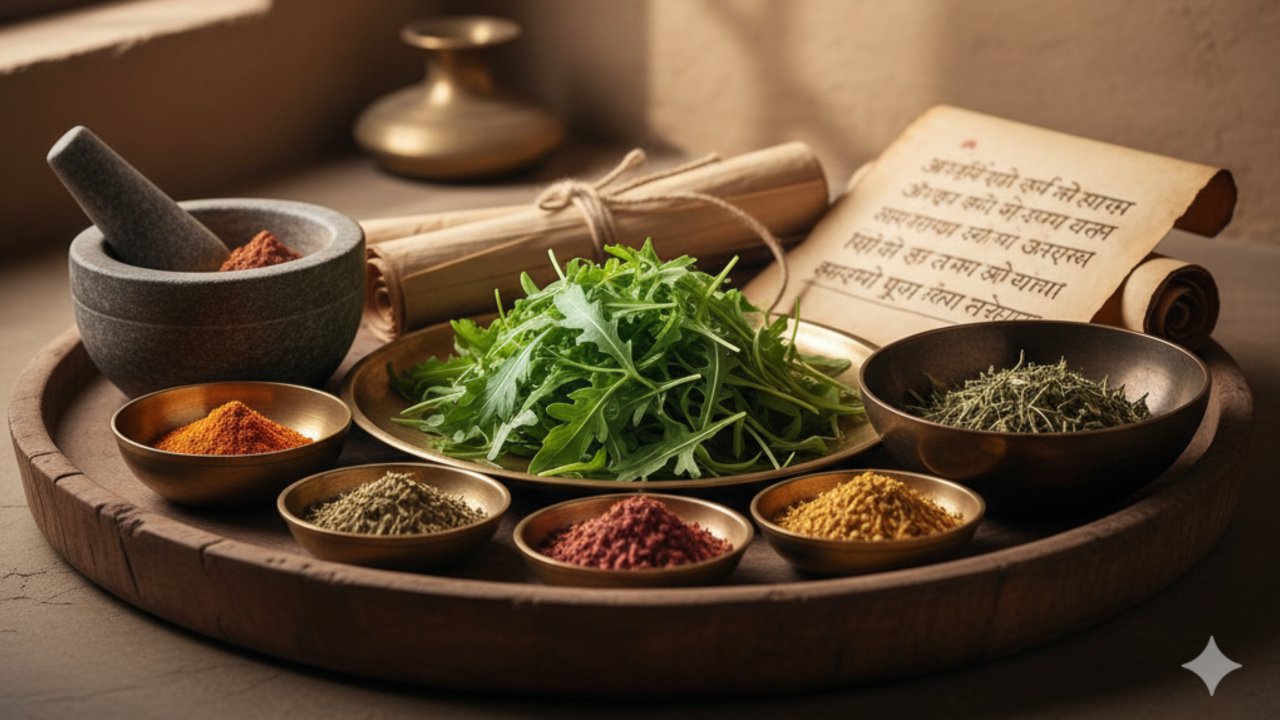 Beyond its culinary appeal, E. sativa has long-standing medicinal use. In traditional systems like Ayurveda, it is regarded for properties such as digestive stimulation, diuretic effects, and aphrodisiac qualities. Its leaves and seeds contain phytochemicals—glucosinolates and isothiocyanates—known for antioxidant, antibacterial, antifungal, and potential anticarcinogenic activities, making it a valuable nutraceutical.
Modern wellness trends often overlook arugula’s ancient significance. In Ayurveda, it is considered a potent herb with specific energetic properties, capable of healing when used wisely. As interest in natural remedies and functional foods rises, E. sativa’s seed mucilage also shows commercial promise as a natural hydrocolloid in the food industry.
Vernacular Names of Arugula (Eruca sativa)
- Sanskrit: Tuvari (तुवरी)
- English: Arugula, Rocket, Garden Rocket
- Hindi: Tori, Tira, Lahi, Tara Mira, Seoha, Tivura
- Bengali: Setasarisha (সেতসরিষা)
- Punjabi: Asu, Tara
- Malayalam: Rucola (റുക്കോള)
Ayurvedic Properties of Arugula (Dravyaguna Vignan)
Before applying any herb, an Ayurvedic practitioner first defines its fundamental properties. This is the map that predicts its journey through the body and its ultimate effect.
1. Rasa (Taste):
The first experience of arugula on the tongue is unmistakably Katu (Pungent). This is followed by a distinct Tikta (Bitter) undertone. This combination is significant.
The pungent taste is hot, dry, and light, immediately stimulating digestion and clearing stagnation. The bitter taste is cooling, dry, and light, responsible for detoxification and reducing excess moisture and heat.
While these tastes seem contradictory, they create a synergistic effect, making arugula a powerful cleansing and stimulating herb.
2. Guna (Qualities):
Arugula carries the qualities of:
- Laghu (Light): It is easy to digest and does not burden the system.
- Rūkṣa (Dry): It absorbs moisture and can have a drying effect on the tissues.
- Tīkṣṇa (Sharp/Penetrating): It can enter deep into the tissues, breaking through blockages and facilitating the movement of other substances.
These Gunas make it an excellent herb for countering conditions of heaviness, oiliness, and stagnation.
3. Virya (Potency):
Despite its bitter note, the overall energetic action of arugula is heating. Its Uṣṇa (Heating) potency is derived primarily from its strong pungent taste.
This heating quality is what stimulates digestion, boosts metabolism, and melts away accumulations.
4. Vipāka (Post-Digestive Effect):
After the process of digestion is complete, arugula yields a Katu (Pungent) effect. This means that while it might initially have a bitter taste, its long-term action in the body is one of heating, scraping, and cleansing.
A Katu Vipaka is known to be particularly drying and can reduce all tissues (Dhatus) if used excessively.
5. Dosha Karma (Action on the Doshas):
- Kapha Dosha: Arugula balances Kapha by counteracting its heavy, oily, and cool nature with its light, dry, and heating qualities. It helps reduce excess mucus, stimulate metabolism, and combat lethargy and weight gain.
- Vata Dosha: Arugula can aggravate Vata due to its light and dry properties, but its heating and penetrating nature can also help balance Vata when used moderately. Cooking it with oil makes it more suitable for Vata types, while excessive use may cause gas, anxiety, and dryness.
- Pitta Dosha: Arugula’s heating potency aggravates Pitta, making it unsuitable for individuals with high Pitta symptoms like inflammation and acidity. It should be used sparingly or avoided by Pitta types to prevent overheating and irritation.
Arugula Nutrition Facts (per 100g raw)
| Arugula Nutrition Facts (Per 100g Raw) | |
|---|---|
| Calories | 25 kcal |
| Carbohydrates | 3.7 g |
| — Dietary Fiber | 1.6 g |
| — Sugars | 2.1 g |
| Protein | 2.6 g |
| Fat | 0.7 g |
| — Saturated Fat | 0.1 g |
| Vitamins | |
| Vitamin A | 2373 IU (79% DV) |
| Vitamin C | 15 mg (25% DV) |
| Vitamin K | 108.6 µg (91% DV) |
| Folate (Vitamin B9) | 97 µg (24% DV) |
| Vitamin B6 | 0.1 mg (5% DV) |
| Riboflavin (B2) | 0.1 mg (6% DV) |
| Niacin (B3) | 0.4 mg (2% DV) |
| Minerals | |
| Calcium | 160 mg (16% DV) |
| Iron | 1.5 mg (8% DV) |
| Magnesium | 47 mg (12% DV) |
| Phosphorus | 52 mg (5% DV) |
| Potassium | 369 mg (11% DV) |
| Zinc | 0.4 mg (3% DV) |
| Manganese | 0.2 mg (10% DV) |
Source: from https://ndb.nal.usda.gov/ndb/
Top 10 Eruca Sativa Health Benefits
Based on its energetic profile, arugula has been traditionally used for a wide range of conditions. Its primary actions are those of a stimulant and a cleanser.
1. Kandu (Itching)
Arugula leaves and seeds are traditionally used to relieve itching caused by various skin irritations. Its anti-inflammatory and cooling properties help soothe the skin and reduce irritation. It may be applied topically as a paste or consumed internally to balance the body’s doshas and reduce allergic reactions.
2. Kushta (Skin Diseases)
Tuvari is used in Ayurveda for treating various skin conditions such as eczema, psoriasis, and other chronic skin disorders. The antimicrobial and anti-inflammatory compounds in arugula help clear infections and promote skin healing. It supports detoxification, which is often necessary for maintaining healthy skin.
3. Koshta Krimi (Intestinal Worm Infestation)
Arugula has anthelmintic properties, helping expel intestinal worms and parasites. Seeds or leaves are used in herbal formulations to cleanse the digestive tract, eliminate worms, and improve nutrient absorption.
4. Visha (Poisoning and Toxic Conditions)
Traditionally, Tuvari is believed to have detoxifying properties that neutralize toxins in the body. It is used in cases of mild poisoning or to reduce the effects of environmental toxins, supporting liver function and overall detoxification.
5. Blood-Related Diseases
Arugula is rich in vitamins and minerals, including iron, which supports healthy blood formation. It is used to treat anemia and other blood disorders by improving blood quality and circulation. Additionally, its antioxidant properties protect blood cells from damage.
6. Deepana (Appetite Stimulant) and Pāchana (Digestive)
The pungent taste and hot potency kindle the digestive fire (Agni). Consuming a small portion of arugula salad or chutney before meals awakens the digestive system, making it ideal for low appetite and sluggish digestion (Mandagni). Its sharp (Tikshna) quality helps break down toxins (Ama), which are the root cause of many diseases.
7. Bhedana / Rechana (Mild Laxative / Purgative)
Due to its sharp, dry, and penetrating qualities, arugula acts as a mild, natural laxative. It promotes the clearing of accumulated waste and stimulates peristalsis, especially useful for occasional constipation linked to Kapha stagnation.
8. Krimighna (Anthelmintic)
The combination of pungent and bitter tastes creates an unfavorable environment for intestinal parasites. Classical Ayurvedic texts recommend herbs with this taste profile for deworming.
9. Shophahara (Anti-inflammatory) and Mutrala (Diuretic)
Arugula is effective for Kapha-type inflammation—swelling that is cold, pale, and puffy—due to its heating nature and diuretic action. It helps reduce edema by flushing excess fluids from tissues. However, it may aggravate Pitta-related inflammation and should be used cautiously in such cases.
10. Vrishya (Aphrodisiac) and Rasayana (Rejuvenative)
Arugula supports reproductive health and vitality (Vrishya). Despite its drying nature, it clears bodily channels (Shrotas) and improves circulation, enhancing nutrient flow to reproductive tissues. When combined with nourishing herbs or fats, it acts as a rejuvenator (Rasayana), promoting overall vitality. This emphasizes a key Ayurvedic principle: the context of use determines the herb’s effects.
Arugula Seeds & Taramira Oil: Ayurvedic Benefits & Modern Science
1. Traditional Ayurvedic Benefits
- Digestive stimulant: Seeds and oil help kindle digestive fire (Agni), improving appetite and digestion.
- Anti-inflammatory: Used externally to soothe skin inflammations and muscle pain through massage.
- Detoxifying: The glucosinolates in seeds support detoxification and help clear toxins (Ama) from the body.
- Skin health: Taramira oil is valued for its nourishing and cooling effects on the skin, aiding in the management of dryness, itching, and certain skin conditions.
- Aphrodisiac & rejuvenative: In combination with other herbs or oils, the seeds/oil are believed to promote vitality and reproductive health (Vrishya and Rasayana properties).
2. Modern Scientific Insights
- Nutrient-rich seed composition: Arugula seeds contain significant amounts of protein, essential fatty acids (oleic and linoleic acid), and glucosinolates, which are compounds with known antioxidant, anti-cancer, and antimicrobial effects.
- Erucic acid content: Erucic acid is a monounsaturated omega-9 fatty acid predominant in Taramira oil. Though it has industrial uses, high intake in humans is cautioned; however, in traditional usage as a topical or culinary oil, it has beneficial effects.
- Anti-microbial & anti-inflammatory: Glucosinolates and their breakdown products (like isothiocyanates) exhibit antimicrobial properties and can reduce inflammation.
- Skin applications: Scientific studies confirm Taramira oil’s potential to improve skin hydration, reduce inflammation, and support wound healing due to its fatty acid profile and antioxidants.
- Animal feed: The residual seed cake after oil extraction is high in protein and used safely as nutritious animal fodder, enhancing livestock health.
🌿 Arugula Research Overview
| Title / Source | Year | What Was Studied | Key Findings / Notes |
|---|---|---|---|
| Nutrient Composition of Arugula Leafy Greens Following Application of Ascorbic Acid Foliar Sprays (MDPI) |
2024 | Effect of ascorbic acid foliar sprays (100 & 200 ppm) on vitamin C, biomass, and minerals. | 200 ppm spray improved vitamin C and growth. Minimal impact on minerals except copper. Good biofortification strategy. |
| Photosynthesis, Biomass Production, Nutritional Quality… under Different Electrical Conductivities (MDPI) |
2021 | Tested hydroponic EC levels (1.0–2.5 dS/m) for impact on yield and nutrients. | Optimal EC (1.5–1.8) increased glucosinolates and carotenoids; high EC reduced some micronutrients and raised nitrates. |
| Nutritional Quality and Bioactive Compounds of Arugula Sprouts and Microgreens (CiteDrive) |
Recent | Compared sprouts vs microgreens (hydroponic) for nutrients and bioactives. | Sprouts had more protein & fiber; flavonoids & carotenoids varied by stage. Useful for tailoring functional foods. |
| Consumption, Efficiency and Water Content… under Brackish Nutritional Solutions (SciELO) |
2018 | Tested growth under saline water (varied salinities, irrigation frequencies). | Arugula tolerates moderate salinity. Relevant for arid climate agriculture and water-efficient systems. |
| The Composition and Medicinal Properties of Arugula (Eruca sativa) (UniversalPublishings) |
2025 | Review of arugula’s vitamins, minerals, glucosinolates, and antioxidants. | Good for background info on nutritional and medicinal value. Summary-focused, not experimental. |
Practical Application and Precautions (Vigyaniya)
This is the most critical section. Knowing the theory is useless without understanding practical application.
How to Use Arugula Wisely:
1. For Kapha Dosha (Ideal): This is arugula’s home turf. Kapha individuals can enjoy it freely, both raw and cooked. A large, raw arugula salad with a light lemon dressing is perfect for stimulating their slow digestion and countering heaviness.
2. For Pitta Dosha (Use with Extreme Caution): Pitta types should generally avoid raw arugula. If they wish to consume it, it must be balanced. This means:
- Cook it: Lightly sautéing or wilting it with cooling oils like coconut or ghee can mitigate some of its heat.
- Combine it: Pair it with cooling, sweet, and bitter foods like cucumber, coconut, cilantro, and lettuce.
- Use Sparingly: A few leaves as an accent, not a base.
3. For Vata Dosha (Use in Moderation with Care): Vata individuals should never make arugula a staple.
- Always Cook It: Raw arugula is too dry and rough for Vata. Sautéing it generously with ghee or olive oil, and adding spices like cumin or fennel, makes it more manageable.
- Small Quantities: Use it as a side dish, not a main component.
- Monitor Symptoms: If signs of Vata aggravation appear (dry skin, constipation, anxiety), discontinue use.
Contraindications (Who Should Avoid It)
- Individuals with a pronounced Pitta Imbalance: This includes people with acid reflux (GERD), peptic ulcers, inflammatory bowel disease, rosacea, or any condition involving heat and inflammation.
- Those with severe Vata Imbalance: This includes emaciation, osteoporosis, chronic anxiety, insomnia, and dryness throughout the body.
- Pregnancy and Lactation: Due to its potential purgative and penetrating effects, it is best avoided during these sensitive times unless specifically recommended by a qualified practitioner.
- During Panchakarma (Cleansing Therapy): Its use would be determined by the specific procedure and the individual’s condition.
Seasonal Considerations
Arugula is a classic herb for late winter and spring—the Kapha season. During this time, the environment is cold and damp, and the body accumulates Kapha qualities, leading to seasonal allergies, colds, and sluggishness. Incorporating arugula during this period is a natural way to “spring clean” the body.
FAQ’s
1. What is arugula (Eruca sativa)?
Answer: Arugula, also known as rocket or rucola, is a leafy green plant from the Brassicaceae family. It has a peppery, slightly spicy flavor and is commonly used in salads, sandwiches, and garnishes.
2. What are the health benefits of arugula?
Answer: Arugula is packed with vitamins A, C, and K, antioxidants, and minerals like calcium and potassium. It supports bone health, boosts immunity, aids digestion, and has anti-inflammatory properties.
3. How do you grow arugula at home?
Answer: Arugula grows best in cool weather. Plant seeds in well-draining soil with partial to full sun. Keep the soil moist and thin seedlings to about 6 inches apart. Harvest leaves young for the best flavor.
4. What does arugula taste like?
Answer: Arugula has a fresh, peppery, and slightly bitter taste with a hint of mustard or radish. The flavor is more intense than typical salad greens.
5. How to store arugula to keep it fresh?
Answer: Store arugula in a plastic bag or container lined with paper towels in the refrigerator. It’s best consumed within 3-5 days for optimal freshness.
6. Can you eat arugula raw?
Answer: Yes! Arugula is commonly eaten raw in salads, sandwiches, and as a garnish. It can also be lightly cooked, but raw leaves retain the best flavor and nutrients.
7. What are the differences between arugula and rocket?
Answer: Arugula and rocket are actually the same plant, just different names used regionally—“arugula” in the U.S. and “rocket” in the U.K. and other countries.
8. Is arugula good for weight loss?
Answer: Yes, arugula is low in calories and high in fiber and water, making it a great choice for weight loss diets. It helps you feel full while providing essential nutrients.
9. What recipes use arugula?
Answer: Arugula is versatile—it’s great in salads, pesto, pasta dishes, on pizzas, sandwiches, and even smoothies for a peppery kick.
10. Does arugula have any side effects or allergies?
Answer: Arugula is generally safe but can cause allergic reactions in rare cases, especially in people allergic to other cruciferous vegetables. It’s also high in vitamin K, so consult a doctor if on blood thinners.
Arugula, or Sāsura, stands as a powerful example of how Ayurveda elevates food to the level of medicine. It teaches us that health is not about labeling foods as “good” or “bad,” but about understanding their intrinsic energies and how they interact with our own unique constitution.
Disclaimer: This article is for educational purposes only and is based on traditional Ayurvedic principles. It is not a substitute for professional medical advice, diagnosis, or treatment. The information provided has not been evaluated by the Food and Drug Administration. Always seek the guidance of your qualified Ayurvedic practitioner or physician with any questions you may have regarding a medical condition before making any changes to your diet or lifestyle.