Chia Seeds in Ayurveda: Benefits, Uses, and Ayurvedic Properties

In modern wellness, chia seeds have achieved rapid fame. Native to Central America, these tiny seeds feature in oats and smoothies, celebrated globally for rich omega-3 fatty acids, dietary fiber, high-quality protein, and vital minerals.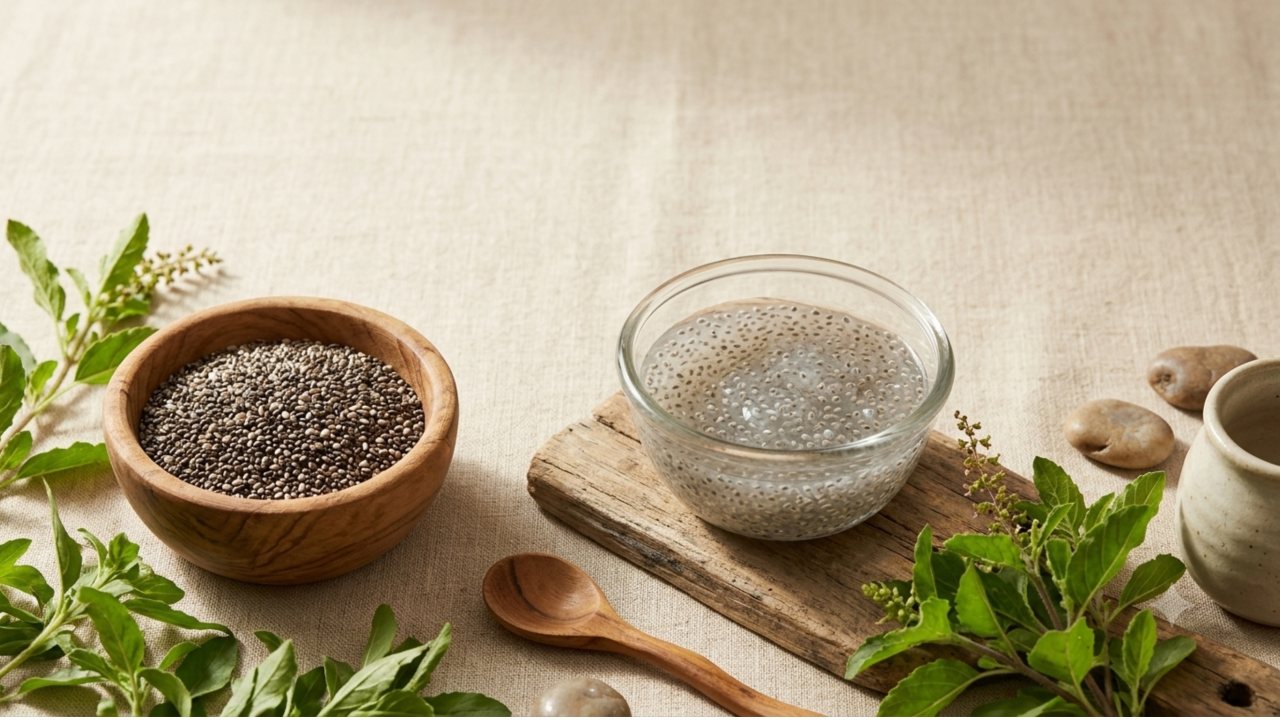 Long before “superfood” became a modern buzzword, Ayurveda established a profound holistic framework to understand foods. Ancient Indian medicine evaluated every ingredient by analyzing how it fundamentally interacts with human mind, body, and spirit.
Because chia seeds are non-native to India, classical texts omitted them, historically favoring seeds like sabja, flaxseed, and fenugreek. However, Ayurveda’s versatile science easily adapts to evaluate and classify newly introduced ingredients without issue.
By assessing taste, qualities, potency, and post-digestive effects, Ayurveda decodes chia seeds completely. Merging modern nutritional biochemistry with energetic Ayurvedic wisdom transforms this trendy seed into an effective tool for balance and vibrant, lasting health.
The Nutritional Profile: Chia Seeds
To truly understand how chia seeds fit into an Ayurvedic framework, we first need a snapshot of their modern nutritional resume. Packed into just a single 1-ounce (28-gram) serving of chia seeds is a remarkable concentration of vital nutrients:
- Dietary Fiber: 11 grams (over 40% of your daily recommended intake)
- Plant Protein: 4 grams of complete, high-quality protein
- Healthy Fats: 9 grams total, including 5 grams of plant-based Omega-3s (ALA)
- Key Minerals: Calcium (18% DV), Magnesium (30% DV), Manganese (30% DV), and Phosphorus (27% DV)
- Antioxidants: Rich in chlorogenic acid, caffeic acid, myricetin, and quercetin
While nutritional science examines these elements as isolated compounds performing isolated biochemical tasks, Ayurveda views the seed as a unified energetic entity. Let’s translate this modern nutritional data into the ancient wisdom of Ayurvedic principles.
The Ayurvedic Properties of Chia Seeds
In Ayurveda, every food is understood through its energetic properties. By observing how chia seeds interact with water and the human body, we can easily categorize their unique Ayurvedic profile:
1. Rasa (Taste): Sweet (Madhura) & Astringent (Kashaya)
Chia seeds carry a mild, nutty taste. Their primary taste is Madhura—representing the nourishing, building sweetness of complex carbs, proteins, and healthy fats—with a subtle Kashaya (astringent) undertone from the outer husk.
2. Guna (Physical Qualities):
- Snigdha (Oily/Unctuous): Once soaked, they release healthy omega-3 fats, providing internal lubrication.
- Guru (Heavy): Protein-dense and able to absorb up to 12 times their weight in liquid, they digest slowly for sustained energy.
- Picchila (Slimy/Sticky): Their characteristic gel coats, protects, and soothes internal tissues.
3. Virya (Thermal Potency): Sheeta (Cooling)
Chia seeds have a deeply cooling energy (Sheeta Virya). They calm internal heat, reduce inflammation, and soothe irritation in the digestive tract.
4. Vipaka (Post-Digestive Effect): Madhura (Sweet)
After full digestion, their post-digestive effect is sweet (Madhura Vipaka), meaning they build vitality (Ojas), nourish deep body tissues (Dhatus), and ground the nervous system.
5. Prabhava (Special Action): Deep Hydration & Detox
The standout action (Prabhava) of chia seeds is cellular hydration. They act as a Yogavahi (a powerful carrier), pulling moisture deep into cells while binding to metabolic toxins (Ama) so they can be swept safely out of the gut.
Chia Seeds and the Three Doshas: An Ayurvedic Guide
Ayurveda centers around balance across the three energetic principles: Vata (movement), Pitta (metabolism), and Kapha (structure). While chia seeds are a modern superfood, their energetic qualities (Gunas) affect each body type differently.
Here is how to align chia seeds with your unique constitution:
Vata (Air & Ether) — Excellent (When Warmed)
- Why it helps: Vata is naturally dry, light, and cold. Soaked chia seeds are heavy (Guru), oily (Snigdha), and deeply hydrating—perfect for relieving constipation, dry skin, and joint stiffness.
- How to serve: Soak seeds in warm liquids with digestive spices like ginger, cinnamon, or cardamom to protect your internal flame (Agni).
Pitta (Fire & Water) — Highly Beneficial
- Why it helps: Pitta tends toward excess heat, acidity, and inflammation. Chia seeds bring a soothing, cooling energy (Sheeta Virya) that calms the digestive tract, while omega-3s tame systemic heat.
- How to serve: Soak in room-temperature water or coconut milk, paired with sweet fruits like blueberries, pears, or figs.
Kapha (Earth & Water) — Consume Sparingly
- Why to be cautious: Kapha is inherently cold, heavy, and moist. Because chia seeds share these same traits (heavy, cold, and mucilaginous Picchila), excessive amounts can cause sluggish digestion and mucus buildup.
- How to serve: Keep portions small (approx. ½ tsp) and combine with heating spices like black pepper, turmeric, dry ginger, or fenugreek to offset heaviness.
Chia Seeds Name in different languages
Because chia seeds are native to Central America and are a relatively recent import to the rest of the world, most languages simply use a phonetic translation of the Spanish word “chía” (which itself comes from the indigenous Nahuatl word chīatl, meaning “oily”).
However, it is helpful to know how to ask for them or identify them across different regions. Here is the name for chia seeds in various languages, categorized by region:
Indian Languages
Note: As mentioned in the article, chia seeds are not native to India, so these are phonetic transliterations of the English name. They are often confused with Sabja or Tukmaria (sweet basil seeds), which are native to India.
- Hindi: चिया सीड्स (Chia seeds)
- Tamil: சியா விதைகள் (Chia vithaikal)
- Telugu: చియా గింజలు (Chia ginjalu)
- Kannada: ಚಿಯಾ ಬೀಜಗಳು (Chia beejagalu)
- Malayalam: ചിയ വിതകൾ (Chia vithakal)
- Bengali: চিয়া বীজ (Chia bij)
- Marathi: चिया बियाणे (Chia biyane)
- Gujarati: ચિયા સીડ્સ (Chia seeds)
- Punjabi: ਚੀਆ ਬੀਜ (Chia bij)
- Urdu: چیا بیج (Chia beej)
European Languages
- Spanish: Semillas de chía (or simply chía)
- French: Graines de chia
- German: Chiasamen
- Italian: Semi di chia
- Portuguese: Sementes de chia
- Dutch: Chiazaden
- Russian: Семена чиа (Semena chia)
- Polish: Nasiona chia
- Greek: Σπόροι τσιά (Sporoi tsia)
- Turkish: Chia tohumları
East & Southeast Asian Languages
- Mandarin Chinese: 奇亚籽 (Qí yà zǐ)
- Cantonese Chinese: 奇亞籽 (Kei ngaa zi)
- Japanese: チアシード (Chia shīdo)
- Korean: 치아 시드 (Chia sideu)
- Thai: เมล็ดเจีย (Melød chia)
- Vietnamese: Hạt chia
- Indonesian: Biji chia
- Filipino: Chia seeds
Middle Eastern & African Languages
- Arabic: بذور الشيا (Budhur al-shiya)
- Hebrew: זרעי צ’יה (Zra’i chia)
- Swahili: Mbegu za chia
- Amharic (Ethiopia): የቺያ ዘሮች (Yechia zeroch)
Indigenous / Origin Languages
- Nahuatl (Aztec): Chian (meaning “oily” or “oily thing”)
- Mayan: Chían
A Quick Buying Tip for India: If you are in India looking for chia seeds, do not ask for “Chia Beej” in a local, traditional Ayurvedic store (as they likely won’t carry it).
You will find them in modern supermarkets, health food stores, or online under the name “Chia Seeds.”
If a traditional vendor offers you a tiny black seed that forms a gel quickly, you are likely being sold Sabja (basil seeds), which are cheaper and native to India, but have slightly different nutritional profiles!
Therapeutic Benefits: Science with Ayurvedic Wisdom
When we look at the health benefits of chia seeds through a dual lens of modern science and Ayurvedic pathology, a beautiful synergy emerges.
1. Mastering Digestion and Elimination (Agni and Ama)
Modern View: The high levels of soluble and insoluble fiber in chia seeds act as prebiotics, feeding beneficial gut bacteria and forming bulk that promotes regular bowel movements.
Ayurvedic View: Ayurveda considers proper elimination (Apana Vayu) the cornerstone of health. When digestion is weak, food ferments, creating Ama (a toxic, sticky sludge). The Picchila (slimy) quality of soaked chia seeds coats the stomach and intestines, soothing irritations and ulcers (a Pitta issue). Simultaneously, the fibrous bulk sweeps through the colon like a soft brush, pulling out Ama and lubricating the tract to cure Vata-type constipation. It kindles a low Agni gently, without causing the sharp acidity that harsh laxatives do.
2. Sustained Energy and Blood Sugar Balance (Ojas and Prana)
Modern View: Chia seeds have a remarkably low glycemic index. The gel formed by the fiber slows down the conversion of carbohydrates into sugar, preventing spikes and crashes in blood glucose.
Ayurvedic View: In Ayurveda, energy is not just calories; it is Prana (life force) and Ojas (ultimate vitality, formed after perfect digestion). Modern energy drinks and caffeine give a false, jittery energy that depletes Ojas. Chia seeds, with their Madhura Vipaka (sweet post-digestive effect) and Guru (heavy) nature, provide sustained, grounded energy. By stabilizing blood sugar, they prevent the sudden drops that cause fatigue and brain fog, thereby protecting and building Ojas.
3. Hydration and Electrolyte Balance (Rasa Dhatu)
Modern View: Chia seeds can hold up to 12 times their weight in water. Consuming them helps the body retain hydration and maintain electrolyte balance, which is why they are popular among endurance athletes.
Ayurvedic View: The first tissue layer in Ayurveda is Rasa Dhatu (plasma and lymph). It is responsible for nourishing all other tissues and keeping the body juicy and hydrated. Chia seeds are a supreme Rasayana (rejuvenative) for Rasa Dhatu. They do not just add water to the body; they add Snigdha (unctuousness), ensuring the cells actually hold onto the moisture. This prevents the premature drying out of tissues, which Ayurveda views as a primary cause of aging.
4. Cardiovascular Health (Hridaya and Rakta Dhatu)
Modern View: The ALA omega-3 fatty acids in chia seeds help lower LDL cholesterol, reduce triglycerides, and lower blood pressure, all of which protect against heart disease.
Ayurvedic View: The heart (Hridaya) is the seat of Pitta and Ojas. The channels (Srotas) that carry blood (Rakta Dhatu) can become clogged with Ama and excess lipids (a Kapha imbalance). The Snigdha (oily) nature of chia seeds acts as an internal solvent, helping to scrape away sticky Ama from the arterial walls. Simultaneously, their Sheeta (cooling) nature soothes the inflamed blood vessels caused by aggravated Pitta.
5. Bone and Joint Health (Asthi Dhatu)
Modern View: Chia seeds contain an exceptionally high amount of calcium, magnesium, and phosphorus—all critical minerals for bone density. The trace mineral boron, also present, helps metabolize calcium. Ayurvedic View: Bones are governed by Asthi Dhatu, which is the domain of Vata dosha (Air element). To build strong bones, the body needs dense, earthy, heavy nutrition. The Guru (heavy) and Madhura (sweet/nourishing) qualities of chia seeds directly feed Asthi Dhatu. Furthermore, the unctuous (Snigdha) oils lubricate the joints, pacifying the dry, cracking joint pain typical of Vata imbalance (often correlated with osteoarthritis in modern medicine).
6. Skin, Hair, and Anti-Aging (Twak and Kesh)
Modern View: The high antioxidant quotient (quercetin, chlorogenic acid) fights free radicals that cause oxidative stress, preventing cellular damage and premature aging of the skin. Omega-3s keep the skin barrier hydrated.
Ayurvedic View: The skin (Twak) is a reflection of Rasa and Rakta Dhatu. Premature aging, wrinkles, and dry skin are classic signs of Vata going out of balance in the tissues. Chia seeds act as an excellent Varnya (complexion-enhancing) and Balya (strengthening) herb. By deeply hydrating Rasa Dhatu and providing cooling, soothing fats to Pitta, chia seeds clear up inflammatory skin conditions like acne, rosacea, and eczema, while preventing the dry, wrinkled appearance of Vata imbalance.
Chia Seeds vs. Sabja Seeds: What’s the Difference in Ayurveda?
In India, chia seeds (Salvia hispanica) and sabja seeds (Ocimum basilicum—also known as sweet basil seeds or tukmaria) are frequently confused. While both form a thick, gelatinous layer when soaked, their Ayurvedic properties and physical characteristics are distinctly different.
While both seeds share cooling (Sheeta) and gelatinous (Picchila) qualities, here is how they differ:
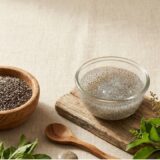
- Appearance: Chia seeds are slightly larger and mottled with shades of black, gray, and white. Sabja seeds are tiny and uniformly jet-black (resembling poppy seeds).
- Taste (Rasa): Chia has a mild, nutty taste. Sabja carries an aromatic, subtle basil flavor.
Ayurvedic Application:
- Sabja Seeds: Traditional in Ayurveda and Unani medicine, sabja is powerful for pacifying acute Pitta issues—such as urinary burning, heatstroke, and body heat.
- Chia Seeds: Higher in fats and proteins, chia is more heavy (Guru) and building, making it exceptional for pacifying Vata, restoring vitality (Ojas), and lubricating joints.
The Takeaway: Use sabja seeds for rapid cooling and urinary comfort, and choose chia seeds for sustained energy, omega-3 nutrients, and joint nourishment.
How to Consume Chia Seeds the Ayurvedic Way
In Ayurveda, how you eat a food is often more important than what you eat. A food that is medicine for one person can be poison for another based on preparation.
1. The Golden Rule: Always Soak Them
Never eat chia seeds dry. Because they absorb 12 times their weight in water, dry chia seeds will absorb moisture directly from your stomach and intestinal lining, potentially causing an impaction, severe bloating, or choking. Ayurvedically, dry seeds are too rough (Khara) for the delicate Pitta in the stomach. Method: Soak 1 to 2 tablespoons of chia seeds in at least 1 cup of warm or room-temperature water, milk, or plant-based milk for at least 15 to 30 minutes until a thick gel forms.
2. Spice Them for Your Dosha
To make chia seeds perfectly digestible, you must use spices (Prakshepa) to kindle Agni.
- For Vata: Soak in warm water or warm almond milk. Add a pinch of ginger powder, cinnamon, nutmeg, and a dash of ghee or sesame oil.
- For Pitta: Soak in room-temperature water or cool coconut milk. Add a pinch of fennel seeds, cardamom, rose water, and a tiny bit of raw sugar or maple syrup.
- For Kapha: Soak in hot water. Add black pepper, dry ginger, turmeric, a pinch of cayenne, and honey (added only after the liquid has cooled down slightly, as heating honey creates Ama).
3. Timing is Everything
- Morning (Best for most): Eating soaked chia seeds first thing in the morning helps flush the digestive tract of accumulated Ama from the night before and provides sustained energy.
- Afternoon: A great time for a chia seed pudding to beat the 3 PM slump without spiking blood sugar.
- Night (Avoid): Because chia seeds are Guru (heavy) and take time to pass through the digestive system, eating them right before bed can suppress Agni during the night, leading to sluggishness the next morning.
Ayurvedic Chia Seed Recipes
1. Vata-Pacifying Warm Chia Porridge
- 1 cup warm almond or oat milk
- 2 tbsp chia seeds (soaked in the milk for 30 mins)
- 1/2 tsp cinnamon
- A pinch of ginger and nutmeg
- 1 tsp ghee
- Soaked almonds and raisins for topping
- Benefit: Deeply grounding, lubricates joints, cures constipation, promotes deep sleep.
2. Pitta-Soothing Cooling Chia Cooler
- 1 cup room-temperature coconut water or filtered water
- 1.5 tbsp chia seeds (soaked)
- 1/2 tsp roasted fennel seed powder (soaked alongside the chia to infuse the water)
- 1 tsp pure rose water
- Fresh, sweet fruits like melon or mango (blended in or eaten on the side)
- Benefit: Cools the blood, soothes acid reflux, clears inflammatory skin issues, calms the mind.
3. Kapha-Balancing Spiced Chia Broth
- 1 cup hot water
- 1 tsp chia seeds (keep the quantity low)
- 1/4 tsp black pepper
- 1/2 tsp turmeric
- 1/4 tsp dry ginger powder
- 1 tsp raw honey (stirred in once the water is warm, not boiling)
- Benefit: Stimulates sluggish digestion, helps clear mucus, provides light, warming energy.
Precautions and Contraindications in Ayurveda
Even the most potent medicines have rules. Because chia seeds are so dense and biochemically active, they must be respected.
- Mandagni (Low Digestive Fire): If you have very weak digestion, characterized by chronic bloating, heavy feeling after meals, and sticky stools (a Kapha/Vata imbalance), chia seeds can make it worse. The heavy, slimy nature will further dampen your fire. In this case, you must use strong spices like ginger and trikatu, or avoid chia entirely until Agni is restored.
- Obstruction (Avarana): In Ayurveda, excess Kapha or Ama can create physical blockages in the channels (Srotas). If you have a history of severe bowel impactions, esophageal strictures, or severe asthma with heavy mucus, the slimy texture of chia can exacerbate the blockage.
- Medication Interactions: Because chia seeds dramatically lower blood sugar and blood pressure, individuals taking allopathic medications for diabetes or hypertension must consult a doctor. From an Ayurvedic perspective, these conditions involve complex Dhatu depletions, and introducing a highly active seed without supervision can cause the body to deplete too quickly.
- Allergies: Though rare, chia seed allergies exist. If you experience itching, hives, or swelling (clear signs of acute Pitta aggravation), discontinue use immediately.
Synthesizing Modern Nutritional Science and Ayurvedic Energetics
This synthesis highlights the exact strength of combining Western bio-nutritional analysis with Eastern constitutional medicine. While modern dietetics focuses on what a food contains, Ayurveda focuses on how a specific body processes it.
Biochemical vs. Energetic Profile: Chia Seeds
Western Biochemical View: High soluble fiber (mucilage), omega-3 fatty acids (α-linolenic acid), complete plant protein, and micronutrients like calcium and magnesium. Excellent for slow glycemic response and satiety.
Ayurvedic Energetic View (Dravyaguna):
- Taste (Rasa): Sweet (Madhura), Earthy.
- Qualities (Guna): Heavy (Guru), Unctuous/Oily (Snigdha), Gelatinous.
- Potency (Virya): Cooling (Sheeta).
- Post-Digestive Effect (Vipaka): Sweet (Madhura).
Dosha-Specific Impact & Optimization
Vata (Air/Ether)
- Impact: Highly beneficial. Vata is dry, cold, and light; chia’s unctuous, warming-when-hydrated, heavy, and grounding nature deeply soothes Vata dryness and supports sluggish elimination.
- Optimization: Soaked in warm water or warm milk with digestive spices like cinnamon, ginger, or cardamom.
Pitta (Fire/Water)
- Impact: Highly beneficial. Pitta benefits from chia’s cooling (Sheeta) potency and anti-inflammatory properties, soothing excess internal heat and hyperacidity.
- Optimization: Soaked in room-temperature water or coconut milk, paired with fennel or rose water.
Kapha (Earth/Water)
- Impact: Potential for stagnation. Kapha is already cold, heavy, wet, and slow. Consuming heavy, mucilaginous foods regularly can increase congestion, slow down the digestive fire (Agni), and contribute to weight retention.
- Optimization: Consumed sparingly, always dry-roasted or soaked in hot water, heavily spiced with dry ginger, black pepper, or cayenne to counteract the Guru (heavy) quality.
Integrating these two paradigms shifts the conversation from universal “superfoods” to contextual nutrition. A food is only healthy if the individual body has the digestive capacity (Agni) to assimilate its nutrients without generating metabolic byproducts (Ama).
FAQ’s
1. Are chia seeds good according to Ayurveda?
Chia seeds can be a nutritious addition to the diet and are commonly valued for their fiber, healthy fats, protein, and minerals. In Ayurvedic use, they are generally considered best when properly soaked and consumed according to individual digestion and constitution.
2. What are the Ayurvedic properties of chia seeds?
Chia seeds are generally described in contemporary Ayurvedic discussions as cooling, hydrating, and nourishing. Their qualities may make them particularly useful when there is a need for hydration and nourishment, although traditional Ayurvedic texts do not extensively document chia seeds because the plant is native to the Americas.
3. What are the benefits of chia seeds in Ayurveda?
Potential benefits include supporting digestion, hydration, bowel regularity, satiety, and overall nourishment. Their high fiber content can support healthy digestion when consumed with adequate fluids.
4. Can chia seeds help with digestion?
Yes. Soaked chia seeds form a gel-like consistency that can provide soluble fiber and support regular bowel movements. Start with a small amount if you are not accustomed to eating high-fiber foods.
5. Should chia seeds be soaked before eating?
Soaking chia seeds is often recommended because it allows them to absorb water and become easier to consume. Soaked chia seeds may also be more comfortable for people who experience digestive discomfort from dry seeds.
6. How should chia seeds be consumed according to Ayurveda?
A simple approach is to soak chia seeds in water for several hours or overnight and consume them as part of a balanced meal. The appropriate quantity can vary depending on digestion, dietary needs, and individual constitution.
7. Are chia seeds hot or cold in Ayurveda?
Chia seeds are commonly regarded in modern Ayurvedic nutrition as having a cooling and hydrating nature. However, Ayurvedic classifications can vary between practitioners, and chia seeds are not a major ingredient in classical Ayurvedic literature.
8. Are chia seeds good for Pitta dosha?
Because chia seeds are generally considered cooling and hydrating, they may be suitable for Pitta-oriented diets. Individual tolerance and preparation matter, so they should still be consumed appropriately.
9. Can Vata people eat chia seeds?
Vata individuals may benefit from consuming chia seeds in a well-soaked form rather than dry. Pairing them with warm, nourishing foods may make them easier to digest.
10. Can Kapha people eat chia seeds?
Kapha individuals can generally include chia seeds in moderation. Because chia seeds are nutrient-dense and high in fiber, portion size and overall diet are important.
11. How much chia seed should I eat per day?
A common starting amount is around 1 tablespoon (about 12–15 g) per day, gradually increasing if well tolerated. Drink enough water because chia seeds absorb significant amounts of liquid.
12. Can chia seeds be eaten every day?
Yes, many people can consume chia seeds daily as part of a balanced diet. Start with a small quantity and increase gradually if your digestive system is not used to high-fiber foods.
13. What is the best time to eat chia seeds?
There is no universally prescribed Ayurvedic time for chia seeds. They can be included with breakfast or another meal, with the choice depending on digestion, routine, and individual dietary needs.
14. Can chia seeds support weight management?
Chia seeds are rich in fiber and can contribute to feelings of fullness, which may support a calorie-controlled diet. However, chia seeds alone do not cause weight loss.
15. Are chia seeds the same as sabja seeds?
No. Chia seeds and sabja (basil) seeds come from different plants. Although both swell when soaked and are sometimes used in cooling beverages, they have different botanical identities and nutritional profiles.
16. Are there any side effects of eating chia seeds?
Eating too many chia seeds, particularly without enough fluid, may cause bloating, gas, constipation, or digestive discomfort. People with swallowing difficulties should avoid consuming dry chia seeds.
17. Can chia seeds be used in Ayurvedic home remedies?
Chia seeds are increasingly incorporated into modern Ayurvedic-inspired recipes and wellness practices, especially soaked in water or added to nourishing foods. They should not be confused with herbs or formulations described in classical Ayurvedic texts.
18. What is the best way to use chia seeds for their health benefits?
Soak them in water or another suitable liquid and add them to smoothies, porridge, yogurt, or other meals. Using them as part of a varied, balanced diet is more beneficial than relying on chia seeds as a standalone remedy.
True wellness relies on aligning nutrition with your unique doshic constitution rather than following blanket trends. Cooling foods like chia seeds soothe fiery Pitta and dry Vata, but need warming spices to support a slower Kapha system. Honoring your specific metabolic fire transforms ordinary ingredients into targeted medicine. Ultimately, the best superfood is simply what matches your body’s needs right now.
References
- U.S. Department of Agriculture, Agricultural Research Service. FoodData Central. U.S. Department of Agriculture. USDA FoodData Central
- National Institutes of Health, Office of Dietary Supplements. Omega-3 Fatty Acids: Fact Sheet for Health Professionals. National Institutes of Health. NIH Office of Dietary Supplements
- National Institutes of Health, Office of Dietary Supplements. Calcium: Fact Sheet for Health Professionals. National Institutes of Health. NIH Office of Dietary Supplements
- MedlinePlus, U.S. National Library of Medicine. Healthy Food Trends: Chia Seeds. U.S. National Library of Medicine. MedlinePlus
- Karimi, M., et al. Effects of chia seed supplementation on cardiovascular risk factors: a systematic review and meta-analysis of randomized controlled trials. Nutrition & Metabolism, 2024. Springer Nature
- Kiani, A. K., et al. Chia seed supplementation and blood pressure: a dose-response meta-analysis of randomized controlled trials. 2024. PubMed
- Chia and cardiovascular risk factors: a systematic review. National Library of Medicine, PubMed. PubMed
- Ministry of AYUSH, Government of India. Ministry of Ayush. Government of India. Ministry of AYUSH
- National Center for Complementary and Integrative Health. Ayurvedic Medicine: In Depth. National Institutes of Health. NCCIH