
Champi – Indian Head Massage: History, How-To & Benefits

In a world increasingly dominated by digital screens, constant connectivity, and unrelenting stress, the search for holistic, accessible, and effective wellness practices has become more essential than ever. Among the many modern therapies available, one ancient tradition shines for its simplicity, profound effectiveness, and deep cultural roots: the Indian Head Massage, lovingly known across the Indian subcontinent as Champi.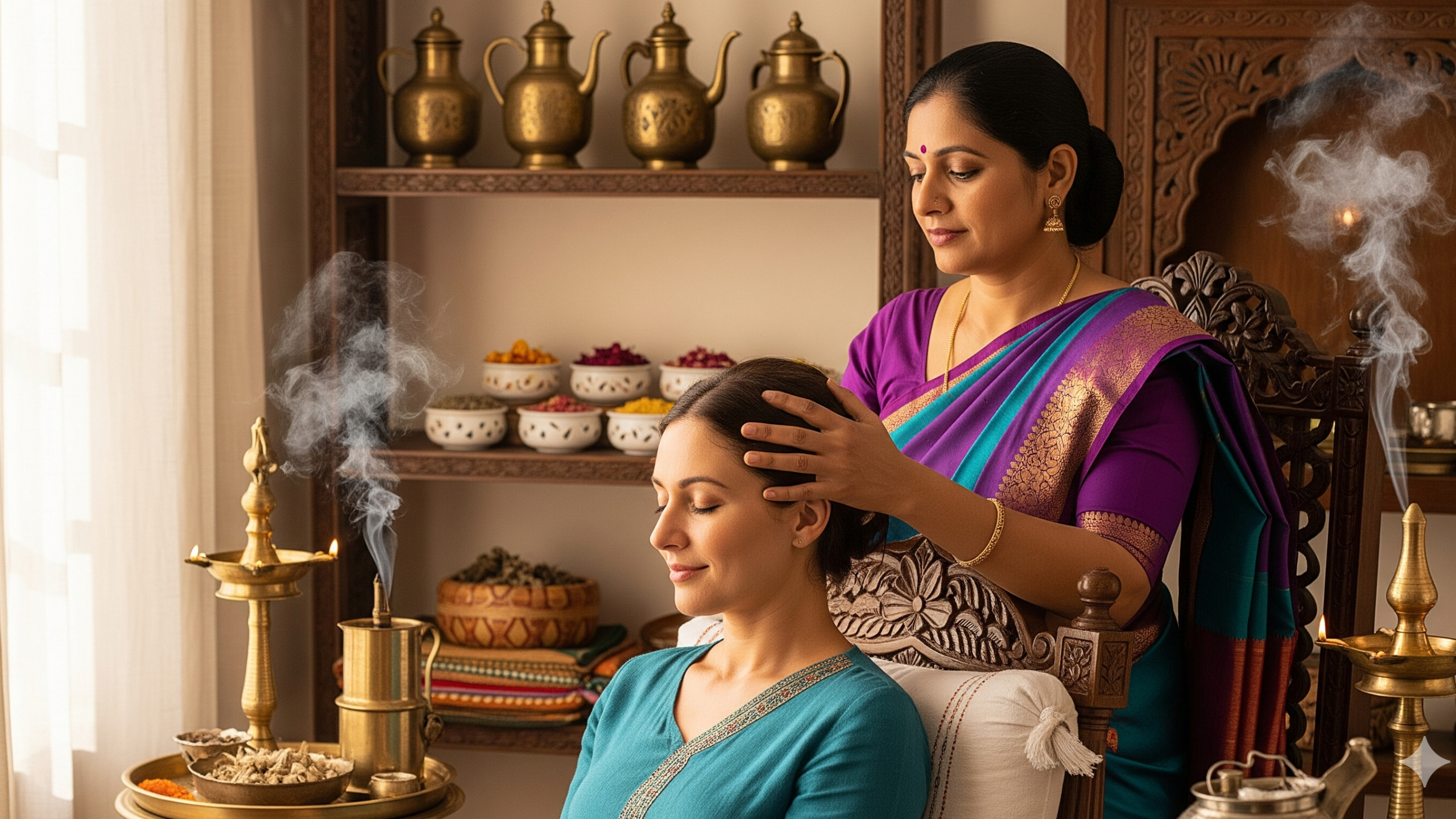 Champi is much more than just a massage; it is a cherished ritual that embodies care and healing through touch. This therapeutic practice requires no fancy equipment or disrobing and can be comfortably performed while seated in a simple chair, making it one of the most accessible and convenient forms of bodywork. Its gentle yet powerful techniques promote relaxation and well-being, connecting tradition with modern needs.
This article will take you on a detailed journey into the world of Champi, exploring its rich historical background, the Ayurvedic principles that guide it, the specific massage techniques involved, and the wide range of scientifically supported benefits it offers. Whether you’re new to Indian Head Massage or looking to deepen your understanding, this exploration will reveal why Champi remains a timeless wellness practice.
What is an Indian Head Massage?
A Traditional Healing Therapy
Indian Head Massage is a traditional therapy that involves the systematic massage of the upper back, shoulders, arms, neck, scalp, and face. Unlike many Western massage forms, it is performed with the recipient fully clothed and seated upright in a chair. This makes it an ideal treatment for corporate settings, homes, and wellness centers alike.
Origins of “Champi”
The term “Champi” originates from the Hindi word ‘Champna’, meaning ‘to press or knead softly’. This word traveled with colonial British families and their Indian nannies (ayahs) back to England in the 19th century, eventually evolving into the English word “shampoo,” which initially referred to the act of massaging the scalp and hair during a wash. This etymological journey hints at the deep, everyday integration of this practice in Indian life.
A Holistic Approach to Wellness
At its heart, Champi is not merely a physical manipulation of muscles; it is a holistic practice designed to balance the body’s energy systems, calm the mind, and nourish the spirit. It is a cornerstone of preventative healthcare in Ayurveda, aimed at maintaining well-being rather than just treating illness.
Champi: Its History and Cultural Background
Below is an overview of Champi, covering its history and cultural background.
Ayurvedic Roots of Champi
Champi, or Indian head massage, is deeply intertwined with Ayurveda, the ancient Indian system of holistic healing.
- Shiro Abhyanga in Ayurveda: Known as Shiro Abhyanga in classical Ayurvedic texts, head massage was considered essential to balance the body’s energies, or doshas, particularly Vata.
- Vital Energy and the Head: The head is seen as the seat of Prana (life force), housing all the sensory organs and higher mental faculties, thus requiring regular nourishment and care.
- Sadhaka Pitta and Mental Wellness: This sub-dosha governs emotions and intellect; massaging the head is believed to stabilize mood and enhance clarity of thought.
- Oiling as a Therapeutic Ritual: Herbal oils were chosen based on individual constitution (prakriti), making the ritual both personalized and medicinal.
- Daily Routine for Health Maintenance: Champi was recommended as part of Dinacharya (daily routine) to promote longevity, better sleep, and healthy hair.
Champi in the Barbershop Culture
Beyond its Ayurvedic application, Champi thrived in India’s vibrant barbershop culture, becoming a mainstay in male grooming traditions.
- A Multi-Sensory Experience: A typical barber visit included not just hair grooming but a robust head, neck, and shoulder massage using rhythmic and percussive movements.
- Physical and Mental Rejuvenation: The massage helped improve circulation, relax tense muscles, and clear mental fatigue, making it a practical wellness ritual.
- Skill Passed Through Apprenticeship: Barbers learned techniques through hands-on mentorship rather than formal education, preserving the traditional methods.
- Community and Accessibility: Affordable and widespread, barbershops made Champi accessible to people across all socioeconomic backgrounds.
- Cultural Identity and Expression: In many regions, this tradition was tied to regional identity and was often customized with local oils and techniques.
Family-Based Tradition and Emotional Bonding
In Indian households, Champi is more than a health practice—it’s an expression of care and familial love.
- Maternal and Grandmaternal Care: Elders often massaged children before baths to nurture both physical and emotional well-being.
- Strengthening Relationships: The act of massaging became a medium of expressing affection, reducing stress, and reinforcing emotional ties.
- Transgenerational Knowledge Transfer: Techniques and herbal formulations were passed down orally, maintaining the practice’s continuity and cultural integrity.
- Domestic Preventative Healthcare: Champi served as an affordable home remedy for ailments like headaches, insomnia, and anxiety.
- Inclusive for All Ages: From infants to the elderly, the practice was adapted to different needs, making it a lifelong wellness companion.
Linguistic and Global Influence
The term Champi itself has left a mark far beyond India, illustrating the cultural reach of the practice.
- Etymology and Language: The Hindi word champi (to massage the head) gave rise to the English word shampoo, originally referring to massage and not cleansing.
- Colonial Era Spread: British colonizers adopted the practice and terminology during their time in India, bringing it back to Europe.
- Fusion with Western Practices: Elements of Indian head massage have been integrated into global spa and massage therapies.
- Global Awareness and Demand: Champi is now taught and practiced worldwide as part of holistic therapy certifications.
Revival and Modern Adaptation
Despite its ancient origins, Champi continues to evolve and find relevance in modern wellness spaces.
- Urban Wellness Centers and Spas: Modern Ayurvedic spas offer Champi as part of premium wellness packages targeting stress and digital fatigue.
- Scientific Recognition: Studies on the benefits of head massage have lent credibility to its use in mental health and stress management.
- Digital Dissemination: Social media and YouTube have allowed traditional barbers and practitioners to share techniques globally, creating a new wave of interest.
- Cultural Reclamation: Younger generations in India and the diaspora are reconnecting with this ancestral practice as a form of cultural identity and self-care.
- Customized for Contemporary Lifestyles: Today’s versions may include aromatherapy, sound healing, or even tech-assisted tools, making Champi accessible to modern users.
Narendra Mehta: The Man Behind Champissage’s Global Rise
Here’s a quick look at Narendra Mehta, the guy who brought Champissage to the world.
Champi in India:
- In India, Champi (head massage) was a common, everyday practice deeply woven into the culture.
- However, it had not been introduced to the West in any formalized way.
Early Life and Background:
- Narendra Mehta was born in India and lost his sight at a young age.
- Raised in Mumbai, he grew up experiencing the benefits of Champi firsthand.
- His blindness heightened his sensitivity to touch, shaping his future path.
Moving to the UK:
- In the 1970s, Mehta moved to the UK to train as a physical therapist.
- He was surprised to find that head massage was completely missing from Western bodywork.
- He recognized a significant gap—Western massage often ignored the head and scalp.
Research in India:
- In 1978, Mehta returned to India to research Champi in its traditional setting.
- Instead of academic sources, he learned from street barbers and traditional healers.
- He studied their methods deeply, mastering pressure, rhythm, and flow.
Creating “Champissage”:
- Mehta blended traditional Indian techniques with Western anatomical knowledge.
- He developed a structured, teachable sequence and named it Champissage (“Champi” + “massage”).
Global Introduction:
- In 1981, Mehta introduced Champissage at an exhibition in Olympia, London.
- He performed the therapy on 179 people during the event.
- The response was overwhelmingly positive—people experienced instant relief from stress and headaches.
Legacy and Impact:
- Champissage gained recognition as a formal complementary therapy in the West.
- Mehta founded the London Centre of Indian Champissage to teach and promote the method.
- Until his passing, he remained a tireless advocate for Champissage, leaving a legacy of healing and cultural exchange.
Ayurveda: The Science Behind Champi
To fully appreciate Indian Head Massage (Champi), it helps to understand the Ayurvedic philosophy that forms its foundation. This ancient system views the body as a dynamic interplay of energy, elements, and consciousness.
The Doshas: The Body’s Natural Energies
Ayurveda teaches that everything in the universe, including the human body, is made up of five elements—space, air, fire, water, and earth. These combine to form three vital energies, or doshas, which govern our physical and mental processes.
- Vata (Air & Space): Governs movement, including the nervous system and mental activity. Easily aggravated by stress and overstimulation.
- Pitta (Fire & Water): Governs digestion, metabolism, and transformation. Imbalances may cause irritability and inflammation.
- Kapha (Earth & Water): Governs structure, stability, and lubrication. When out of balance, it can lead to sluggishness or attachment.
Champi is particularly effective in calming Vata, which often accumulates in the head and neck due to mental stress and sensory overload.
Marma Points: Unlocking the Body’s Vital Energy
Marma points are subtle energy centers where bones, muscles, blood vessels, and nerves converge—similar to acupuncture points. Massaging these areas can balance Prana (life force), promote healing, and restore energetic flow.
Key marma points addressed during Champi include:
- Adhipati (Crown of the Head): Relieves mental tension and headaches.
- Sthapani (Between the Eyebrows/Third Eye): Improves focus and relieves sinus pressure.
- Apanga (Temples): Eases eye strain and tension headaches.
- Vidhura (Behind the Earlobes): Soothes ear-related discomfort and jaw tightness.
These points are not just anatomical—they’re energetic access points that influence both physical and emotional health.
Chakras: Balancing the Energy Centers
Champi also aligns and activates chakras, or spinning energy centers, located along the spine and head. Each chakra governs specific physical and emotional aspects of our being.
- Vishuddha (Throat Chakra): Massaging the neck area helps improve communication, expression, and confidence.
- Ajna (Third Eye Chakra): Located between the brows, it’s stimulated during forehead massage and supports clarity, intuition, and inner vision.
- Sahasrara (Crown Chakra): Found at the top of the head, this chakra connects us to higher awareness, peace, and spiritual insight.
A skilled practitioner intuitively works with these chakras to create a deeper sense of well-being and balance.
A Truly Holistic Experience
Far beyond a physical treatment, Champi works on multiple layers of the self—body, mind, and spirit. By harmonizing the doshas, stimulating vital points, and opening energy channels, this ancient practice offers a profound experience of relaxation, clarity, and rejuvenation.
How to Do a Champi Massage: Step-by-Step Guide to Champi
A full Indian Head Massage sequence is a flowing, rhythmic dance of hands over the upper body. It typically lasts between 20 to 45 minutes and follows a logical progression from the broader muscle groups to the more delicate areas. Here is an expanded breakdown of the four core stages:
Shoulders, Upper Back, and Arms
Objective: To release deep-seated tension in the trapezius and deltoid muscles, which are primary repositories of stress. This stage warms up the body and prepares it for deeper work on the neck and head.
Technique:
- The practitioner stands behind the seated client.
- Effleurage: Long, gliding strokes are used to warm the muscles over the shoulders and down the arms.
- Kneading (Petrissage): The fleshy trapezius muscle is gently lifted, squeezed, and rolled between the fingers and thumb, working from the base of the neck out towards the shoulder joint. This is done methodically, increasing pressure gradually based on client feedback.
- Friction: Circular thumb pressure is applied along the top of the shoulders and into the tight “knots” along the muscle fibers of the upper back, particularly around the scapula.
- Tapotement (Percussion): A series of gentle, stimulating hacking or cupping movements (hastaprakarshana) may be used on the shoulders and back to invigorate the area.
The Neck
Objective: To release tension in the sternocleidomastoid and levator scapulae muscles, improve mobility, and stimulate blood flow to the brain.
Technique:
- This requires great care due to the sensitivity of the cervical spine.
- The practitioner supports the client’s forehead with one hand while using the other to perform slow, firm strokes down the sides and back of the neck, using the thumb and fingers.
- Gentle rotating movements of the head may be incorporated to increase flexibility and release stiffness. This is always performed slowly and within the client’s natural range of motion, never forcing a movement.
- Attention is paid to the Marma points at the base of the skull (a key area for tension headaches).
The Scalp
Objective: To stimulate the countless nerve endings and blood vessels in the scalp, promote hair health, and induce deep mental relaxation.
Technique:
- The practitioner’s fingers are spread wide apart, and firm, consistent pressure is applied with the pads of the fingers.
- Using a variety of movements—small circular motions, lifting and squeezing of the scalp, and a “knuckling” technique where loose fists are rotated on the scalp—the entire head is thoroughly massaged.
- The hair is gently pulled and tugged in sections to stimulate the hair roots and release tension from the scalp tissue (Gandusha).
- This stage is often described as intensely relaxing and euphoric.
The Face and Ears
Objective: To release tension held in the jaw (TMJ), temples, and brow, and to complete the relaxation process.
Technique:
- Using very gentle, soothing strokes, the practitioner massages the forehead, smoothing out frown lines from the center out towards the temples.
- Small circular pressure is applied to the temples.
- The jawline is worked on to release clenching, and pressure points around the sinuses are stimulated to relieve congestion.
- A surprisingly effective and relaxing technique involves a gentle massage of the earlobes and the outer ear, which are rich in nerve endings and acupuncture points connected to the entire body.
The treatment concludes with the practitioner resting their hands gently on the client’s shoulders or the crown of the head for a moment, allowing the energy to settle and integrate.
How Champi Helps Your Body and Mind
The benefits of regular Indian Head Massage are extensive and well-supported by both ancient wisdom and modern science.
1. Stress, Anxiety, and Mental Well-being
This is its most celebrated benefit. The massage dramatically reduces cortisol (the primary stress hormone) levels and stimulates the production of endorphins (feel-good hormones) and serotonin. This induces a state of deep calm, alleviates anxiety, and can help manage symptoms of depression. It provides a much-needed “digital detox,” forcing a break from constant mental stimulation.
2. Relief from Headaches and Migraines
By releasing muscle tension in the neck, shoulders, and scalp—a primary cause of tension headaches—and improving circulation, Champi can significantly reduce the frequency and intensity of headaches. For migraine sufferers, it can serve as a powerful complementary therapy for managing pain.
3. Improved Concentration and Mental Clarity
The increased blood flow to the brain delivers more oxygen and nutrients, sharpening cognitive function. Clients often report improved focus, enhanced memory, and clearer thinking after a session, making it an excellent practice for students and professionals.
4. Hair and Scalp Health
The massage unclogs hair follicles, removes dead skin cells, and stimulates sebaceous glands to produce natural oils, promoting a healthier scalp environment. This can reduce dandruff, dryness, and hair thinning while encouraging stronger, shinier, and healthier hair growth.
5. Relief from Eye Strain and Sinusitis
The gentle work around the eye sockets, sinuses, and bridge of the nose helps drain congestion, relieve pressure, and ease strain caused by excessive screen time.
6. Improved Sleep Quality (Insomnia Relief)
The profound state of relaxation it induces, combined with the pacification of the Vata dosha which governs the nervous system, makes it an effective natural remedy for insomnia and restless sleep.
7. Energetic Rebalancing
On a subtle level, the massage is believed to clear blockages in the energy pathways (nadis), balance the chakras, and promote a free flow of Prana throughout the body, leading to a feeling of vitality and holistic well-being.
Contraindications and Important Aftercare Advice
While Indian Head Massage is extremely safe, it is not suitable for everyone. Contraindications include:
- Contagious or infectious skin conditions on the head or neck (e.g., ringworm, impetigo, severe acne).
- Recent head injury, concussion, or brain surgery.
- Severe, uncontrolled hypertension.
- History of stroke or blood clots.
- Osteoporosis of the neck or spine.
- Immediately after chemotherapy or radiotherapy.
- Important: It is always advised to consult a doctor before receiving any massage if you have a specific medical condition.
Aftercare is simple but crucial to maximize benefits:
- Hydrate: Drink plenty of water to help flush out any released toxins.
- Rest: Avoid strenuous activity immediately after the massage. Allow your body and mind to integrate the experience.
- Avoid Stimulants: Try to avoid caffeine, alcohol, and heavy meals for a few hours post-massage.
- Listen to Your Body: It is common to feel deeply relaxed, slightly light-headed, or sleepy. This is a positive sign that the body is entering a state of healing and rest.
FAQ’s
1. What is Champi massage?
Champi is a traditional Indian head massage rooted in Ayurvedic healing, focusing on the head, neck, and shoulders to promote relaxation, improve circulation, and balance energy.
2. How is Champi performed?
Champi involves a series of gentle, rhythmic massage strokes using fingertips and palms on the scalp, neck, shoulders, and sometimes the face, often with the application of herbal oils.
3. What are the benefits of Champi?
Champi can reduce stress and tension, improve blood flow to the scalp, promote healthy hair growth, relieve headaches, and enhance mental clarity and relaxation.
4. Is Champi massage good for hair growth?
Yes, the stimulation of the scalp during Champi increases blood circulation to hair follicles, nourishing them and potentially encouraging stronger, healthier hair growth.
5. How often should you get a Champi massage?
For best results, Champi can be done 1-3 times a week, but even a weekly session can provide noticeable relaxation and hair health benefits.
6. Can Champi reduce stress and anxiety?
Absolutely, the calming, soothing touch helps to lower stress hormones and promote a sense of peace and relaxation, making it effective for anxiety relief.
7. What oils are used in Champi massage?
Common oils include coconut, sesame, almond, and herbal blends infused with neem, brahmi, or amla—each chosen for their nourishing and healing properties.
8. Where can I get a Champi massage near me?
Many Ayurvedic centers, wellness spas, and some salons offer Champi massages. A quick online search or local wellness directories can help you find providers nearby.
9. Can I learn Champi massage at home?
Yes, with proper guidance through videos or workshops, you can learn basic Champi techniques to practice on yourself or family members safely.
10. Is Champi safe for babies and the elderly?
Yes, Champi is gentle enough for babies and elderly individuals, but it should be done with light pressure and suitable oils; it’s best to consult a healthcare provider if there are specific health concerns.
Indian Head Massage, or Champi, is a gift of ancient wisdom perfectly suited for the challenges of the 21st century. It is a democratized therapy—inexpensive, non-invasive, and powerfully effective. It requires no technology, only the human touch and mindful intention.






















Thank you for sharing
I could imagine receiving a Champissage, a type of head massage with specific ancient techniques used to relieve specific tension patterns.