Monsoon Wellness with Ayurveda: Ritucharya for Varsha Ritu

The monsoon season, known as Varsha Ritu in Ayurveda, arrives as a welcome respite from the scorching heat of summer (Grishma Ritu). The earth dons a vibrant green cloak, the air fills with the petrichor of rain on dry soil, and rivers swell with life-giving water. 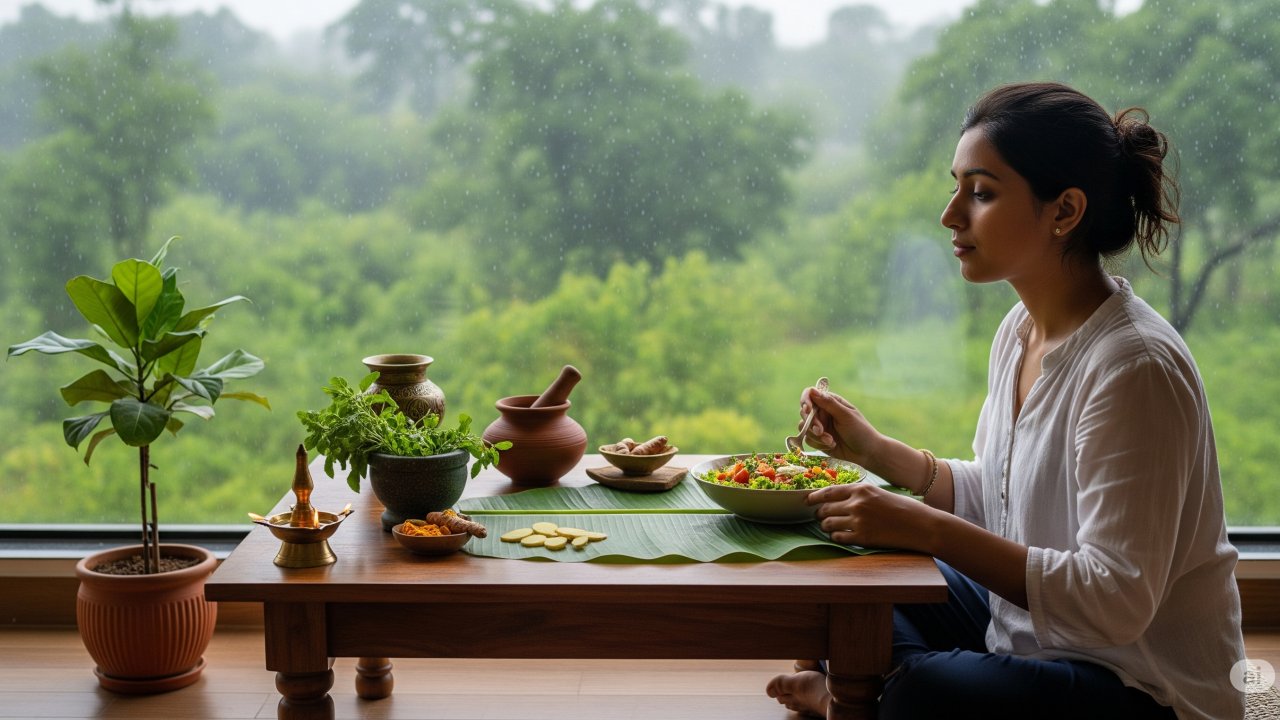 However, this dramatic shift in the environment brings unique challenges to our health and well-being. Ayurveda, the ancient Indian science of life, emphasizes living in harmony with nature’s cycles through Ritucharya – the seasonal regimen.
Adhering to specific practices during Varsha Ritu is paramount to navigating its potential pitfalls and harnessing its rejuvenating potential. This comprehensive guide delves deep into the Ayurvedic wisdom for thriving during the monsoon.
Ayurveda and Monsoon Health
Ayurveda teaches that our internal environment (microcosm) is intrinsically linked to the external environment (macrocosm). As seasons change, so do the dominant forces within nature – the Doshas (Vata, Pitta, Kapha) – and consequently, within our own physiology.
Ritucharya provides a tailored blueprint of diet, lifestyle, and therapies designed to maintain Doshic balance, strengthen Agni (digestive fire), and bolster immunity as we transition through each season. Ignoring these seasonal shifts can lead to imbalances, weakened immunity, and susceptibility to disease.
In the traditional Indian calendar, Varsha Ritu typically spans from approximately mid-July to mid-September, corresponding to the lunar months of Shravana and Bhadrapada.
This period is characterized by:
- Cooling Temperatures: Relief from intense summer heat.
- High Humidity: The air becomes laden with moisture.
- Overcast Skies & Heavy Rainfall: Reduced sunlight exposure.
- Wind & Storms: Increased movement in the atmosphere.
- Earth Becomes Muddy & Unstable: Affecting grounding and stability.
How Monsoon Affects Your Doshas
Vata Aggravation
The qualities of Vata Dosha (dry, light, cold, mobile, rough, subtle) are significantly amplified during the monsoon. Cool winds, dampness, reduced sunlight, and the inherent instability of muddy ground all contribute to Vata vitiation. This is the primary Doshic challenge of the season.
Pitta Accumulation
While Pitta (hot, sharp, liquid, slightly oily) isn’t dominant, the residual heat from summer combined with high humidity creates a stagnant, “fermentative” environment. Pitta can accumulate, especially in the digestive system, leading to heat-related issues.
Severely Depressed Agni (Digestive Fire)
This is arguably the most critical factor. Ayurveda states that Agni is at its absolute weakest during Varsha Ritu. The combination of Vata’s cold and erratic nature, high humidity (dampening the fire).
The lingering effects of summer heat on the body drastically diminish digestive capacity. Weak Agni leads to poor digestion, malabsorption, and the formation of Ama – toxic, undigested metabolic waste that clogs channels and is the root cause of many diseases.
Why Varsha Ritucharya is Non-Negotiable
Ignoring seasonal adjustments invites a host of health issues:
- Digestive Disorders: Bloating, gas, indigestion, constipation, diarrhea, loss of appetite, acid reflux.
- Ama Buildup: Fatigue, heaviness, coated tongue, brain fog, low immunity.
- Joint & Musculoskeletal Issues: Aggravated Vata causes stiffness, aches, pains, arthritis flare-ups, and muscle cramps.
- Respiratory Ailments: Colds, coughs, flu, sinusitis, aggravated asthma.
- Skin Problems: Fungal infections (ringworm, athlete’s foot), eczema flare-ups, acne (due to Pitta accumulation and Ama), boils.
- Waterborne & Vector-Borne Diseases: Increased risk of typhoid, cholera, hepatitis A, gastroenteritis, dengue, malaria due to contaminated water, food, and stagnant water breeding mosquitoes.
- Low Immunity & General Debility: Weak Agni directly correlates with weakened Ojas (vital essence), making the body vulnerable.
- Mental Imbalances: Vata imbalance can manifest as anxiety, restlessness, insomnia, and fearfulness.
How Seasonal Change Affects Your Doshas and Physiology
The environmental shifts of Varsha Ritu create a cascade of effects within the body:
1. Vata Imbalance
- Causes: Cold winds, pervasive dampness (yet paradoxically causing internal dryness), reduced atmospheric pressure, unstable footing, erratic weather patterns.
- Manifestations: Dry or rough skin and lips, constipation, bloating, excessive gas, abdominal cramps, joint pain (especially lower back, knees, hips), muscle stiffness or twitching, cracking joints, tremors, insomnia, anxiety, nervousness, restlessness, feelings of ungroundedness, earaches, sensitivity to cold.
2. Pitta Imbalance
- Causes: Lingering summer heat trapped by humidity, stagnant water creating a “fermenting” environment internally and externally, consumption of improper foods (sour, fermented, spicy).
- Manifestations: Acidity, heartburn, sour belching, inflammatory skin conditions (rashes, acne, boils), low-grade fevers, excessive thirst, irritability, frustration, loose stools or diarrhea with a burning sensation, susceptibility to infections (as Pitta governs metabolic fire and transformation, its imbalance weakens this protective aspect).
3. Agni (Digestive Fire) at its Lowest
- Causes: The dominance of Vata’s cold and erratic qualities, Kapha-like dampness from humidity suppressing the fire, and a weakened body from summer depletion.
Weak Agni leads to:
- Incomplete digestion of food.
- Poor nutrient absorption.
- Rapid formation of Ama (toxins).
- Ama circulates through channels (Srotas), causing blockages and inflammation.
- Heaviness, lethargy, fatigue, brain fog.
- Compromised immune function (Ojas depletion).
- Exacerbation of all other imbalances.
Dinacharya for Monsoon: A Daily Routine for Balance and Calm
Your daily routine is your first line of defense against monsoon imbalances. Prioritize warmth, dryness, stability, and gentle nourishment.
1. Waking Up:
- Rise early, ideally during Brahma Muhurta (around 1.5 hours before sunrise). However, avoid immediate exposure to cold, damp morning air. Allow your body to adjust gradually.
2. Oral Hygiene (Danta Dhavana):
- Tongue Scraping (Jihwa Nirlekhana): Essential upon waking to remove accumulated Ama (toxins) and bacteria. Use a copper or stainless steel scraper.
- Oil Pulling (Gandusha/Kavala): Swish 1 tablespoon of warm Sesame Oil (excellent for Vata) or Coconut Oil (if Pitta is high) in your mouth for 5-10 minutes. Spit it out (never swallow) and rinse. This strengthens gums, purifies the oral cavity, draws out toxins, and soothes Vata.
- Brush teeth with herbal pastes (Neem, Babool).
2. Abhyanga (Self-Massage): Non-negotiable in Monsoon.
- Why: Counteracts Vata’s dryness, roughness, and coldness. Nourishes tissues, calms the nervous system, improves circulation, lubricates joints, and promotes grounding.
- Oil: Warm Sesame Oil is ideal for its deep penetrating, Vata-pacifying qualities. If Pitta is significantly aggravated, use warm Coconut Oil.
- Method: Generously massage warm oil all over the body, paying special attention to the head (Shiro Abhyanga), ears, feet, and joints. Use long, steady strokes on limbs and circular motions on joints. Massage for 10-20 minutes.
- Aftercare: Allow the oil to absorb for 15-30 minutes, then take a warm (not hot) bath or shower. Avoid harsh soaps; use chickpea flour (Besan) or mild herbal soap. Thoroughly dry yourself, especially between toes and skin folds.
3. Exercise (Vyayama): Moderation is key.
- Intensity: Opt for gentle to moderate exercise. Over-exertion depletes energy and further aggravates Vata.
Ideal Practices:
- Yoga: Focus on grounding poses (Tadasana, Vrksasana, Virabhadrasana I & II), gentle twists (Bharadvajasana), forward folds (Paschimottanasana), hip openers (Baddha Konasana), and restorative poses (Supta Baddha Konasana, Viparita Karani).
- Include Pranayama: Nadi Shodhana (Alternate Nostril Breathing – balancing), Ujjayi (Victorious Breath – warming, calming), Bhramari (Bee Breath – calming Vata).
- Indoor Activities: Light stretching, Tai Chi, Qi Gong.
- Walking: Only during breaks in the rain, on dry ground. Avoid slippery surfaces.
Avoid: Intense cardio, heavy weightlifting, long-distance running, exercising in the rain or cold wind.
- Crucial: Dry off completely and change into warm, dry clothes immediately after exercise. Do not let dampness linger.
4. Clothing (Vastra): Your armor against the elements.
- Fabric: Choose warm, dry, natural fibers like cotton (light layers), silk (thermoregulating), or light wool. Avoid synthetic fabrics that trap moisture.
- Cover Up: Protect your head, ears, neck, and feet from cold winds and dampness. Use scarves, hats, socks, and sturdy, waterproof footwear. Keep your lower back covered.
- Dryness: Always change out of wet clothes immediately. Have spare dry clothes available.
5. Sleep (Nidra): Prioritize rest and warmth.
- Timing: Aim to be asleep by 10:00 PM. Adequate sleep is vital for Vata balance and immune function.
- Environment: Ensure your sleeping area is warm, dry, and draft-free. Use warm bedding. Consider a warm bath or foot soak before bed.
- Avoid: Daytime sleep (Nidra Divasa), as it severely dampens Agni and increases Kapha and Ama.
Ahara: The Monsoon Diet
When your digestion (Agni) is weak, diet becomes especially important. The key is to eat food that is light, warm, easy to digest, and freshly made.
The goal is to gently strengthen your digestive fire without putting too much pressure on it or increasing heat (Pitta) in the body. At the same time, we want to calm Vata and prevent toxins (Ama) from building up.
What is beneficial (Pathya):
1. Grains: Focus on easily digestible grains. Old Barley (Yava) is highly recommended in Ayurveda for the monsoon due to its light, drying, and Agni-kindling properties. Rice (especially Basmati), well-cooked Oats, Wheat (in moderation, well-cooked like chapatis), and Millets (like Foxtail Millet – Kangni) are good. Soak grains before cooking if possible.
2. Legumes (Pulses): Moong Dal (split yellow or green Mung beans) is the king of monsoon lentils – supremely easy to digest, nourishing, and balancing. Masoor Dal (Red Lentils) is also relatively light. Prepare them as thin soups (Dal) or Kichadi.
3. Vegetables: Prioritize well-cooked vegetables. Gourds are excellent: Bottle Gourd (Lauki/Dudhi), Ridge Gourd (Turai/Tori), Bitter Gourd (Karela – Pitta pacifying). Also include Pumpkin, Carrots, Asparagus, Green Beans, Okra (Ladyfinger/Bhindi), Sweet Potatoes (in moderation), cooked Onions, and Ginger. Leafy greens should be consumed in strict moderation, always well-cooked (e.g., spinach in dal) due to potential contamination and Vata-aggravating qualities.
4. Fruits: Choose astringent, less juicy fruits at room temperature: Pomegranate, Apples (cooked or stewed are even better), Berries, Cherries, Peaches. Avoid refrigerated fruits.
5. Dairy: Fresh Buttermilk (Takra) – diluted with water and at room temperature – is excellent for digestion. Ghee (Clarified Butter) – moderate amounts, added to warm food – nourishes tissues and kindles Agni. Warm Milk – preferably spiced with ginger, cardamom, turmeric, or cinnamon – is good before bed for Vata. Use cow or goat milk. Avoid heavy yogurt/curd (Dahi) – buttermilk is the fermented choice.
6. Spices & Herbs: Indispensable Agni-Kindlers & Digestives: Fresh Ginger (Adrak – chew a piece before meals), Dry Ginger (Shunthi), Black Pepper (Kali Mirch), Long Pepper (Pippali), Cumin (Jeera), Coriander (Dhaniya) seeds/powder, Fennel (Saunf), Turmeric (Haldi), Asafoetida (Hing – a pinch in cooking), Rock Salt (Saindhava Namak), Fenugreek seeds (Methi), Cinnamon (Dalchini), Cardamom (Elaichi), Cloves (Laung), Mint (Pudina). Use generously but avoid excessive chili heat.
7. Fats & Oils: Ghee (best), Sesame Oil (for cooking, especially Vata types), Mustard Oil (traditional, warming). Use moderately.
8. Drinks: Sip Warm Water throughout the day (boiled and cooled is best).
9. Herbal Teas: Ginger tea, Cinnamon tea, Tulsi (Holy Basil) tea, Coriander-Fennel-Cumin (CFC) tea, Lemon Grass tea. Warm, diluted Buttermilk. Light vegetable soups. Warm spiced milk (Haldi Doodh/Golden Milk).
Avoid/Strictly Limit (Apathya)
- Heavy, Oily, Fried Foods: Pakoras, Samosas, French Fries, greasy curries, excessive nuts. They overwhelm weak Agni and cause immediate Ama.
- Raw Foods: Salads, uncooked vegetables, sprouts (unless very well cooked). Too hard to digest.
- Cold & Refrigerated Items: Ice water, cold drinks, ice cream, chilled yogurt, anything straight from the fridge. Extinguishes Agni.
- Sour Foods: Excessive yogurt/curd, heavy cheese, vinegar, excessive citrus fruits (lemons/limes in warm water are ok), fermented foods (pickles, sourdough – use minimally). Aggravates Pitta.
- Heavy Meats & Seafood: Red meat, pork, deep-water fish. Very hard to digest; promotes Ama and inflammation. If consumed, choose light options like chicken stew in small quantities.
- Excess Leafy Greens: Hard to digest and prone to contamination. Use sparingly, well-cooked.
- Leftovers & Stale Food: Prone to spoilage and Ama formation. Cook fresh meals.
- Street Food & Unhygienic Food: High risk of contamination and food/water-borne illnesses.
- Excess Water During Meals: Dilutes digestive juices. Sip warm water between meals instead.
- Processed Foods, Refined Sugar, White Flour: Contribute to Ama and inflammation.
Cooking & Eating Habits
- Methods: Boiling, Steaming, Stewing, Light Sautéing, Soups. Ensure food is cooked thoroughly and served hot/warm.
- Freshness: Prepare meals fresh, ideally for each meal.
- Timing: Lunch should be the largest meal when Agni is naturally strongest (around noon). Eat dinner early (by 7:30-8:00 PM) and keep it light (e.g., Kichadi, soup, stewed apple).
- Mindful Eating: Eat only when genuinely hungry. Avoid emotional eating. Eat in a calm environment, chewing food thoroughly (aim for liquid consistency before swallowing). Portions should be moderate – stop eating when about 3/4 full.
Vihara: Lifestyle for the Rainy Season
Beyond diet and daily routine, conscious lifestyle choices are crucial:
1. Warmth and Dryness are Sacred:
- Avoid getting drenched. If caught in the rain, change clothes and dry off immediately.
- Use room heaters or dehumidifiers if necessary, but avoid sitting in direct drafts.
- Keep living spaces dry and well-ventilated to prevent mold and mildew.
2. Shield from Wind and Dampness:
- Cover your head and ears when going outside, especially in windy conditions.
- Avoid sitting or sleeping directly on cold, damp floors or surfaces. Use mats or cushions.
- Dry your feet thoroughly, especially between the toes, after being outdoors.
3. Hygiene: Your First Defense:
- Water: Consume only purified or boiled and cooled water. Use water filters if possible.
- Food: Wash all fruits and vegetables meticulously in clean water, preferably with a drop of vinegar or turmeric water. Peel where appropriate.
- Personal Hygiene: Maintain regular bathing (with warm water), hand washing (especially before eating and after using the restroom), and oral hygiene. Keep nails trimmed.
- Environment: Prevent stagnant water around your home (breeding ground for mosquitoes). Keep kitchens and bathrooms clean and dry. Ensure proper waste disposal.
4. Nurturing the Mind (Manas):
- Pranayama & Meditation: Daily practice is essential. Nadi Shodhana balances Vata and Pitta. Bhramari calms anxiety. Meditation cultivates inner stability amidst external chaos.
- Stress Management: Vata imbalance makes the mind prone to anxiety. Avoid excessive mental strain, overwork, and stressful situations. Prioritize relaxation.
- Calming Activities: Engage in gentle hobbies – reading, listening to soothing music, light gardening (when dry), spending quality time with loved ones, practicing gratitude.
5. Avoid Daytime Sleep:
- As emphasized earlier, it severely dampens Agni, increases Kapha and Ama, leading to lethargy and congestion.
6. Aromatherapy (Gandhayukti):
Use warming, grounding essential oils to soothe Vata:
- Diffusers: Cedarwood, Frankincense, Sandalwood, Sweet Orange, Mild Camphor (Kapur), Lavender (calming).
- Massage Oil Blends: Add a few drops of warming oils like Ginger, Black Pepper, or Cinnamon to your Abhyanga oil base (test dilution first).
Herbal Support for Monsoon Wellness
Ayurveda offers potent herbs to support the body during this vulnerable time. Use under guidance if possible, especially for chronic conditions.
Agni Kindlers & Digestives (Deepana-Pachana):
- Fresh Ginger (Adrak): Chew a small piece before meals or drink ginger tea. The ultimate digestive stimulant.
- Trikatu Churna: Classic blend of Ginger, Black Pepper, and Long Pepper. A potent Agni igniter. Use sparingly (pinch) with honey or warm water before meals. Avoid if Pitta is very high or ulcers present.
- Hing (Asafoetida): A pinch added to cooking lentils and vegetables prevents gas and bloating.
- Ajwain (Carom Seeds): Chew a pinch after meals or drink Ajwain water for digestion.
Immunity Builders & Rasayanas (Rejuvenators):
- Chyawanprash: The legendary herbal jam. A daily dose (1-2 tsp) boosts immunity (Ojas), supports respiratory health, aids digestion, and counteracts Vata depletion. Take warm with warm milk or water.
- Tulsi (Holy Basil): “The Incomparable One.” Drink Tulsi tea daily for immune support, respiratory health, stress relief, and Pitta balance.
- Turmeric (Haldi): Powerful anti-inflammatory, antimicrobial, liver-supportive. Use liberally in cooking. Golden Milk (Haldi Doodh – turmeric simmered in warm milk with spices) is a monsoon tonic.
- Amalaki (Indian Gooseberry): Rich in Vitamin C, Pitta-pacifying, rejuvenative. Found in Chyawanprash or as powder (Churna).
Vata Pacifiers & Nervines:
- Ashwagandha (Withania somnifera): The premier adaptogen for Vata. Reduces stress, anxiety, fatigue, improves sleep, strengthens nerves and muscles. Best taken with warm milk at bedtime.
- Brahmi (Bacopa monnieri/Gotu Kola): Calms the mind, improves focus, reduces Vata-related anxiety and restlessness.
- Dashamoola: A traditional compound of ten roots, renowned for pacifying Vata, especially in musculoskeletal pain, nervous disorders, and respiratory issues. Use under professional guidance.
Water Purifiers:
- Boiling water: The most reliable method.
- Herbs: Add Tulsi leaves or Ushiras (Vetiver) roots to stored drinking water for purification and cooling properties.
Monsoon Illnesses and How Ayurveda Helps
1. Indigestion, Bloating, Ama (Mandagni):
- Action: Light fasting or mono-diet (e.g., only Moong Dal Khichadi or vegetable soup). Ginger tea before meals. Trikatu or Hing with warm water. Gentle abdominal massage clockwise with warm sesame oil. Avoid all aggravating foods.
2. Common Cold, Cough, Flu (Pratishyaya, Kasa):
- Action: Rest. Warm fluids (Tulsi-Ginger tea, CFC tea). Steam inhalation with Tulsi leaves or Eucalyptus oil (if Kapha congestion). Light, warm diet (soups, Kichadi). Ginger powder + honey for dry cough. Vasaka (Adhatoda vasica) syrup (for wet cough) under guidance. Avoid cold, heavy, dairy (except buttermilk).
3. Joint & Muscle Pain (Sandhivata, Mamsagata Vata):
- Action: Regular warm oil massage (Abhyanga) with sesame or Mahanarayan oil. Apply gentle heat (warm compress, heating pad). Anti-Vata diet (warm, oily, nourishing). Gentle mobility exercises (Yoga). Ashwagandha. Avoid cold, dry, raw foods.
4. Skin Infections/Fungal Issues (Kushtha):
- Action: Strict hygiene. Keep skin clean and dry. Apply pastes of Neem leaves or Turmeric powder mixed with water or sandalwood paste to affected areas. Consume Neem capsules or juice (bitter, Pitta pacifying) under guidance. Turmeric internally. Avoid sugar, fermented foods, heavy oils, and damp environments on skin.
5. Waterborne Diseases (Jala Ja Rogas – e.g., Gastroenteritis, Typhoid, Cholera, Hepatitis A):
- Prevention is Paramount: Rigorous hygiene (boiled/filtered water, washed/cooked food) is non-negotiable.
6. Early Signs & Mild Cases (Vomiting, Diarrhea, Low Fever):
- Action: Immediate rest. Strict light liquid diet: Warm CCF tea (Cumin-Coriander-Fennel), Ginger tea, Yavagu (thin rice gruel cooked with ginger and cumin), Manda (water from cooked rice). Avoid solids.
Herbs:
- Kutaja (Holarrhena antidysenterica): The premier herb for infectious diarrhea/dysentery. Use Kutajavaleha (herbal jam) or powder (1-2g with honey, 2-3 times daily) under guidance.
- Musta (Cyperus rotundus): Excellent for fever, digestive upset in infections. Powder (1g with warm water).
- Pomegranate Peel (Dadima Twak): Astringent, antimicrobial. Decoction of peel (small piece boiled in water).
- Ginger + Rock Salt: Chew a small piece for nausea.
- Hydration: Sip Oral Rehydration Solution (ORS) or homemade Lime-Salt-Sugar water or Buttermilk with Rock Salt & Cumin Powder frequently in small amounts.
7. Severe Cases (High Fever, Bloody Stools, Severe Dehydration, Persistent Vomiting):
- Action: SEEK URGENT MEDICAL ATTENTION. Ayurvedic support can be adjunctive alongside modern medical care for hydration, antibiotics if needed, and managing complications.
- Ayurvedic Adjuncts (Under Professional Supervision): Kutajarishta (fermented decoction), Bilva (Aegle marmelos) pulp for dysentery, Parpatarishtam (for typhoid fever symptoms).
8. Low Immunity & Fatigue (Ojakshaya, Daurbalya):
Causes: Weak Agni (Ama buildup), poor nutrient absorption, Vata depletion, stress, recurrent infections.
- Action:Focus on easily digestible, nourishing foods: Moong Dal Khichadi with ghee, bone broths (if non-veg), stewed fruits, warm spiced milk. Small, frequent meals if weak.
Herbs/Rasayanas:
- Chyawanprash: 1-2 tsp twice daily with warm milk/water. Prime rejuvenative for immunity and energy.
- Ashwagandha: 1-3g powder with warm milk at bedtime. Builds strength, stamina, Ojas, and calms stress. Best for Vata fatigue.
- Shatavari (Asparagus racemosus): 1-3g powder with milk. Nourishing, cooling, builds fluids and Ojas. Good for Pitta-related weakness.
- Guduchi (Tinospora cordifolia): 1-3g powder or decoction. Powerful immunomodulator, detoxifier (clears Ama), fever reducer.
- Golden Milk (Haldi Doodh): Daily dose of turmeric’s anti-inflammatory and immune benefits.
- Lifestyle: Prioritize rest. Gentle movement (walking, stretching). Stress management (Pranayama, Meditation). Strict adherence to Ritucharya principles.
9. Mental Well-being: Anxiety & Lethargy (Manasika Vikara – Chinta, Alasya):
Vata-Type Anxiety (Chinta, Bhaya): Restlessness, worry, fear, insomnia.
- Action: Grounding routine. Warm Abhyanga (esp. head/shoulders). Nadi Shodhana Pranayama. Bhramari Pranayama. Meditation.
- Herbs: Ashwagandha (with warm milk), Brahmi/Gotu Kola (calms mind, improves focus), Jatamansi (sedative, nervine), Sarpagandha (for severe anxiety, only under strict supervision).
- Diet: Warm, oily, slightly sweet, regular meals. Avoid caffeine, stimulants.
Kapha-Type Lethargy (Alasya, Tandra): Heaviness, drowsiness, lack of motivation, depression.
- Action: Vigorous Abhyanga with lighter oils (mustard). Kapalbhati Pranayama. Sun exposure when possible. Engaging activities. Avoid daytime sleep.
- Herbs: Trikatu (stimulates mind/body), Brahmi (uplifting in Kapha imbalance), Vacha (Acorus calamus – stimulant, use cautiously under guidance).
- Diet: Light, warm, spicy, dry foods. Minimize sweets, dairy, and heavy carbs.
By following Ayurvedic Ritucharya during Varsha Ritu, we can stay balanced and healthy throughout the monsoon. Simple shifts in diet, routine, and lifestyle help support digestion, calm the doshas, and build resilience. Aligning with the season brings not just protection—but renewal.