Mukhalepam – The Ancient Ayurvedic Face Therapy for Glowing Skin

For centuries, the pursuit of radiant, healthy skin has gone beyond vanity—reflecting a deeper desire for balance, vitality, and harmony with nature. Originating in India, one profound and elegant solution lies in the ancient Ayurvedic ritual known as Mukhalepam. 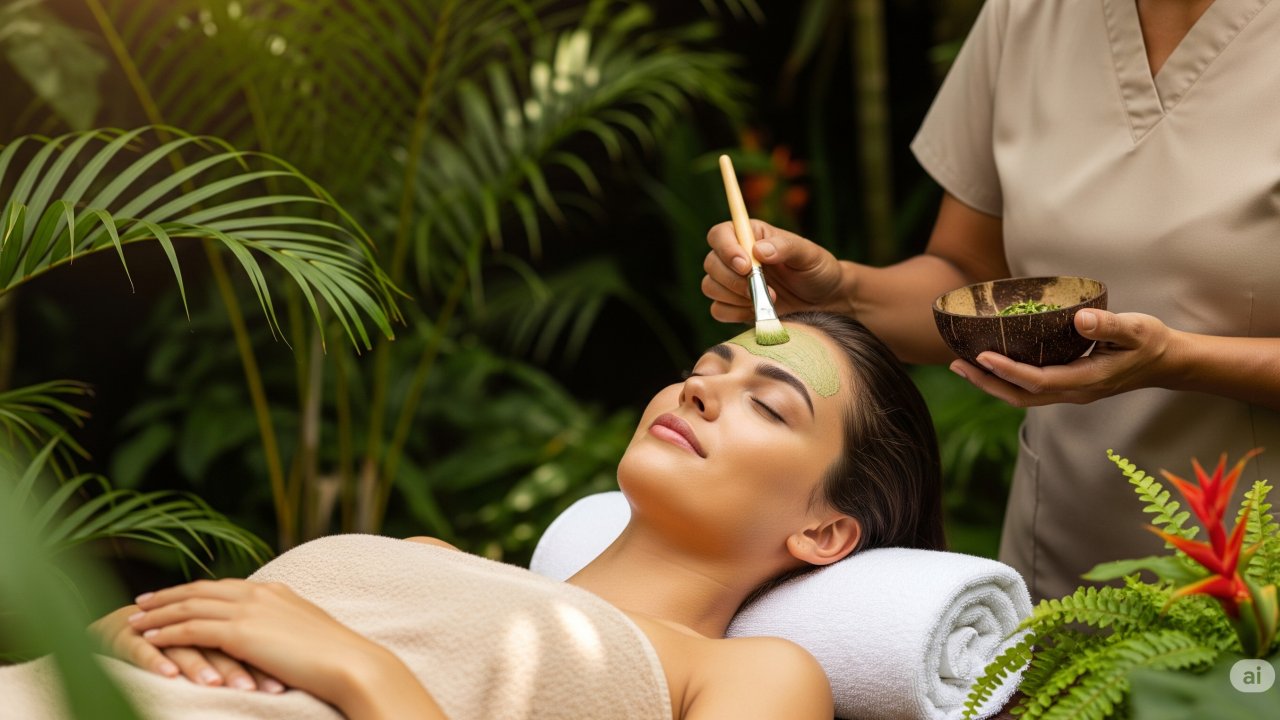 More than just a facial mask, Mukhalepam (pronounced Moo-kha-lay-pum) is a therapeutic practice that combines nature’s finest botanicals, carefully applied to the face and neck to cleanse, nourish, and rejuvenate the skin from within.
Rooted in Ayurveda, this ritual embraces a holistic philosophy of beauty—where external glow is a direct reflection of internal well-being. In this article, we explore the philosophy, science, practice, and lasting benefits of Mukhalepam, an enduring treasure of Ayurvedic tradition.
What is Mukhalepam: Meaning and Essence?
The term “Mukhalepam” is derived from two Sanskrit words: “Mukha” meaning “Face” and “Lepam” meaning “Application,” “Paste,” or “Coating.” Literally, it translates to “Facial Application.”
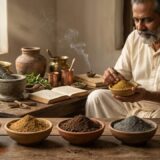
Mukhalepam is a foundational external therapy (Bahya Parimarjana Chikitsa) within Ayurveda. It involves the preparation and application of a paste or mask, formulated primarily from finely powdered grains, legumes, clays.
And potent medicinal herbs, mixed with specific liquids (like water, milk, rose water, or herbal decoctions), onto cleansed facial skin.
While enhancing beauty (Saundarya) is a significant outcome, Mukhalepam’s primary purpose, rooted in Ayurvedic principles, is therapeutic. It aims to:
- Balance Doshas: Correct vitiations of Pitta (often causing inflammation, acne, pigmentation) and Kapha (causing oiliness, congestion, dullness) at the skin level. Vata imbalance (dryness, roughness) is also addressed through nourishing formulations.
- Purify and Detoxify: Remove accumulated toxins (Ama) and impurities (Mala) from the skin’s micro-channels (Srotas).
- Nourish Tissues (Dhatus): Specifically target the Twak (Skin) and Rasa (Plasma/Nutrient Fluid) dhatus.
- Enhance Complexion (Varnya): Promote natural radiance, even skin tone, and clarity.
- Rejuvenate (Rasayana): Offers mild anti-aging benefits by improving texture and resilience.
- Soothe and Cool (Shitala): Alleviate inflammation, redness, and heat associated with Pitta imbalance or sun exposure.
Mukhalepam is rarely a standalone therapy. It often forms part of broader beauty and rejuvenation regimens like Swarna Prashana (gold-based therapies) or is preceded by facial massage (Mukhabhyanga).
Followed by specific dietary and lifestyle advice tailored to the individual’s constitution (Prakriti) and current imbalance (Vikriti).
Roots Historical and Textual Foundations
Mukhalepam isn’t a modern wellness fad; its wisdom is etched in the classical Ayurvedic texts, revered for millennia:
1. Charaka Samhita (Circa 1st Century BCE – 2nd Century CE)
This foundational text, primarily focused on internal medicine (Kayachikitsa), discusses skin diseases (Kushtha) and therapies for enhancing complexion (Varnya).
While not detailing Mukhalepam procedures per se, it lays the groundwork for understanding skin physiology, doshic influence, and the use of numerous herbs later incorporated into Lepams. Concepts of cleansing (Shodhana) and pacifying aggravated Doshas are central.
2. Sushruta Samhita (Circa 600 BCE – 400 CE)
Known as the father of surgery, Sushruta’s compendium places significant emphasis on external therapies and wound healing. It extensively discusses various types of Lepas (applications/poultices) for wounds, ulcers, and skin conditions.
The principles of ingredient selection based on properties (Guna), potency (Virya), and effect (Karma) outlined for Lepas directly apply to Mukhalepam formulations. Descriptions of using pastes for cleansing wounds and promoting healing translate directly to facial cleansing and rejuvenation.
3. Ashtanga Hridaya & Ashtanga Sangraha (Circa 6th-7th Century CE)
Compiled by Vagbhata, these texts synthesize knowledge from Charaka and Sushruta. They provide more specific references to therapies for skin health and beauty.
The Ashtanga Hridaya, particularly in sections dealing with Vajikarana (aphrodisiacs) and Rasayana (rejuvenation), mentions the use of external applications for enhancing beauty and skin quality, implicitly supporting the practice of Mukhalepam. Specific chapters on Kumara Tantra (Pediatrics) sometimes mention gentle Lepas for children’s skin issues.
4. Later Texts and Nighantus (Materia Medica)
Over subsequent centuries, numerous Ayurvedic texts and specialized pharmacopeias (Nighantus like Bhavaprakasha, Dhanvantari Nighantu, Raja Nighantu) elaborated on formulations.
They documented specific recipes for Mukha Lepas using combinations of herbs, grains, and clays for various skin concerns like acne (Yauvan Pidika), pigmentation (Vyanga), wrinkles (Vali), and dullness.
This rich textual heritage underscores that Mukhalepam is not merely folk tradition but a therapy grounded in systematic medical knowledge, refined through centuries of empirical observation and practice.
The Ayurvedic Science Behind the Glow Principles & Mechanisms
Understanding why Mukhalepam works requires delving into Ayurveda’s unique perspective on skin health:
1. Doshic Balance:
- Pitta: Governs metabolism, heat, and transformation. Excess Pitta manifests as inflammation, redness, acne, rosacea, sensitivity, premature aging (fine lines), and hyperpigmentation (melasma, sun spots). Mukhalepams for Pitta use cooling (Shitala), soothing herbs like Sandalwood, Rose, Vetiver, Aloe, and Coriander.
- Kapha: Governs structure, lubrication, and stability. Excess Kapha leads to oiliness, enlarged pores, blackheads, whiteheads, congestion, dullness, puffiness, and cystic acne. Mukhalepams for Kapha use drying (Ruksha), warming (Ushna), stimulating, and penetrating herbs, such as Neem, Turmeric, Fuller’s Earth, Triphala, and Musta.
- Vata: Governs movement and dryness. Excess Vata causes dryness, flakiness, roughness, fine lines, wrinkles, and a feeling of tightness. Mukhalepams for Vata use nourishing (Snigdha), grounding, and warming herbs like Licorice, Shatavari, Ashwagandha, Almond paste, and Avocado mixed with milk or oils.
2. Bhrajaka Pitta: The Skin’s Inner Fire:
This sub-dosha of Pitta resides specifically in the skin. It is responsible for:
- Healthy complexion and radiance (Prabha).
- Processing substances applied topically (including toxins and nutrients).
- Regulating skin temperature.
Mukhalepam aims to balance Bhrajaka Pitta – cooling it when aggravated (inflammation), or stimulating it gently when sluggish (dullness).
3. Srotoshodhana: Cleansing the Micro-Channels
Ayurveda views the body as a network of channels (Srotas) transporting nutrients and eliminating waste. Skin has its own micro-channels. Impurities (Ama), excess oil (Sneha), dead cells, and environmental pollutants clog these channels, leading to dullness, congestion, and eruptions. Mukhalepam acts as a potent cleanser:
- Absorption: Clays and powders absorb excess oil and impurities.
- Exfoliation: Fine particles gently slough off dead skin cells.
- Penetration: Medicinal properties of herbs penetrate the skin layers.
4. Dhatu Nourishment (Twak & Rasa)
The paste nourishes the skin tissue (Twak Dhatu) directly. Ingredients rich in nutrients also support the Rasa Dhatu (plasma), the primary nourisher of all tissues, enhancing overall skin health from within.
- Ama Pachana (Toxin Digestion): Certain herbs in the Lepam possess properties that help digest and neutralize toxins (Ama) accumulated in the skin layers.
- Rakta Prasadana (Blood Purification): Some herbs have a secondary effect of purifying the blood (Rakta Dhatu), which reflects on skin clarity. This is more systemic but supported by topical application.
- Varnya Guna (Complexion Enhancing): Many Mukhalepam herbs are specifically classified as Varnya – possessing the quality to enhance skin complexion, promote radiance, and reduce discoloration.
- Shitala Effect (Cooling): Particularly crucial for Pitta conditions, the cooling sensation and properties of many Lepam ingredients reduce inflammation, redness, and heat.
The Key Ingredients and Formulations
The power of Mukhalepam lies in the synergistic blend of its ingredients. Formulations are highly customizable based on Prakriti (constitution), Vikriti (current imbalance), season, and specific skin concerns.
1. Base Powders (Providing Structure & Cleansing):
Grains/Legumes: Finely ground, often roasted for better absorption/drying properties.
- Yava (Barley Flour): Mildly abrasive, excellent exfoliant, oil-absorbent (Kapha/Pitta).
- Chana (Chickpea Flour/Besan): Classic base, cleansing, oil-absorbent, brightening (Kapha/Pitta).
- Masha (Black Gram Flour/Urad Dal): More nourishing, often used in combinations for Vata or dry skin.
- Godhuma (Wheat Flour): Soothing, mildly nourishing (Vata/Pitta).
- Vrihi (Rice Flour): Very gentle, soothing, cooling (Pitta/Vata).
Clays:
- Multani Mitti (Fuller’s Earth): Highly absorbent, deep cleansing, oil-controlling (Kapha/Pitta).
- Gopi Chandan (White Clay/Kaolin): Gentle, soothing, less drying, suitable for sensitive skin (Pitta/Vata).
- Red Clay: Rich in minerals, stimulating circulation.
2. Medicinal Herbs & Plants (The Therapeutic Powerhouses):
Added as fine powders. Selection is critical.
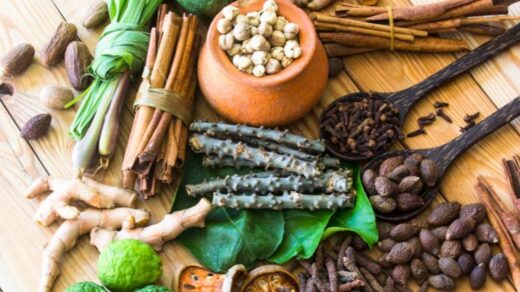
- For Cooling & Pitta Balance: Sandalwood (Chandana), Rose petals (Taruni), Coriander (Dhanyaka), Vetiver (Ushira), Aloe Vera (Kumari – gel or powder), Fennel (Shatapushpa), Indian Sarsaparilla (Anantmool).
- For Cleansing & Kapha Balance: Neem (Nimba), Turmeric (Haridra), Manjistha, Lodhra, Musta (Nutgrass), Triphala (Haritaki, Bibhitaki, Amalaki), Tulsi (Holy Basil).
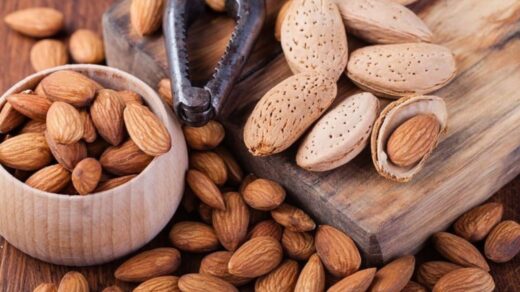
- For Nourishing & Vata Balance: Licorice (Yashtimadhu), Shatavari, Ashwagandha, Almond powder (Vatada), Saffron (Kumkuma), Avocado pulp.
- For Brightening & Pigmentation (Varnya): Sandalwood, Manjistha, Licorice, Saffron, Turmeric, Vetiver, Indian Madder.
- For Acne & Inflammation: Neem, Turmeric, Manjistha, Lodhra, Sariva, Guduchi.
- For Anti-Aging & Rejuvenation: Ashwagandha, Shatavari, Amalaki (Indian Gooseberry), Gokshura, Saffron.
3. Liquids for Mixing (Anupana – Vehicles):
These aren’t passive; they enhance the paste’s properties.
- Water: Neutral base.
- Rose Water: Cooling, soothing, fragrant, Pitta-pacifying.
- Milk: Nourishing, cooling, Vata/Pitta pacifying. Raw milk is preferred.
- Buttermilk (Takra): Cooling, cleansing, slightly acidic (good for Pitta/Kapha).
- Aloe Vera Gel: Deeply cooling, soothing, healing (Pitta).
- Honey (Madhu): Humectant, antibacterial, cleanser (Kapha/Pitta – use sparingly).
- Herbal Decoctions (Kashaya): Decoctions of herbs like Neem, Sandalwood, Manjistha, or Triphala made specifically for the Lepam, intensifying the effect.
- Kanjika (Fermented Rice Water): Mildly acidic, brightening, traditional cleanser.
Tailoring the Lepam:
A skilled Ayurvedic practitioner considers:
- Dosha Imbalance: Primary driver of formulation.
- Skin Type: Dry (Vata), Sensitive/Combination (Pitta), Oily/Congested (Kapha).
- Specific Concerns: Acne, pigmentation, wrinkles, dullness, redness, dehydration.
- Season: More cooling in summer (Pitta season), more nourishing in winter (Vata season).
Examples:
- Pitta-Sensitive Skin (Redness, Inflammation): Sandalwood, Rose, Coriander powder, Rice Flour, Rose Water/Aloe Gel.
- Kapha-Oily Skin (Acne, Congestion): Neem, Turmeric, Fuller’s Earth, Triphala powder, Buttermilk/Neem decoction.
- Vata-Dry Skin (Dryness, Wrinkles): Licorice, Almond powder, Ashwagandha, Wheat Flour, Milk/Honey.
- General Brightening: Sandalwood, Manjistha, Chickpea Flour, Rose Water/Milk.
The Application & Mukhalepam Procedure
The application is a ritual, maximizing therapeutic benefits:
1. Preparation & Consultation
- Thorough assessment by an Ayurvedic practitioner: Pulse diagnosis (Nadi Pariksha), observation of tongue (Jihva Pariksha), skin examination, discussion of constitution (Prakriti) and imbalances (Vikriti).
- Selection and preparation of the specific herbal paste mixture.
2. Pre-Treatment (Purvakarma – Preparatory Steps)
1. Gentle Cleansing
Removal of makeup, dirt, and surface oil using a mild herbal cleanser or simply lukewarm water.
2. Mild Steaming (Optional but Recommended)
Using warm (not hot) steam for 5-7 minutes. This:
- Opens pores (Swedana effect).
- Softens skin and impurities.
- Enhances the penetration of Lepam’s medicinal properties.
- Contraindicated: In severe active inflammation (Pitta) or very sensitive, broken skin.
3. Application (Pradhanakarma – Main Procedure)
- The freshly prepared paste should be lukewarm or cool (especially for Pitta), never hot.
- Application is done evenly and gently over the entire face and neck using clean fingers or a spatula, avoiding the delicate eye area, lips, and nostrils.
- Thickness: Typically a moderate layer (1-3mm), thick enough to stay moist but not dripping.
4. Duration
Varies significantly based on the formulation and skin condition:
- Cooling Lepas (Pitta): 15-25 minutes.
- Drying/Cleansing Lepas (Kapha): 20-30 minutes.
- Nourishing Lepas (Vata): 15-20 minutes (avoid over-drying).
5. Sensation
A mild tingling or tightening is common; any burning or intense discomfort necessitates immediate removal.
Removal:
- Gentle removal using lukewarm water and soft circular motions with fingertips. This provides mild additional exfoliation.
- Avoid harsh rubbing. Ensure all residue is washed away.
- Pat the skin dry gently with a clean, soft towel.
Post-Treatment (Paschatkarma – Follow-up)
- Toning: Application of a soothing herbal toner like pure Rose Water, Sandalwood water, or a mild herbal infusion to close pores and balance pH.
- Moisturizing: Application of a suitable herbal moisturizer or facial oil (Taila) based on skin type. For Pitta: Cooling oils like Coconut or Chandanadi oil. For Vata: Nourishing oils like Sesame or Almond infused with Vata-pacifying herbs. For Kapha: Light, non-comedogenic oils like Sunflower or Grapeseed, often infused with Kapha-pacifying herbs.
- Rest: Relaxation for a few minutes allows the skin to fully absorb the benefits.
- Advice: Practitioner may offer specific dietary, lifestyle, or follow-up treatment recommendations.
The Benefits of Mukhalepam
Consistent and correctly applied Mukhalepam offers a multitude of benefits:
1. Deep Cleansing & Pore Purification: Removes embedded dirt, pollutants, and excess sebum far more effectively than regular washing.
2. Gentle Exfoliation: Sloughs off dead skin cells, promoting cellular turnover for smoother texture.
3. Oil Control & Sebum Regulation: Especially beneficial for Kapha-imbalanced, oily, and acne-prone skin.
4. Acne Reduction: Addresses root causes (bacteria, inflammation, clogged pores) through herbs like Neem, Turmeric, Manjistha.
5. Inflammation & Redness Reduction: Cooling herbs soothe irritation, rosacea, and sunburn (Pitta pacification).
6. Hyperpigmentation & Dark Spot Lightening: Varnya herbs like Sandalwood, Manjistha, and Licorice inhibit melanin production and promote even tone.
7. Enhanced Radiance & Complexion Improvement: Removes dullness, improves microcirculation, reveals the skin’s natural glow (Prabha).
8. Improved Skin Texture & Firmness: Nourishes the skin, supports collagen (conceptually in Ayurveda), and refines pores.
9. Mild Anti-Aging Effects: Reduces the appearance of fine lines and wrinkles, improves elasticity (especially Vata-pacifying formulations).
10. Hydration & Nourishment: Prevents and alleviates dryness, flakiness, and roughness (Vata balance).
11. Soothing & Calming: Provides relief for sensitive, reactive skin.
12. Stress Relief & Relaxation: The aromatic herbs and the ritual itself promote mental calmness, reducing stress-related skin issues.
13. Preparation for Further Treatments: Creates an optimal canvas for serums, oils, or makeup by thoroughly cleansing and balancing the skin.
Mukhalepam in the Modern World
While deeply traditional, Mukhalepam has gracefully adapted to contemporary wellness landscapes:
1. Ayurvedic Spas & Wellness Centers
The cornerstone of authentic Ayurvedic facial treatments globally. Offered as standalone therapies or integrated into longer rejuvenation programs (Panchakarma or Rasayana).
2. Influence on Natural/Organic Skincare
The surge in demand for clean beauty has led mainstream and niche brands to incorporate Ayurvedic herbs (Neem, Turmeric, Ashwagandha, Manjistha, Sandalwood) into masks, cleansers, and serums, directly inspired by Mukhalepam principles.
3. Pre-Mixed Powders for Home Use
Growing availability of authentic, high-quality Mukhalepam powder blends tailored for different skin types (Vata, Pitta, Kapha) or concerns (Acne, Glow, Anti-Age). Empowers individuals to practice self-care rooted in tradition.
4. Combination Therapies
Often seamlessly integrated with:
- Mukhabhyanga: Herbalized facial oil massage preceding the Lepam, enhancing relaxation and penetration.
- Netra Tarpana: Nourishing the eyes with medicated ghee.
- Shirodhara: Oil stream on the forehead for deep relaxation.
5. Scientific Validation
Emerging research supports the efficacy of key Ayurvedic herbs used in Mukhalepam. Studies highlight the anti-inflammatory, antimicrobial, antioxidant, tyrosinase-inhibiting (brightening), and wound-healing properties of Neem, Turmeric, Sandalwood, Manjistha, Aloe Vera, and Licorice – validating traditional uses.
6. Holistic Beauty Movement
Mukhalepam perfectly aligns with the growing desire for beauty rituals that are natural, sustainable, non-toxic, and address root causes rather than just symptoms. It represents a shift from “covering up” to “healing and revealing.”
Contraindications and Precautions
While generally safe and gentle, Mukhalepam requires mindful application:
1. Absolute Contraindications:
- Active skin infections (bacterial, viral like active herpes, fungal).
- Open wounds, cuts, or severe burns on the face.
- Unexplained rashes or severe allergic dermatitis.
2. Relative Contraindications/Caution:
- Severe Active Inflammation/Rosacea Flare-up: Avoid steaming and potentially irritating herbs; opt for ultra-cooling, soothing pastes like Sandalwood/Rose with Rice Flour and Aloe gel. Test first.
- Immediately After Significant Sun Exposure/Sunburn: Use only very cooling, calming formulations; avoid exfoliating bases. Prioritize healing.
- Known Allergies: Always disclose allergies. Perform a patch test (apply a small amount behind the ear or on inner arm, wait 24 hours) before full application, especially with new formulations or home mixes.
- Choosing the Wrong Formulation: Using a very drying Lepam on already Vata-dry skin will worsen dryness. Professional consultation is ideal.
- Pregnancy & Lactation: Some herbs may be contraindicated. Always consult an Ayurvedic physician and your OB/GYN.
3. Quality of Ingredients: Crucial. Use organic, contaminant-free herbs and powders. Avoid synthetic colors or fragrances in pre-mixed powders.
4. Consistency & Expectations: While results can be noticeable after one session (especially glow and clarity), significant changes for chronic concerns like deep pigmentation or acne require consistent application over weeks or months, often alongside internal Ayurvedic management and lifestyle changes.
5. Consultation is Key: For persistent or severe skin conditions, Mukhalepam should be part of a treatment plan guided by a qualified Ayurvedic practitioner or dermatologist familiar with integrative approaches. It complements, but does not replace, necessary medical treatment.
Mukhalepam vs. Modern Facials: A Comparative Glance
Mukhalepam stands as a testament to Ayurveda’s profound understanding of skin health as an inseparable facet of overall well-being. It transcends the superficial, offering a therapeutic pathway to radiant skin through the lens of natural balance.
| Feature | Mukhalepam (Ayurvedic Facial) | Modern Facial |
|---|---|---|
| Philosophy | 🧘♀️ Holistic: Balances body/mind (Doshas), treats root cause | 💅 Primarily Cosmetic: Focuses on surface symptoms, immediate results |
| Ingredients | 🌿 Natural: Herbs, grains, clays, natural liquids | 🧪 Often Synthetic: Chemicals, acids, synthetic fillers, preservatives |
| Customization | 🪔 High: Based on Dosha, Vikriti, skin type, season | 🧴 Moderate: Based on generic skin type (oily, dry, combo) |
| Mechanism | 🔄 Detoxification, Dosha balance, Srotas cleansing, Dhatu nourishment | ⚙️ Exfoliation, hydration, extraction, stimulation |
| Exfoliation | 🌾 Gentle, physical (fine powders) | 🧼 Can be harsh (chemical peels, strong scrubs) |
| Anti-Aging Focus | 🍯 Nourishment, improving natural resilience | 🔬 Often targets wrinkle filling, collagen induction (sometimes invasive) |
| Side Effects | ✅ Generally minimal with correct formulation | ⚠️ Potential for irritation, redness, photosensitivity |
| Relaxation | 🧘♂️ Integral part of the therapy (mind-body focus) | 💆 Often included, but secondary to cosmetic goals |
| Sustainability | ♻️ Generally high (natural, biodegradable) | 🧴 Varies widely; often involves packaging & chemicals |
FAQ’s
1. What is Mukhalepam?
Mukhalepam is a traditional Ayurvedic facial therapy that involves applying a specially prepared herbal paste to the face. It is designed to detoxify the skin, reduce pigmentation, and promote a natural glow.
2. What ingredients are used in Mukhalepam?
The herbal paste typically includes natural ingredients such as turmeric, sandalwood, aloe vera, manjistha, neem, and other Ayurvedic herbs selected based on your skin type and condition.
3. What are the benefits of Mukhalepam?
Mukhalepam helps:
- Nourish and rejuvenate the skin
- Reduce acne, blemishes, and pigmentation
- Prevent wrinkles and signs of aging
- Improve skin texture and tone
- Promote a radiant, natural glow
4. Is Mukhalepam suitable for all skin types?
Yes, but the herbs and oils used are customized to suit your prakriti (body constitution) and skin condition. A qualified Ayurvedic practitioner can determine the best formulation for you.
5. How long does a Mukhalepam session take?
A typical session lasts around 30 to 60 minutes, depending on the skin condition and the type of treatment.
6. How often should I do Mukhalepam?
For general skincare and glow, once a month is sufficient. For treating specific conditions like acne or pigmentation, your practitioner may recommend more frequent sessions.
7. Are there any side effects?
Mukhalepam is generally safe and uses natural ingredients. However, if you have sensitive skin or allergies, always consult with an Ayurvedic expert before trying the therapy.
8. Can I do Mukhalepam at home?
While basic versions can be done at home using Ayurvedic ingredients, for maximum benefit and proper herb selection, it’s best to get it done by a trained Ayurvedic therapist.
9. Is Mukhalepam only for women?
Not at all. Mukhalepam is beneficial for both men and women, especially those who are looking for natural ways to improve skin health and appearance.
10. Where can I get Mukhalepam done?
Mukhalepam is offered at many Ayurvedic spas and wellness centers. Always choose a reputable center with certified practitioners to ensure authenticity and quality.
Mukhalepam stands as a testament to Ayurveda’s profound understanding of skin health as an inseparable facet of overall well-being. It transcends the superficial, offering a therapeutic pathway to radiant skin through the lens of natural balance.
References:
- Mukhalepa in Vyanga (Melasma) An Ayurvedic Review(1)
- Vishwa+Mukha+Lepam+Significant+Role+In+Skin+Complexion (2)
- Vishwa Mukha Lepam Significant Role In Skin Complexion(3)
- ROLE OF LEPAKALPANA FOR IMPROVING BEAUTY OF SKIN W. S. R. TO MUKHALEPA(4)
- OA01.44. Efficacy of arjunatwak mukhalepa and panchanimba churna in the management of vyanga w.s.r.to facial melanosis(5)