
Triphala Churna: Health Benefits, Uses, Dosage & Side Effects

Triphala Churna is one of Ayurveda’s most trusted herbal remedies, prepared from three powerful fruits. Used for thousands of years, it is valued for supporting natural healing, improving wellness, and maintaining overall body balance.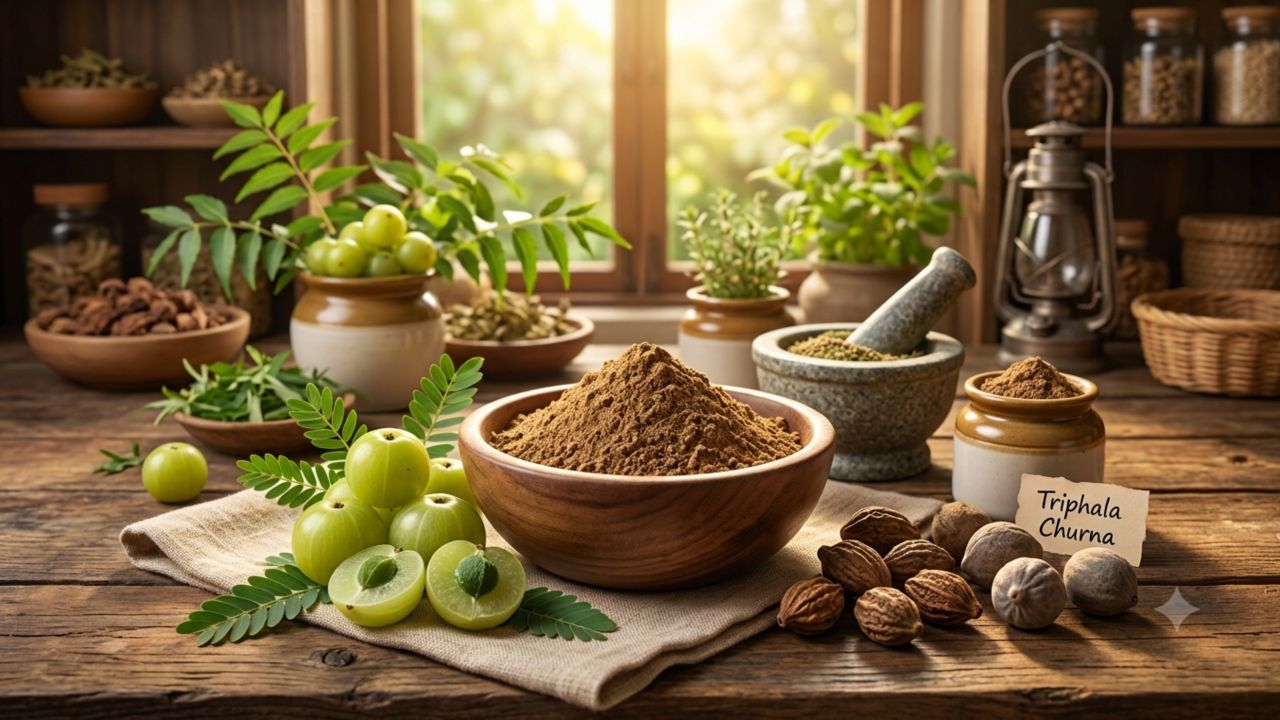 Unlike many modern treatments that focus on one health concern, Triphala Churna works holistically. It helps support digestion, strengthens immunity, promotes gentle detoxification, and contributes to better overall health and vitality.
A unique quality of Triphala Churna is its ability to balance all three Ayurvedic doshas—Vata, Pitta, and Kapha. This makes it a versatile herbal formula suitable for many people and everyday wellness.
This guide explains what Triphala Churna is, its key ingredients, health benefits, nutritional value, recommended uses, and simple ways to include this traditional Ayurvedic remedy in your daily routine.
The Anatomy of Triphala: The Three Fruits
The magic of Triphala lies in the synergy of its three ingredients. In Ayurveda, the whole is always greater than the sum of its parts.
Each fruit brings a unique set of properties to the table, and when combined, they create a perfectly balanced formulation.
1. Amla (Emblica officinalis) – The Nourisher
Also known as Indian Gooseberry, Amla is a powerhouse of nutrition. It is considered one of the highest natural sources of Vitamin C, which is highly stable in Amla due to the presence of tannins that prevent its oxidation.
- Ayurvedic Properties: Amla is sweet (Madhura), sour (Amla), pungent (Katu), bitter (Tikta), and astringent (Kashaya) in taste. It is cooling in potency (Sheeta Virya) and sweet post-digestion (Madhura Vipaka).
- Primary Function: It predominantly pacifies the Pitta dosha (governing heat and metabolism) and Kapha dosha (governing structure and fluid balance). Amla nourishes the tissues (Dhatus), promotes longevity, and acts as a potent rejuvenator for the blood, bones, liver, and heart.
2. Bibhitaki (Terminalia bellirica) – The Purifier
Known as “Bibhitaki” because it is said to make a person “fearless” of disease, this fruit is highly valued for its detoxifying properties. It looks like a small, brownish nut and has astringent and sweet qualities.
- Ayurvedic Properties: Bibhitaki is astringent (Kashaya) and pungent (Katu) in taste. It is heating in potency (Ushna Virya) and sweet post-digestion.
- Primary Function: It is renowned for its ability to expel accumulated toxins (Ama) from the respiratory and digestive tracts. It excels at balancing Kapha dosha, making it highly effective for conditions involving mucus, such as asthma, bronchitis, and sinus congestion. It is also widely used to promote healthy weight management.
3. Haritaki (Terminalia chebula) – The Regulator
Haritaki holds a place of immense reverence in Ayurveda, often referred to as the “King of Medicines.” It is a greenish-brown fruit that grows in the foothills of the Himalayas.
- Ayurvedic Properties: Haritaki contains all five tastes except salty (sweet, sour, pungent, bitter, astringent). It is heating in potency (Ushna Virya) and pungent post-digestion (Katu Vipaka).
- Primary Function: Haritaki is the ultimate Vata pacifier. Vata governs movement in the body, including the nervous system and the elimination of waste. Haritaki is a potent laxative, digestive stimulant, and detoxifier. It is famous for scraping away stagnant toxins and promoting regular, healthy bowel movements.
The Synergy: Amla cools and nourishes, Haritaki heats and cleanses, while Bibhitaki moderates and purifies. Together, they neutralize each other’s extreme properties, resulting in a gentle, balanced formula that can be taken long-term without causing dependency or imbalance.
The Nutritional and Chemical Profile
Modern science has begun to validate what Ayurvedic sages have known for millennia. Triphala’s health benefits are not just mythological; they are deeply rooted in biochemistry.
- Antioxidants: Triphala is incredibly rich in polyphenols, flavonoids, tannins, and saponins. Compounds like gallic acid, ellagic acid, and chebulagic acid act as fierce scavengers of free radicals, protecting cells from oxidative stress and premature aging.
- Vitamin C: Primarily derived from Amla, the Vitamin C in Triphala supports collagen synthesis, immune function, and iron absorption.
- Linoleic Acid and Omega-3 Fatty Acids: These essential fatty acids are present in the seeds and fruits, supporting cardiovascular health and brain function.
- Bioactive Compounds: Chebulinic acid and chebulagic acid (from Haritaki) have been heavily studied for their anti-diabetic, neuroprotective, and anti-cancer properties. Belleric acid (from Bibhitaki) is known for its anti-inflammatory and antimicrobial effects.
The Ayurvedic Perspective: How Triphala Works
To truly understand Triphala, one must understand two fundamental Ayurvedic concepts: Agni (digestive fire) and Ama (toxic buildup).
According to Ayurveda, 80% of all diseases stem from a weak digestive fire. When Agni is low, food is not properly metabolized.
This undigested food turns into a toxic, sticky substance called Ama, which accumulates in the gut, circulates in the bloodstream, and eventually lodges itself in weak tissues, causing disease.
Triphala works by kindling Agni without aggravating Pitta (excess heat). It gently scrapes away Ama from the digestive tract and facilitates its excretion.
Furthermore, because it is a Rasayana, it not only removes the bad but actively rebuilds and nourishes the good tissues (Ojas), creating a foundation of robust health.
Health Benefits of Triphala Churna
The therapeutic applications of Triphala are vast. Here is a detailed look at how Triphala Churna benefits various systems of the body.
1. Gastrointestinal Health and Digestion
Triphala is most famous for its role as a natural, non-habit-forming laxative. Unlike synthetic laxatives that forcibly purge the bowels and deplete the colon’s mucosal lining, Triphala works as a Brahmana (nourishing) and Lekhana (scraping) agent.
- Constipation Relief: Haritaki stimulates the peristaltic movements of the gut, while Amla and Bibhitaki tone the intestinal muscles. It draws water into the intestines, softening the stool and promoting effortless elimination.
- Gut Microbiome: Modern research shows that Triphala acts as a prebiotic, promoting the growth of beneficial gut bacteria (like Bifidobacterium and Lactobacillus) while inhibiting pathogenic bacteria. A healthy microbiome is linked to everything from better digestion to improved mental health.
- IBS and Colitis: Its anti-inflammatory properties soothe the inflamed lining of the intestines, making it beneficial for Irritable Bowel Syndrome (IBS) and ulcerative colitis.
2. Detoxification and Liver Health
The liver is the body’s primary detoxification organ. Triphala supports liver function on multiple levels.
- Hepatoprotective: The antioxidants in Triphala protect liver cells (hepatocytes) from damage caused by toxins, alcohol, and certain medications.
- Fat Reduction: It helps prevent the accumulation of fat in the liver (fatty liver disease) by improving lipid metabolism.
- Systemic Detox: By ensuring daily, complete bowel movements, Triphala prevents the reabsorption of toxins back into the bloodstream from the colon, effectively acting as a daily systemic detox.
3. Immune System Modulation
A strong immune system relies heavily on a clean digestive tract. Since a large portion of the immune system resides in the gut (Gut-Associated Lymphoid Tissue, or GALT), Triphala’s ability to clean and heal the gut directly translates to enhanced immunity.
- Immunomodulatory: Triphala does not just “boost” the immune system; it modulates it. This means it can stimulate a sluggish immune response to fight off infections, while simultaneously calming an overactive immune response (autoimmune conditions or allergies).
- Anti-microbial: It possesses natural antibacterial, antiviral, and antifungal properties, helping the body fend off pathogens.
4. Blood Sugar Regulation and Diabetes Management
The rising global epidemic of Type 2 diabetes has brought Triphala into the spotlight of modern medical research.
- Insulin Sensitivity: Triphala helps cells respond better to insulin, allowing glucose to move from the bloodstream into the cells for energy.
- Alpha-Glucosidase Inhibition: It inhibits the enzymes in the digestive tract that break down complex carbohydrates into simple sugars, thereby preventing sudden spikes in blood glucose after meals.
- Preventing Diabetic Complications: The antioxidants in Triphala protect against oxidative stress in diabetic patients, significantly reducing the risk of diabetic neuropathy (nerve damage), nephropathy (kidney damage), and retinopathy (eye damage).
5. Cardiovascular Health
Heart disease is another area where Triphala shows immense promise.
- Cholesterol Management: Triphala lowers Low-Density Lipoprotein (LDL or “bad” cholesterol) and triglycerides, while simultaneously boosting High-Density Lipoprotein (HDL or “good” cholesterol).
- Arterial Health: It prevents the oxidation of cholesterol, which is the primary step in the formation of arterial plaque (atherosclerosis). By keeping arteries flexible and clear, it supports healthy blood pressure.
- Prevents Platelet Aggregation: It helps prevent blood cells from clumping together, reducing the risk of abnormal blood clots that can lead to heart attacks or strokes.
6. Skin Health and Anti-Aging
In Ayurveda, the skin is a reflection of the blood (Rakta dhatu) and the digestive system. If the gut is toxic, it shows up on the skin as acne, eczema, or premature aging.
- Blood Purification: Triphala cleanses the blood of toxins, leading to a clear, natural glow.
- Collagen Synthesis: The high Vitamin C content from Amla is essential for the synthesis of collagen, the protein that keeps skin firm, elastic, and youthful.
- Wound Healing: Applied topically as a paste or taken internally, Triphala accelerates wound healing and reduces scarring due to its anti-inflammatory and antimicrobial properties.
- Eczema and Psoriasis: By reducing systemic inflammation and balancing the gut-skin axis, Triphala can alleviate flare-ups of chronic skin conditions.
7. Hair Health
Hair loss and premature graying are often linked to poor digestion, stress, and nutritional deficiencies.
- Nutrient Delivery: By improving digestion, Triphala ensures that the hair follicles receive adequate nutrients.
- Scalp Health: Applying a paste of Triphala churna to the scalp can help combat dandruff, fungal infections, and scalp psoriasis. It strengthens the hair roots, reducing breakage and hair fall.
- Preventing Graying: Traditional Ayurvedic texts claim that regular use of Triphala can prevent premature graying due to its high antioxidant content, which protects the melanin-producing cells in the hair follicles.
8. Eye Health
Triphala has a special affinity for the eyes. In fact, there is a famous Ayurvedic eye treatment called Netra Basti, where a ring of dough is placed around the eyes and filled with warm, liquefied Triphala ghee.
- Prevents Cataracts and Glaucoma: The antioxidants protect the lens of the eye from oxidative damage, delaying the onset of cataracts. It also helps regulate intraocular pressure.
- Relieves Eye Strain: In the digital age, our eyes are constantly fatigued. Washing the eyes with a weak decoction of Triphala (strained through a fine muslin cloth) soothes tired, red, or dry eyes.
- Conjunctivitis: Its antibacterial properties make it an effective remedy for bacterial conjunctivitis (pink eye).
9. Weight Management and Fat Loss
Obesity is often viewed in Ayurveda as a Kapha imbalance, characterized by sluggish digestion and the accumulation of Meda (fat tissue).
- Lipid Metabolism: Triphala enhances the body’s ability to metabolize fats. It stimulates the liver to break down stored fat and excrete it.
- Satiety: Taking Triphala before meals can promote a feeling of fullness, preventing overeating.
- Detoxification of Fat Cells: It helps flush out toxins stored in adipose (fat) tissue, which can otherwise make losing weight very difficult.
10. Anti-Inflammatory and Pain Relief
Chronic inflammation is the root cause of many modern diseases, including arthritis.
- Arthritis and Joint Pain: Triphala inhibits the production of inflammatory cytokines and enzymes like COX-2 and LOX (similar to how ibuprofen works, but without the gastrointestinal side effects). It helps reduce swelling, redness, and pain in joints affected by Rheumatoid Arthritis and Osteoarthritis.
- Gout: By aiding the kidneys in excreting uric acid, Triphala can help prevent gout attacks.
11. Oral and Dental Health
Oral health is a critical, yet often overlooked, aspect of overall well-being.
- Gum Health: Gargling with a strong Triphala decoction tightens the gums, reduces bleeding (gingivitis), and treats mouth ulcers.
- Plaque and Caries: Its antimicrobial properties inhibit the growth of Streptococcus mutans, the bacteria primarily responsible for tooth decay and plaque formation. In some parts of India, Triphala is used as a natural tooth powder.
12. Respiratory Health
Because of Bibhitaki’s strong Kapha-pacifying properties, Triphala is excellent for the respiratory system.
- Asthma and Bronchitis: It helps expel excess mucus from the lungs and bronchial tubes, clearing the airways. Its anti-inflammatory action reduces the hyper-responsiveness of the airways in asthma patients.
- Allergic Rhinitis: By purifying the blood and reducing systemic histamine responses, it can alleviate sneezing, runny nose, and sinus congestion caused by allergies.
How to Use Triphala Churna: Dosage and Methods
One of the greatest advantages of Triphala is its versatility. It can be consumed internally, used externally, and easily incorporated into various daily routines.
General Dosage Guidelines
The appropriate dose of Triphala Churna depends on the individual’s age, digestive strength, and the condition being treated.
- Adults: Generally, 1/2 to 1 teaspoon (approx. 2 to 4 grams) once or twice daily.
- Children (over 5 years): 1/4 to 1/2 teaspoon, or as directed by a pediatrician.
- Elderly or those with weak digestion: Start with a very low dose (1/8 teaspoon) and gradually increase to avoid sudden, intense bowel movements.
Note: It is always best to start with a lower dose and observe how your body reacts before increasing it.
The Concept of Anupana (The Vehicle)
In Ayurveda, the substance with which a medicine is taken is called the Anupana. The Anupana directs the medicine to a specific tissue or organ. You can change the effects of Triphala simply by changing what you mix it with:
- With Warm Water: This is the most common and versatile method. Taking Triphala with warm water before bed is excellent for gentle constipation relief, detoxification, and weight loss. Warm water helps the herbs penetrate deeper into the tissues.
- With Honey: Honey acts as an Anupana for fat metabolism and respiratory health. Mixing Triphala in a teaspoon of raw honey and taking it on an empty stomach can aid in weight management and help clear mucus from the lungs.
- With Ghee (Clarified Butter): Ghee carries the medicine deep into the bodily tissues. Taking Triphala with a teaspoon of warm ghee is highly recommended for pacifying Pitta, healing skin conditions, promoting eye health, and calming the nervous system.
- With Warm Milk: Milk is a nourishing Anupana. Triphala taken with warm milk (ideally before bed) is a classic Rasayana (rejuvenative) combination. It is excellent for balancing Vata, reducing stress, improving sleep quality, and anti-aging.
- As a Kadha (Decoction): Boil 1 teaspoon of Triphala in 2 cups of water until the water reduces to half a cup. Strain the liquid. This concentrated form is highly effective for severe digestive issues, eye washes, or gargling for oral health.
- As an Eye Wash: Boil 1 teaspoon of Triphala in a cup of water for 5 minutes. Let it cool completely, then strain it multiple times through a very fine muslin cloth or a coffee filter to ensure absolutely no fine particles remain (particles in the eye can cause severe scratching). Use this lukewarm or cool liquid to wash the eyes using an eye cup.
Best Time to Take Triphala
- Before Bed (9 PM – 10 PM): This is the most highly recommended time. It works overnight to clean the digestive tract, ensuring you wake up with a healthy bowel movement and a clear mind.
- First Thing in the Morning (On an empty stomach): Taking it 30 minutes before breakfast is excellent for absorption, boosting metabolism, and kickstarting the body’s detoxification process for the day.
- Before Meals: Taking it 30 minutes before lunch or dinner can aid in digestion, regulate blood sugar spikes, and prevent overeating.
Potential Side Effects and Precautions
While Triphala is incredibly safe and generally well-tolerated, it is a powerful herbal formulation and must be used with respect and awareness.
- Pregnancy and Lactation: Triphala is strictly contraindicated during pregnancy. Haritaki has downward-moving and muscle-stimulating properties that can trigger uterine contractions, potentially leading to miscarriage or premature labor. It should also be avoided by nursing mothers unless specifically prescribed by a qualified Ayurvedic doctor, as its strong detoxifying properties can pass into breast milk.
- Acute Diarrhea or Dysentery: Because Triphala promotes bowel movements, it should not be taken if you already have loose stools or acute diarrhea, as it will worsen the condition.
- Dehydration: Triphala draws water into the intestines. If you do not drink enough water throughout the day while taking Triphala, it can lead to constipation (the exact opposite of its intended effect) or mild dehydration.
- Excessive Dosage: Taking too much Triphala can cause abdominal cramping, bloating, gas, and severe diarrhea. Always stick to the recommended dosage.
Interaction with Medications:
- Diabetes meds: Because Triphala lowers blood sugar, taking it alongside diabetic medications (like insulin or Metformin) can cause blood sugar to drop too low (hypoglycemia). Monitor levels closely.
- Blood Thinners: Triphala prevents platelet aggregation. If you are on blood-thinning medications (like Warfarin or Aspirin), consult a doctor before using Triphala to avoid excessive bleeding.
- Surgical Procedures: Due to its effect on blood sugar and blood clotting, it is advised to stop taking Triphala at least two weeks before any scheduled surgery.
How to Choose a High-Quality Triphala Churna
The efficacy of Triphala depends entirely on the quality of the raw ingredients and the manufacturing process. Here is what to look for when purchasing Triphala Churna:
- Organic Certification: Because the three fruits are wild-harvested or grown in forests, they are highly susceptible to pesticide contamination. Always choose a certified organic product.
- Whole Fruit Powder vs. Extracts: Traditional Ayurveda dictates that Triphala should be made from the dried powder of the whole fruit, including the seed and the pulp. Many cheap commercial brands use fruit extracts or throw away the seeds. This disrupts the natural chemical balance and synergy of the formula.
- Processing Temperature: High heat destroys the delicate volatile oils and Vitamin C in Triphala. Ensure the manufacturer uses low-temperature grinding techniques.
- Texture and Aroma: Authentic Triphala Churna is a light brownish-yellow powder. It should not be overly fine (like talcum powder), as excessive grinding generates heat. It has a distinct, slightly astringent, earthy, and sweet-sour aroma.
- Third-Party Testing: Reputable brands will have their products tested for heavy metals, microbial contamination, and pesticide residues by independent labs. Look for certificates of analysis (COA) on the packaging or the brand’s website.
Triphala in Modern Scientific Research
The bridge between ancient Ayurvedic wisdom and modern clinical science is growing stronger by the year.
Thousands of peer-reviewed studies have been published on Triphala in journals like the Journal of Alternative and Complementary Medicine and the International Journal of Ayurveda Research.
- Cancer Research: Perhaps the most exciting area of modern Triphala research is its anti-cancer potential. Studies have shown that Triphala induces apoptosis (programmed cell death) in various cancer cell lines, including colon, breast, and pancreatic cancer cells, without harming normal, healthy cells. It does this by inhibiting the NF-κB pathway, a protein complex that controls DNA transcription and is often overactive in cancers.
- Radioprotection: Triphala has been studied for its ability to protect healthy cells from radiation damage during chemotherapy and radiotherapy, acting as a radioprotective agent while simultaneously making the cancer cells more sensitive to the radiation.
- Neuroprotection: Research indicates that Triphala can protect the brain against neurodegenerative diseases like Alzheimer’s and Parkinson’s. Its antioxidants cross the blood-brain barrier, reducing amyloid plaque buildup and protecting neurons from oxidative stress.
Integrating Triphala into Your Daily Lifestyle
Triphala is not a quick-fix pill; it is a lifestyle adjunct. To experience its profound benefits, consistency is key. Here is an example of how to seamlessly integrate it into a modern lifestyle:
The Nighttime Detox Ritual:
- Thirty minutes after finishing dinner, allow your food to begin digesting. Around 9:00 PM, boil half a cup of water and let it cool until it is warm (not scalding).
- Add 1/2 teaspoon of organic Triphala Churna to the water, stir well, and drink it.
Alternative:
- If you find the taste too bitter or astringent, mix the 1/2 teaspoon of churna with 1 teaspoon of raw, unpasteurized honey to form a paste, and wash it down with warm water.
Over the course of a few weeks, you will likely notice that you wake up feeling lighter, your morning bowel movements are effortless and complete, and your skin begins to take on a clearer, healthier hue.
Triphala Churna stands as a testament to the brilliance of ancient Ayurvedic pharmacology. In a world overwhelmed by synthetic chemicals, isolated nutrients, and quick fixes, Triphala offers a return to holistic, synergistic healing. It does not force the body into submission; rather, it gently guides the body back to its natural state of equilibrium.
References:
- Peterson, C. T., Denniston, K., & Chopra, D. (2017) – Therapeutic Uses of Triphala in Ayurvedic Medicine. (1)
- Baliga, M. S. (2010) – Triphala, Ayurvedic Formulation for Treating and Preventing Cancer: A Review. (2)
- Triphala: Phytochemistry, Pharmacological Activities and Therapeutic Applications. (3)
- National Center for Biotechnology Information (NCBI) – Scientific Studies on Triphala. (4)
- Charaka Samhita – Classical Ayurvedic text describing the medicinal properties of Triphala. (5)
- Sushruta Samhita – Ancient Ayurvedic text detailing the use of Triphala. (6)
- Bhavaprakasha Nighantu (Dr. K.C. Chunekar Edition). (7)
- The Ayurvedic Formulary of India (AFI), Part I. (8)
- Ministry of AYUSH, Government of India. (9)
- World Health Organization (WHO) – Traditional, Complementary and Integrative Medicine. (10)
- Plants of the World Online (Royal Botanic Gardens, Kew). (11)
- Journal of Ayurveda and Integrative Medicine (J-AIM). (12)
























Ayurveda and its Ayurvedic medicine which originated in the Indian subcontinent are back in trend. It is a proven fact that plants and herbs when consumed in the right proportions can help to combat deadly diseases. Ayurvedic supplements are a safe to several ailments. Very interesting the medical benefit of Ayurveda I like to read more about AYURVEDIC.