Putapaka Eye Treatment: Complete Guide to Ayurvedic Eye Therapy

In the modern digital age, where screens dominate our waking hours, the human eye is subjected to unprecedented levels of stress, strain, and fatigue. The resulting epidemic of dry eyes, blurred vision, and chronic headaches has led many to seek holistic alternatives to conventional eye care.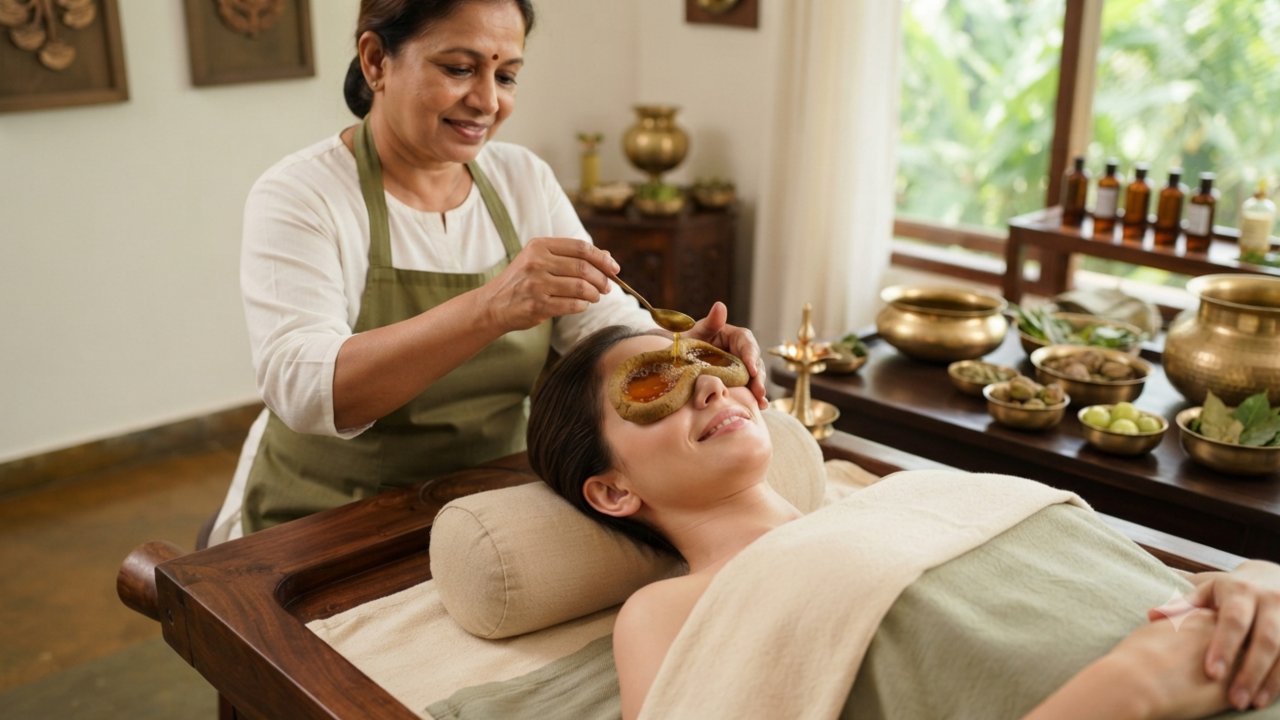 Within the profound and ancient healing system of Ayurveda, there exists a highly specialized branch known as Shalakya Tantra, dedicated exclusively to the health of the sensory organs—particularly the eyes.
Among the myriad of therapeutic techniques in this discipline, Putapaka stands out as a well-established, meticulously designed procedure that plays a pivotal role in the comprehensive care and rejuvenation of ocular health.
Putapaka is not merely a symptomatic treatment; it is a deeply restorative therapy that addresses a wide array of eye-related issues while promoting their overall well-being.
By harnessing the warmth and therapeutic properties of specialized medicinal liquids, Putapaka nurtures the delicate tissues of the eyes, offering a sanctuary of healing and relief.
Understanding Putapaka: The Procedure and Preparation
At its core, Putapaka is a procedure that involves bathing the eyes gently in lukewarm medicated juice, commonly referred to in Ayurveda as swarasa.
Unlike topical eye drops that are quickly washed away by tears, Putapaka ensures sustained contact between the healing liquid and the ocular surface.
To achieve this, a specially crafted frame—traditionally made from a dough of black gram (Masha) but today often replaced by sterile, leak-proof medical-grade plastic frames—is securely placed around the eyes.
This frame acts as a dam, keeping the lukewarm medicated juice in place and allowing it to make direct, uninterrupted contact with the eyes for a specified period.
The magic of Putapaka lies not just in the application, but in the meticulous preparation of the medicine.
1. Medicated Juice (Swarasa):
Swarasa is the fresh juice extracted from specific herbs or medicinal substances. These herbs are carefully selected by an Ayurvedic practitioner based on the patient’s unique constitution (Prakriti) and the specific nature of their eye ailment (Vikriti).
The herbs are chosen for their potent anti-inflammatory, cooling, nourishing, or cleansing properties. The extraction process must preserve the volatile oils and delicate active compounds of the plants, ensuring the final liquid is brimming with life-force (Prana).
2. Preparation with Putapaka Vidhi:
The medicated juice is often prepared using a highly specific, classical Ayurvedic method known as Putapaka Vidhi. The word Puta refers to a specific type of enclosed earthen pot used for roasting or heating, and Paka means cooking.
In this traditional pharmaceutical process, the chosen herbs or substances are placed inside a container, covered, and subjected to a controlled, specific type of heat (often burying the pot in hot sand or placing it in a fire pit).
This unique method of cooking extracts the beneficial components of the herbs at a deep level without destroying their medicinal potency, resulting in a highly concentrated, enhanced healing liquid.
3. Stagnation in the Eyes:
Once the lukewarm swarasa is prepared, it is gently poured into the frame around the eyes. The patient is instructed to keep their eyes open, allowing the liquid to stagnate over the ocular surface.
The warmth of the liquid dilates the local blood vessels and opens up the microscopic pores of the ocular epithelium, creating an ideal environment for the absorption of the herbal properties.
The Synergy of Tarpana and Putapaka
To truly understand the value of Putapaka, one must understand its relationship with Tarpana therapy. In Ayurvedic ocular care, these two procedures are intimately linked, often performed back-to-back as a comprehensive therapeutic regimen.
Tarpana is a renowned Ayurvedic treatment involving the application of pooled, medicated ghee (clarified butter) or oil to the eyes. It is a deeply nourishing procedure intended to saturate the eye tissues with lipid-soluble nutrients, lubricate dry surfaces, and strengthen the optic nerve. Tarpana sets the foundational stage for enhanced eye health.
However, applying heavy, oily substances to the eyes, while incredibly nourishing, can sometimes leave a residual greasiness, slightly alter the pH of the ocular surface, or cause a feeling of heaviness.
This is where Putapaka enters the picture. Putapaka takes the eye care process a step further by fortifying the eyes and adding to their resilience and vigor, but it does so using a water-based medium (swarasa).
The combination of these two therapies offers a profound holistic approach. Tarpana provides deep, lipid-based nourishment (Santarpana), while Putapaka acts as a balancing, water-based toner. It washes away the excess oil, restores the natural pH balance of the eye, and drives the water-soluble medicinal properties deep into the tissues. Together, they address a wide array of concerns, from simple dryness and strain to more complex, chronic conditions.
The Mode of Action: How Putapaka Heals
The efficacy of Putapaka is rooted in its multifaceted mode of action. It is not a passive application; it actively alters the physiological environment of the eye.
1. Complementing Tarpana and Balancing pH:
As mentioned, Putapaka is typically performed immediately after tarpana. It serves to mitigate any potential side effects, such as stickiness or blurred vision caused by the residual ghee.
Because both tarpanam and putapaka are santarpana (nourishing) methods, doing tarpana alone can sometimes lead to an imbalance in the eye’s pH level due to the alkaline nature of some medicated ghees.
The lukewarm swarasa in Putapaka is formulated to normalize the eye’s condition, bringing the pH back to its natural, healthy state.
Putapaka can also be used as an independent therapy for chronic eye inflammations or irritating eye conditions, including ulcers, where oils might be contraindicated.
2. Temperature and Medicinal Potency Transfer:
The application of lukewarm liquid is a critical detail. If the juice were cold, it would cause the blood vessels to constrict and the pores to close, repelling the medicine.
If it were too hot, it would burn the delicate ocular tissues. The precise warmth facilitates the transfer of the medicinal properties to the inner layers of the eyes, ensuring that these active components breach the epithelial barrier and reach the deeper connective and vascular tissues.
3. Clearing Obstructions (Srotoshodhana):
According to Ayurveda, disease is often caused by blockages in the body’s channels (Srotas).
The medicinal action of Putapaka helps in clearing any microscopic obstructions present in the channels of the eyes.
By dissolving sticky ama (toxins) and clearing these pathways, it restores the natural flow of nutrients and energy to the ocular tissues.
4. Increasing Microcirculation:
The warmth of the swarasa promotes vasodilation, leading to improved, localized blood circulation within the eye.
This enhanced microcirculation is highly beneficial for delivering essential systemic nutrients and oxygen to the avascular cornea and other eye tissues, aiding in their rapid nourishment and overall health.
5. Stimulating Cellular Regeneration:
The procedure actively stimulates the cells within the eye. The herbal compounds act as catalysts for cellular metabolism.
This cellular stimulation contributes to the rejuvenation (Jarana and Brimhana) and repair of damaged eye tissues, slowing down degenerative processes.
6. Removing Impurities (Shodhana):
Beyond nourishing, Putapaka plays a crucial role in exfoliation and cleansing.
It helps to gently lift and remove accumulated dirt, dust, cellular debris, and dead cells from the surface of the eyes. This cleansing action is vital for maintaining the optical clarity and health of the cornea and conjunctiva.
Therapeutic Benefits and Indications
By focusing on the maintenance, cleansing, and enhancement of eye health, Ayurvedic practitioners utilize Putapaka to address a remarkably broad spectrum of ocular conditions.
It is important to note that Ayurvedic treatments are often used as complementary therapies alongside conventional medical treatments. Here is a detailed look at the conditions Putapaka is indicated for:
1. The Modern Epidemic: Dry Eyes and Computer Vision Syndrome
Dry eyes occur when the eyes do not produce enough tears, or the tears evaporate too quickly, leading to a gritty, burning sensation.
Prolonged use of digital devices leads to Computer Vision Syndrome (CVS), a condition characterized by decreased blinking, resulting in severe eye strain, dryness, redness, and fatigue.
The lukewarm swarasa in Putapaka acts as a superior hydrating agent. The herbal extracts form a protective, moisturizing film over the eye, providing deep, lasting relief to dry, irritated eyes while the warmth relaxes the spasmed ciliary muscles caused by screen time.
2. Watery Eyes
Paradoxically, excessively watery eyes can also be a sign of ocular distress, often resulting from allergies, irritants, or compensatory tearing due to severe dryness.
Ayurvedic treatments can help soothe and balance the eye’s hyperactive response to such irritants, stabilizing the tear film and reducing excessive tearing.
3. Strengthening of Vision and Refractive Errors
Refractive errors, such as myopia (nearsightedness) and hyperopia (farsightedness), result from irregularities in the eye’s shape or the lens’s ability to focus light.
While Ayurvedic treatments may not replace corrective lenses or surgical interventions like LASIK, they play a massive role in supporting eye health.
By nourishing the muscles that control the lens and improving blood flow to the retina, these treatments can contribute to clearer, more robust eyesight and prevent the progression of refractive errors.
4. Night Blindness (Nyctalopia)
Night blindness is a condition in which individuals have difficulty seeing in low-light conditions, often linked to a deficiency in Vitamin A or retinal health issues.
Ayurvedic therapies address night blindness by enhancing overall eye health, supplying specific nutrients that support rhodopsin (the visual pigment) production, and improving the adaptability of the retinal cells to different lighting conditions.
5. Inflammatory Conditions:
Conjunctivitis and Inflammatory Lesions Conjunctivitis (pink eye) is an inflammation or infection of the conjunctiva causing redness, itching, and discharge.
Inflammatory lesions affecting the eye’s tissues can cause severe discomfort and vision problems. The herbs selected for Putapaka often possess potent anti-bacterial, anti-viral, and anti-inflammatory properties.
The procedure helps to cool the burning sensation (Daha), reduce redness, alleviate symptoms, and support the rapid healing of these inflammatory eye conditions.
6. Corneal Ulcers
Corneal ulcers are painful, open sores on the clear outer layer of the eye. They can be incredibly dangerous if left untreated.
Ayurvedic treatments utilizing specific healing swarasas can aid in the rapid epithelialization (healing) process of the ulcer, reduce the associated stromal inflammation, and help manage the severe discomfort linked to corneal ulcers.
7. Degenerative Conditions:
Cataracts and Glaucoma Cataracts involve the clouding of the eye’s lens, leading to blurred vision, primarily an age-related issue.
Glaucoma is a group of conditions leading to optic nerve damage, often associated with elevated intraocular pressure (IOP).
While Putapaka may not reverse an already formed, dense cataract or cure advanced glaucoma, it is highly effective as a preventative and supportive measure.
The cellular stimulation and antioxidant properties of the herbs used in Putapaka can help delay the onset of cataracts by neutralizing free radicals.
For glaucoma, the improved circulation and channel-clearing properties can support conventional IOP-lowering treatments, helping to maintain optic nerve health.
8. Ptosis and Muscular Issues
Ptosis refers to the drooping of the upper eyelid due to weakness in the levator muscle. Stiffness and roughness of the eye, often caused by imbalances in Vata dosha (the bio-energy of movement), can also cause profound discomfort. Ayurvedic therapies can alleviate this stiffness.
The nourishing properties of Putapaka help improve muscle tone and nerve supply to the ocular muscles, offering supportive management for ptosis and making the eyes feel more supple and rejuvenated.
Putapaka Treatment Duration and What to Expect
Putapaka is a traditional Ayurvedic eye therapy designed to nourish and rejuvenate the eyes.
The treatment is simple, comfortable, and typically completed within 20 to 30 minutes.
However, the exact duration and number of sessions vary according to the patient’s eye condition and the physician’s treatment plan.
How Long Does Putapaka Treatment Take?
The duration of a Putapaka session depends on several individual factors.
- A typical session lasts 20–30 minutes.
The treatment time may vary based on:
- The severity of the eye disorder.
- The patient’s age and overall health.
- Individual tolerance to the herbal formulation.
- The type of Putapaka being performed.
- The Ayurvedic physician’s clinical assessment.
What Happens During a Putapaka Session?
The procedure is performed in a calm and comfortable setting under the supervision of a qualified Ayurvedic practitioner.
- The patient lies comfortably on their back.
- A dough ring or specialized eye frame is placed securely around the eyes.
- Lukewarm medicated herbal juice or liquid is gently poured into the eye reservoir until the eyes are fully immersed.
- Patients may notice a mild stinging or tingling sensation for a few seconds as the eyes adjust to the herbal preparation.
During the treatment, the practitioner may ask the patient to:
- Blink gently.
- Move the eyes up and down.
- Rotate the eyes slowly in different directions.
- These gentle movements help ensure the medicated liquid reaches all areas of the ocular surface.
Once the treatment is complete:
- The herbal liquid is carefully drained.
- The eye frame is removed.
- The eyes are cleansed with sterile water or a mild herbal decoction.
What to Expect After Putapaka Therapy
After the treatment, patients usually experience a feeling of relaxation and soothing in the eyes. Proper aftercare is essential to maximize the therapeutic benefits.
- Rest with your eyes closed for 15–30 minutes after the procedure.
Avoid:
- Bright sunlight and harsh lighting.
- Mobile phones, computers, and television screens.
- Dust, smoke, and strong winds.
- Rubbing the eyes immediately after treatment.
Follow the Ayurvedic physician’s advice regarding medications, diet, and daily activities.
How Many Putapaka Sessions Are Needed?
Putapaka therapy is usually recommended as a course of treatment rather than a single session.
- Most treatment plans include 7 to 14 consecutive sessions.
The number of sessions depends on:
- The type of eye disease.
- Whether the condition is acute or chronic.
- The patient’s response to treatment.
- The physician’s evaluation and treatment goals.
Can Putapaka Be Combined with Other Ayurvedic Treatments?
Yes. For the best results, Putapaka is often combined with other Ayurvedic therapies and lifestyle recommendations.
- Internal Ayurvedic herbal medicines.
- Netra Tarpana or other Ayurvedic eye treatments.
- Personalized dietary modifications.
- Lifestyle changes to support long-term eye health.
- Regular follow-up with the Ayurvedic practitioner.
When performed under professional supervision, Putapaka therapy can be an effective part of a comprehensive Ayurvedic approach to maintaining eye health and supporting the management of various eye conditions.
Contraindications: When to Avoid Putapaka
While Putapaka is an incredibly safe and nurturing procedure when performed correctly, it is not suitable for everyone.
Ayurveda places a strong emphasis on Apathya (things to be avoided) to ensure the safety and well-being of the patient.
There are specific contraindications for Ayurvedic eye treatments like Tarpana and Putapaka:
1. Certain Infectious Eye Diseases:
If a person has an acute, highly infectious eye disease (such as acute hemorrhagic conjunctivitis or severe bacterial infections with heavy pus discharge), Ayurvedic eye treatments should generally be avoided until the acute infectious phase passes.
Performing Putapaka during an active, aggressive infection could exacerbate the condition, cause the infection to spread to the other eye, or introduce secondary infections.
It is essential to clear the acute infection using appropriate antimicrobial measures before considering these nourishing therapies.
2. Severe Headache:
If an individual is experiencing a severe headache—whether it is a migraine, a tension headache, or a sinus headache—it is typically advisable to avoid Ayurvedic eye treatments.
The treatments require the patient to lie completely still on their back in a well-lit clinical setting.
The bright light, the inability to move, and the pooling of liquid around the eyes can significantly worsen the discomfort and throbbing associated with a severe headache.
3. Fever:
When a person has a fever—indicating an active systemic infection or inflammatory process—it is important to avoid Putapaka.
Ayurveda views fever as a state where the body’s internal fire (Agni) is disturbed and fighting a pathogen. Applying lukewarm liquids to the highly sensitive eyes during a fever can be uncomfortable.
It can potentially raise the local temperature further, and divert the body’s healing energy away from fighting the systemic infection. The prone position required for the treatment can also be incredibly taxing on a febrile patient.
4. Certain Cancerous Conditions:
Ayurvedic eye treatments may not be suitable for individuals with certain cancerous conditions, particularly ocular cancers or systemic cancers that have metastasized.
Because Putapaka involves cellular stimulation and increased localized circulation, there is a theoretical risk that this could interfere with the tumor microenvironment.
The impact of Ayurvedic treatments on cancer patients must be very carefully assessed by an oncologist in conjunction with a qualified Ayurvedic practitioner. Putapaka should never be used as a primary treatment for cancerous eye lesions.
FAQ’s
1. What is Putapaka eye treatment in Ayurveda?
Putapaka is a specialized Ayurvedic eye therapy performed after Netra Tarpana. It involves applying freshly prepared herbal extracts, medicated ghee, or herbal juices to nourish, rejuvenate, and strengthen the eyes. The treatment is designed to improve eye health and support vision naturally.
2. What are the benefits of Putapaka treatment?
Putapaka therapy may help:
- Nourish and strengthen eye tissues
- Reduce eye strain caused by prolonged screen time
- Relieve dryness and irritation
- Improve lubrication of the eyes
- Support healthy vision
- Reduce fatigue and discomfort in the eyes
3. How is Putapaka eye therapy performed?
During the procedure, a dough ring is placed around the eyes, similar to Netra Tarpana. A specially prepared herbal extract or medicated formulation is then retained over the eyes for a prescribed duration before being gently removed. The treatment is performed under the guidance of a qualified Ayurvedic practitioner.
4. Who can benefit from Putapaka therapy?
Putapaka may be recommended for individuals experiencing:
- Dry eyes
- Eye fatigue
- Computer vision syndrome
- Burning sensation in the eyes
- Mild age-related eye weakness
- General eye nourishment after Netra Tarpana
An Ayurvedic physician determines whether the therapy is appropriate based on the individual’s condition.
5. Is Putapaka treatment safe?
Yes, Putapaka is generally considered safe when performed by a trained Ayurvedic practitioner using appropriate herbal preparations. Self-administering the therapy is not recommended.
6. Does Putapaka improve eyesight permanently?
Putapaka is traditionally used to support eye health and comfort. While some individuals may notice improved visual comfort and reduced eye strain, there is limited high-quality scientific evidence to confirm that it permanently improves eyesight or cures refractive errors.
7. How long does a Putapaka session take?
A typical Putapaka session lasts about 20 to 40 minutes, depending on the treatment plan and the individual’s needs.
8. Is Putapaka done after Netra Tarpana?
Yes. In classical Ayurvedic practice, Putapaka is often performed after Netra Tarpana to provide deeper nourishment and rejuvenation to the eyes, especially when prolonged nourishment is required.
9. Are there any side effects of Putapaka therapy?
When performed correctly, side effects are uncommon. Some individuals may experience temporary blurred vision, mild watering, or slight sensitivity immediately after the treatment, which usually resolves within a short time.
10. Who should avoid Putapaka treatment?
Putapaka may not be suitable for individuals with:
- Acute eye infections
- Eye injuries
- Severe inflammation
- Recent eye surgery (unless approved by an eye specialist and Ayurvedic physician)
A proper medical evaluation is recommended before undergoing treatment.
11. How many Putapaka sessions are needed?
The number of sessions varies depending on the individual’s condition, eye health, and Ayurvedic assessment. Some people benefit from a single session, while others may require a series of treatments.
12. Can Putapaka help with digital eye strain?
Yes. Ayurveda commonly recommends Putapaka as a supportive therapy for people experiencing eye fatigue, dryness, and discomfort associated with prolonged computer or mobile device use. It should be considered part of a broader eye care plan rather than a standalone treatment.
13. What is the difference between Netra Tarpana and Putapaka?
Netra Tarpana primarily lubricates and nourishes the eyes using medicated ghee, while Putapaka uses specially prepared herbal extracts or medicated formulations to provide deeper nourishment and rejuvenation after Tarpana. The two therapies are often complementary.
14. Is Putapaka scientifically proven?
Traditional Ayurvedic texts describe Putapaka as a therapeutic eye care procedure. Although some preliminary research suggests potential benefits for eye comfort and tear film stability, more high-quality clinical studies are needed to establish its effectiveness for specific eye conditions.
15. Where can I get Putapaka eye treatment?
Putapaka should be performed at a reputable Ayurvedic hospital or clinic by a qualified Ayurvedic physician experienced in Panchakarma and Ayurvedic eye therapies. Proper diagnosis and individualized treatment planning are essential for safety and effectiveness.
Putapaka is a masterpiece of Ayurvedic ingenuity. It represents a profound understanding of human anatomy, physiology, and botanical medicine, distilled into a singular, elegant therapeutic procedure. By utilizing the precise application of lukewarm medicated juices prepared through the ancient Putapaka Vidhi, this therapy transcends mere symptom management.
Reference List (APA 7th Edition)
- Meena, R., Vardhan, P., & Pamnani, G. C. (2024). Netra Putpaka Kriya Kalpa: An Ayurvedic Perspective on Ocular Treatment. International Research Journal of Ayurveda & Yoga, 7(2), 41–44.
https://doi.org/10.48165/IRJAY.2024.70208(1) - Scope of Put Paka (Kriyakalpa) in Preventive and Curative Eye Care. (2025/2026). International Journal of AYUSH.
Link: https://internationaljournal.org.in/journal/index.php/ijayush/article/view/1667 - Sushruta. Sushruta Samhita: Uttara Tantra, Chapter 18 (Kriyakalpa Adhyaya). Translated by K. R. Srikantha Murthy. Chaukhambha Orientalia.
Online reference (Sushruta Samhita text archive):
https://en.wikisource.org/wiki/Sushruta_Samhita - Vagbhata. Ashtanga Hridaya: Uttarasthana (Netra Kriyakalpa section). Chaukhambha Sanskrit Series.
Reference information:
https://www.carakasamhitaonline.com/ - Vagbhata. Ashtanga Sangraha: Uttaratantra. Chaukhambha Orientalia.
Reference information:
https://www.carakasamhitaonline.com/ - Suja, K. A Textbook of Shalakya Tantra. Chaukhambha Orientalia.
Publisher reference:
https://www.chaukhambha.com/ - Garaszczuk, I. K., Montes-Mico, R., Iskander, D. R., & Cervino, A. (2019). The tear turnover and tear clearance tests – A review.
Link: https://arxiv.org/abs/1902.04963 - Tripathi, A., & Singh, R. H. (Review). A critical review on Netra Kriyakalpa in Ayurvedic ophthalmology.
Available through Ayurvedic research databases:
https://www.ncbi.nlm.nih.gov/pmc/ - Dwivedi, A., & colleagues. Clinical evaluation of Ayurvedic ocular therapies (Netra Tarpana/Kriyakalpa) in eye disorders.
Database search:
https://pubmed.ncbi.nlm.nih.gov/ - National Research Portal – Ayurveda and traditional medicine publications (10)