Ayurvedic Home Remedies for Glowing Skin

Ayurveda, the ancient Indian science of life, views beauty as a reflection of inner health. It emphasizes balance between body, mind, and spirit, promoting natural methods to achieve radiant, glowing skin from within.According to Ayurveda, glowing skin results from balanced doshas—Vata, Pitta, and Kapha—formed from five elements.
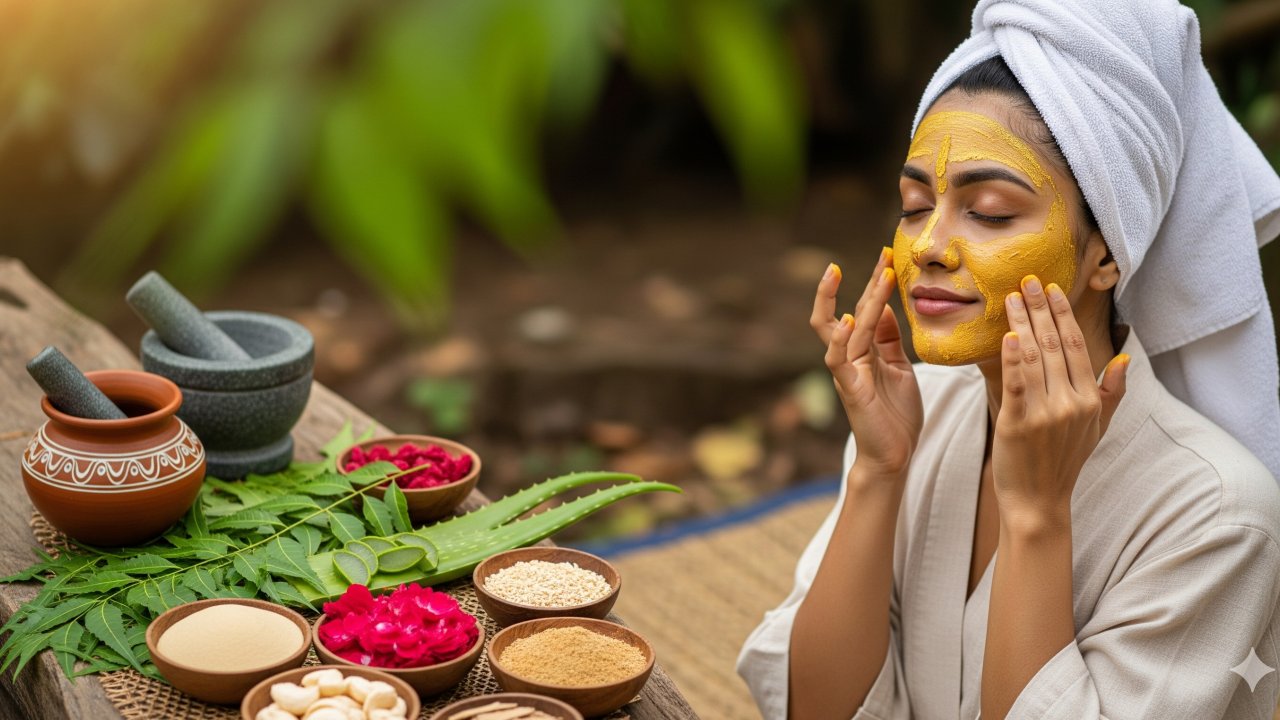 When these energies are in harmony, they support healthy digestion, detoxification, and circulation, which directly enhance skin vitality. Skin issues often arise due to dosha imbalance caused by poor diet, stress, or environmental factors. Ayurveda treats these imbalances with personalized remedies, herbal formulations, mindful eating, and lifestyle changes to restore skin health.
Through nourishing oils, cleansing herbs, and holistic routines, Ayurveda promotes deep hydration, detoxification, and rejuvenation. Its time-tested approach nurtures not just the skin’s appearance but its long-term health, offering true inner and outer glow.
Ayurveda View Skin as a Reflection of Internal Balance
Ayurveda, the “Science of Life” from India, posits that the universe, and our bodies within it, are composed of five fundamental elements: Space (Akasha), Air (Vayu), Fire (Agni), Water (Jala), and Earth (Prithvi).
These elements combine to form three primary biological energies or humors, known as Doshas: Vata, Pitta, and Kapha. Every individual has a unique proportion of these three doshas, which defines their Prakriti, or natural constitution.
Skin health, according to Ayurveda, is directly governed by the state of these doshas. When they are in balance, we experience health and vitality.
When they are aggravated or out of balance due to diet, lifestyle, stress, or environmental factors, they manifest as specific skin concerns.
- Ama (Toxins): A key concept in Ayurvedic pathology is the formation of Ama, undigested metabolic waste that accumulates due to weak digestion. This sticky toxin can clog the channels of the body (Srotas), including those that nourish the skin, leading to dullness, breakouts, and inflammation.
- Agni (Digestive Fire): The strength of our Agni is paramount. A robust digestive fire ensures proper assimilation of nutrients and efficient elimination of waste, preventing the formation of Ama and ensuring the skin receives the nourishment it needs.
Therefore, the Ayurvedic approach is twofold:
- External (Bahya): Using herbs, oils, and natural ingredients to cleanse, nourish, and protect the skin.
- Internal (Abhyantara): Using diet, lifestyle, and herbs to balance the doshas, strengthen Agni, and eliminate Ama.
Know Your Ayurvedic Skin Type
The first step to an effective Ayurvedic skincare routine is understanding your dominant dosha, as this will dictate everything from the foods you eat to the masks you apply.
1. Vata Skin (Governed by Air & Ether)
- In Balance: Thin, delicate, and cool to the touch. While it may be naturally dry, it has a subtle, elegant quality. It ages gracefully but is always asking for hydration.
- Out of Balance: The air element becomes excessive. Skin becomes very dry, flaky, rough, and easily dehydrated. It can feel tight and is prone to premature fine lines and wrinkles. It may chap and crack easily in cold or windy weather. Under-eye dark circles are common. Imbalance is often triggered by stress, cold weather, irregular routines, and excessive travel.
2. Pitta Skin (Governed by Fire & Water)
- In Balance: Fair, warm, and luminous. It has a medium thickness and a natural glow, often with a rosy or reddish undertone. It is the “I-can-get-away-with-sunbathing” skin that tans easily.
- Out of Balance: The fire element rages. Skin becomes sensitive, inflamed, and reactive. It is prone to redness, rosacea, acne (especially inflamed, painful pustules), sunburns, rashes, and broken capillaries. It can be a combination—oily in the T-zone but normal elsewhere. Excessive heat, sun exposure, spicy/acidic foods, alcohol, and emotional frustration trigger imbalance.
3. Kapha Skin (Governed by Earth & Water)
- In Balance: Plump, thick, well-hydrated, soft, and supremely supple. It is blessed with natural oils that keep it youthful and wrinkle-free for longer. It has large, but well-structured pores.
- Out of Balance: The earth and water elements lead to congestion. Skin becomes excessively oily, sluggish, and prone to congestion. It is susceptible to large pores, blackheads, whiteheads, cystic acne, and puffiness, especially around the face. Imbalance is triggered by heavy, oily, or sweet foods, lack of exercise, and sedentary habits.
Most people are a combination of two doshas (e.g., Vata-Pitta, Pitta-Kapha), with one being more dominant. Observe your skin’s tendencies over a few weeks to identify your primary doshic influence.
Ayurvedic Skin Care Daily Ritual (Dinacharya)
Ayurveda emphasizes routine (Dinacharya) to align with nature’s cycles and create stability. A simple daily skincare ritual can be a powerful act of mindfulness.
1. Internal Cleansing (Ushapan)
Upon waking, drink a glass of warm (not hot) water. This simple act hydrates the body, flushes the digestive system, stimulates peristalsis, and helps eliminate toxins that have accumulated overnight.
You can add a squeeze of lemon for Pitta and Kapha types, or a teaspoon of honey (which is heating, so best for Vata and Kapha) to further support digestion.
2. External Cleansing (Pratisarjana Karma)
Oil Cleansing (Abhyanga for the Face): Contrary to modern fear of oils, Ayurveda champions them. Applying oil to the skin (a practice called Sneha) pacifies Vata, the primary dosha responsible for dryness and aging.
It dissolves sebum, makeup, and impurities without stripping the skin’s natural acid mantle.
- Vata: Use warm, heavy, nourishing oils like sesame, avocado, or almond oil.
- Pitta: Use cool, soothing oils like coconut or sunflower oil.
- Kapha: Use light, astringent, warming oils like jojoba or grapeseed oil. A light massage is sufficient.
Method: Massage a small amount of oil onto your dry face for 1-2 minutes using upward, circular strokes. Let it sit for a minute, then gently remove it with a soft, warm, damp cloth.
Herbal Cleansers
Follow oil cleansing with a gentle, natural cleanser to remove any residual oil and impurities.
- Vata: A paste of chickpea flour (besan) mixed with a pinch of turmeric and raw milk or almond milk. Milk is grounding and nourishing.
- Pitta: Oatmeal ground into a fine powder and mixed with cool water and a teaspoon of rose water. Oatmeal is incredibly soothing and anti-inflammatory.
- Kapha: Chickpea flour (besan) or lentil flour (masoor dal powder) mixed with a pinch of turmeric and water or rose water. This provides gentle exfoliation.
3. Toning (Svédana)
Toners help restore the skin’s pH, hydrate, and prepare it to receive nourishment.
- For All Types: Pure rose water is a magnificent hydrator and mild astringent that balances all doshas. Keep it in a spray bottle and mist your face.
- Pitta: Rose water, cucumber juice, or aloe vera juice.
- Kapha: A toner made from 1 part apple cider vinegar or witch hazel to 3 parts water.
4. Moisturizing & Nourishing (Lepa)
- Vata: A few drops of your cleansing oil (sesame, almond) can often be enough. For extra dryness, a light layer of ghee (clarified butter) is a revered Ayurvedic moisturizer.
- Pitta: A tiny amount of coconut oil or aloe vera gel.
- Kapha: Often, Kapha skin does not need a heavy moisturizer. If feeling tight after cleansing, use a minimal amount of jojoba oil (which closely resembles skin’s sebum) or simply use your herbal toner.
Home Remedies: Masks and Treatments by Dosha
These treatments can be done 1-2 times per week to address specific concerns.
For All Doshas (General Radiance and Prevention)
Classic Ubtan: This is the traditional Ayurvedic cleansing paste used for millennia.
- Base: 2 tbsp chickpea flour (besan)
- Herbs: 1/2 tsp turmeric powder (antibacterial, brightening), 1/2 tsp sandalwood powder (cooling, soothing)
- Liquid: Mix with raw milk (for Vata), rose water (for Pitta), or water (for Kapha) to form a smooth paste.
- Apply: Gently massage onto damp skin and leave on for 10-15 minutes before rinsing with lukewarm water. It exfoliates, brightens, and cleanses deeply.
1. For Vata Skin (Dry, Thin, Mature)
Avocado & Honey Hydration Bomb: Avocado is packed with healthy fats and vitamins, while honey is a natural humectant.
- Recipe: Mash 1/2 ripe avocado. Mix in 1 tsp raw honey and 1 tsp almond milk or plain yogurt.
- Apply: Smooth a thick layer onto your face. Leave on for 15-20 minutes. Rinse and feel the incredible softness.
Nourishing Oil Serum:
- Recipe: In a 1-oz dropper bottle, combine 1 oz of almond or sesame oil. Add 3 drops of lavender essential oil and 2 drops of frankincense essential oil (excellent for mature skin).
- Use: Massage 3-4 drops onto your face every night.
2. For Pitta Skin (Sensitive, Inflamed, Acne-Prone)
The Ultimate Cool-Down Mask: This mask is designed to extinguish the internal fire.
- Recipe: 2 tbsp fresh aloe vera gel (straight from the plant is best) + 1 tsp sandalwood powder + 1 tsp rose water + 1 tsp finely ground oatmeal (for extra soothing).
- Apply: Apply a cool, thick layer. Leave on for 15-20 minutes. The cooling sensation is immediate and deeply calming.
Neem Spot Treatment: Neem is a powerful blood purifier and antimicrobial herb in Ayurveda.
- Recipe: Make a thick paste with neem powder and a few drops of water.
- Apply: Dab directly on active breakouts and leave on for 15 minutes before rinsing. Caution: Neem is very bitter and drying, so use only as a spot treatment.
3. For Kapha Skin (Oily, Congested)
Honey & Lemon Exfoliating Mask: Honey is antibacterial, while lemon is astringent and rich in alpha-hydroxy acids (AHAs).
- Recipe: 1 tbsp raw honey + 1 tsp fresh lemon juice + 1 tbsp finely ground oatmeal.
- Apply: Massage gently onto the skin to exfoliate, then leave on as a mask for 10-15 minutes. Rinse thoroughly. Note: Do not use if you have active inflammation or broken skin, as lemon can sting.
Multani Mitti (Fuller’s Earth) Clarifying Treatment: This clay is famous for its oil-absorbing properties.
- Recipe: 2 tbsp Multani Mitti powder mixed with rose water (for a balancing effect) or aloe vera juice to form a paste.
- Apply: Apply a thin layer, avoiding the delicate eye area. As it dries, it will tighten. Rinse as soon as it dries completely to avoid over-drying.
Diet and Lifestyle as Skincare
This is the non-negotiable cornerstone of Ayurvedic beauty. You cannot out-treat a poor diet.
1. Diet (Ahara) for Balanced Skin
General Rule: Favor fresh, seasonal, organic, and whole foods. Eat your largest meal at lunch when your digestive fire (Agni) is strongest.
For Vata: Favor warm, moist, grounding foods. Think cooked oats, stews, soups, steamed vegetables, healthy oils (ghee, olive oil), and well-ripened sweet fruits.
- Avoid: excessive raw foods, cold salads, crackers, and dried fruits.
For Pitta: Favor cool, sweet, bitter, and astringent foods. Embrace cucumbers, melons, coconut, leafy greens, cilantro, fennel, and sweet, ripe fruits.
- Avoid: spicy, sour, and salty foods. This means cutting back on chili peppers, vinegar, fermented foods, and excessive amounts of garlic and onion.
For Kapha: Favor light, warm, dry, and spicy foods. Focus on steamed vegetables, legumes, apples, pears, pomegranates, and plenty of spices like ginger, black pepper, cumin, and turmeric.
- Avoid: dairy, heavy meats, fried foods, processed sugars, and excessive oils.
2. Hydration
Sip warm water throughout the day. This is far more effective at hydrating the tissues and flushing toxins than gulping cold water. Herbal teas are excellent:
- Vata: Ginger, cinnamon, licorice tea.
- Pitta: Cooling peppermint, fennel, or chrysanthemum tea.
- Kapha: Ginger, lemon, and honey tea or green tea.
3. Strengthening Digestion (Agni)
- Start meals with a 1-inch piece of fresh ginger with a squeeze of lemon and a pinch of salt to ignite Agni.
- Avoid ice-cold drinks with meals, as they douse the digestive fire.
- Practice mindful eating in a calm environment.
4. Sleep & Stress Management (Nidra)
Sleep: Aim for 7-8 hours of quality sleep, ideally going to bed by 10 p.m. The hours before midnight are considered most restorative for the nervous system and for the body’s natural detoxification processes.
Stress: Chronic stress aggravates all doshas, particularly Pitta and Vata. Incorporate daily practices:
- Yoga: Gentle, grounding flows for Vata; cooling, non-competitive poses for Pitta; invigorating, heating sequences for Kapha.
- Pranayama (Breathwork): Nadi Shodhana (Alternate Nostril Breathing) is brilliant for balancing all doshas and calming the mind.
- Meditation: Even 10 minutes a day can significantly lower stress hormones that contribute to inflammation and breakouts.
- Spend time in nature.
Important Precautions and Final Tips
- Patch Test: Always test a new ingredient on a small patch of skin (like your inner arm) first to check for any allergic reaction.
- Quality Matters: Use the highest quality, organic, and food-grade ingredients you can find. The purity of what you put on your skin is as important as what you put in your body.
- Freshness: Mix your masks in small batches for immediate use. Do not store pre-mixed pastes for more than a day.
- Consistency Over Intensity: A simple, consistent routine performed with love and awareness is infinitely more powerful than an elaborate, sporadic one.
- Listen to Your Skin: Your skin’s needs can change with the seasons, your stress levels, and your age. A Pitta-dominant person might need more cooling in the summer, while a Vata type will need intense nourishment in the winter. Be adaptable.
- Consult an Expert: For persistent, severe skin conditions like cystic acne, eczema, or psoriasis, please consult a dermatologist. For a deeper understanding of your constitution and internal imbalances, seek out a qualified Ayurvedic practitioner.
FAQ’s
1. What are the best Ayurvedic ingredients for glowing skin?
Answer: Some of the most effective Ayurvedic ingredients include turmeric, sandalwood, neem, aloe vera, rose water, and multani mitti (Fuller’s earth). These help cleanse, nourish, and brighten the skin naturally.
2. How can I use turmeric in an Ayurvedic face remedy?
Answer: Mix ½ teaspoon of turmeric powder with 1 tablespoon of honey and 1 tablespoon of yogurt. Apply the paste to your face, leave for 10–15 minutes, then rinse with lukewarm water. Use 1–2 times a week.
3. Which Ayurvedic remedies are best for oily skin that still glows?
Answer: Use a neem and multani mitti face pack to control oil without dulling the skin. Add rose water for a soothing effect. Also, wash your face with triphalā-infused water twice daily.
4. Can Ayurveda help reduce dark spots and pigmentation?
Answer: Yes, herbs like manjistha, sandalwood, and licorice (yashtimadhu) are traditionally used to fade pigmentation and even skin tone over time.
5. How often should I apply Ayurvedic face masks?
Answer: Once or twice a week is ideal for most skin types. Overuse can lead to dryness or irritation, especially with deep-cleansing ingredients like multani mitti.
6. Are Ayurvedic remedies safe for sensitive skin?
Answer: Generally, yes, but always do a patch test first. Even natural ingredients can cause reactions. Avoid essential oils or strong herbs if you have known sensitivities.
7. Does Ayurvedic diet play a role in skin health?
Answer: Absolutely. Eating fresh, seasonal, and sattvic foods like fruits, vegetables, ghee, and spices like turmeric supports internal detoxification and skin glow. Avoid fried or overly spicy foods.
8. What is Abhyanga, and how does it help skin glow?
Answer: Abhyanga is a daily Ayurvedic self-massage using warm oils like sesame or coconut oil. It improves blood circulation, nourishes the skin, and enhances natural radiance.
9. How long does it take for Ayurvedic remedies to show results?
Answer: Typically, visible improvements can be seen within 2–4 weeks, depending on your skin type, lifestyle, and consistency in following the remedies.
10. Is there a best time—morning or night—for Ayurvedic skincare?
Answer: Morning: Cleanse and protect with light herbal face packs. Night: Nourish and repair using oils like kumkumadi tailam or rose-infused ghee. Night is ideal for deeper treatments.
Ayurveda offers gentle, effective home remedies tailored to your unique skin type through dosha-specific care. By using natural ingredients mindfully, you can support healthy, glowing skin without harsh chemicals. Choose your treatments based on your dosha and stay consistent for best results.