
Hatha Yoga: Its Mythic Origins and Historical Journey

Hatha Yoga is often mistaken for a simple collection of physical poses, yet its origins reveal a profound system designed to purify the practitioner, strengthen inner discipline, and guide consciousness toward deeper spiritual awareness and transformation.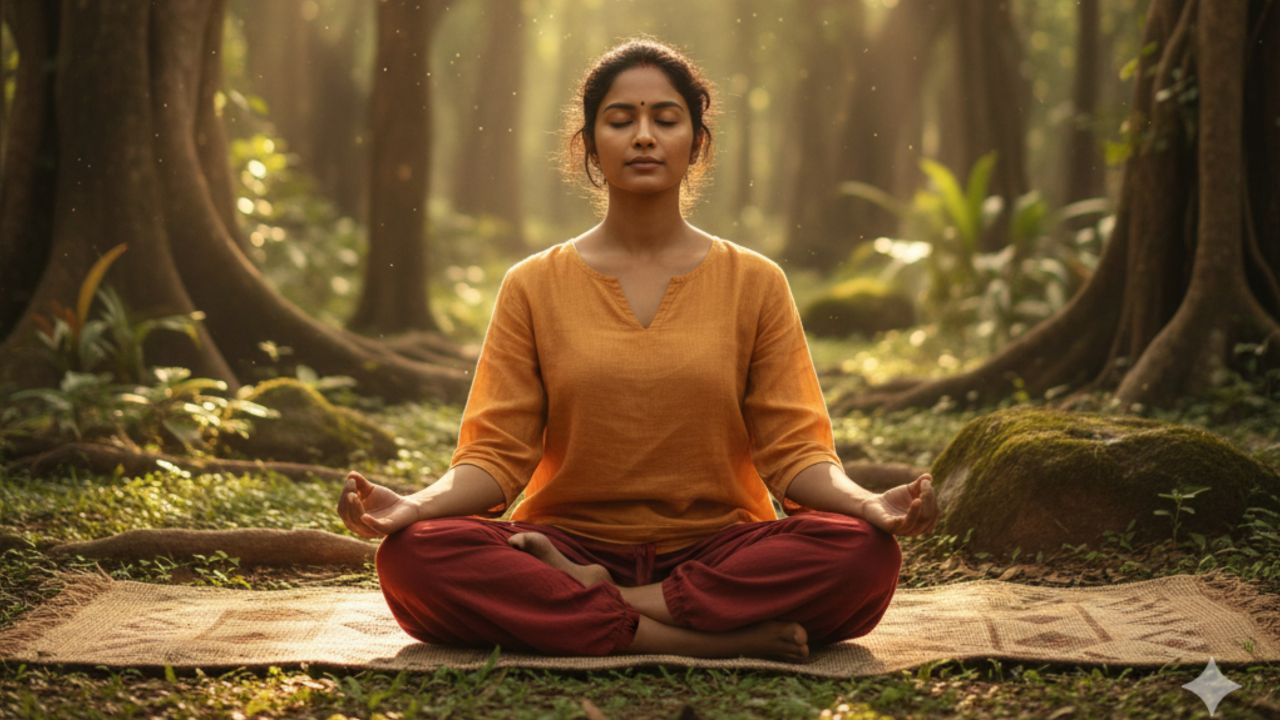 Modern interpretations emphasize flexibility, alignment, and gentle movement, capturing only a fraction of Hatha Yoga’s true depth. Classical teachings combined physical intensity with breath mastery, meditation, and ethical discipline to unify body, mind, and subtle energies.
As contemporary life accelerates and distractions multiply, Hatha Yoga invites a return to inner stillness. It encourages practitioners to slow down, reconnect with themselves, and rediscover the deep spiritual purpose embedded within this ancient, holistic discipline.
Exploring Hatha Yoga’s authentic roots reveals a path far richer than modern practice suggests. By understanding its philosophy, history, and transformative methods, practitioners can cultivate a more meaningful journey toward balance, clarity, and genuine spiritual awakening.
Hatha Yoga: Exploring Its Mythic Roots
The roots of Hatha Yoga are in sacred mythology, tracing back to the legendary sage Matsyendranatha. His story emphasizes the divine origins of the practice and highlights the mystical foundation upon which traditions were built.
According to legend, Matsyendranatha was cast into the ocean as an infant and swallowed by a giant fish. Hidden within its belly, he overheard Shiva teaching Parvati yoga’s esoteric secrets and secretly practiced them for years.
After emerging from the fish, Matsyendranatha was a Siddha, an enlightened master shaped by twelve years of hidden practice. He later shared these teachings widely, becoming a guru whose legacy anchored Hatha Yoga traditions enduring.
His disciple Gorakshanath expanded and systematized Hatha Yoga across India, shaping its philosophy and practice. Together, they are honored as foundational masters whose texts and monastic lineages preserved the tradition and ensured its continuous survival.
From Tantra to Hatha Yoga: A Historical Journey
While yogic practices date back over 5,000 years to the Vedas, Hatha Yoga crystallized as a distinct path between the 9th and 15th centuries CE. It emerged significantly from the fertile ground of Tantra, a spiritual movement that challenged orthodox Vedic ritualism by embracing the physical body as a vehicle for transcendence.
1. The Early Tantric Synthesis (c. 900–1300 CE)
The earliest systematic mentions of Hatha Yoga techniques appear in Tantric Buddhist texts like the Amrtasiddhi (11th century), which introduced key concepts like the central channel (sushumna) and the vital force (bindu). Concurrently, Hindu Nath sect texts attributed to Gorakshanath, such as the Goraksha Sataka, began outlining practices for mastering prana (life force) and the physical body.
2. The Classical Period (c. 1400–1800 CE)
This era produced the definitive scriptures that form the bedrock of classical Hatha Yoga:
- Hatha Yoga Pradipika (15th century): Compiled by Swami Svatmarama, this is the most influential text. It presents Hatha Yoga as a stairway to Raja Yoga (the royal path of meditation), detailing shatkarmas (cleansing), asana, pranayama, mudra, and samadhi.
- Gheranda Samhita (17th century): A manual framed as a dialogue between sage Gheranda and his disciple, it outlines a “seven-limbed” (saptanga) yoga, emphasizing physical purification and strength.
- Shiva Samhita (17th–18th century): A text that blends philosophical discourse with practical guidance, acknowledging multiple paths to liberation while detailing complex practices.
These texts shifted the focus from solely meditative asceticism to a sophisticated science of transforming the human body into a fortress of immortality and enlightenment.
3. The Philosophy: Union Through Mastery
The term Hatha itself is rich with meaning. It is commonly broken into Ha (sun) and Tha (moon), symbolizing the union of opposing energies—active/passive, masculine/feminine, pingala/ida nadis—within the practitioner. Alternatively, Hatha means “force” or “determined effort,” reflecting the discipline required.
Hatha Yoga’s ultimate goal is identical to all yoga: moksha (liberation) and samadhi (absorption into the divine). Its unique methodology is premised on the idea that a purified and fortified body is the optimal instrument for achieving a steady mind and spiritual awakening. It works directly with:
- Prana: The subtle life force that animates all beings.
- Nadis: The energy channels (72,000 are mentioned, with ida, pingala, and sushumna being primary).
- Chakras: The psychic energy centers along the spine.
- Bindu & Kundalini: The conserved vital essence (often associated with semen/ovarian energy) and the dormant serpent power at the base of the spine, whose awakening is central to the process.
Hatha Yoga fully embraces Patanjali’s Eight Limbs (Ashtanga), providing practical tools, especially for the third (asana) and fourth (pranayama) limbs, to achieve the higher states of concentration and meditation.
Hatha Yoga: Six Steps to Inner Cleansing
Classical Hatha Yoga is a comprehensive system far beyond posture. The Hatha Yoga Pradipika prioritizes a sixfold path:
1. Shatkarma – The Purification Techniques
These six (shat) actions detoxify the physical body and balance the doshas (bio-energies), creating a clean vessel for higher practice.
- Neti: Nasal cleansing with saline water (Jala Neti) or a string (Sutra Neti) to clear sinuses and improve respiration.
- Dhauti: Cleansing of the digestive tract, including techniques like swallowing a long cloth (Vastra Dhauti) or drinking saline water (Kunjal Kriya).
- Nauli: Abdominal churning and isolation to massage internal organs and stoke digestive fire (agni).
- Basti: Yogic enema for colon purification.
- Kapalabhati: “Skull-shining breath,” a forceful exhalation practice to cleanse the respiratory tract and energize the mind.
- Trataka: Steady gazing at a point (like a candle flame) to cleanse the eyes and develop concentration.
2. Asana – Cultivating Steadiness and Ease
In Hatha Yoga, asana refers to a stable, comfortable seat for meditation. Classical teachings highlight only essential poses, prioritizing mastery and inner steadiness over variety.
The goal, described in the Hatha Yoga Pradipika, is achieving “sthira sukham asanam,” a posture steady and pleasant. This stability encourages practice and nurtures awareness.
Holding poses for minutes builds endurance and focus, training practitioners to observe sensations without reacting. This approach transforms practice into meditation, merging movement with awareness.
3. Pranayama – Mastering the Life Force
After the body becomes steady and purified, the yogi begins regulating prana. Pranayama is more than breathing—it is the precise science of directing and expanding subtle life-energy.
Through inhalation, exhalation, and retention—puraka, rechaka, and kumbhaka—the practitioner learns to refine internal energy, strengthening concentration and preparing the mind for deeper spiritual experience.
Methods such as Nadi Shodhana, Bhramari, and extended breath retention cleanse energy channels, calm the nervous system, and center prana, creating ideal conditions for Kundalini’s awakening.
4. Mudra – Sealing the Energy
Mudras are “seals” or “gestures” that redirect pranic flow and lock energy within the body. They often combine physical posture, breath, and concentration.
- Hand Mudras (Hasta Mudra): Like Jnana (chin) mudra, directing psychic energy.
- Body Mudras (Kaya Mudra): Such as Viparita Karani (the invert, not just legs-up-the-wall but a full shoulder stand) to reverse the downward flow of energy.
- Perineal Mudra (Aswini Mudra): Contraction of the anal sphincter.
- Tongue Mudra (Khecari Mudra): A highly advanced practice of drawing the tongue back to stimulate the pituitary and pineal glands.
5. Pratyahara – Withdrawal of the Senses
Pratyahara, the fifth limb of yoga, serves as a vital bridge between external discipline and internal awakening, guiding practitioners from physical techniques toward deeper mental stillness.
Through steady inward focus, cultivated by earlier practices, the yogi gradually withdraws attention from external sensory distractions, allowing the mind to settle into its own quiet center.
This withdrawal is not suppression but refinement—an intentional turning inward that trains awareness to remain steady, preparing the practitioner for authentic concentration, meditation, and ultimately inner liberation.
6. Dharana, Dhyana, Samadhi – Concentration, Meditation, and Absorption
Dharana, Dhyana, and Samadhi represent yoga’s final limbs, marking the culmination of Hatha Yoga’s preparatory journey toward deeper mental stillness and spiritual realization.
With a purified body, steady prana, and withdrawn senses, the practitioner can hold one-pointed concentration, allowing the mind to rest firmly on a chosen focal point.
Sustained concentration evolves into meditation, which ultimately dissolves into samadhi—a state of complete absorption where individuality fades and awareness merges with unified consciousness.
Hatha Yoga: From Ancient Path to Modern Practice
The late 19th and early 20th centuries marked yoga’s global expansion. Swami Vivekananda introduced philosophy, while Krishnamacharya emphasized physical practice, shaping modern Hatha Yoga worldwide.
Krishnamacharya’s students—Iyengar, Jois, Desikachar, and Indra Devi—transformed yoga, creating diverse styles emphasizing alignment, flow, therapy, and accessibility, establishing a worldwide movement that endures today.
This popularization made yoga widely accessible but often separated it from its spiritual roots. Modern classes focus on asana, light pranayama, and relaxation, reflecting only a fraction of the original system.
Hatha Yoga Benefits: Transforming Mind, Body, and Spirit
While increased flexibility, strength, and stress reduction are well-documented physical benefits, classical Hatha Yoga’s true gifts are holistic:
Physiological & Energetic Benefits:
- Balances the Nervous System: Pranayama and slow holds regulate the sympathetic (“fight-or-flight”) and parasympathetic (“rest-and-digest”) responses.
- Enhances Cellular Health: Practices like Kapalabhati and Nauli improve oxygenation, circulation, and lymphatic drainage.
- Optimizes Endocrine Function: Specific asanas and mudras stimulate glands like the thyroid and adrenals.
- Purifies the Energetic Body: Shatkarmas and pranayama clear nadis, allowing for smoother pranic flow and preventing energy blockages linked to disease.
Psychological & Emotional Benefits:
- Cultivates Mindfulness & Present-Moment Awareness: The sustained focus required in asana and pranayama trains the mind to reside in the now.
- Builds Emotional Resilience: By learning to sit with physical and emotional discomfort on the mat, practitioners develop equanimity (upeksha) in daily life.
- Reduces Anxiety & Depression: The combination of movement, breath control, and meditation significantly lowers cortisol levels and increases GABA activity.
- Sharpens Concentration & Mental Clarity: Pratyahara and dharana practices enhance cognitive function.
Spiritual Benefits:
- Fosters Self-Realization: The practice becomes a mirror, revealing habits, fears, and the nature of the ego.
- Awakens Intuition & Inner Wisdom: As mental chatter subsides, a deeper intelligence emerges.
- Cultivates a Sense of Oneness: The process of unifying body, breath, and mind naturally expands to a feeling of connection with all life.
- Prepares for Deep Meditation: Creates the necessary physical comfort and mental stillness for profound inner exploration.
Hatha Yoga Research Overview
| Focus Area | Study Summary | Key Findings | Source |
|---|---|---|---|
| Historical Origins of Hatha Yoga | Explores how Hatha Yoga emerged from medieval ascetic and tantric traditions. | Rooted in purification, energy practices, and early yogic lineages. | Mallinson (Routledge) |
| Mythic Foundations | Examines yogic myths such as Shiva as the first yogi and their symbolic role. | Myths shape cosmology, discipline, and the philosophical roots of practice. | Eliade (Princeton) |
| Nath Tradition Development | Research on Matsyendranath, Gorakshanath, and the rise of early Hatha Yoga schools. | Naths formalized mudras, pranayama, subtle body techniques. | Briggs (MLBD) |
| Classical Hatha Yoga Texts | Analysis of texts like Hatha Yoga Pradipika and Gheranda Samhita. | Focus on purification, energy awakening, and limited asana lists. | Hatha Yoga Pradipika | Gheranda Samhita |
| Philosophical & Subtle Body Concepts | Discusses nadis, chakras, kundalini, and yogic energetics. | Energy model underlies all classical Hatha Yoga practice. | Feuerstein (Hohm Press) |
| Shift to Modern Postural Yoga | Explores 19th–20th century influences transforming yoga into a posture-focused practice. | Modern yoga reworked asanas and emphasized physical fitness. | Singleton (OUP) |
| Physical Health Research | Reviews studies on mobility, posture, and physical function. | General evidence shows improved flexibility and movement quality. | Woodyard (NCBI) |
| Mental Well-Being Research | Examines stress, emotional regulation, and autonomic balance. | Findings include improved relaxation and reduced stress markers. | Streeter et al. |
| Pranayama & Breathwork Research | Studies the physiological effects of controlled breathing practices. | Linked to improved autonomic balance and relaxation. | Brown & Gerbarg |
| Sociocultural Evolution | Explores how colonialism, nationalism, and globalization shaped modern yoga. | Yoga evolved into a global wellness and spiritual practice. | Alter (Princeton) |
Bringing Hatha Yoga Tradition into Modern Living
Embracing classical Hatha Yoga today doesn’t require retiring to a cave. It means approaching your practice with intention and reverence:
- Start with Philosophy: Read translations of the core texts. Understand the “why” behind the practice.
- Seek Knowledgeable Guidance: Find teachers who honor the tradition and can safely guide you through advanced techniques like pranayama or kriyas.
- Practice Consistency Over Intensity: Short, daily sessions focused on breath and awareness are more transformative than occasional intense workouts.
- Expand Your Practice Beyond the Mat: Incorporate the yamas and niyamas (ethical precepts), mindful eating (mitahara), and moments of conscious breath throughout your day.
- Create a Sacred Space: Dedicate a quiet corner for practice, perhaps with a simple altar, to signify the shift from ordinary activity to sacred ritual.
- Listen to Your Body’s Wisdom: Use the practice as a dialogue, not a domination. Respect your limits while gently expanding them.
- Integrate All Eight Limbs: Move beyond asana. Dedicate time specifically to pranayama, meditation, and self-study (svadhyaya).
FAQ’s:
1. What is Hatha Yoga?
Hatha Yoga is a branch of yoga that emphasizes physical postures, breath control, purification practices, and energetic techniques designed to prepare the body and mind for deeper spiritual practices.
2. Where did Hatha Yoga originate?
Hatha Yoga emerged in medieval India, influenced by earlier Tantric and ascetic traditions. Its roots can be traced to yogic lineages associated with the Nath tradition, especially figures like Matsyendranath and Gorakshanath.
3. What does the word “Hatha” mean?
“Hatha” traditionally means “forceful,” but it is also interpreted symbolically as the union of ha (sun) and tha (moon), reflecting balance between opposing energies.
4. Is Hatha Yoga based on mythology?
Yes, many early accounts attribute the teachings of Hatha Yoga to divine figures such as Shiva. These mythic narratives coexist with historical evidence from manuscripts and yogic lineages.
5. What are the main historical texts of Hatha Yoga?
Key texts include the Hatha Yoga Pradipika, Gheranda Samhita, and Shiva Samhita, which describe postures, breathwork, purification rituals, and the ultimate aim of spiritual awakening.
6. Who were the founding figures of Hatha Yoga?
Prominent early teachers include Matsyendranath and Gorakshanath of the Nath tradition, who systematized techniques that later became foundational in Hatha Yoga.
7. What was the original purpose of Hatha Yoga?
Historically, Hatha Yoga was a spiritual discipline aimed at awakening kundalini energy, purifying the body, and achieving higher states of consciousness—not primarily physical fitness.
8. How is traditional Hatha Yoga different from modern yoga?
Traditional Hatha Yoga emphasized breath control, energetic locks, mudras, and internal practices. Modern Hatha Yoga often focuses more on physical postures and accessible wellness routines.
9. How did Hatha Yoga evolve into today’s global yoga movement?
During the 19th–20th centuries, reformers and teachers adapted Hatha Yoga for general audiences, blending traditional practices with physical exercise, making it popular worldwide.
10. Why are the mythic origins important to understanding Hatha Yoga?
Mythic stories reveal how ancient practitioners understood yoga’s purpose and power. They offer cultural context, symbolic meaning, and insight into yoga’s spiritual foundations.
11. Are the mythic stories historically accurate?
Mythic narratives should be viewed as symbolic rather than literal. Historical accuracy relies on manuscripts, archaeological findings, and lineage traditions.
12. What role do pranayama, mudras, and bandhas play in classical Hatha Yoga?
These practices are essential for manipulating the body’s subtle energies, purifying the system, and preparing practitioners for meditation and higher yogic states.
13. Is Hatha Yoga suitable for beginners?
Yes! Modern Hatha Yoga is widely accessible for all levels. Traditional Hatha techniques can also be practiced safely under proper guidance.
14. How old is Hatha Yoga?
While its mythic origins are ancient, the structured system of Hatha Yoga texts dates roughly between the 11th and 17th centuries.
15. How can understanding its history enhance my practice?
Learning the origins helps practitioners appreciate the depth behind the techniques, fostering a more mindful, intentional, and respectful approach to yoga.
Hatha Yoga is an invitation to a grand alchemical experiment—the transformation of the lead of our fragmented existence into the gold of integrated consciousness. It is a journey from the gross to the subtle, from identification with the body-mind to recognition of the timeless Self.

























JK stated long ago, that his viewpoint is that the modern form of yoga only began a few centuries ago. He refers to this as simply exercise; that the real yoga is Raja yoga. He is a considerable source of wisdom and knowledge, yet this extreme viewpoint does not jibe with your history, as presented here, nor the method I personally use which is Kripalu.