
Ayurvedic Foods to Keep Cool During Summer

The sun hangs high, a brilliant, relentless orb in a cerulean sky. The air shimmers with heat, and the very world seems to slow to a languid, syrupy pace. This is summer in its full glory—a time of vibrant energy, long days, and the simple joy of sunshine. 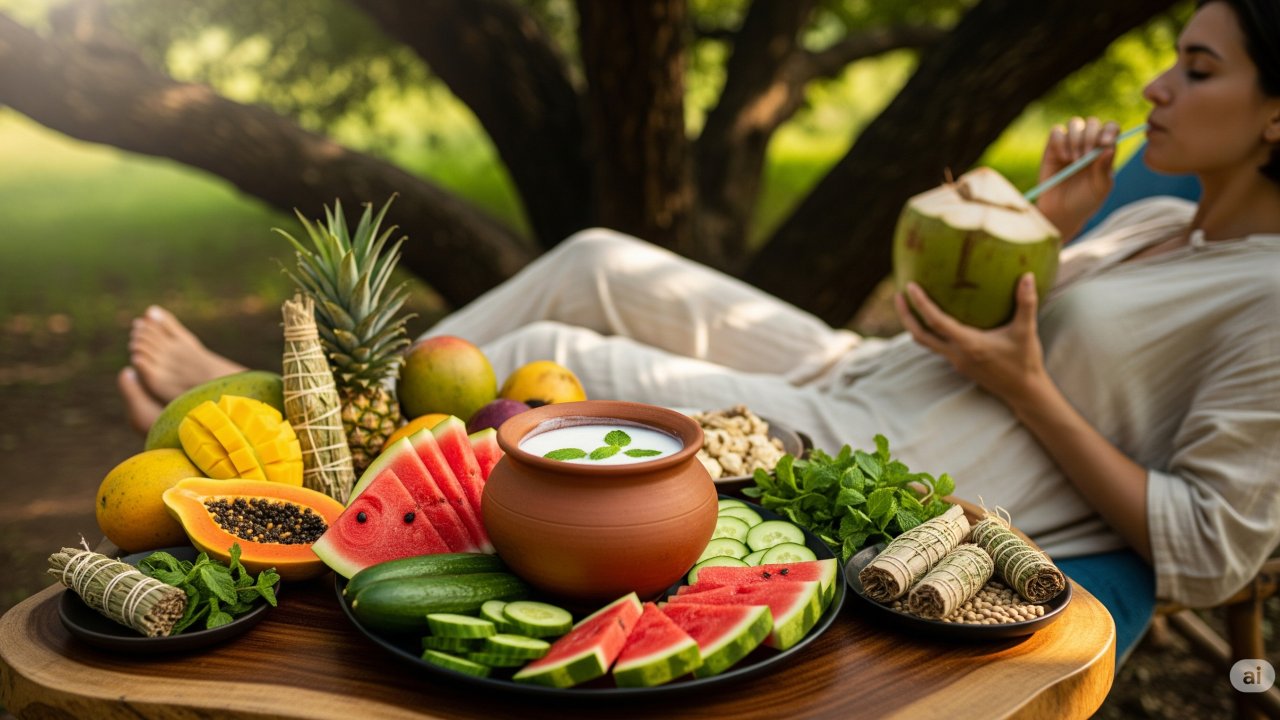 Yet, for many of us, this external warmth quickly turns inward, manifesting as discomfort, agitation, and a feeling of being utterly overheated. We experience fatigue that no amount of iced coffee can fix, skin that flares up with rashes or sunburn, digestive systems rebelling with acid reflux, and a general sense of irritability that simmers just below the surface.
In our modern struggle to beat the heat, we often reach for the very things that exacerbate the problem: ice-cold beers, sugary slushies, frozen yogurts laden with toppings, and salads drenched in vinegar-based dressings. We wonder why, despite chugging liters of ice water, we still feel parched and inflamed.
The answer, according to the ancient wisdom of Ayurveda, lies not in fighting fire with ice, but in understanding the nature of the season itself and learning to harmonize with it. For over 5,000 years, this “science of life” from India has offered a profound and holistic roadmap to navigating the cycles of nature, both externally and within our own bodies. It teaches us that the key to thriving in summer isn’t found in a quick fix but in a conscious, cooling diet that soothes our internal landscape.
Understanding Pitta Dosha
To understand the Ayurvedic approach to summer, we must first meet the three doshas—Vata (Air/Ether), Pitta (Fire/Water), and Kapha (Earth/Water).
These are the fundamental biological energies that govern all physical and mental processes in our body. Each of us has a unique constitution, a combination of these doshas, but the external environment can influence their balance.
Summer is unequivocally the season of Pitta dosha. Pitta is composed of the Fire and Water elements. It is the energy of transformation, metabolism, and digestion.
It governs our ability to process not just food, but also thoughts, experiences, and sensory input. In balance, Pitta bestows intelligence, courage, ambition, a sharp intellect, a strong digestive fire (Agni), and a healthy, glowing complexion. It is the force that allows us to achieve, to lead, and to illuminate.
The qualities, or gunas, of Pitta are:
- Hot (Ushna)
- Sharp (Tikshna)
- Light (Laghu)
- Oily (Snigdha)
- Liquid (Drava)
- Spreading (Sara)
Now, observe the qualities of a peak summer day: it is hot, the light is intense and sharp, the season feels light compared to the heaviness of winter, the skin can become oily with sweat, we crave liquid to stay hydrated, and the heat seems to spread everywhere.
This is where the core Ayurvedic principle of “like increases like, and opposites balance” comes into play. When the external heat and intensity of summer increase, they directly aggravate our internal Pitta.
The already fiery dosha becomes excessive, leading to a state of imbalance. This is not a sign of illness, but a sign that our system is overworked and needs to be cooled and soothed.
Symptoms of a Pitta Imbalance include:
- Physical Heat: Excessive body heat, burning sensations in the eyes or skin, constant thirst, acid reflux, heartburn, loose stools, inflammation, skin rashes, acne, sunburn sensitivity, and premature greying or hair loss.
- Mental/Emotional Heat: Irritability, anger, frustration, impatience, jealousy, criticism (of self and others), and a perfectionist drive that leads to burnout.
The goal of an Ayurvedic summer regimen, therefore, is to introduce qualities that are the direct opposite of Pitta’s hot, sharp, and oily nature. We seek out foods and habits that are cooling, calming, sweet, bitter, astringent, and hydrating.
Ayurvedic Summer Eating: It’s All About the Taste
Ayurveda categorizes food not just by its nutritional content, but by its taste (Rasa), its post-digestive effect (Vipaka), and its energetic potency (Virya—either heating or cooling). For managing Pitta, the six tastes are our most powerful tool.
Favor These Cooling Tastes:
1. Sweet (Madhura): This is the most important taste for pacifying Pitta. “Sweet” here doesn’t mean sugary cakes, but the innate sweetness found in foods like ripe fruits, most grains, root vegetables, milk, and ghee. The sweet taste is grounding, nourishing, building, and deeply soothing to the body and mind. It counteracts the light and hot qualities of Pitta.
2. Bitter (Tikta): Think leafy greens—kale, spinach, dandelion greens, arugula—as well as bitter melon and spices like turmeric. The bitter taste is detoxifying, cooling, and light. It helps to reduce heat, curb cravings, and cleanse the blood and liver, which are Pitta organs.
3. Astringent (Kashaya): This is a drying, tightening taste that makes your mouth pucker. It is found in legumes (like beans and lentils), pomegranates, broccoli, cauliflower, and green apples. The astringent taste helps to counter Pitta’s oily and liquid nature, absorbing excess moisture and tightening tissues.
Minimize These Heating Tastes:
1. Sour (Amla): This taste, found in citrus fruits (like lemons, limes, grapefruit), vinegar, fermented foods (like yogurt, sour cream, alcohol), and overly ripe fruits, is directly heating. It stokes the digestive fire too aggressively and can easily lead to acid reflux and inflammation.
2. Salty (Lavana): Salt is heating and retains water. While necessary in small amounts, excessive salt from chips, processed foods, and heavy salting at the table increases Pitta’s intensity and can lead to water retention, hypertension, and heightened thirst.
3. Pungent (Katu): This is the spicy, hot taste of chili peppers, raw onions, garlic, ginger (in excess), mustard, and hot spices. It is the most heating taste of all and directly aggravates Pitta, leading to anger, inflammation, and burning sensations throughout the body.
General Dietary Guidelines:
- Eat More, Drink More: Favor meals that are liquid-rich and hydrating—soups, stews, juicy fruits.
- Go Light: Choose lighter meals that are easy to digest, as your digestive fire naturally lowers in the heat. Heavy, greasy foods demand more metabolic energy, which generates internal heat.
- Timing is Everything: Have your largest meal at lunch, when your digestive fire is strongest (solar noon). Eat a lighter, earlier dinner to allow for complete digestion before sleep.
- Create a Calm Environment: Never eat when angry, rushed, or stressed. This emotional heat directly impairs digestion and fuels Pitta imbalance.
What to Eat in the Summer Season in India
Below is a list of summer foods that should be in your grocery cart.
Fruits: Nature’s Sweetest Coolants
Ripe, sweet, and juicy fruits are your best friends. They are packed with water, electrolytes, and natural sugars that cool and nourish.
- Stars: Watermelon (perhaps the #1 cooling food), cantaloupe, honeydew melon, sweet grapes, pears, mangoes (ripe and sweet), sweet oranges, plums, avocados, figs, dates (soaked), and coconuts (every part—water, milk, flesh, oil).
- Enjoy in Moderation: Berries can be slightly astringent and heating in excess. Bananas can be congesting if eaten alone; have them with cardamom.
- Minimize: Sour fruits like grapefruit, unripe mangoes, cranberries, and anything that makes you pucker.
2. Vegetables: The Bitter and Astringent Heroes
Load up on vegetables that grow above ground and are in season. They are typically light and cooling.
- Stars: Cucumber (extremely cooling), zucchini, summer squash, asparagus, broccoli, cauliflower, leafy greens (cooked is better than raw to ease digestion), celery, green beans, okra, lettuce, sprouts, potatoes, and sweet potatoes.
- The Onion & Garlic Note: Raw onions and garlic are strongly pungent and heating. If you use them, cook them thoroughly with cooling spices like cumin and fennel to mitigate their heating effects.
- Avoid: Hot peppers, radishes, raw onions, garlic (in large amounts), tomatoes (highly acidic and pungent), and beets (in excess).
3. Grains: Grounding and Soothing
Grains provide sustained energy without overheating the system.
- Stars: Basmati rice (the most sattvic and cooling grain), barley (excellent for cooling and reducing thirst), oats (cooked, not instant), quinoa, and wheat.
- Minimize: Corn, rye, millet, and brown rice can be drier and more difficult to digest, potentially aggravating Vata if over-consumed.
4. Proteins: Light and Easy to Digest
The summer diet should be lighter on animal protein. The focus is on plant-based, easy-to-digest options.
- The Ultimate Star: Moong Dal. Split yellow mung beans are the most revered protein in Ayurveda for summer. They are tridoshic, incredibly easy to digest, cooling, and nourishing. They form the base of the cleansing dish Kichadi.
- Other Good Choices: Tofu, paneer (Indian cottage cheese, in moderation), black beans, adzuki beans, and chickpeas (soaked and well-cooked with digestive spices).
- Animal Protein (if consumed): Opt for white meat chicken or turkey, fresh water fish (like trout). Always cook with cooling spices.
- Avoid: Red meat, lamb, seafood (especially shrimp), excessive eggs, and heavy, hard-to-digest lentils like urad dal.
5. Dairy: Favor Fresh and Sweet
Dairy can be very cooling, but it must be consumed fresh, organic, and in its sweet state (not sour).
- Stars: Milk (whole, organic, preferably consumed warm or room temperature with a pinch of cardamom or nutmeg; never ice-cold), ghee (clarified butter, the most treasured Ayurvedic fat—cooling, nourishing, and digestive), unsalted butter.
- The Yogurt Conundrum: Yogurt is sour and heating. However, when diluted into a drink called Lassi, it becomes a fantastic digestive aid. (Recipe below).
- Avoid: Sour cream, hard aged cheeses, salted cheese, and buttermilk (unless it’s very fresh and diluted).
6. Sweeteners, Nuts, and Seeds: Choose Wisely
- Sweeteners: Use raw honey in small amounts (it is actually cooling when unheated), maple syrup, or jaggery. Avoid white sugar and molasses, which are heating.
- Nuts & Seeds: Most nuts are heating. The best exception is coconut in all forms. Also good are sunflower seeds and pumpkin seeds. If you eat almonds, always soak them overnight and peel the skin to remove their heating quality.
What to Drink This Summer
Hydration is paramount, but how you hydrate makes all the difference.
1. Water: Sip room temperature or cool water throughout the day. Avoid ice-cold water. While it feels instantly refreshing, it shocks the digestive fire (Agni), putting it out like pouring cold water on a flame. This leads to poor digestion, the creation of toxins (ama), and ironically, can make you feel hotter in the long run as your body works to rewarm itself.
2. Cooling Herbal Teas: Sip on teas made from fennel seeds, cumin seeds, coriander seeds, or rose petals. These are not “teas” in the caffeinated sense, but gentle, cooling infusions. Simply steep a teaspoon of seeds in hot water, let it cool, and sip.
3. Nimbu Pani (Classic Lemon Water): This summer staple is excellent, but make it the Ayurvedic way. Use room temperature water, fresh lemon juice, a pinch of rock salt (sendha namak), and a sweetener like jaggery or sugar to balance the sourness of the lemon. This creates a balanced, electrolyte-replenishing drink.
4. The Ultimate Digestive Aid: Lassi: This is not a thick smoothie. Traditional lassi is a diluted yogurt drink. Blend 1/4 cup fresh, plain yogurt with 3/4 cup room temperature water until frothy. Add a pinch of roasted cumin powder, a pinch of fresh ginger (optional), and some chopped cilantro or mint. Drink it with or after lunch to aid digestion. Do not drink it at night.
5. Infused Waters: offer a refreshing twist—simply add cucumber slices, fresh mint leaves, or rose petals to a pitcher of water. These natural ingredients gently enhance the flavor while keeping the drink light and hydrating, making it a perfect, cooling choice for warm days or a soothing addition to your routine.
6. Coconut Water: Coconut water is nature’s ideal electrolyte drink—naturally hydrating, cooling, and packed with essential minerals. It helps replenish fluids, supports tissue nourishment, and refreshes the body on hot days. Light and slightly sweet, it’s a perfect natural alternative to sugary sports drinks, promoting overall well-being and optimal hydration with every sip.
7. Avoid: Avoid ice-cold beers, sodas, excessive coffee, black tea, alcohol, and carbonated drinks. These beverages may seem refreshing, but are actually heating and dehydrating to the body. They can disturb internal balance, especially in hot weather, leading to increased dryness, agitation, and discomfort. Choose cooling, hydrating alternatives for better wellness.
Lifestyle and Summer Eating Food List
1. Upon Waking (6:00-7:00 am):
- Start your day with a glass of room-temperature water. You can add a teaspoon of raw honey and a squeeze of lime if desired.
- Practice Sitali Pranayama (Cooling Breath): Roll your tongue and inhale slowly through the mouth, hold for a second, then exhale through the nose. This directly cools the nervous system.
2. Breakfast (8:00-9:00 am):
- Option 1: A bowl of cooked oatmeal made with water or milk, topped with sliced ripe pear and a pinch of cardamom.
- Option 2: A small bowl of sweet, ripe fruit, like melon or grapes. Avoid mixing too many fruits.
- Option 3: A piece of whole-wheat toast with a thin layer of ghee.
3. Lunch (12:00-1:00 pm) – The Main Meal:
- Main: A generous bowl of Kichadi (the ultimate Pitta-balancing meal). This is a simple one-pot dish of basmati rice and moong dal, cooked with cooling spices like cumin, coriander, fennel, and a hint of turmeric. Cook it with plenty of water to make it soupy.
- Side 1: Steamed seasonal vegetables like zucchini or asparagus, drizzled with ghee and fresh cilantro.
- Side 2: A small serving of raita—plain yogurt diluted with water and mixed with grated cucumber, cumin, and mint.
- Drink: A glass of lassi or room-temperature water.
4. Mid-Afternoon (3:00-4:00 pm):
- A glass of coconut water.
- Or a handful of soaked and peeled almonds or sunflower seeds.
5. Dinner (6:00-7:00 pm) – A Lighter Meal:
- Option 1: A simple vegetable soup (e.g., asparagus and zucchini) with a slice of whole-wheat bread.
- Option 2: Steamed vegetables with a small portion of basmati rice or quinoa, seasoned with ghee and cooling herbs.
- Dessert: A small bowl of watermelon or a few slices of cantaloupe.
6. After Dinner:
- Take a gentle evening stroll.
- Sip a cup of warm fennel tea to aid digestion before sleep.
Lifestyle Tips to Complement Your Cooling Diet
Diet is the foundation, but a holistic approach magnifies the benefits.
1. Abhyanga (Self-Massage): Before your morning shower, massage your entire body with coconut oil. Coconut oil is intensely cooling. This practice not only nourishes the skin but also calms the nervous system, grounds the mind, and helps move excess heat out of the body.
2. Exercise Wisely: Exercise is crucial, but do it in the coolest parts of the day—early morning or late evening. Favor cooling practices like swimming, moonlit walks, gentle yoga (avoid intense hot yoga), and Tai Chi. Listen to your body; don’t push to the point of exhaustion and overheating.
3. Surround Yourself with Cool: Wear light-colored, loose-fitting clothing made of natural fibers like cotton, linen, or silk. Spend time in nature near water—lakes, rivers, the sea. Use calming scents like rose, sandalwood, lavender, or jasmine.
4. Cultivate a Cool Mind: Practice meditation to calm the sharp, driven nature of Pitta. Avoid intense, competitive situations when possible. Practice forgiveness and let go of the need to control. Listen to calming music and spend time with people who have a soothing presence.
FAQ,s
1. What types of foods does Ayurveda recommend in summer?
Ayurveda suggests light, cooling, and hydrating foods—like cucumbers, melons, leafy greens, coconut, and sweet fruits. These help balance the heat-dominant Pitta dosha.
2. Which tastes are most balancing during summer?
Favor the sweet, bitter, and astringent tastes. These naturally cool and calm the body. Avoid overly spicy, sour, or salty foods, which increase internal heat.
3. Is it okay to drink iced water in summer?
According to Ayurveda, ice-cold water can weaken digestion (Agni). It’s better to sip room-temperature or slightly cool water, especially between meals.
4. What are some ideal Ayurvedic drinks for hot weather?
Try coconut water, rose water, mint or fennel tea, cucumber juice, or CCF tea (cumin, coriander, fennel). These support hydration and calm the system.
5. Can I eat dairy during summer?
Yes—in moderation. Ayurveda supports cooling dairy like fresh yogurt (in the form of lassi), milk, and ghee. Avoid heavy, aged cheeses and overly creamy dishes.
6. What are quick Ayurvedic meal ideas for summer?
Easy meals include kitchari with cooling herbs, quinoa with steamed greens, cucumber raita, and fruit salads with a sprinkle of mint or lime.
7. Are raw foods better than cooked foods in summer?
Some raw foods are fine, especially hydrating veggies like cucumbers and lettuce. But Ayurveda still encourages lightly cooked meals for easier digestion.
8. What common summer foods should I avoid?
Avoid spicy dishes, fermented foods, fried items, tomatoes, onions, excess coffee, alcohol, and vinegary dressings—these all increase Pitta and internal heat.
9. What signs show my body is out of balance in summer?
Look for irritability, acid reflux, skin rashes, overheating, fatigue, or loose stools. These may signal excess Pitta and the need for cooling adjustments.
10. How can I tell if a food is cooling or heating?
In general, juicy, sweet, light, and water-rich foods are cooling. Dry, spicy, oily, and acidic foods tend to be heating. Taste and post-digestive effect matter too in Ayurveda.
Summer doesn’t have to leave you feeling drained, overheated, or out of balance. With just a few mindful shifts in your diet, you can actually feel lighter, cooler, and more energized—even on the hottest days. Ayurveda reminds us that food is more than fuel; it’s medicine, especially when chosen in harmony with the season.
























Vary nice article on What To Eat To Keep Body Cool In Summer? Ayurvedic Diet Tip For Summer, each and every person must know about this article,this is a vary informatic post