Abhyanga Massage: Benefits, Guide & Best Oils for Every Dosha

Touch is one of the first ways we experience love, comfort, and safety. Yet in today’s busy world, its importance is often underestimated. We treat it as a simple gesture, forgetting that human touch plays a vital role in both our physical and emotional well-being.
 Just think about a newborn baby. Babies who are regularly held, cuddled, and gently massaged tend to grow stronger and healthier than those who receive little physical affection.
For an infant, a mother’s touch is almost as essential as food and sleep. It helps regulate emotions, supports healthy brain development, strengthens immunity, and increases the release of oxytocin—the hormone responsible for bonding, trust, and feelings of security.
The need for healing touch doesn’t disappear as we grow older. Adults also benefit from gentle, mindful touch.
A simple massage or comforting touch can calm the nervous system, reduce stress, improve sleep, and even support the body’s natural healing processes.
In a world where stress has become a daily companion, touch remains one of the most natural and effective forms of therapy.
India’s Timeless Tradition of Massage
In India, massage has never been considered an occasional luxury. It has long been a part of everyday life, passed down through generations as a simple yet powerful way to maintain health and balance.
1. Daily Massage for Babies: Newborns are traditionally massaged every day, often until the age of three. This daily ritual is believed to strengthen muscles and bones, improve circulation, nourish the skin, and support healthy development of the nervous system. Beyond the physical benefits, it also creates a deep emotional bond between parent and child.
2. Restoring Mothers After Childbirth: After delivery, new mothers traditionally receive daily oil massages for about 40 days. This period allows the body to recover from childbirth, restore strength, relieve muscle tension, and promote overall healing. It is a time dedicated to nurturing both the mother’s physical recovery and emotional well-being.
3. Supporting Teenagers Through Change: Massage is also valued during adolescence, when the body undergoes rapid physical and hormonal changes. Gentle massage can help reduce stress, improve sleep, relax tense muscles, and bring a sense of calm during this transformative stage of life.
Abhyanga: Ayurveda’s Daily Self-Care Ritual
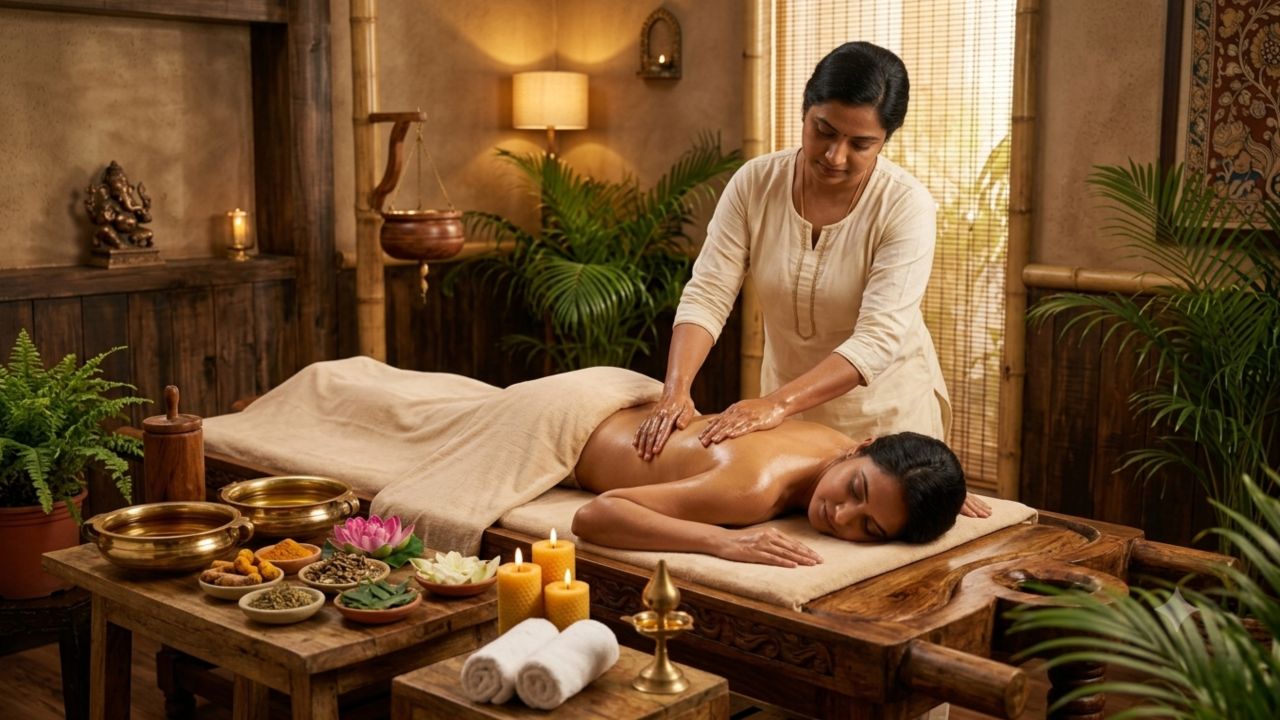
For adults, Ayurveda recommends the regular practice of Abhyanga, a warm oil massage performed using herbal oils chosen according to an individual’s body constitution (Prakriti) or specific health needs.
Abhyanga is much more than rubbing oil onto the skin. It is a mindful self-care ritual that nourishes the body from the outside in.
The word Abhyanga comes from the Sanskrit words Abhi, meaning “towards,” and Anga, meaning “body” or “limbs.” Together, they describe the practice of anointing the entire body with warm, medicinal oil.
How Does Abhyanga Work?
According to Ayurveda, warm herbal oils penetrate deep into the skin, nourishing tissues, lubricating joints, and supporting the body’s natural balance.
The massage also stimulates Marma points—vital energy centers believed to influence physical, mental, and emotional health.
When practiced regularly, Abhyanga may help improve circulation, reduce muscle stiffness, calm the nervous system, support better sleep, nourish the skin, and leave both body and mind feeling deeply relaxed.
A Practice That Nourishes Body and Mind
To fully appreciate Abhyanga, it helps to understand the Ayurvedic view of the body, the importance of choosing the right oils, and the proper massage techniques.
More than just a wellness routine, Abhyanga is a daily act of self-care that reminds us of something simple yet profound: healing often begins with touch.
The Science Behind Marma Therapy and Energy Channels
To understand the true benefits of Abhyanga, it’s important to know about Marma—the body’s vital energy points. Ayurveda identifies 107 Marma points, where muscles, bones, joints, blood vessels, nerves, and ligaments meet. These points are connected by subtle energy channels called Nadis, which carry Prana, or life force, throughout the body.
1. How Marma Therapy Supports Health: During Abhyanga, warm herbal oils and gentle massage stimulate the Marma points.
According to Ayurveda, this helps improve circulation, relax muscles, calm the nervous system, and support the body’s natural healing processes.
The massage is also believed to clear Ama (accumulated toxins) and unblock the Srotas (body channels), allowing energy and nutrients to flow more freely.
2. Restoring the Flow of Prana: As energy channels become clear, Prana flows more freely, helping restore balance between the body and mind.
Regular Marma therapy is believed to enhance vitality, reduce stress, improve overall well-being, and make Abhyanga more than just a massage—it becomes a holistic daily practice for health, relaxation, and inner harmony.
Personalizing the Practice: Oils for Your Dosha
However, the whole process—from the choice of oil to the power of pressure applied—must strictly comply with the constitution of the body of the particular person.
Ayurveda recognizes three fundamental bio-energies, or Doshas: Vata, Pitta, and Kapha. Using the wrong oil can imbalance these energies and cause harm rather than heal.
1. Vata Dosha (Air and Ether)
Vata types tend to have dry, rough, cool, and thin skin. They are prone to anxiety, restlessness, and joint stiffness. For cold Vata-Dosha, warming and soothing oils are essential.
Sesame oil is the king of Vata oils due to its heavy, warming, and grounding properties. It provides deep lubrication to the joints and calms the nervous system. Herbal infusions of Ashwagandha or Bala in a sesame base are exceptionally beneficial.
2. Pitta Dosha (Fire and Water)
Pitta types have warm, oily, sensitive skin that is prone to inflammation, rashes, and sunburn. Warming sesame oil can be too “hot” for fiery Pitta and may even cause a rash or aggravate skin conditions. Instead, cooling oils are required.
Coconut oil is the premier choice for Pitta, offering a soothing, anti-inflammatory effect. Sunflower oil and olive oil are also excellent. Infusing these with cooling herbs like Brahmi, Amalaki, or Sandalwood enhances the therapeutic effect.
3. Kapha Dosha (Earth and Water)
Kapha types naturally have thick, oily, cool, and smooth skin. They are prone to sluggishness, water retention, and excess mucus. For Kapha, heavy oils are contraindicated. Light, stimulating, and warming oils are necessary to kick-start circulation.
Mustard seed oil or Safflower oil are ideal. Dry brushing (Garshana) followed by a very light application of warm mustard oil infused with stimulating herbs like Punarnava or Ginger can deeply revitalize a Kapha constitution.
The Abhyanga Massage Procedure: A Step-by-Step Guide
Full self-massage includes nine distinct stages that systematically cover different parts of the body. It is traditionally performed sitting on the floor or a stool, or standing in a warm bathroom.
Below is the detailed procedure for how to do Abhyanga massage at home, integrating the vital Marma points:
1. The Hair Part of the Head
The head is the seat of Sahasrara (the crown chakra) and contains vital Marma points that govern the nervous system and endocrine system. While performing massage in these parts, the following objectives are involved:
- Brahmarandhra spot: Located in the center of the skull, about eight fingers’ breadth from the eyebrows. This is the soft spot on a baby’s head that hardens with age but remains an energetic gateway. Gently rub warm oil here in circular motions to calm the mind.
- Adhipati Marma: Located in the upper part of the skull between the ears. Massaging this point improves memory, relieves headaches, and clears the sinuses.
- Mania Mule: The hollow behind the skull (the occipital protuberance). This is a crucial area for releasing tension in the neck and upper back. Use the thumbs to apply gentle, upward pressure.
2. The Feet Part
In Ayurveda, the feet are considered the “root” of the human body. Massaging the feet grounds the energy and promotes deeply restful sleep. Care is taken that the massage is performed first on the right foot, then repeated with the left:
- Talahridaya Marma: Located in the center of the foot (often corresponding to the solar plexus). This point connects to the heart and digestive system. Press firmly with the thumb.
- Fingers (Toes): Each toe is massaged separately. First, the joints are massaged, starting with the big toe and moving towards the little toe, then the toes themselves are massaged in the same order. This stimulates nerve endings corresponding to the sinuses and head.
- Kshipra Marma: Located between the second toe and the big toe (about 2-3 cm in the hollow). Massaged deeply with the thumbs, this point releases emotional blockages and relieves chest congestion.
- The Foot Itself: Massaged from the toes up to the heel and ankle using long, sweeping strokes with the palms.
3. Legs Part
The legs contain the largest muscle groups and major lymphatic pathways. While performing the massage, the following parts are taken into account:
- The Ankle Joint: Massaged in a circular motion, clockwise, to promote joint mobility and drain excess fluid.
- Lower Leg: Use long, up-and-down strokes from the ankle to the knee. Apply moderate pressure to stimulate circulation in the calves.
- Knee: Massage the joint with the palms in a clockwise direction, then gently massage the tender area just under the kneecap to lubricate the joint cartilage.
- Thigh: Massage by analogy with the lower leg, using broad, sweeping strokes to cover the large quadriceps and hamstrings.
- Lohitaksha Marma Point: Located above the lymph node near the groin. This is a highly sensitive area; gently knead it with the middle finger to stimulate the lymphatic system and drain toxins from the lower extremities.
4. The Hands
The hands are an extension of the heart in Ayurvedic thought. It should be massaged in the same sequential ways as the feet—first the right hand and up to the shoulder, then the left:
- Talahridaya Point: In the middle of the palm. Pressing here relieves chest tightness and anxiety.
- Fingers: Everything is performed as with the feet, from the thumb to the little finger, ensuring each joint is flexed and rubbed.
- Hand: Massaged from the fingers down to the wrist using long strokes.
- Wrist: Massaged clockwise, slightly compressed with the fingers of the other hand over the joint to relieve carpal tunnel symptoms.
- Forearm: Massaged up and down with a gentle squeezing motion.
- Elbow: Massaged in a circular motion, similar to the wrist and knee.
- Shoulder and Shoulder Joint: Massaged using the palms in broad circular motions, just like the knees.
- Kakshadhara Marma: The axillary (armpit) center. This is a major lymphatic drainage site. Gently massage in a circular motion to release trapped toxins and tension from the upper body.
5. Back
When massaging the back, start by massaging the lower part (sacrum/lower back) and work your way up to the upper part (shoulders and upper back).
Because it is difficult to reach, you can use the backs of your hands or a custom-made Ayurvedic back massager.
Long upward strokes help to lengthen the spine, while circular motions over the kidneys and shoulder blades release deep-seated muscular tension.
6. The Abdomen Part
The abdomen is the seat of Agni (the digestive fire) and houses the Manipura chakra. Massaging this part requires specific, intentional movements:
- Nabhi Marma Point: Located at the navel. The navel is considered the center of the body in Ayurveda. Gently massage this point in a clockwise direction.
- Expanding Circles: Warm oil is poured and massaged clockwise from the navel in a small circle, gradually expanding to a wider radius that covers the entire abdomen. Note: Clockwise massage follows the natural path of the large intestine, aiding in digestion and relieving constipation.
- Contracting Circles: Then, the direction changes (or rather, the radius decreases), and the circle gradually narrows back to the navel, drawing energy and focus back to the center.
7. Chest Part
The chest houses the heart and lungs, requiring a delicate, loving touch:
- Nabhi (Solar Plexus): Corresponds to the third chakra, located about 12 cm above the navel. Massaged with gentle, circular strokes.
- Hridayam Marma: Located in the area of the fourth chakra (heart center), slightly to the left of the center of the chest. Massaged by a gentle circular motion clockwise. This point is deeply connected to emotional release and cardiovascular health.
- Upper Chest: Use broad strokes moving from the center of the chest outward toward the shoulders.
- Nila Marma: The hollow over the sternum at the base of the throat, associated with the throat chakra (Sarasvati). Massaged gently with the middle finger to clear the respiratory passages and calm the voice.
8. Neck and Face
For massaging the neck and face, use a lighter, less fatty oil (such as a specialized facial oil or infused coconut oil):
- Neck: Massaged with the palms from the bottom up to the top, counteracting gravity and promoting youthful skin.
- Hanu Marma: The hollow under the lower lip. Massaged with the index finger (resting on the marma point) and the middle finger (resting on the chin), moving gently to release jaw tension.
- Ears: Massage the right ear with the right hand, then switch to the left hand for the left ear. The ears contain hundreds of nerve endings (similar to auricular therapy).
- Cheeks and Mouth: Folds on the cheeks and the corners of the mouth are massaged from the bottom up to lift the facial muscles.
- Eyes: Massaged in a circular motion from the beginning of the eyebrows to the outer end of the eye, and from there under the eye back to the nose. This improves micro-circulation and reduces dark circles.
- The Sthapani Chakra: Located in the middle of the forehead above the eyebrows (the third eye). Massaged in an upward direction with the middle finger along the lines leading to it from the nose to stimulate intuition and relieve sinus pressure.
9. Forehead
Tightening the skin of the face through specific acupressure can be performed either after the full Abhyanga or separately as a quick pick-me-up.
Such self-massage of the face helps tremendously with migraines, runny nose, and mental lethargy. At each point, follow this protocol:
- Stop for about half a minute of sustained, gentle pressure.
- Center of the chin
- Corners of the mouth
- Dimple above the upper lip (the philtrum)
- Outer corners of the nostrils
- Cheekbones
- Points under the lower eyelids (not massaged, but gently pressed by the ring fingers to drain lymphatic fluid)
- Eyebrows (knead them with your thumb while pressing on the inside of their base near the nose)
- Sthapani Chakra (the center of the forehead)
The Express Method: If a full 15-minute routine is too demanding, there is also an abbreviated method of massage which incorporates only stages 1 (head), 2 (feet), 6 (abdomen), and 9 (forehead).
It affects the most basic, vital points, is designed to take only about 3 minutes, and is highly suitable for those who do not have enough time but still want to reap the benefits.
These massage therapies are incredibly helpful to tone the body, release deep tension, and activate the function of the main chakras. During the procedure, always listen to your feelings, and adjust the duration and pressure of movements as your body dictates.
Abhyanga Techniques and Principles
For self-massage, Abhyanga at home to be truly effective, you should follow some practical recommendations rooted in Ayurvedic wisdom.
Time and Frequency of Massage
Ayurveda is deeply tied to the circadian rhythm and the natural cycles of the Doshas throughout the day:
- General Rule: Full self-massage is best if done before a shower in the morning to lubricate the body and protect it from the day’s stress, or in the evening before bedtime to calm the nervous system for deep sleep.
- For Kapha: For fatty skin types, Kapha representatives, or for Kapha-type disorders (lethargy, water retention, congestion), it is better to massage in the morning (6 AM to 10 AM). The stimulating nature of the massage will help shake off Kapha heaviness and provide excellent stimulation for the day ahead.
- For Vata: For disorders of Vata (nervousness, anxiety, insomnia, dry skin) or during the cold, windy autumn and winter months, massages done twice a day—in the morning and evening—are highly useful. Vata thrives on routine and deep grounding.
- For Pitta: The person with sensitive, inflamed skin has a lower need for heavy oil massage. The best time for Pitta massage is the late afternoon or evening (after 6 PM), when the heat of the day has passed, and the environment is cooling down.
Preparing and Using the Oil
The medium of massage is just as important as the technique:
- Temperature: The oil must be warm. Cold oil shocks the nervous system and closes the pores. You can hold the oil bottle under a stream of hot water for a few minutes, or place it in a mug of hot water to bring it to a comfortably warm temperature before use.
- Constitutional Match: As mentioned earlier, it must fit your constitution. For Vata, choose warmer, heavier oils; for Pitta, choose cooler, lighter oils.
- High-Fat Content/High Kapha: For individuals with very high-fat content or heavily congested Kapha, it is better to limit the amount of oil used, or even replace the oil massage with Udvartana—a stimulating massage using dry herbal powders like pea flour, chickpea flour, or a dry loofah. This scrapes away excess fat and stimulates circulation without adding oil.
- Evening Therapy: For an evening massage focused specifically on the feet and palms to induce sleep, you can use a little bit of warm clarified butter (ghee). Ghee is profoundly cooling and grounding, making it the perfect nighttime remedy for insomnia.
The Physiological Benefits of Abhyanga
To understand why this 15-minute daily ritual is so heavily prescribed by Ayurvedic practitioners, we must look at the cascade of physiological benefits it triggers:
1. Cleansing the Lymphatic System
Unlike the cardiovascular system, which has the heart to pump blood, the lymphatic system has no pump. It relies entirely on muscle movement and physical manipulation to drain cellular waste.
Abhyanga acts as a manual pump, pushing stagnant lymph fluid through the body, drastically reducing edema, boosting immune function, and clearing out Ama (toxic buildup).
2. Softening and Nourishing the Skin
The skin is the largest organ of the body. Warm herbal oil penetrates the seven layers of the skin (Dhatus), replacing dry, dead cells with nourishing lipids.
Regular Abhyanga prevents premature aging, reduces wrinkles, and gives the skin a characteristic Ayurvedic “glow” (Ojas).
3. Calming the Nervous System
The rhythmic, repetitive strokes of Abhyanga activate the parasympathetic nervous system (the “rest and digest” mode) while turning off the sympathetic nervous system (the “fight or flight” mode).
This dramatically lowers cortisol levels, reduces heart rate, and induces a state of deep mental tranquility.
4. Lubricating the Joints
As we age, synovial fluid within the joints can dry up, leading to stiffness, cracking, and conditions like osteoarthritis. Abhyanga forces oil into the joint capsules, keeping them supple, flexible, and pain-free.
5. Improving Sleep Quality
By grounding Vata energy and calming the mind, an evening Abhyanga—especially focusing on the scalp and feet—is one of the most effective natural remedies for insomnia.
Precautions and Contraindications: When to Avoid Abhyanga
While Abhyanga is universally beneficial for healthy individuals, Ayurveda strictly advises against massage during certain physiological states. Self-massage cannot be performed during times of:
- Serious Weakness or Exhaustion: If the body lacks the energy to process the oil, it will simply add heaviness.
- Constipation: Massage can push toxins deeper into the tissues if the body’s primary elimination channel is blocked.
- Menstruation: During a woman’s menstrual cycle, the body is naturally engaged in a downward-flowing cleansing process (Apana Vayu). Applying oil and massaging upward can disrupt this natural flow.
- Fever or Acute Illness: During a fever, the body is trying to burn off an infection. Applying warm oil traps the heat inside the body and can make the illness significantly worse. Toxins can penetrate even deeper into the delicate tissues during these times.
Specific Regional Contraindications:
- Pregnancy: Self-massage of the abdomen is strictly contraindicated for pregnant women, as it can disturb the fetus and the protective energy surrounding the womb. (Though gentle leg and foot massages are encouraged during pregnancy, they should be done with caution and ideally by a specialist).
- Stomach Ulcer: Deep abdominal massage is contraindicated for patients with active stomach ulcers or acute digestive inflammation.
- Heart Disease: Deep, forceful massage over the Hridaya Marma (heart center) is contraindicated for those with severe cardiovascular disease.
Integrating Abhyanga into Modern Life
In a world that demands our constant attention, taking 15 minutes a day to anoint oneself with warm, fragrant oil can feel like a radical act of self-love. It is a declaration that your body is a sacred temple, worthy of care, attention, and nurturing touch.
Abhyanga teaches us to slow down. It forces us to be present with our physical form, to notice areas of tension we otherwise ignore, and to breathe deeply.
Over time, this practice cultivates a profound mind-body connection. You begin to intuitively know which oils your body is craving, which Marma points feel tender, and how much pressure is required on any given day.
By making Abhyanga a daily ritual—just like brushing your teeth—you invest in your long-term health, emotional stability, and spiritual well-being.
You carry forward an ancient Indian tradition that recognizes a simple, undeniable truth: that the healing power of touch is one of the greatest medicines we possess.
References:
1. Banyan Botanicals – Abhyanga: The Ayurvedic Oil Massage. This is one of the most respected educational resources for Ayurveda in the West. This specific page breaks down the definition of Abhyanga, its place in the daily routine (Dinacharya), and its general benefits for the tissues (dhatus). (1)
2. The Ayurvedic Institute (Dr. Vasant Lad) – Ayurvedic Self-Massage (Abhyanga) Dr. Vasant Lad is one of the world’s foremost Ayurvedic physicians. This article details the traditional application of Abhyanga, the importance of warming the oil, and the mental/spiritual benefits of the practice. (2)
3. Dosha-Specific Oils (Vata, Pitta, Kapha): Kerala Ayurveda – Best Oils for Abhyanga According to Your Dosha. Kerala Ayurveda is a globally recognized institution rooted in traditional Indian medicine. This guide perfectly outlines why sesame oil is used for Vata, coconut for Pitta, and lighter oils like mustard for Kapha. (3)
4. The Science of Touch and Infant Immunity: National Institutes of Health (NIH) – “Tactile stimulation and infant development.” To back up the article’s opening claims about babies, this peer-reviewed scientific paper explores how physical touch and massage (tactile/kinesthetic stimulation) positively affect the immune system, weight gain, and neurological development in infants. (4)
5. Touch Research Institutes (University of Miami School of Medicine). Founded by Dr. Tiffany Field, this institute is the world’s leading research center on the effects of touch therapy. Their archives contain numerous studies proving that touch reduces stress hormones (cortisol) and increases immune-boosting cells in both infants and adults. (5)
6. Marma Points and Energy Channels (Nadis): Jiva Ayurveda – Marma Therapy in Ayurveda. This article explains the concept of Marmas (vital points) and Nadis (energy channels). It supports the section of the article detailing how massaging these intersection points affects the physical and subtle body. (6)
7. Kottakkal Arya Vaidya Sala – Marma Chikitsa. Kottakkal is a premier Ayurvedic institution in India. This page provides a clinical, traditional look at the 107 Marma points and how manipulating them releases trapped energy and toxins. (7)
8. Physiological Benefits (Lymphatics, Joints, and Nervous System): Verywell Health – The Health Benefits of Ayurvedic Massage. Written by a licensed massage therapist, this piece breaks down the exact physiological mechanisms of Abhyanga, such as stimulating the lymphatic system, exfoliating the skin, and calming the sympathetic nervous system. (8)
9. Johns Hopkins Medicine – The Lymphatic System: To support the claim that Abhyanga acts as a “manual pump” for the lymphatic system, this medical overview explains how the lymph system relies on muscle movement and physical manipulation (like massage) to drain fluid and fight infection. (9)