Somaraji Oil: Ayurvedic Benefits, Uses & Ingredients

In the ancient and holistic healing system of Ayurveda, the skin is not merely viewed as an external covering, but as a mirror reflecting the internal balance of the body’s doshas (Vata, Pitta, and Kapha) and the purity of the blood (Rakta dhatu). 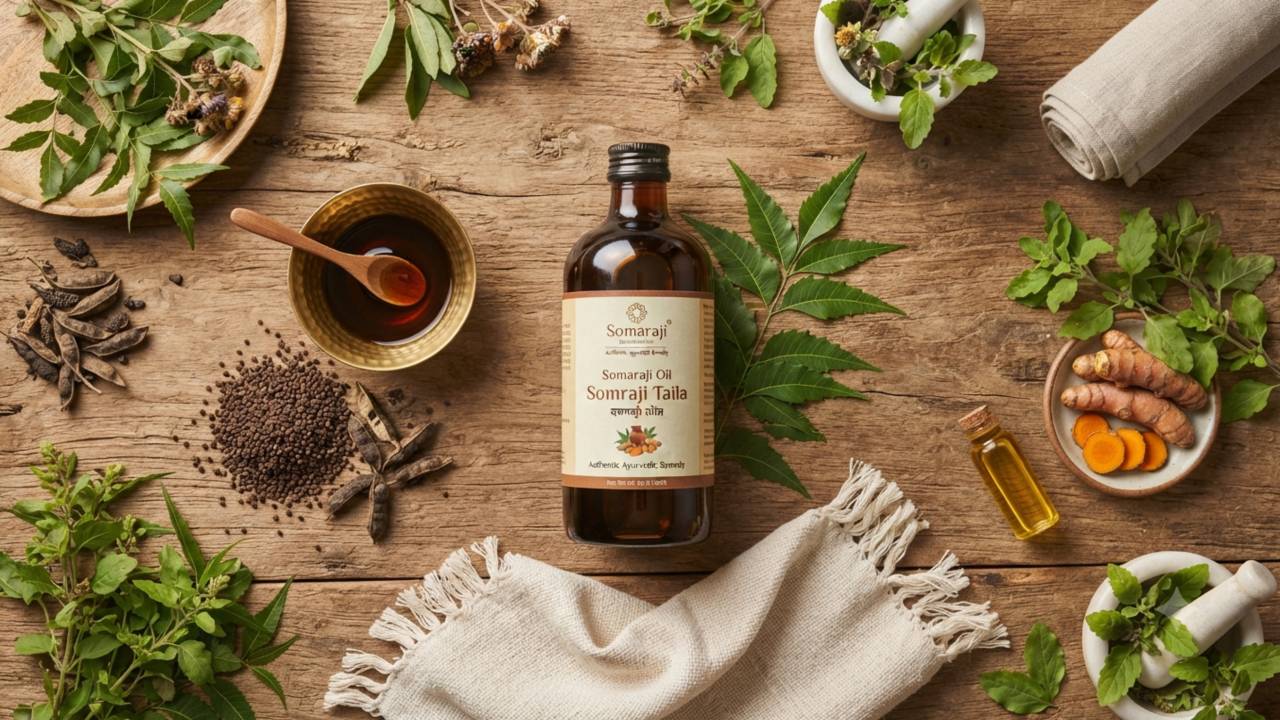 When toxins (Ama) accumulate in the body due to poor digestion, stress, or environmental factors, they often manifest on the skin as stubborn, uncomfortable, and sometimes painful conditions.
For centuries, Ayurvedic practitioners have formulated potent herbal oils to draw out these toxins, reduce inflammation, and restore the skin to its natural state of health.
Among these time-tested formulations, Somaraji Oil, also widely known as Somraji Taila or Somraji Tel, stands out as a highly effective, targeted treatment for a variety of dermatological challenges.
Somaraji Oil is a specialized Ayurvedic herbal oil primarily utilized in the management of chronic skin diseases. Prepared with a mustard oil base, it is designed exclusively for external application.
This article delves deep into the multifaceted benefits of Somaraji Oil, its traditional formulation, precise methods of application, necessary precautions, and its standing in classical Ayurvedic texts.
Understanding the Ayurvedic Context of Skin Diseases
Before exploring the specifics of Somaraji Oil, it is vital to understand how Ayurveda approaches skin diseases. Conditions like eczema, psoriasis, and dermatitis are broadly categorized under Kushta and Kshudra Kushta in Ayurvedic literature.
These conditions are typically caused by the vitiation of all three doshas, but particularly Pitta (governing heat and inflammation) and Kapha (governing heaviness, oozing, and itching), along with the accumulation of toxins in the blood and skin tissues.
Treating these conditions requires a multi-pronged approach: internal purification to cleanse the blood, and external application to soothe the localized symptoms, repair the skin barrier, and prevent further damage.
Somaraji Oil plays a crucial role in this external management. Because it is formulated in a mustard oil base, which is inherently Ushna (heating) and Tikshna (sharp/piercing).
It possesses the unique ability to penetrate deep into the skin layers (Twak), bypassing superficial barriers to deliver the therapeutic properties of its complex herbal ingredients directly to the affected tissues.
The Primary Benefits of Somaraji Oil (Somraji Taila)
Somaraji Oil is celebrated for its broad-spectrum efficacy in treating stubborn skin ailments.
Its benefits are rooted in the synergistic action of its ingredients, which work together to reduce itching, clear lesions, and promote healthy skin regeneration.
1. Management of Eczema (Vicharchika)
Eczema is characterized by dry, red, itchy, and inflamed skin. In severe cases, it can lead to oozing and crusting. Somaraji Oil helps by moisturizing the affected area while simultaneously reducing the inflammatory response.
The oil creates a protective barrier over the skin, preventing external allergens from triggering further flare-ups, while the herbal extracts work to heal the broken skin.
2. Alleviation of Psoriasis (Kitibha Kushta)
Psoriasis is an autoimmune condition marked by the rapid buildup of skin cells, leading to scaling, redness, and silvery plaques.
The ingredients in Somaraji Oil, particularly the hero ingredient Somaraji (Bakuchi), are renowned in Ayurveda for their keratolytic (scaling-removing) and anti-psoriatic properties.
Regular application helps to soften the plaques, reduce the underlying redness, and slow down the excessive proliferation of skin cells.
3. Treatment of Dermatitis and Allergic Skin Conditions
Contact dermatitis and allergic reactions cause acute itching, swelling, and redness. Somaraji Oil acts as a natural antihistamine and anti-inflammatory agent.
It calms the aggravated Pitta dosha responsible for the heat and redness, providing rapid relief from the discomfort of allergic outbreaks.
4. Relief from Pruritus (Severe Itching)
Itching is one of the most distressing symptoms associated with skin disorders. The persistent urge to scratch can lead to secondary bacterial infections and further damage to the skin.
Somaraji Oil contains specific herbs that directly target the nerve endings responsible for the itch sensation, providing a soothing, cooling, and calming effect that breaks the itch-scratch cycle.
4. Support in Gout-Related Skin Manifestations
While gout (Vatarakta in Ayurveda*) is primarily a metabolic joint disorder, it can sometimes cause localized inflammation, redness, and extreme tenderness over the affected joints (such as the big toe or ankles).
The anti-inflammatory and Vata-Kapha pacifying properties of Somaraji Oil make it useful for topical application over these inflamed joint areas to reduce localized swelling and pain.
Ingredients and How It is Made
The efficacy of any Ayurvedic oil lies in its meticulous preparation and the quality of its ingredients. Somaraji Oil is not just a simple herbal infusion; it is a complex decoction-based oil (known as Taila Paka Vidhi).
According to classical Ayurvedic formulation guidelines, the ingredients are carefully measured and processed to extract both water-soluble and oil-soluble phytochemicals, binding them to the lipid base for maximum transdermal absorption.
The Herbal Paste (Kalka)
The following fine powders are ground into a paste, using exactly 24 grams of each:
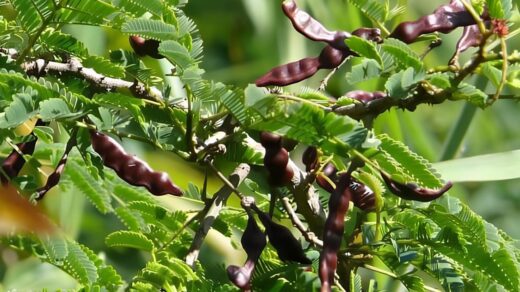
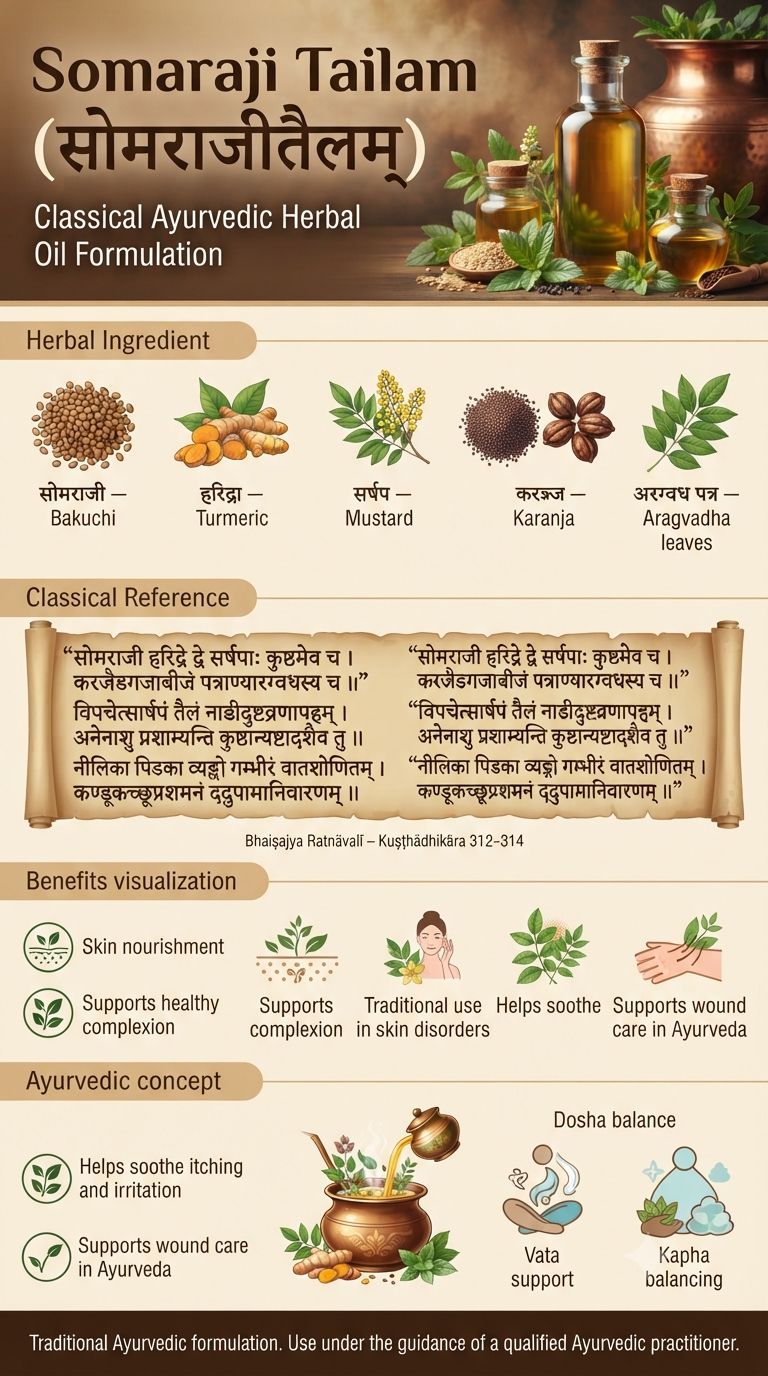
1. Somaraji (Psoralea corylifolia / Bakuchi): The primary active ingredient. It is a powerful herb for skin pigmentation disorders, psoriasis, and eczema. It stimulates melanin production and has strong antibacterial and antifungal properties.
2. Haridra (Turmeric rhizome – Curcuma longa): A cornerstone of Ayurvedic medicine. Haridra contains curcumin, which is a potent anti-inflammatory, antimicrobial, and antioxidant. It purifies the blood (when considered systemically) and prevents secondary infections in open skin lesions.
3. Daru Haridra (Tree Turmeric stem – Berberis aristata): Contains berberine, a powerful alkaloid known for its antibacterial, anti-inflammatory, and wound-healing properties. It is highly effective in treating allergic skin conditions and urticaria.
4. Sarshapa (Mustard seed – Brassica juncea): Mustard seeds have excellent rubefacient (warming and blood-flow-increasing) properties. They help in drawing out deep-seated toxins from the skin layers.
5. Kushta (Saussurea lappa): Interestingly, this herb shares its name with the Ayurvedic category for skin diseases (Kushta), highlighting its specific affinity for treating them. It is highly effective in reducing inflammation, healing wounds, and treating chronic skin conditions.
6. Karanja (Indian Beech bark/seed – Pongamia pinnata): Karanja is highly regarded for its antiseptic, antifungal, and antibacterial actions. It is particularly useful in weeping eczema and conditions where the skin is at risk of bacterial infection.
7. Edagajabeeja (Cassia tora): This herb is highly effective in treating ringworm, itching, and pustular eruptions. It acts as a natural blood purifier and skin soother.
8. Aragwadha (Cassia fistula): Known for its cooling properties (Sheeta Virya), Aragwadha helps balance the heating properties of other ingredients like mustard and Bakuchi. It is excellent for reducing burning sensations associated with severe itching and inflammation.
The Liquid Medium (Drava) and Oil Base (Sneha)
- Sarshapa Taila (Mustard Oil) – 768 ml: As the base oil, mustard oil is chosen for its Tikshna (piercing) nature. Unlike coconut or sesame oil, mustard oil has smaller molecular components that allow it to penetrate the lipid barrier of the skin rapidly. It acts as a vehicle (Anupana) to carry the herbal extracts deep into the tissues.
- Water – 3.072 liters: Water is used to create a decoction (Kwatha) of the herbs.
The Traditional Manufacturing Process
The preparation of Somaraji Oil follows the strict Snehapaka (oil cooking) method outlined in Ayurvedic pharmacoepia:
- The herbs (except those made into paste) are boiled in the 3.072 liters of water until the volume reduces significantly, creating a potent herbal decoction.
- This decoction is then combined with the 768 ml of Mustard Oil and the 24g herbal pastes in a large, heavy-bottomed vessel.
- The mixture is heated slowly and steadily. The water in the decoction slowly evaporates.
- The cooking process is closely monitored. The oil is considered perfectly cooked when all the water has evaporated, and a characteristic sound is heard (indicating the absence of moisture), or when a small drop of the oil placed on a piece of paper does not leave a wet, watery ring around it.
- The final product is filtered to remove the herbal residues, leaving behind a rich, dark, therapeutically potent oil.
How to Use Somaraji Taila Effectively
To achieve the best results from Somaraji Oil, correct application is essential. Because it is a targeted therapeutic oil, it should be used mindfully.
General Application:
- Cleanse the Area: Gently wash the affected skin area with lukewarm water and a mild, non-chemical soap. Pat the area dry with a clean towel. Avoid harsh scrubbing.
- Warming the Oil (Optional but Beneficial): Slightly warming the oil in a water bath (do not microwave) can enhance its penetration and provide instant soothing relief to itchy areas.
- Application: Pour a few drops of Somaraji Oil onto your fingertips. Gently massage it over the affected area using soft, circular motions. Do not apply excessive pressure, especially if the skin is broken, blistered, or actively oozing.
- Absorption: Allow the oil to absorb into the skin for at least 30 to 45 minutes.
- Washing Off: Depending on the severity of the condition and your comfort, you can leave the oil on overnight (covering with an old cloth to protect bedding) or wash it off with lukewarm water after an hour or two.
How Long to Use Somaraji Tailam?
Skin diseases in Ayurveda are considered deep-seated and take time to heal from the root. Externally, Somaraji Oil can be used for a very long period of time.
It is non-habit forming, and the body does not build a tolerance to its benefits. For chronic conditions like psoriasis, consistent daily application for several weeks to months may be required to see significant, lasting results.
It is generally safe for prolonged use as long as it does not trigger any adverse reactions.
Special Precautions: Application on Feet
A highly specific and practical precaution is outlined regarding the application of Somaraji Oil on the feet.
Because the oil is mustard-based, it has a naturally slippery texture that does not absorb completely into the thick skin of the soles as quickly as it does on other body parts.
- Slip Hazard: If you apply this oil on the soles of your feet, you must ensure that you wash it off thoroughly with water or wipe it off completely with a dry cloth before walking barefoot. The residual oil can make you highly susceptible to slipping and falling, which can lead to severe injuries.
- Floor Safety: After applying the oil (whether on the feet or any other body part), ensure that there are no oil spills on the floor. Mustard oil is notoriously difficult to see on tiled or hardwood floors and can make the floor extremely slippery, posing a danger to you and others in the household. Wipe down the application area immediately.
The Crucial Rule: Steam Therapy and Somaraji Oil
A common question in Ayurvedic treatment is whether oil should be applied before or after steam therapy (Swedana).
- Can this product be applied after steam therapy?
- No. Somaraji Oil is best applied before steam therapy.
This rule is grounded in fundamental Ayurvedic principles. The purpose of steam therapy is to open the pores of the skin (Srotas) and induce sweating to flush out toxins.
If you apply the oil after steam therapy, the pores begin to close rapidly as the skin cools down. This traps the heat inside the skin, which can cause severe irritation, burning sensations, and redness.
Furthermore, the closed pores will block the oil from penetrating, rendering the application useless. When applied before steam therapy, the oil acts as a protective barrier and a medium.
The heat from the steam melts the oil, driving the herbal extracts deep into the tissues and joints, while the oil prevents the steam from completely stripping the skin of its natural moisture.
Side Effects of Somaraji Tel
One of the greatest strengths of classical Ayurvedic formulations, when prepared authentically, is their high safety profile.
There are no apparent side effects with this medicine when used as directed for external application. The herbs are cooked into the oil, which mitigates the harshness of raw ingredients (like Bakuchi, which can be abrasive if applied raw).
However, general safety guidelines must be observed:
- Patch Test: Even though side effects are rare, it is always wise to perform a patch test. Apply a small amount of oil to a healthy patch of skin on the inner arm and wait 24 hours to ensure there is no allergic reaction, redness, or severe irritation.
- Open Wounds: While the oil heals, applying it directly into deep, open, infected wounds should be done under medical supervision.
- Storage: Keep out of sight and reach of children. Store the oil in a cool, dry place, away from direct sunlight. Ensure the cap is screwed on tightly after every use to prevent oxidation of the mustard oil base, which can cause the oil to smell rancid and lose its efficacy.
Shelf Life and Storage Guidelines
The shelf life of Somaraji Oil is a testament to the preserving nature of its oil base.
- Unopened: The oil has a shelf life of three years from the date of manufacture. The lipid base protects the herbal extracts from degradation.
- Opened: Once the seal is broken and the oil is exposed to air, it is best to empty the oil within 1 year. Over time, the essential volatile compounds in the herbs can dissipate, and the base oil can slowly oxidize, reducing the oil’s therapeutic potency.
Safety During Pregnancy and Lactation
Pregnancy is a delicate time where the body’s hormones and immune responses are highly altered.
During Pregnancy: If you were already using this oil before becoming pregnant without experiencing any allergic reactions or discomfort, you can generally continue using this oil even during pregnancy.
However, if you have not used this product before and wish to start using it during pregnancy, it is highly recommended to consult your Ayurvedic doctor or gynecologist first.
Pregnancy can trigger unique skin sensitivities, and in some rare cases, the oil (specifically the Bakuchi content) could cause an unexpected skin allergy.
During Lactation: It is generally considered safe to use during lactation, as the oil is applied externally and systemic absorption is minimal.
However, if the affected area is near the breast or nipple, extreme caution must be taken to ensure the baby does not ingest the oil.
Always consult your doctor for the right advice tailored to your specific postpartum health.
Classical Reference and Authenticity
The authenticity of an Ayurvedic medicine is verified by its presence in the Brihat Trayee (the three great classical texts) or later authoritative compendiums.
Somaraji Oil is referenced in the esteemed classical text: Bheshaj Ratnavali, Nadivrana Rogadhikara 39.
(Note: While the chapter ‘Nadivrana’ specifically deals with sinus tract wounds and fistulas, Ayurvedic texts often list multi-faceted formulations in specific chapters based on their primary traditional usage by the author, though their indications—like skin diseases—often overlap due to the involvement of underlying tissues like Mamsa (muscle) and Rakta (blood). Modern Ayurvedic practice widely recognizes and utilizes this exact formulation from this reference for eczema, psoriasis, and pruritus as detailed above).
When purchasing Somaraji Oil, looking for products that explicitly mention this classical reference on the label is a good way to ensure you are buying an authentic, traditionally prepared formula rather than a proprietary, diluted mimic.
FAQ’s
1. What is Somaraji Oil used for?
Somaraji Oil is an Ayurvedic herbal oil traditionally used to support skin health. It is commonly applied for skin nourishment, dryness, uneven skin tone, and other skincare concerns.
2. What are the main ingredients of Somaraji Oil?
The primary ingredient of Somaraji Oil is Somaraji (Bakuchi/Psoralea corylifolia). Depending on the formulation, it may also contain herbs such as neem, turmeric, manjistha, and a carrier oil like sesame oil.
3. Is Somaraji Oil beneficial for pigmentation?
In Ayurveda, Somaraji (Bakuchi) is traditionally used to support healthy skin pigmentation and complexion. Results may vary, and persistent pigmentation should be evaluated by a dermatologist.
4. Can Somaraji Oil be used for vitiligo?
Somaraji Oil has a traditional Ayurvedic association with vitiligo care, but it should not be considered a guaranteed treatment. People with vitiligo should consult a qualified dermatologist or Ayurvedic practitioner before use.
5. How should Somaraji Oil be applied?
Apply a small amount of Somaraji Oil to clean skin and gently massage. Follow the product instructions or the advice of an Ayurvedic professional for frequency and duration.
6. Can Somaraji Oil be used daily?
Daily use depends on the product formulation and individual skin sensitivity. A patch test is recommended before regular application.
7. Does Somaraji Oil have any side effects?
Some people may experience redness, itching, irritation, or increased sensitivity to sunlight. Stop use if severe irritation occurs.
8. Is Somaraji Oil safe for sensitive skin?
People with sensitive skin should perform a patch test before applying it to larger areas. Avoid use if irritation or allergy develops.
9. Can Somaraji Oil remove dark spots?
Somaraji Oil is traditionally used to support an even-looking complexion, but its effectiveness for dark spots can vary depending on the cause and skin condition.
10. Is Somaraji Oil suitable for all skin types?
Somaraji Oil may be suitable for many skin types, but individual reactions differ. People with sensitive or allergy-prone skin should use caution.
11. Can Somaraji Oil be applied on the face?
Yes, Somaraji Oil may be used on the face if the product instructions allow it. Always do a patch test first, especially for facial application.
12. How long does Somaraji Oil take to show results?
The time required to notice changes varies based on skin type, consistency of use, and the specific skin concern being addressed.
13. Can children use Somaraji Oil?
Children should use Somaraji Oil only after consulting a healthcare professional, as their skin may be more sensitive.
14. Can Somaraji Oil be used during pregnancy?
Pregnant or breastfeeding individuals should consult a healthcare provider before using Somaraji Oil.
15. Where can I buy authentic Somaraji Oil?
Authentic Somaraji Oil is usually available through Ayurvedic pharmacies, trusted herbal product stores, and authorized sellers. Check the ingredients, manufacturer details, and quality certifications before purchase.
Somaraji Oil (Somraji Taila) is a classical Ayurvedic herbal formulation prepared with mustard oil and potent herbs like Bakuchi, Haridra, and Daru Haridra, traditionally used to support skin health and help manage eczema, psoriasis, and persistent itching.