Gandharvahastadi Thailam: Benefits, Uses, Dosage & Ingredients

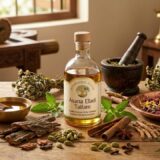
Ayurveda considers healthy digestion the cornerstone of overall wellness. A strong digestive fire (Agni) supports nourishment, vitality, and disease resistance, while impaired digestion is believed to contribute to the development of many health conditions.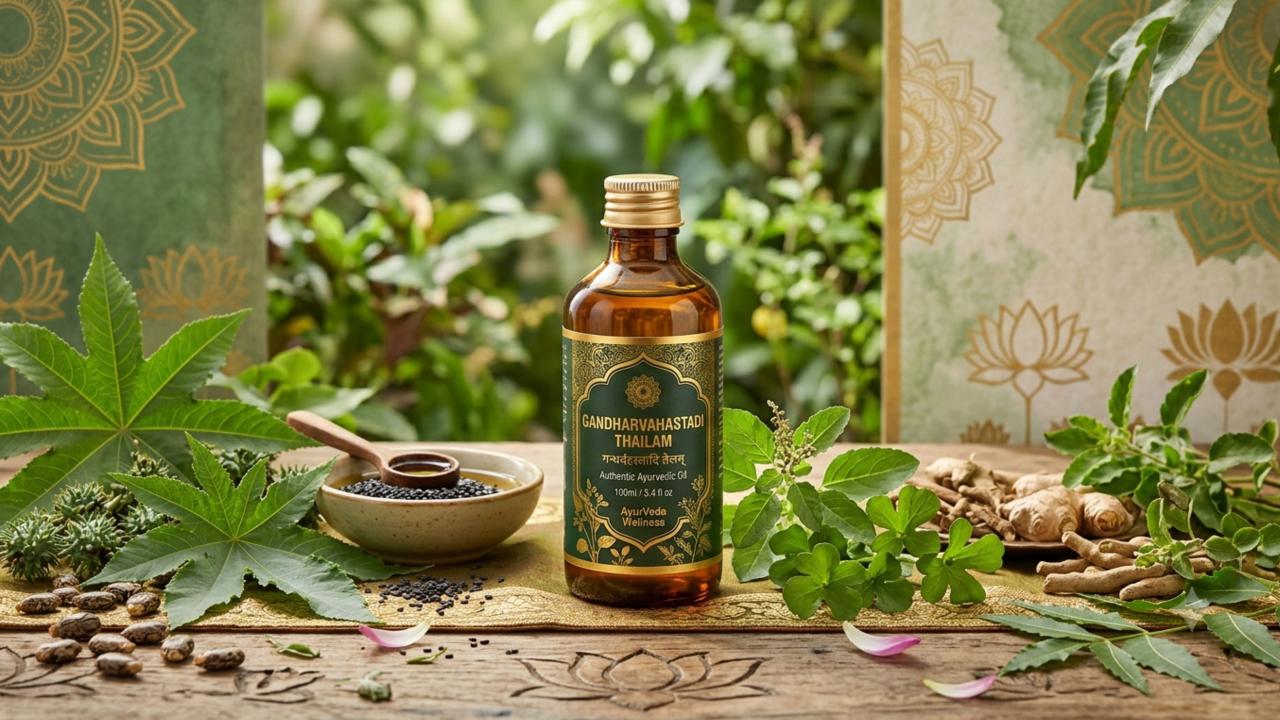 Gandharvahastadi Thailam, also known as Gandharvahastadi Eranda Tailam, is a classical Ayurvedic medicated oil traditionally used to support digestive health, Vata balance, and comfortable bowel movements. It is especially valued in South Indian Ayurvedic practice.
Prepared through the traditional Sneha Kalpana process, this formulation combines processed castor oil with carefully selected herbs to enhance its therapeutic properties while reducing the harsh effects associated with raw castor oil.
This guide explores the history, ingredients, preparation, traditional Ayurvedic uses, dosage, precautions, potential benefits, and practical applications of Gandharvahastadi Thailam, offering a comprehensive overview for practitioners and wellness enthusiasts alike.
What Is Gandharvahastadi Thailam?
To understand Gandharvahastadi Thailam, it is important to first understand its primary ingredient: Castor oil (Eranda Taila).
In modern times, castor oil is recognized for its powerful therapeutic properties, especially for supporting skin and hair health.
However, it is also known for its strong purgative (laxative) action, which can make raw castor oil difficult for some people to consume.
How Ayurveda Transforms Castor Oil
Raw castor oil can be heavy, difficult to digest, and unpleasant to take because of its thick consistency and strong taste.
Ayurvedic acharyas developed an advanced preparation method known as Sneha Kalpana, the traditional science of preparing medicinal oils and ghees, to enhance the benefits of oils while reducing their unwanted effects.
The Preparation of Gandharvahastadi Thailam
Gandharvahastadi Thailam is created through this specialized Ayurvedic process. It is not simply plain castor oil; it is a carefully processed herbal oil prepared by:
- Purifying castor oil through traditional methods (Murchita process)
- Combining it with specific herbal decoctions
- Infusing it with herbal pastes (Kalka)
- Processing it with ingredients such as cow’s milk according to classical Ayurvedic formulations
Why This Process Matters
Through this traditional preparation, the properties of castor oil are refined and enhanced. The process is believed in Ayurveda to reduce the harshness of raw castor oil while improving its therapeutic qualities.
As a result, Gandharvahastadi Thailam is traditionally considered a gentler form of castor oil preparation that can be used in smaller doses and is also employed in Panchakarma therapies under Ayurvedic guidance.
The name itself is derived from its primary ingredient: Gandharvahasta, which is the Sanskrit name for the Castor plant (Ricinus communis).
The Ayurvedic Principle Behind the Formulation
According to Ayurveda, the human body is governed by three fundamental bio-energies known as doshas: Vata (air and ether), Pitta (fire and water), and Kapha (earth and water).
Each dosha plays a vital role in maintaining balance and supporting various physiological functions.
The digestive system, especially the colon (Pakvashaya), is considered the primary seat of Vata dosha. Since Vata governs movement within the body, its balance is essential for proper digestion, elimination, and overall well-being.
Vata Imbalance and Its Effects
When Vata dosha becomes aggravated due to factors such as improper diet, a sedentary lifestyle, stress, or suppression of natural urges.
It can lead to a condition described in Ayurveda as Apana Vata Udrepana—the disturbance of the downward-moving energy responsible for elimination.
This imbalance may manifest as:
- Abdominal bloating
- Gas and discomfort
- Constipation
- Lower back pain
- Abdominal distension
The Principle of Vata Anulomana
Gandharvahastadi Thailam works according to the Ayurvedic principle of Vata Anulomana, which refers to restoring the natural downward movement of aggravated Vata dosha.
The formulation is designed to support the proper functioning of Apana Vata by helping regulate elimination and balance the qualities associated with excess Vata.
Role of the Herbal Oil Medium
During the traditional preparation process, medicinal herbs are infused into a processed oil medium along with herbal water decoctions. This allows the formulation to incorporate both oil-soluble and water-soluble components of the herbs.
The oil acts as a carrier (Anupana), helping deliver the herbal properties throughout the body, while the herbs are traditionally believed in Ayurveda to support the removal of Ama (metabolic impurities) and help clear blockages in the body’s channels (Srotas).
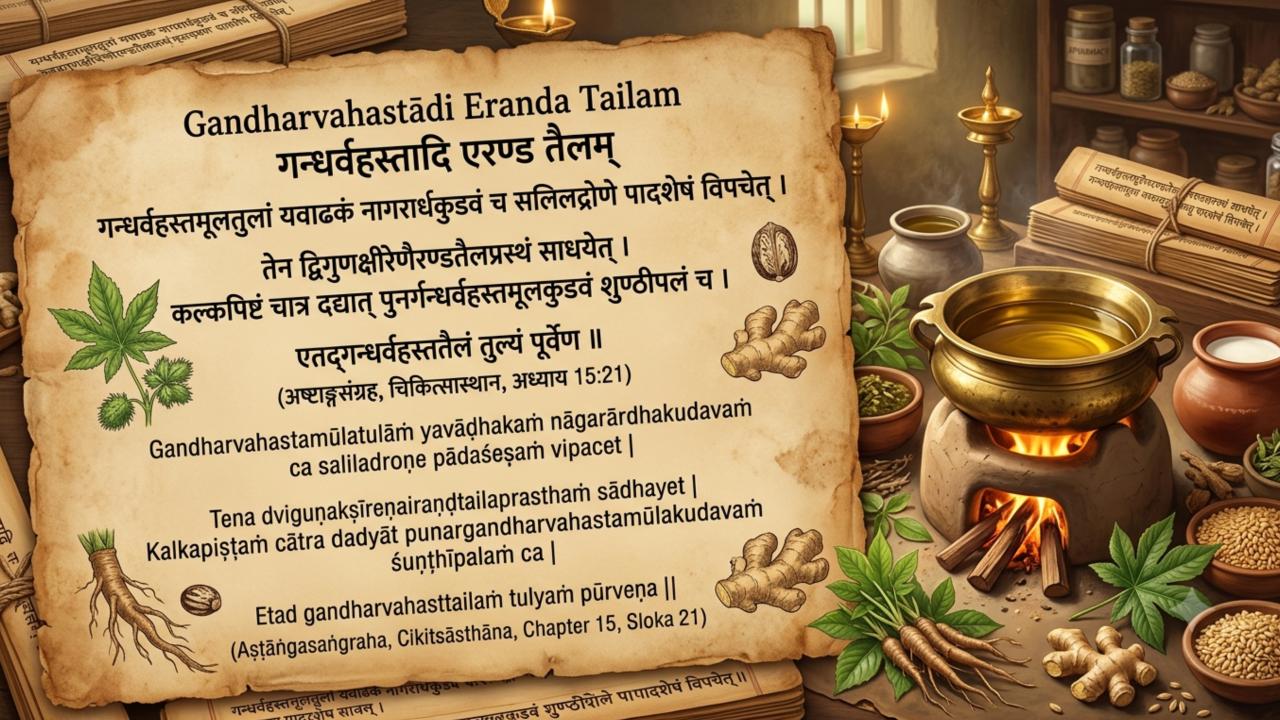
Shloka Sanskrit Verse
Benefits of Gandharvahastadi Thailam
Gandharvahastadi castor oil is a multi-faceted remedy. While it is most famous for its digestive benefits, its systemic effects reach far beyond the stomach. Here is a detailed look at its therapeutic uses:
1. Relief from Abdominal Bloating and Gas (Adhmana)
Bloating is primarily a Vata disorder where gas gets trapped in the gastrointestinal tract. The ginger and castor root in this formulation have carminative properties that help break up the gas pockets, while the oil base smooths the intestinal lining, allowing for easy expulsion of gas.
2. Treatment of Constipation (Vibandha)
Unlike harsh chemical laxatives that cause dependency and cramping, Gandharvahastadi Thailam acts as a Virechana (purgative) that softens the hard stool (due to its unctuous/oily nature) and stimulates peristalsis. It cures body aches, back aches, and other Vata troubles by giving good, smooth motions without depleting the body’s strength.
3. Management of Abscesses (Vidradhi)
In Ayurveda, an abscess is often a localized collection of Pitta (heat/infection) and Kapha (fluid/swelling) blocked by Vata. Taken internally, this oil helps to digest the toxins causing the abscess and promotes their elimination through the digestive tract.
4. Splenic Disorders (Pliha Roga)
The spleen is an organ closely associated with blood filtration and immune function in Ayurveda. Enlargement of the spleen or splenic dysfunction is treated by purifying the Rakta dhatu (blood tissue). The purgative action of this oil directly impacts the liver and spleen, helping to reduce inflammation and clear out accumulated metabolic waste from these organs.
5. Oedema and Inflammatory Conditions of the Abdomen
Oedema (swelling caused by fluid retention) in the abdominal region is often linked to poor kidney function, liver issues, or compromised lymphatic drainage—all of which involve Kapha and Vata doshas. The diuretic and purgative properties of Gandharvahastadi Thailam help pull excess fluid out of the tissues and eliminate it safely.
6. Ascites (Jalodara)
Ascites, the accumulation of fluid in the peritoneal cavity (often seen in advanced liver disease), is a serious condition. In classical Ayurveda, Gandharvahastadi Thailam is utilized to gently draw out this accumulated fluid through the digestive tract, providing significant relief to the patient when used under strict medical supervision.
7. Relief from Lower Back Ache and Body Aches
Because the colon (specifically the Apana Vayu) shares a direct neurological and energetic connection with the lower back and pelvic region, chronic constipation and gas are leading causes of lower back pain. By clearing the bowels efficiently and pacifying Vata, this oil indirectly but highly effectively relieves lower back aches and general body stiffness.
Gandharvahastadi Thailam Ingredients
The efficacy of any Ayurvedic formulation relies entirely on the quality, synergy, and precise proportions of its ingredients.
Gandharvahastadi Thailam is a masterclass in minimalism—using just a few, highly targeted ingredients to create a powerful medicine.
1. Gandharvahastha Moola – Root of Castor (Ricinus communis)
- Quantity used: 4.8 kg (for decoction) + 192 g (fine paste)
- Significance: While the seeds are used for oil, the root of the castor plant has unique medicinal properties. It is highly effective in reducing inflammation, treating abdominal lumps, and acting on the digestive and respiratory tracts. Using both the decoction of the root and the paste ensures maximum extraction of its bioactive compounds.
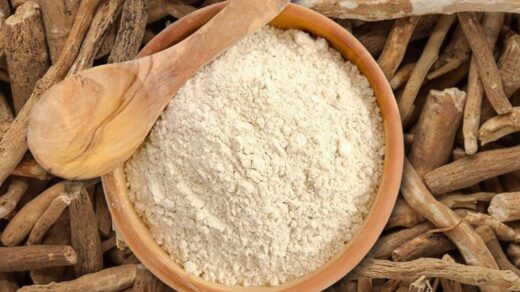
2. Yava – Barley (Hordeum vulgare)
- Quantity used: 3.072 kg (Seeds)
- Significance: Barley is a classic Ayurvedic Grahi (absorbent) and Pitta-Shamak (Pitta-pacifying) grain. When castor oil is processed with barley, the barley acts as a buffer. It prevents the oil from causing excessive diarrhea, adds a cooling effect to counteract the heating nature of ginger, and improves the digestibility of the oil. It also provides nourishment to the body tissues.
3. Nagara / Shunti – Ginger (Zingiber officinalis)
- Quantity used: 96 g (Dry ginger for decoction) + 48 g (Fresh ginger paste)
- Significance: Ginger is known as Vishwabheshaja (the universal medicine). It is a potent Deepana (appetizer) and Pachana (digestive). In this formulation, ginger’s primary role is to ignite the digestive fire so that the body can properly process and utilize the heavy castor oil. It also prevents the formation of Ama (toxins) during digestion.
4. Water for Decoction (Kwatha)
- Quantity used: 24.576 liters, boiled and reduced to 6.144 liters
- Significance: The water-soluble active principles of castor root, barley, and dry ginger are extracted through this meticulous boiling process. Reducing the water to exactly one-quarter of its original volume ensures a highly concentrated herbal decoction.
5. Ksheera – Cow Milk
- Quantity used: 1.536 liters
- Significance: Milk is a Sneha (unctuous) substance that acts as a brilliant medium for extracting fat-soluble alkaloids from the herbs. It also has a Sandhana (binding) property. More importantly, adding milk to the heating oil prevents the oil from burning, ensures a uniform, smooth texture, and imparts a soothing, cooling, and nourishing quality to the final product, protecting the stomach lining.
6. Murchita Eranda Taila – Processed Castor Oil (Ricinus communis)
- Quantity used: 768 ml
- Significance: The word Murchita means “processed” or “purified.” Raw castor oil contains toxic proteins like ricin (which is removed during commercial cold-pressing) and can be difficult to digest. In Ayurveda, castor oil is further purified by boiling it with specific herbs or decoctions until it changes color and loses its foam. Murchita castor oil is vastly superior to plain castor oil—it is lighter to digest, more penetrating, and devoid of side effects.
The Traditional Method of Preparation (Sneha Kalpana)
The manufacturing of Gandharvahastadi Thailam is a delicate, time-consuming process that cannot be replicated by simply mixing ingredients together. It follows the strict pharmaceutical guidelines of Sneha Paka (oil cooking).
1. Preparation of Decoction (Kwatha): The ingredients from Gandharvahastha (castor root) to Nagara (dry ginger) are cleaned and made into a coarse powder. This powder is boiled with 24.576 liters of water until the water reduces exactly to 6.144 liters. The liquid is then filtered to obtain a clear, potent herbal decoction.
2. Preparation of Paste (Kalka): Fresh Gandharvahasta moola (castor root) and Shunti (ginger) are ground into a fine, smooth paste by adding a small amount of water.
3. The Cooking Process (Paka): In a large, heavy-bottomed vessel, the Murchita castor oil is heated gently. The herbal paste is added to the oil and stirred continuously. Slowly, the herbal decoction and cow’s milk are poured into the oil-paste mixture.
4. Continuous Stirring: This is the most critical step. The mixture must be stirred continuously to prevent the paste from burning and sticking to the bottom of the vessel, and to ensure the water evaporates uniformly, allowing the oil to absorb the herbal properties.
5. Determining Completion (Paka Siddhi Lakshana): The heating is stopped only when specific visual and auditory signs appear. First, a characteristic froth appears over the surface of the oil. Second, the moisture content must be absolutely zero. To test this, a small drop of the hot oil is dropped onto a dry blade or into the fire. If it makes a crackling or popping sound, moisture is still present, and cooking must continue. When the oil drops silently into the fire, the Sneha is perfectly cooked.
6. Filtration and Storage: The oil is immediately filtered to remove all solid herbal waste materials, allowed to cool naturally, and stored in airtight, glass or food-grade HDPE containers away from light and moisture.
How To Use Gandharvahastadi Thailam (Mode of Usage & Dosage)
Gandharvahastadi castor oil is uniquely versatile because it is used for internal administration in two entirely different ways: as a daily maintenance medicine and as an intensive detoxification agent.
1. As a Regular Ayurvedic Medicine (Daily Use)
For chronic conditions like bloating, mild constipation, lower back ache, or inflammatory abdominal conditions, it is used as a general oral Ayurvedic medicine for daily use.
- Dose: 5 – 10 drops (not milliliters, but literal drops) once or twice a day.
- Timing: It should be taken before food. Taking it on an empty stomach (or just before a meal) ensures it acts directly on the upper digestive tract and prepares the lower GI tract for smooth elimination.
- Administration: Because of its taste, it is usually mixed with a small amount of warm water or equal parts warm milk to make it easier to swallow.
2. As a Panchakarma Therapy (Virechana)
Virechana is the Ayurvedic purgative therapy, one of the five main detoxification procedures of Panchakarma. It is used to completely flush out excess Pitta (heat, toxins, bile) and Vata from the body.
- In this context, Gandharvahastadi Thailam is used for internal administration in a large dose.
- Crucial Note: The decision of its usage in Virechana, the exact dosage (which can range from 20 ml to 60 ml or more), and the preparatory procedures (Snehana and Swedana) are exclusively taken by a qualified Ayurvedic doctor. You should never attempt Virechana at home.
How Long to Use It?
- As a regular medicine in low doses: It can be used for a period of one month, based strictly on your doctor’s advice.
- After a month, the doctor will assess your digestive strength, symptom relief, and dosha balance to decide if you should continue, stop, or switch to a different medicine.
- Do not use this for self-medication for extended periods, as even gentle purgatives can eventually deplete electrolytes or cause dependency if misused.
Gandharvahastadi Thailam Side Effects and Precautions
When used correctly under medical supervision, Gandharvahastadi Thailam is incredibly safe and is often described in classical texts as a “harmless” purgative.
However, because it is fundamentally a potent oil designed to move the bowels, misuse can lead to issues.
Potential Side Effects:
- Loose Stools and Diarrhea: In higher doses, or in cases where it is wrongly administered (e.g., given to a person with already loose motions or severe irritable bowel syndrome), it may cause severe loose stools and diarrhea.
- Dehydration and Electrolyte Imbalance: If taken in large doses without medical supervision, excessive purging can lead to a loss of essential fluids and minerals, causing fatigue, dizziness, and muscle cramps.
- Abdominal Cramping: While the ginger and milk usually prevent cramping, taking cold oil or taking it after a heavy, greasy meal can cause mild abdominal gripping or cramps.
Who Should Avoid It? (Contraindications)
- Children: Their digestive fire is delicate and still developing. It is best avoided in children unless explicitly prescribed by a pediatric Ayurvedic specialist.
- Pregnant Women: This requires special attention (see the detailed FAQ section below).
- Lactating Mothers: While generally considered safe, the components of the oil can pass into breast milk. It is best to consult a doctor to ensure it does not cause loose motions in the infant.
- People with Severe Diarrhea or Dysentery: If you already have loose, watery stools (a condition of Atisara), giving a purgative oil will only worsen the condition and deplete the body.
- Acute Fever and Weakness: During high fever or extreme physical debility, the body’s energy should be directed toward healing, not purging.
Shelf Life and Expiry Date
Because of the meticulous Sneha Kalpana process which removes all water content, Ayurvedic oils have a remarkably long shelf life.
- Unopened Expiry: 3 years from the date of manufacture.
- Opened Expiry: Once you break the seal and open the container, the oil is exposed to oxygen and ambient moisture. It is highly recommended to use the oil within 1 year of opening.
- Always store it in a cool, dark place, and ensure the lid is screwed on tightly after every use to prevent the oil from oxidizing (going rancid).
Top Manufacturers of Gandharvahastadi Thailam
When purchasing Ayurvedic medicines, the source matters immensely. The efficacy of the oil depends entirely on the quality of the raw herbs, the purity of the castor oil, and the strict adherence to the traditional cooking methods. Several legendary Ayurvedic pharmacies produce this oil with pristine quality:
- Kottakkal Arya Vaidya Sala: Perhaps the most trusted name in Ayurveda worldwide, based in Kerala. Their Gandharvahastadi Eranda Tailam is considered the gold standard.
- Nagarjuna Ayurvedic: They manufacture it under the name Gandharvahasthadi Thailam (Gandharvahasthadi Erandam). They are known for high-quality GMP-certified manufacturing.
- SDP Ayurveda Products: Another excellent South Indian brand that produces authentic, traditionally prepared Gandharvahastadi Thailam.
- Vaidyaratnam Oushadhasala: Highly reputable for classical Kerala Ayurvedic preparations.
Modern Scientific Perspective on the Ingredients
While Ayurveda relies on doshas and herbal qualities, modern science validates the mechanisms behind why Gandharvahastadi Thailam works so effectively:
- Ricinoleic Acid: Castor oil is exceptionally high in ricinoleic acid. When ingested, this fatty acid is released by lipases in the small intestine. Ricinoleic acid activates specific receptors (EP3 prostanoid receptors) in the intestinal smooth muscle, leading to a powerful but smooth contraction of the bowels. Unlike senna or other stimulant laxatives, ricinoleic acid does not cause cramping because it works via a different neurological pathway.
- Gingerols and Shogaols: The ginger in the formulation provides powerful anti-inflammatory and pro-kinetic effects. It speeds up gastric emptying, ensuring the castor oil moves smoothly through the stomach without causing nausea or acid reflux.
- Beta-Glucans in Barley: Barley contains high amounts of soluble fiber and beta-glucans, which form a soothing gel-like substance in the gut. This protects the mucosal lining from the purgative action of the oil and helps regulate the consistency of the stool, preventing sudden, watery diarrhea.
Classical References
This formulation is documented in two of the most authoritative texts in Ayurveda:
- Ashtanga Hrudayam: Written by Acharya Vagbhata, this text is the cornerstone of Ayurvedic clinical practice. The formula is found in the Chikitsa Sthana (Treatment section), specifically chapter 15, verse 21. This chapter deals with the treatment of Gulma (abdominal tumors, bloating, and pseudo-tumors caused by Vata).
- Sahasrayogam: A highly revered compendium of Ayurvedic formulations widely used in the Kerala Ayurveda tradition, which prescribes the exact methodology for its preparation.
FAQ’s
1. What is Gandharvahastadi Thailam?
Gandharvahastadi Thailam (also known as Gandharvahastadi Eranda Tailam or Gandharvahastadi castor oil) is a classical Ayurvedic medicine primarily used for internal administration. Unlike regular massage oils, it is an herbal castor oil formulation highly valued in South Indian Ayurveda for treating digestive issues, abdominal pain, and Vata imbalances.
2. What are the main benefits of Gandharvahastadi Thailam?
The primary benefits of Gandharvahastadi Thailam include relieving abdominal bloating, gas, and chronic constipation. Because it corrects Vata dosha, it also helps cure body aches, lower back pain, and inflammatory abdominal conditions like oedema, ascites, and splenic disorders by acting as a harmless purgative.
3. What is the correct dose of Gandharvahastadi castor oil?
For regular daily use, the standard Ayurvedic dose is very small—just 5 to 10 drops, taken once or twice a day before food. It can be mixed with warm water or warm milk. Higher doses are strictly used only during Panchakarma (Virechana) therapy under the direct supervision of an Ayurvedic doctor.
4. Are there any side effects of Gandharvahastadi Thailam?
When taken in the recommended low doses, it is generally safe and does not cause side effects. However, if taken in higher doses or without medical supervision, it can cause loose stools, diarrhea, abdominal cramping, and dehydration due to its purgative nature.
5. Is Gandharvahastadi Thailam safe during pregnancy?
No, intake of this oil does not cause miscarriage when taken in standard, low therapeutic doses. However, if you have not used this product before pregnancy, it is highly recommended to consult your doctor first, as it can cause mild skin allergies or stomach upset in rare cases. Always seek direct medical advice during pregnancy.
6. Can I use Gandharvahastadi Thailam while breastfeeding?
It is generally considered safe to use during lactation, especially if you were using it before pregnancy to treat conditions like postpartum back pain or constipation. However, because its compounds can pass into breast milk, you should consult your Ayurvedic doctor for the correct advice and dosage.
7. Can Gandharvahastadi Thailam be used for Virechana (Panchakarma detox)? Yes, it is one of the preferred oils for Virechana (therapeutic purgation) to flush out Pitta and Vata toxins from the body. However, during Virechana, it is administered in much larger doses. This must be done exclusively by a qualified Ayurvedic practitioner in a clinical setting.
8. Can I apply Gandharvahastadi Thailam after steam therapy?
No. According to basic Ayurvedic principles, oil should always be applied before steam therapy. Applying oil after steaming blocks the pores as they try to close, traps moisture on the skin, and can lead to colds or sinus congestion.
9. What is the base oil used in Gandharvahastadi Thailam?
The base oil used is Murchita Eranda Taila, which means purified or processed castor oil. Raw castor oil is harsh and difficult to digest; the Ayurvedic purification process removes these harsh qualities, making it safe, gentle, and highly effective for internal use.
10. How long can I take Gandharvahastadi Thailam?
As a regular medicine in low doses (5-10 drops), it can typically be used for a period of one month. Prolonged self-medication is not recommended. You should consult an Ayurvedic doctor who will assess your symptoms and advise whether to continue, stop, or change the medicine after one month.
What is the shelf life of Gandharvahastadi Thailam?
Unopened, Gandharvahastadi Thailam has an expiry date of 3 years from the date of manufacture. However, once you break the seal and open the bottle, it is best to use it within 1 year to ensure the active herbal compounds remain potent and the oil does not oxidize.
Gandharvahastadi Thailam is a shining example of the genius of Ayurvedic pharmaceutical science. It takes a raw, heavy, and potentially harsh substance like castor oil and, through the synergistic application of herbal decoctions, pastes, and milk, transforms it into a sophisticated, multi-targeted medicine.
Disclaimer: This article is for educational and informational purposes only. It is not intended to substitute for professional medical advice, diagnosis, or treatment. Always seek the advice of your Ayurvedic physician or other qualified health provider with any questions you may have regarding a medical condition or before starting any new herbal supplement.
References:
- Ashtanga Sangraha (Digital Edition – NIIMH)(1)
- Ashtanga Hridayam (English/Sanskrit)(2)
- Charaka Samhita(3)
- Sushruta Samhita(4)
- Sharangadhara Samhita(5)
- Sahasrayogam(6)
- Ministry of AYUSH(7)
- The Ayurvedic Pharmacopoeia of India(8)
- Pharmacopoeia Commission for Indian Medicine & Homoeopathy (PCIM&H)(9)
- Castor Oil- Ricinoleic acid activates EP3 prostanoid receptors (PNAS)(10)
Castor oil anti-inflammatory effects (PubMed)(10) - Ginger- Ginger bioactive compounds (MDPI Foods)(11)
- Ginger and gastric motility (PubMed)(12)
- Barley- Health benefits of β-glucan (Nutrients)(13)