Nidan in Ayurveda: The Science of Disease Diagnosis and Pathology

In Ayurveda, Nidan is a systematic investigative approach that goes beyond simple diagnosis. It seeks to uncover root causes of disease, understanding its origin, progression, and underlying imbalances that manifest as symptoms in the body. Accurate Nidan is essential because treatment depends on identifying the true source of illness. Causes may be internal or external, yet Ayurveda emphasizes eliminating root factors rather than merely suppressing visible symptoms for lasting cure.
According to Ayurvedic theory, disease is associated with disturbance or imbalance of the doshas. These metabolic forces are disturbed by various factors, and only then do physical or mental symptoms begin to appear in the individual body.
Nidan acts as a guiding principle for physicians, helping trace symptoms back to their origin. It leads the practitioner through complex clinical presentations toward the fundamental imbalance responsible for disease development and progression over time.
The Causative Factors: Diet, Lifestyle, and Activities
In Ayurveda, Nidana refers to the causative factors of disease, including diet (Ahara), lifestyle (Vihara), daily activities, and mental states. These factors continuously interact with an individual’s unique constitution, influencing health in highly personalized ways.
1. The Role of Individual Constitution in Disease: What benefits one person may harm another because of differences in biological makeup. A nourishing food for one individual may become harmful to another, making Ayurvedic diagnosis and treatment highly individualized rather than generalized.
2. Prakriti and Vikriti in Ayurvedic Diagnosis: Ayurveda evaluates health through Prakriti (individual constitution) and Vikriti (current imbalance). Even similar symptoms, such as headaches, may arise from different causes in different patients, requiring careful assessment of the underlying doshic disturbance.
3. How Nidana Identifies the Root Cause: Ayurveda associates disease with an imbalance of Vata, Pitta, and Kapha. Nidana examines how diet, lifestyle, activities, and other factors disturb these doshas, helping physicians identify the root cause and support the restoration of balance through individualized treatment.
Diagnosis of Doshas: The Root of Imbalance
Below are some key reasons for Diagnosing Doshas: The Root of Imbalance.
1. Understanding Vata Dosha
Vata, formed by Air and Ether, governs movement, nerves, circulation, breathing, and thoughts, supporting creativity and stability when balanced.
Dry, cold foods, irregular routines, travel, poor sleep, and processed foods can aggravate Vata, causing dryness, weakness, and depletion.
Stress, excessive screens, noise, overwork, and overstimulation further disturb Vata, affecting nerves, energy, mental stability, and overall wellbeing.
Symptoms of Vata Aggravation:
When Vata exceeds its normal limits, the symptoms it produces are characteristically dry, cold, light, mobile, and rough.
- Joint Pains: Vata dries up the synovial fluid in the joints, causing friction, stiffness, and pain.
- Constipation: The dryness in the colon prevents proper fecal formation and peristalsis becomes erratic.
- Dry Skin: The lack of internal moisture manifests externally as rough, flaky, or cracked skin.
- Loss of Memory: The erratic movement of Vata in the mind disrupts the retention and retrieval of information.
- Palpitation and Insomnia: The heart, governed by Vata’s movement, experiences irregular rhythms, while the mind’s hyperactivity prevents restful sleep.
- Stiffness of Muscles: Lack of lubrication in the muscle fibers leads to rigidity and spasms.
- Weight Loss: Excess Vata catabolizes body tissues faster than they can be rebuilt, leading to emaciation.
- Migraine: Often characterized by a throbbing, shifting pain, driven by the air element in the head.
- Vertigo: The erratic movement of Vata disrupts the inner ear’s equilibrium.
- Tremors: Uncontrolled shaking is the purest expression of hyper-mobile, ungrounded Vata energy in the neuromuscular system.
2. Understanding Pitta Dosha
Pitta, formed by Fire and Water, governs digestion, metabolism, temperature, and emotional processing, supporting strong digestion, clarity, and intellect when balanced.
Excessive heat, stimulants, smoking, alcohol, and spicy foods can aggravate Pitta, increasing internal heat and disturbing digestion and metabolism.
Hot climates and prolonged sunlight further increase Pitta, potentially causing inflammation, irritability, discomfort, and imbalance by overwhelming the body’s cooling mechanisms.
Symptoms of Pitta Aggravation:
The symptoms of excess Pitta are characteristically hot, sharp, light, liquid, and spreading.
- Hyperacidity: An overabundance of digestive fire spills upwards, burning the esophageal lining and causing acid reflux.
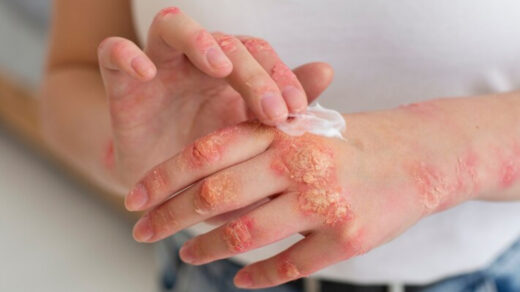
- Skin Diseases: Heat tries to escape the body through the skin, manifesting as rashes, hives, eczema, psoriasis, and acne.
- Burning Sensation: A classic Pitta symptom felt in the hands, feet, eyes, or stomach due to internal heat.
- Fever: The body’s systemic temperature rises as Pitta dominates the blood and lymphatic tissues.
- Infections: The excess heat creates a conducive environment for rapid bacterial or viral proliferation, leading to acute infections.
- Ulcers and Liver Disorders: The hot, sharp, liquid nature of Pitta literally burns the mucous membranes of the stomach (ulcers) and overburdens the liver, the primary seat of Pitta, leading to conditions like hepatitis or fatty liver.
3. Understanding Kapha Dosha
Kapha, formed by Earth and Water, supports structure, lubrication, immunity, endurance, and stability. When balanced, it promotes calmness and strength.
Heavy, sweet, oily foods, including fried foods, dairy, sweets, meat, and ice cream, can increase Kapha and promote mucus and heaviness.
Daytime sleeping and physical inactivity further aggravate Kapha by slowing metabolism, reducing circulation, and digestion, causing lethargy, stagnation, and accumulation.
Symptoms of Kapha Aggravation:
The symptoms of excess Kapha are heavy, slow, cold, oily, and sticky.
- Asthma: Excess mucous production clogs the bronchial tubes, restricting the airflow and causing wheezing.
- Cough and Cold: The body attempts to expel the accumulated, sticky Kapha from the respiratory tract.
- Congestion in the Chest: A feeling of heaviness and blockage in the lung region due to phlegm accumulation.
- Anorexia: A sluggish digestive fire, smothered by the heavy, wet qualities of Kapha, leads to a complete loss of appetite.
- Obesity: The excess calories and heavy qualities of Kapha are stored as adipose tissue, leading to rapid weight gain and a feeling of lethargy.
Ayurveda Pareeksha: The Methodology of Examination
Ayurveda Pareeksha is a systematic examination method based on Ayurvedic principles, assessing body functions, balance, and physiological harmony to understand health and disease.
Instead of focusing only on symptoms, it thoroughly examines the patient to identify underlying causes and understand the condition before treatment.
This approach evaluates overall imbalances and guides treatment toward restoring health by addressing root causes rather than merely suppressing symptoms.
Trividh Pareeksha: The Three-Fold Examination
The foundational clinical assessment in Ayurveda is known as Trividh Pareeksha, which relies on three primary methods of investigation: Darshana, Sparshana, and Pratyaksha (which incorporates Anumana).
1. Darshana (Observation)
Darshana means careful visual examination of the patient’s body. It is the first clinical assessment in Trividh Pariksha, helping physicians understand disease characteristics through systematic observation.
The physician observes body build, movements, complexion, skin, eyes, and overall appearance. Features such as dryness, oiliness, restlessness, heaviness, or calmness may suggest Vata, Pitta, or Kapha dominance.
Darshana also examines the tongue, which may reflect digestive conditions. Coating can indicate Ama, while dryness or cracks may suggest Vata imbalance, providing valuable information before verbal questioning.
2. Sparshana (Palpation/Touch)
Sparshana is the tactile examination method in Ayurveda, helping physicians assess individual constitution and physical conditions through touch, supporting personalized understanding of disease and bodily imbalances.
It includes Nadi Pariksha, or pulse examination, where practitioners assess pulse characteristics associated traditionally with Vata, Pitta, and Kapha patterns for clinical understanding.
Physicians may also palpate the abdomen, skin, and Marma points, assessing tenderness, rigidity, temperature, pain, or other physical signs that may indicate underlying imbalance.
3. Pratyaksha (Direct Perception) and Anumana (Inference)
Pratyaksha means direct perception through the senses, including seeing, touching, hearing, and smelling. These observations help physicians identify physical signs and understand possible doshic patterns.
Anumana means inference or logical reasoning. Physicians connect observed symptoms with underlying processes, such as relating joint pain and dryness to possible Vata aggravation.
Together, Pratyaksha and Anumana help physicians interpret visible and hidden disease processes. They support assessment of dosha involvement, disease location, progression, and underlying causes.
Expanding the Diagnostic Horizon: Panchavidha Pareeksha
While Trividh Pareeksha (Darshana, Sparshana, Pratyaksha/Anumana) forms the core of physical examination, classical Ayurveda also utilizes Panchavidha Pareeksha, the five-fold examination, to corroborate findings. This adds immense depth to the Nidan process.
- Nadi (Pulse): As discussed in Sparshana, this is the ultimate tool for assessing the dynamic state of the doshas.
- Mootra (Urine): The color, odor, and consistency of urine are observed. Sometimes, a drop of oil is placed in a sample of urine; the way it spreads (forming a snake-like shape for Vata, a flower for Pitta, or a pearl for Kapha) provides diagnostic clues.
- Mala (Stool): Examining the feces for consistency, color, presence of mucus or blood, and whether it sinks or floats helps diagnose the digestive fire and the presence of toxins.
- Jihva (Tongue): A detailed inspection of the tongue’s color, texture, and coating maps the internal organ health.
- Shabda (Voice/Speech): Assessing the tone, clarity, and strength of the patient’s voice reveals the state of the vital breath (Prana) and the doshas.
The Stages of Disease: Shatkriyakala
A crucial aspect of Nidan is not just identifying what is wrong, but when the disease is happening. Ayurveda outlines six stages of disease propagation (Shatkriyakala). True Nidan aims to catch the disease as early as possible.
- Sanchaya (Accumulation): The dosha begins to increase in its primary seat (e.g., Kapha in the stomach). No external symptoms are present yet.
- Prakopa (Aggravation): The dosha continues to accumulate, overflowing its primary seat. Still, symptoms are vague.
- Prasara (Spread): The aggravated dosha leaves its home and begins to circulate throughout the body via the channels (Srotas).
- Sthana Samshraya (Localization): The wandering dosha finds a weak tissue (like a joint or the skin) and embeds itself there. Pre-symptoms (Purvarupa) may appear.
- Vyakti (Manifestation): The full-blown, recognizable symptoms of the disease appear. This is when most people seek medical help.
- Bheda (Complications/Differentiation): The disease becomes chronic, deep-seated, and may split into sub-types or affect other organs.
Modern medicine often only recognizes a disease at stage 5 (Vyakti). The genius of Ayurvedic Nidan lies in its ability to diagnose imbalances at stages 1 through 4 through careful assessment of diet, lifestyle, subtle pulse changes, and Pratyaksha. By identifying the root cause early, Ayurveda can reverse the disease process before irreversible tissue damage occurs.
Samprapti: Tracing the Pathogenesis
Samprapti describes the step-by-step development of disease, tracing its progression from root causes and imbalances to specific symptoms and affected tissues within the body.
1. Role of Ama and Dosha Imbalance: Unhealthy habits can weaken digestive fire, producing Ama. This combines with aggravated doshas, travels through Srotas, and settles in vulnerable tissues, eventually producing specific symptoms.
2. Identifying the Root Cause: Treating only symptoms may provide temporary relief while underlying imbalances remain. Samprapti helps physicians understand the complete disease process and identify deeper causes requiring attention.
3. Ayurvedic Approach to Treatment: Ayurvedic treatment aims to address these underlying factors by reducing Ama, balancing aggravated doshas, improving digestion, and supporting affected tissues through appropriate diet and lifestyle changes.
The Holistic Integration of Mind and Body in Nidan
Nidan considers both physical and mental health, recognizing the close connection between mind and body. Ayurveda evaluates how physical doshas influence emotions, thoughts, and overall well-being.
1. Influence of Doshas on Mental Wellbeing: Excess Vata may contribute to anxiety and fear, while Pitta can increase anger and irritability. Kapha imbalance may promote attachment, lethargy, and low mood.
2. Mental Assessment During Nidan: During Nidan, physicians consider mental state, stress, emotions, and possible triggers. This broader assessment helps identify psychological factors that may contribute to physical symptoms and imbalances.
3. Holistic Treatment Approach: Treatment may combine dietary changes with lifestyle adjustments, counseling, Yoga, and Pranayama. Addressing both mind and body supports a comprehensive approach to restoring balance.
The Imperative of Individualized Diagnosis
In Ayurveda, diagnosis and treatment are tailored to each individual. Nidan considers the patient’s unique symptoms, constitution, dosha balance, lifestyle, and overall condition.
1. Different Doshas, Different Presentations: The same illness may present differently depending on dosha involvement. Dry cough and constipation may indicate Vata, while burning throat and yellow expectoration may suggest Pitta.
2. Kapha-Related Symptoms: Thick white expectoration, a swollen tongue, and lethargy may indicate Kapha involvement. These differences help physicians understand the individual pattern behind similar symptoms.
3. The Importance of Individualized Treatment: By identifying each patient’s unique imbalance, Ayurveda aims to provide personalized treatment. This approach focuses on addressing underlying factors while supporting the body’s natural healing processes.
FAQ’s
1. What is Nidan in Ayurveda?
Nidan is the Ayurvedic process of examining disease causes, signs, symptoms, progression, and underlying factors to understand the condition systematically.
2. What is Nidan Panchaka?
Nidan Panchaka is a five-part diagnostic approach consisting of Nidana, Purvarupa, Rupa, Upashaya, and Samprapti.
3. What are the five components of Nidan Panchaka?
The five components are causes, early symptoms, manifested symptoms, therapeutic assessment, and disease pathogenesis. Together, they help assess the development of disease.
4. What is Nidana in Ayurveda?
Nidana refers to the causative factors associated with disease, including dietary habits, lifestyle, activities, and other contributing factors.
5. What is Samprapti in Ayurveda?
Samprapti describes the pathogenesis and progression of disease, explaining how causative factors and doshic disturbances develop into clinical manifestations.
6. What are Vata, Pitta, and Kapha in Nidan?
Vata, Pitta, and Kapha are the three doshas used in Ayurveda to understand physiological patterns and disease-related imbalances.
7. What is Pareeksha in Ayurveda?
Pareeksha means examination or investigation. Ayurveda uses different examination methods to assess both the disease (Roga) and the patient (Rogi).
8. What is Trividh Pareeksha?
Trividh Pareeksha is a threefold examination involving Darshana (observation), Sparshana (touch or palpation), and Prashna (questioning).
9. Why is individualized diagnosis important in Ayurveda?
Ayurveda considers the patient’s constitution, current condition, lifestyle, and disease characteristics, supporting an individualized approach to diagnosis and treatment planning.
10. What is the importance of Nidan in Ayurvedic treatment?
Nidan helps organize information about disease causes, manifestations, progression, and the patient’s condition, providing a foundation for appropriate Ayurvedic management.
Nidan is central to Ayurvedic healing, providing systematic examination to identify root causes of disease. It connects Vata, Pitta, and Kapha imbalances with diet, lifestyle, environment, and symptoms, supporting personalized and holistic treatment.
References
- Edavalath M, Bharathan BP. Methodology for developing and evaluating diagnostic tools in Ayurveda – A review. Journal of Ayurveda and Integrative Medicine. 2021;12(2):389-397. PubMed
- Sawant V, Ashu, Parida A, Prasad NA. Nidana Panchaka – A Tool of Diagnosis in Ayurveda. Journal of Ayurveda and Integrated Medical Sciences. 2019;4(1):61-65. Full Article – JAIMS
- Singtan K, Rasotra M, Kumari A, Manglesh R. Role of Ashtavidha Pariksha in the Diagnosis and Prognosis of Diseases. International Journal of Pharmaceutical and Phytopharmacological Research. 2020;9(3):150-154. Full Article – IJPAR
- Rathour G. Concept and Significance of Shatkriyakala. Journal of Ayurveda and Integrated Medical Sciences. 2024;9(4). Full Article – JAIMS
- Umate V. Critical Review of ShatKriyakala: A Conceptual Study. Ayurline: International Journal of Research in Indian Medicine. 2020;4(3). Full Article – Ayurline
- Kurande VH, Waagepetersen R, Toft E, Prasad R. Reliability Studies of Diagnostic Methods in Indian Traditional Ayurveda Medicine: An Overview. Journal of Ayurveda and Integrative Medicine. 2013;4(2):67-72. Full Article – PMC
- Thakar VJ. Diagnostic Methods in Ayurveda. Ancient Science of Life. 1982;1(3):139. Full Article – PMC
- Sharma P, Sonia, Drall Y. Importance of Ashtavidha Pariksha – A Diagnostic Method: Review Article. International Journal of AYUSH. 2025;14(6). Full Article – International Journal of AYUSH
- Rautaray KT, Mohanty SP. Exploration of Standardized Diagnostic Protocol in Ayurvedic Perspective w.s.r. to Nidana Panchaka and Its Relevant Application in Current Clinical Practice. Journal of Ayurveda and Integrated Medical Sciences. Full Article – JAIMS
- Chauhan A, Semwal DK, Mishra SP, Semwal RB. Ayurvedic Concept of Shatkriyakala: A Traditional Knowledge of Cancer Pathogenesis and Therapy. Journal of Integrative Medicine. 2017;15(2):88-94. DOI
- Charaka Samhita. Charaka, with classical commentaries. Sutrasthana and Nidanasthana. Varanasi: Chaukhambha Bharati Academy.
- Sushruta Samhita. Sushruta, with classical commentary. Sutrasthana, including the discussion of Shatkriyakala. Varanasi: Chaukhambha Sanskrit Sansthan.
- Ashtanga Hridaya. Vagbhata, with classical commentary. Nidanasthana. Varanasi: Chaukhambha Surbharati Prakashan.