Ayurvedic Summer Foods for Pitta Balance | Stay Cool Naturally

As summer arrives with rising temperatures and longer days, nature changes beautifully. Ayurveda views this seasonal transition as the beginning of Pitta season, marked by heat and intensity.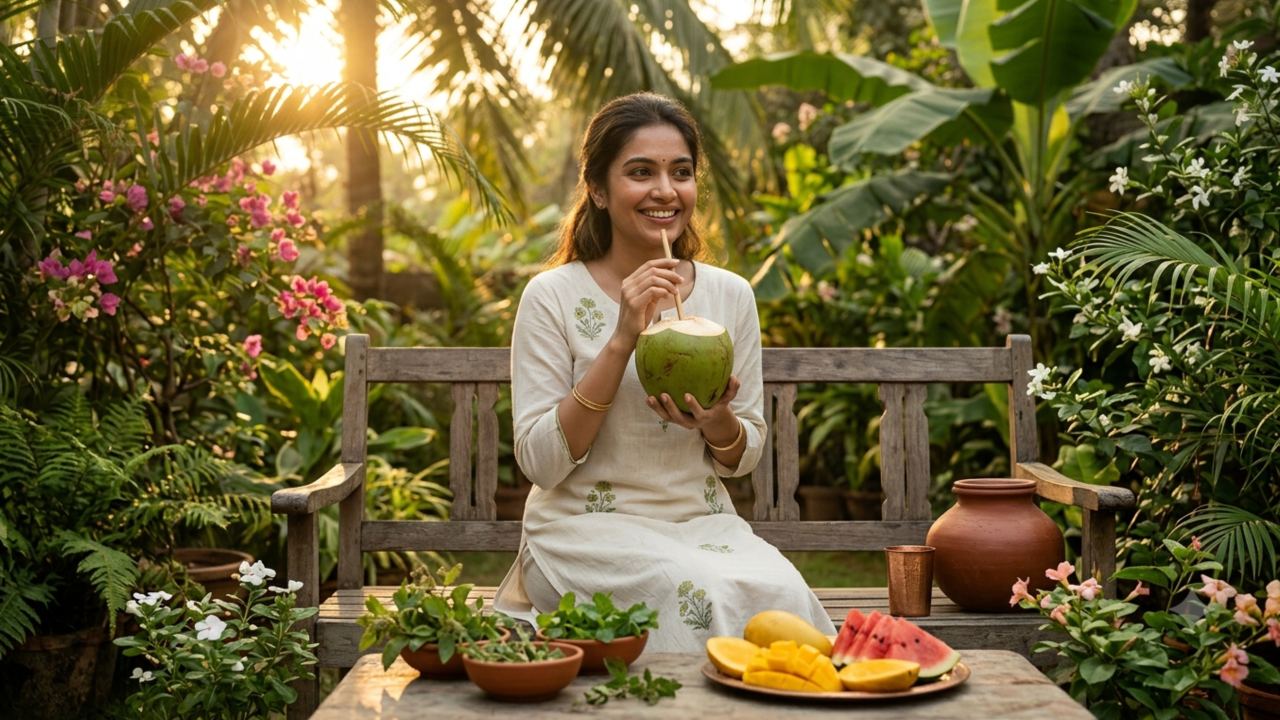 During summer, these qualities can increase within the body, causing imbalances. Symptoms like skin irritation, acidity, frustration, and excess internal heat may appear without proper seasonal adjustments.
Ayurveda recommends balancing summer’s fiery energy through mindful dietary choices rather than simply escaping heat. Cooling foods that calm Pitta can support vitality, comfort, and overall seasonal wellness.
This guide explores Pitta dosha, cooling Ayurvedic foods, foods to avoid, practical meal ideas, and lifestyle practices designed to maintain balance, nourishment, and harmony throughout the summer months.
Understanding Pitta Dosha: The Fire Within Summer
To understand summer nutrition, Ayurveda first explains the doshas that influence our body and mind.
The universe is made of five elements: Ether, Air, Fire, Water, and Earth. These combine into three energies—Vata, Pitta, and Kapha.
- Pitta Dosha: The Energy of Transformation: Pitta, formed mainly from Fire and Water, governs transformation, digestion, metabolism, body temperature, and mental abilities. When balanced, it supports strong digestion, focus, confidence, healthy appetite, and a glowing complexion.
- When Pitta Becomes Imbalanced in Summer: Summer’s intense heat naturally increases Pitta energy. Excess Pitta may cause acidity, heartburn, inflammation, irritability, impatience, and skin issues like rashes, acne, and sensitivity. The body and mind become overheated.
- Signs of Excess Pitta: A person with aggravated Pitta may experience excessive thirst, overheating, digestive disturbances, frustration, perfectionism, and burnout. These signs indicate the need for cooling and calming lifestyle adjustments.
- Balancing Pitta Through Opposite Qualities: Ayurveda follows the principle that “like increases like, and opposites create balance.” To calm excess Pitta, introduce cooling, soothing, stable, and nourishing foods that counter summer’s hot and intense qualities.
- Understanding Ayurvedic Cooling Foods: In Ayurveda, cooling foods are not defined only by physical temperature. Their cooling effect comes from their post-digestive energy, known as virya, which helps restore internal balance and harmony.
The Guiding Principles of a Pitta-Pacifying Diet
Before diving into specific grocery lists, it is highly beneficial to understand the underlying framework of an Ayurvedic diet.
Ayurveda categorizes all foods into six tastes (rasas): Sweet, Sour, Salty, Pungent, Bitter, and Astringent. To balance Pitta in the summer, we lean heavily into the three tastes that cool the body, ground the mind, and reduce inflammation.
1. Sweet (Madhura)
In this context, “sweet” absolutely does not refer to refined white sugar, high-fructose corn syrup, or heavy, processed desserts.
It refers to the naturally sweet, nourishing, and building energy found in whole foods. This includes ripe fruits, root vegetables, whole grains (like rice, wheat, and oats), and wholesome fats like ghee and coconut oil.
Sweet foods are grounding, satisfying, and cooling. They coat the stomach lining, soothing the burning sensations of acid reflux.
2. Bitter (Tikta)
The bitter taste is nature’s most potent antibiotic and anti-inflammatory. It cools the blood, cleanses the liver (which is a primary seat of Pitta in the body), and helps to clear heat from the skin.
Bitter foods stimulate the taste buds, which in turn stimulate digestion, but they do so without adding heat. Think dark leafy greens like kale, spinach, dandelion greens, and fenugreek.
3. Astringent (Kashaya)
This taste creates a drying, contracting, and puckering sensation in the mouth (think of biting into a raw green apple or taking a sip of strong black tea).
Astringency helps to reduce excess fluidity, sweat, and inflammation, directly counteracting Pitta’s oily and intense nature. Legumes, broccoli, cauliflower, celery, and pomegranates are excellent astringent sources.
Conversely, three tastes strongly aggravate Pitta and should be strictly minimized during the summer months: Pungent (Spicy), Sour, and Salty.
- Pungent foods like chilies, black pepper, garlic, and raw onions literally add fire to the digestive tract.
- Sour foods like tomatoes, yogurt, vinegar, and fermented items increase hydrochloric acid, bringing heat and acidity.
- Salty foods cause water retention, raise blood pressure, and increase Pitta’s intensity and sharpness.
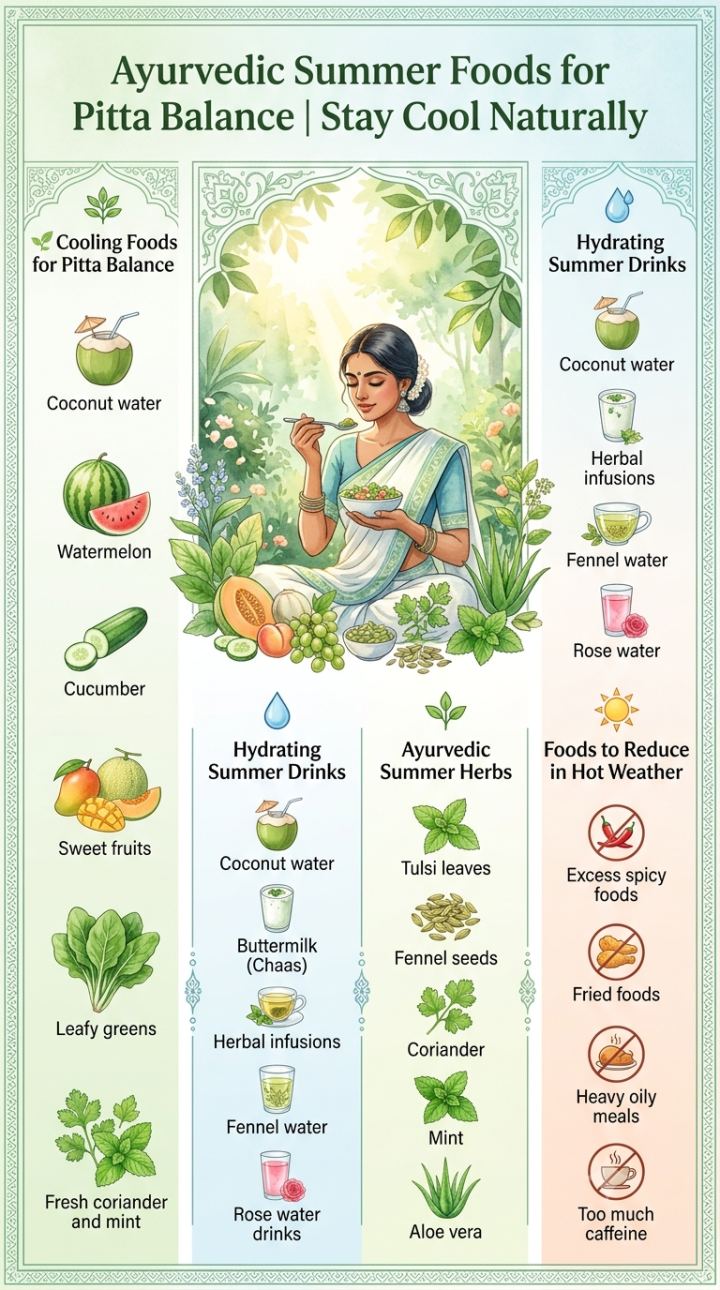
Infographics: Ayurvedic Summer Foods for Pitta Balance
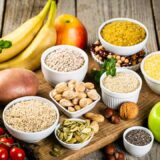
The List of Cooling Foods for Summer
With these guiding principles in mind, let’s explore the specific, readily available foods that act as a natural air conditioner for your body and mind.
1. Luscious and Sweet Fruits
Fruits are nature’s perfect summer food. They are highly hydrating, packed with life-giving antioxidants, and naturally sweet. Opt for fruits that are ripe, juicy, and slightly sweet. Avoid sour or unripe fruits, as these will aggravate Pitta.
- Watermelon: A quintessential summer fruit, watermelon is incredibly hydrating and cooling. It is sweet with a slightly astringent quality, making it ideal for pacifying Pitta. It also helps to flush out the urinary tract.
- Coconut: All forms of coconut are highly beneficial in the summer. Coconut water is a natural, electrolyte-rich sports drink that cools and rehydrates without spiking blood sugar. Coconut meat and milk are sweet, nourishing, and grounding. Coconut oil is considered the most cooling cooking oil in Ayurveda.
- Sweet Melons: Cantaloupe, honeydew, and muskmelon are excellent choices. They are light, easy to digest, and highly hydrating.
- Berries: Blueberries, blackberries, raspberries, and strawberries are not only delicious but packed with antioxidants that protect the liver and cool the blood.
- Grapes, Pears, and Sweet Apricots: These fruits are juicy, cooling, and provide sustained energy without overheating the system.
2. Abundant Green and Bitter Vegetables
Vegetables, especially leafy greens and watery vegetables, should form the foundation of your summer meals. They are rich in the bitter and astringent tastes vital for cooling Pitta.
- Cucumber: Perhaps the ultimate Pitta-pacifying vegetable. With its exceptionally high water content and cooling nature, cucumber helps to regulate internal body temperature. It is perfect in salads, infused waters, or traditional Indian raitas.
- Leafy Greens: Spinach, kale, Swiss chard, collard greens, and arugula are excellent sources of the bitter taste. Ayurvedic tip: While raw salads are popular in summer, large amounts of raw greens can be hard on a sensitive digestive fire. It is often recommended to lightly steam or sauté them with a bit of ghee to make them more digestible while retaining their cooling properties.
- Zucchini and Summer Squash: These light, water-rich vegetables are incredibly easy to digest and have a naturally cooling, soothing effect on the stomach lining.
- Broccoli, Cauliflower, and Asparagus: These vegetables possess an astringent quality that helps to counter Pitta’s oiliness and heat. They should be cooked thoroughly.
- Fennel: Fennel is a unique vegetable and spice. It is sweet, cooling, and excellent for digestion. It can be eaten raw in salads, roasted, or used as a spice after meals to freshen breath and cool the stomach.
3. Nourishing Grains and Legumes
Grains provide the “sweet” taste that grounds and nourishes the body without overheating it. Legumes provide much-needed protein with a beneficial astringent quality.
- Basmati Rice: This fragrant, long-grain rice is a staple in Ayurvedic cooking. It is light, easy to digest, cooling, and balancing for all doshas. It serves as an excellent, neutral base for vegetable dishes and lentil soups.
- Barley and Oats: These grains are considered cooling and are slightly more drying than rice, which can be highly beneficial for balancing Pitta’s moist, oily nature. A bowl of oatmeal with cooling fruits makes a great summer breakfast.
- Mung Dal: In Ayurveda, split yellow mung beans are considered one of the most perfect foods. They are light, easy to digest, and do not produce excess gas (a common issue with other beans). They help to balance all doshas, especially Pitta.
4. Cooling Herbs and Spices
It is a common misconception that all spices are “hot.” Many spices have profoundly cooling properties and are actually essential for kindling the digestive fire (Agni) without overheating the body.
If we eat only raw, cold foods, our Agni can become weak, leading to the formation of toxic buildup, or ama.
- Fresh Cilantro (Coriander Leaves): Fresh cilantro is a powerful cooling herb and a potent heavy-metal detoxifier. It can help to soothe skin rashes, acidity, and burning sensations. Use it liberally as a garnish, blend it into chutneys, or add it to salads.
- Mint: Peppermint and spearmint are wonderfully refreshing and cooling. Mint tea or a simple garnish of fresh mint in water can calm an irritated Pitta mind and soothe the digestive tract.
- Coriander Seeds, Fennel Seeds, and Cardamom: These three spices form a cooling, aromatic trifecta. Boiling them together to make “CCF tea” is a famous Ayurvedic remedy for flushing heat out of the body via the urinary tract. Chewing fennel seeds after meals cools the digestive tract.
- Turmeric: While it has a pungent quality, turmeric is such a potent anti-inflammatory that it remains vital for maintaining a healthy response to summer heat and stress. It is best used in cooking combined with other cooling spices and a bit of black pepper.
- Cumin Seeds: Cumin is excellent for digestion and, when used in moderation, has a surprisingly balancing, cooling effect on Pitta.
5. Wholesome Fats and Dairy
Healthy fats are crucial for nourishing the tissues, lubricating the joints, and calming the nervous system. In summer, you must opt for the coolest, most stable fat sources.
1. Ghee (Clarified Butter): Ghee is one of the most sattvic (pure, life-giving) foods in Ayurveda. It is sweet, cooling, and nourishing. Ghee helps to build ojas (immunity and vitality) and supports healthy digestion without aggravating Pitta, as the milk solids (which are heating) have been removed.
2. Coconut Oil: As mentioned, this is the ultimate cooling oil for both internal consumption (in moderation) and external application (as a sunscreen alternative or after-sun soother).
3. Milk: If you tolerate dairy well, high-quality, organic, whole milk can be deeply healing for Pitta. Crucial Ayurvedic rule: Milk should almost always be consumed warm, never cold.
Cold milk is heavy and causes mucus. Warm milk with a pinch of cardamom, a dash of turmeric, and a little raw honey before bed is a deeply calming, sleep-promoting tonic for an overactive, fiery mind.
6. Hydrating and Healing Beverages
What you drink is just as important as what you eat. Summer is a time to increase fluid intake drastically, but the quality and temperature of those fluids matter immensely.
1. Coconut Water: Nature’s perfect electrolyte drink. It is cooling, rejuvenating, and rich in potassium and magnesium.
2. Rose Water and Fennel Sherbet: A traditional Ayurvedic summer recipe. Rose has a profoundly cooling effect on the blood and the heart (the organs associated with Pitta and the emotions of love and joy).
Soaking rose petals and fennel seeds in cool water, sweetening them slightly, and blending them creates a beverage that soothes the mind and cools the body instantly.
3. Cucumber-Lemon Cooler: Infusing water with cucumber slices, fresh mint, and a small squeeze of lime creates a refreshing, alkalizing drink. Warning: It is crucial to use room temperature or cool water rather than ice-cold water. Ice-cold water shocks and completely extinguishes the digestive fire, leading to toxic buildup.
4. Cooling Herbal Teas: Mint tea, hibiscus tea, and licorice root tea are all excellent choices for staying hydrated and cool without caffeine.
Foods to Avoid: The Pitta Aggravators
Just as important as knowing what to eat is knowing what to avoid. To keep Pitta in check, you should significantly reduce or eliminate the following from your summer diet:
1. Pungent Foods: Chili peppers, cayenne, raw garlic, raw onion, mustard seeds, ginger (in excess), and horseradish. These add excessive, unnecessary heat to the digestive tract and blood.
2. Sour Foods and Nightshades: Tomatoes, sour cream, yogurt (especially store-bought varieties which are highly acidic), vinegar, pickles, fermented foods (like sauerkraut and kimchi), and sour citrus fruits like grapefruits and pineapples.
Nightshades (tomatoes, eggplants, bell peppers) are particularly notorious in Ayurveda for aggravating Pitta and causing skin inflammation.
(Note: Fresh lemons and limes are exceptions; despite being sour, they have a cooling post-digestive effect and can be used sparingly).
3. Salty Foods: Avoid processed foods, chips, salted nuts, soy sauce, and excessive salt in cooking. Salt holds water in the body, promotes edema, and increases Pitta’s sharp, intense nature.
4. Fried and Greasy Foods: Heavy, oily, and deep-fried foods are difficult to digest and create ama (toxins) in the gut. These toxins circulate in the blood and cause inflammatory skin breakouts and liver congestion.
5. Red Meat and Heavy Meats: Especially dark, heavy meats like beef, lamb, and pork. These are incredibly heating and take tremendous energy to digest. If you eat meat, opt for lighter, sweeter options like organic chicken or freshwater fish, and only in small, lunchtime portions.
6. Alcohol and Caffeine: Alcohol is a known liver irritant and is highly heating. Coffee and caffeinated sodas are stimulating, dehydrating, and aggressively aggravate Pitta. Replace your morning coffee with a cup of chicory root or a grain-based coffee alternative blended with warm almond milk and cardamom.
A Practical 3-Day Pitta-Pacifying Summer Meal Plan
Applying these Ayurvedic principles doesn’t have to be complicated or require hours in the kitchen.
Here is a sample of what three days of Pitta-pacifying eating might look like to inspire your grocery shopping and meal prep.
Day 1
- Breakfast: A bowl of fresh, sweet blueberries and sliced pears topped with a spoonful of shredded coconut.
- Lunch: A hearty bowl of basmati rice topped with a warm, spiced mung dal soup (seasoned with cumin, coriander, and a pinch of turmeric). Serve with a side of lightly steamed asparagus drizzled with melted ghee.
- Snack: A tall glass of fresh coconut water with a squeeze of lime.
- Dinner: A light, cooling cucumber and fennel salad (chopped finely, dressed with olive oil and lemon juice), alongside a small portion of quinoa.
Day 2
- Breakfast: Warm oatmeal cooked with water or almond milk, topped with sliced sweet apricots, a pinch of cardamom, and a teaspoon of ghee stirred in at the end.
- Lunch: A large bowl of zucchini and summer squash, lightly sautéed with fennel seeds and shredded coconut, served over basmati rice. Garnish generously with fresh cilantro.
- Snack: A handful of soaked and peeled almonds (soaking removes the skin, which contains tannins that are hard to digest).
- Dinner: A simple, pureed vegetable broth made from broccoli, cauliflower, and fresh mint.
Day 3
- Breakfast: A green smoothie made with coconut milk, fresh spinach, half a sweet apple, a handful of berries, and a quarter teaspoon of ground cardamom.
- Lunch: Leftover kitchari (if you made extra) OR a simple wrap using a whole-wheat tortilla filled with hummus, shredded lettuce, cucumber, and fresh mint.
- Snack: Sweet, ripe grapes or a slice of honeydew melon.
- Dinner: Mung bean noodles (glass noodles) tossed with shredded zucchini, carrots, bean sprouts, and a dressing made from coconut aminos, sesame oil, cilantro, and mint.
Remember: Lunch should always be your largest meal, as your digestive fire peaks when the sun is highest in the sky (around noon to 2 PM). Dinner should be light and eaten early, ideally before 7:00 PM, to allow for complete digestion before sleep.
Beyond Diet: Lifestyle Practices to Cool Pitta Dosha
Food is the foundation of Ayurvedic health, but a holistic approach yields the most profound results. To truly transform your summer experience, combine your Pitta-pacifying diet with these targeted lifestyle practices:
1. Master Your Exercise Timing
Pitta naturally drives us to achieve and push our limits, but summer is not the time for extreme, competitive sports or hot yoga.
Engage in physical activity only during the coolest parts of the day—early morning before 10 AM or late evening after 6 PM.
Avoid strenuous exercise during the midday sun, which will quickly deplete your energy and aggravate Pitta. Swimming is the absolute ideal form of exercise for summer, as it incorporates the cooling water element.
2. Practice Cooling Pranayama (Breathwork)
Your breath is a direct remote control for your nervous system.
- Sitali Pranayama: Roll your tongue into a tube (if you are genetically able to; if not, purse your lips tightly). Inhale deeply through the mouth, feeling the cool air pass over your tongue. Close the mouth and exhale slowly through the nose. Repeat 10-15 times. This practice has an immediate, physically noticeable cooling effect on the blood and the mind.
- Nadi Shodhana (Alternate Nostril Breathing): This balances the left (cooling, lunar) and right (heating, solar) energy channels in the body, bringing profound mental calmness.
3. Daily Coconut Oil Abhyanga (Self-Massage)
Before your morning shower, take 5-10 minutes to massage warm (not hot) coconut oil into your skin. Start at the scalp and work your way down to the feet.
This practice, known as Abhyanga, soothes the nervous system, draws heat out through the skin, and helps to ground excess fiery energy. It also prevents the skin from becoming dry and irritated from sun exposure.
4. Harness the Power of Aromatherapy
Because Pitta is closely associated with the sense of smell and the emotional heart center, surrounding yourself with specific aromas can instantly shift your mood. Use pure essential oils in a diffuser, or apply them (diluted) to your pulse points.
- Best cooling scents: Sandalwood, rose, jasmine, vetiver (khus), lavender, and sweet orange.
Avoid stimulating oils like eucalyptus, peppermint (too sharp for Pitta), or cinnamon.
5. Adjust Your Visual Environment
Pitta is associated with the eyes and the element of light. Staring into bright screens all day increases internal heat.
Dim the lights in your home in the evening. Wear sunglasses when outside. Surround yourself with colors that cool the physiology: whites, pastels, soft blues, greens, and lavenders. Avoid wearing bright reds, oranges, and yellows during the summer months.
6. Cultivate “Moonlight” Energy
Pitta is ruled by the sun. To balance it, we must embrace the moon. Take slow, gentle walks in the moonlight. Spend time near bodies of water—lakes, rivers, or the ocean.
Water is the complementary element to Pitta’s fire, and simply being near it is deeply regulating.
7. Prioritize Sleep and Rest
Because the days are long, we often stay up later in the summer, which eats into our sleep time. Pitta governs the hours between 10 PM and 2 AM.
If you are awake during this time (especially if you are working, looking at screens, or eating), Pitta spikes dramatically. Make it a non-negotiable rule to be in bed, lights out, by 10:00 PM.
By aligning our diet and lifestyle with the ancient, time-tested wisdom of Ayurveda, we do not need to dread the heat or suffer through its uncomfortable imbalances. We do not need to hide indoors or rely solely on artificial cooling. Instead, we can actively embrace the season by nourishing ourselves with nature’s cooling bounty—sweet fruits, bitter greens, grounding grains, and fragrant, soothing herbs.
References
- Central Council for Research in Ayurvedic Sciences (CCRAS), Ministry of AYUSH, Government of India. Ritu Charya: Ayurvedic Seasonal Regimen. CCRAS. CCRAS – Ritu Charya
- Charaka Samhita Research, Training and Skill Development Centre. Tasyashiteeya Adhyaya: Seasonal regimen of diet and lifestyle. Charaka Samhita Online. Charaka Samhita Online
- Thakkar, J., Chaudhari, S., & Sarkar, P. K. Ritucharya: Answer to the lifestyle disorders. Ayu. PubMed Central
- Kumar, A., et al. Adopting seasonal regimen (Ritucharya) to modulate the seasonal variation in gut microbiome. Journal of Ethnic Foods. Journal of Ethnic Foods
- Gilca, M., & Dragos, D. Extraoral Taste Receptor Discovery: New Light on Ayurvedic Pharmacology. Evidence-Based Complementary and Alternative Medicine. PubMed Central
- Rath, S. K., Panja, A. K., Nagar, L., & Shinde, A. The scientific basis of rasa (taste) of a substance as a tool to explore its pharmacological behavior. Ancient Science of Life. PubMed Central
- Mishra, L., Singh, B. B., & Dagenais, S. Ayurveda: a historical perspective and principles of the traditional healthcare system in India. Alternative Therapies in Health and Medicine. PubMed
- Anantha Narayana, D. B., & Durg, S. Ayurveda: (W)here is the evidence. Journal of Ayurveda and Integrative Medicine. PubMed
- Gautama, P. A. RCTs and other clinical trial designs in Ayurveda: A review of challenges and opportunities. Journal of Ayurveda and Integrative Medicine. PubMed
- Royal Botanic Gardens, Kew. Cocos nucifera L. Plants of the World Online. Kew – Plants of the World Online
- Royal Botanic Gardens, Kew. Cucumis sativus L. Plants of the World Online. Kew – Plants of the World Online
- Royal Botanic Gardens, Kew. Oryza sativa L. Plants of the World Online. Kew – Plants of the World Online