
Top 10 Ayurvedic Ways to Relieve Ankylosing Pain

Waking up with Ankylosing Spondylitis can feel overwhelming. Many people struggle with severe back stiffness, making even getting out of bed a painful challenge. A warm shower often becomes the first source of relief.
 Ankylosing Spondylitis, or AS, is a long-term inflammatory disease that mainly affects the spine and the joints connecting the spine to the pelvis. Over time, it can reduce flexibility and make movement difficult.
Doctors consider AS an autoimmune condition where the immune system mistakenly attacks healthy tissues. This ongoing inflammation may cause new bone formation, eventually leading to the fusion of spinal bones and reduced mobility.
Conventional treatments like NSAIDs, corticosteroids, and biologic medications can help control inflammation and slow disease progression. These therapies are often essential for protecting the spine and maintaining a better quality of life.
However, some medications may cause unwanted side effects, including stomach problems or a higher risk of infections. Because of this, many people also explore natural, supportive therapies to ease pain, improve flexibility, and feel healthier.
To truly address this condition naturally, we must look beyond mere symptom suppression and turn to one of the world’s oldest and most comprehensive medical systems: Ayurveda.
The Ayurvedic Perspective on Ankylosing Spondylitis
Ayurveda does not specifically name Ankylosing Spondylitis. Instead, it relates the condition to Amavata, Kati Vata, or advanced Asthi-majja-gata Vata, depending on symptoms and progression.
- The Root Cause Begins with Digestion: According to Ayurveda, weak digestion (Mandagni) leads to the formation of Ama, a toxic, undigested substance that circulates through the body and disrupts normal function.
- How Ama and Vata Affect the Spine: When Ama combines with an aggravated Vata dosha, it settles in the joints, ligaments, and spine, causing pain, stiffness, inflammation, and reduced mobility over time.
- Why Stiffness Develops: Vata is naturally cold, dry, and mobile, while Ama is heavy and sticky. Together, they create blockage, tissue degeneration, and progressive hardening of spinal structures.
The Ayurvedic Treatment Approach
Ayurvedic treatment focuses on improving digestion to remove Ama while calming Vata through warm oils, nourishing therapies, herbal medicines, and lifestyle practices that restore balance.
Here are the top 10 natural ways to relieve Ankylosing Spondylitis pain, deeply infused with the ancient wisdom of Ayurveda.
1. Ayurvedic Yoga and Pranayama (Vata-Balancing Movement)
In the world of AS, the phrase “use it or lose it” is a literal truth. Prolonged rest allows the inflamed ligaments to calcify and fuse. While modern physiotherapy is excellent, Ayurvedic Yoga specifically targets the subtle energy channels (Nadis) and the bio-energies (Doshas) to heal the body from the inside out.
The Ayurvedic Perspective: AS is a Vata-dominant condition. Vata governs all movement in the body, but when it is out of balance, it creates erratic, cold, and stiff movement. Yoga postures (Asanas) that are slow, grounded, and warming help to pacify Vata, while Pranayama (breathwork) directly nourishes Prana Vata (the life-force in the head and chest), preventing the chest-wall stiffening common in AS.
How to Implement It:
- Surya Namaskar (Sun Salutation): Performed slowly and mindfully, this sequence generates internal heat (Agni), which helps burn away Ama in the joints. The backward bends (like Bhujangasana/Cobra Pose) are paramount for AS, as they actively counteract the forward-stooping (kyphotic) posture the disease tries to impose.
- Cat-Cow Stretch (Marjaryasana-Bitilakasana): This gentle spinal flexion and extension keeps the vertebrae lubricated and mobile.
- Pranayama for the Chest: AS can fuse the rib joints, restricting breathing. Practice Bhastrika (Bellows Breath) to pump oxygen into the blood and generate heat, followed by Anulom Vilom (Alternate Nostril Breathing) to balance the nervous system. Avoid fast, forceful breathing during acute flare-ups; stick to deep, diaphragmatic breathing.
2. The Ama-Dissolving Ayurvedic Diet
Modern science confirms that AS patients often have altered gut microbiomes and intestinal permeability (“leaky gut”). Ayurveda identified this thousands of years ago as Srotorodha (blockage of the body’s internal channels). The food you eat must either clog these channels further or clear them.
The Ayurvedic Perspective: To heal AS, you must kindle the digestive fire (Agni) and eliminate Ama. This means strictly avoiding Abhishyandi foods—items that create excess dampness, mucus, and toxicity in the body.
How to Implement It:
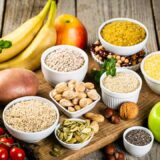
- Warm, Cooked, and Oiled: Vata is cold and dry; therefore, your food should be warm, moist, and well-cooked. Steamed vegetables, soups, stews, and kitchari (a traditional Ayurvedic dish of mung beans and basmati rice) are ideal.
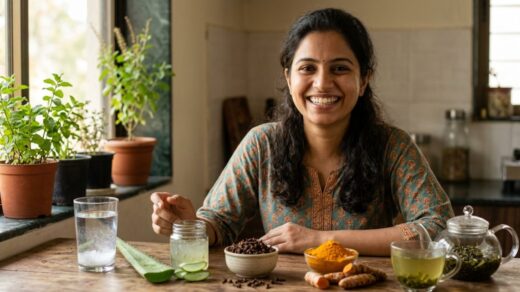
- The Anti-Ama Spices: Cook with digestive spices that act as natural bio-availability enhancers and anti-inflammatories. Use fresh ginger (the best Ama digester), turmeric, cumin, coriander, fennel, black pepper, and asafoetida (hing).
- Foods to Avoid: Eliminate cold, raw foods (salads, smoothies), as they shock Agni. Strictly avoid fermented foods (which increase Ama and Pitta), refined sugar, gluten, dairy (especially cold milk), and nightshades (tomatoes, potatoes, eggplants, peppers), as they are highly toxic (Vishakta) to joints in Ayurveda.
- Ghee: Cook with small amounts of pure, grass-fed cow’s ghee. It is considered a Rasayana (rejuvenator) that lubricates the tissues and carries the medicinal properties of spices deep into the cells without aggravating Ama.
3. Kati Basti and Svedana (Ancient Thermotherapy)
While modern science advocates for heat and cold packs, Ayurveda offers a highly specialized, targeted form of thermotherapy that has provided immense relief to AS patients for millennia.
The Ayurvedic Perspective: Cold aggravates Vata, so cryotherapy (ice) is generally contraindicated in AS unless there is an acute, burning Pitta flare-up. Instead, Ayurveda relies on Svedana (sudation therapy) to melt the frozen Ama and pacify Vata.
How to Implement It:
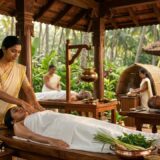
- Kati Basti (Lower Back Oil Pooling): This is a jewel of Ayurvedic pain management. A special dough dam is built on the lower back (over the sacroiliac joints and lumbar spine). Warm, medicated oil (like Mahanarayan Taila or Ksheerabala Taila) is continuously poured into this dam and kept warm for 20 to 30 minutes. The oil penetrates deeply into the ligaments and joints, instantly reducing pain and restoring mobility.
- Patra Pinda Sweda (Herbal Leaf Bundle Massage): Fresh medicinal leaves (like Nirgundi, Eranda, and Castor) fried in medicated oils are tied into a bolus and dabbed vigorously along the spine. This generates profound, moist heat that relieves muscle spasm and dissolves joint stiffness.
- At-Home Svedana: If you cannot visit an Ayurvedic clinic, apply warm Bala Ashwagandha oil to your spine and sit in a steam room or use a far-infrared sauna. Follow immediately with a warm shower.
4. Abhyanga (Daily Self-Oil Massage)
In AS, the pain is not just in the bones; the surrounding muscles go into severe spasm to protect an unstable spine. Ayurvedic massage addresses both the muscular tension and the underlying doshic imbalance.
The Ayurvedic Perspective: Abhyanga is the application of warm, herbal oil to the body. Oil is the ultimate antidote to Vata (which is dry and rough). The Sanskrit word for oil is Sneha, which also translates to “love.” Abhyanga is quite literally an act of self-love that calms the nervous system. Furthermore, the herbs in the oil are carried transdermally into the bloodstream to reduce local inflammation.
How to Implement It:
- The Right Oils: Use warm Sesame oil (the king of Vata-pacifying oils) or specifically formulated Ayurvedic oils. Mahanarayan Taila is famous for joint and bone pain, containing herbs that strengthen the Asthi (bone) and Majja (marrow) dhatus (tissues). Dhanwantharam Taila is excellent for neurological and musculoskeletal pain.
- The Technique: Warm the oil. Apply it to your entire body, but spend extra time on the spine. Use long, sweeping strokes on the long bones, and circular strokes on the joints. Do not press deeply into an inflamed, acutely flaring spine; use gentle, soothing pressure to calm the Vyana Vata (the sub-dosha of Vata that governs circulation and movement).
- Frequency: Ideally performed daily before a warm morning shower. Leave the oil on for 15-20 minutes to allow absorption.
5. Ayurvedic Herbal Powerhouses (Haridra, Guggulu, and Ashwagandha)
Modern science is fascinated by curcumin, but Ayurveda has utilized the full spectrum of medicinal plants (Dravya Guna) for thousands of years. Ayurvedic herbs do not just suppress symptoms; they remove the root cause by digesting Ama and strengthening the affected tissues.
The Ayurvedic Perspective & How to Implement It:
- Haridra (Turmeric/Curcumin): In Ayurveda, Haridra is Kapha-Vata hara (reduces Kapha and Vata) and is a potent Ama digester. As mentioned in modern science, it inhibits NF-kB and TNF-alpha. Take a high-quality, bioavailable Curcumin extract (like a liposomal or piperine blend) at a therapeutic dose of 500mg-1000mg daily.
- Yogaraj Guggulu: This is arguably the most important classical Ayurvedic formulation for AS and Amavata. Guggulu (Commiphora mukul) is a resin that has a unique ability to scrape away Ama from the joints (Lekhana property) while simultaneously strengthening the bone tissue. Yogaraj Guggulu is mixed with pungent herbs like Trikatu (black pepper, long pepper, ginger) to drive the medicine deep into the spine. (Note: Must be taken under Ayurvedic supervision).
- Ashwagandha (Withania somnifera): AS causes severe fatigue and muscle wasting. Ashwagandha is a Balya (strength-giving) herb and an adaptogen. It nourishes Majja Agni (the metabolic fire of the nervous system and bone marrow), helps rebuild weakened back muscles, and calms the anxiety and insomnia that often accompany chronic pain.
6. Panchakarma Detoxification (Clearing the Root Cause)
While dietary changes and herbs are excellent for maintenance, to truly reverse the buildup of Ama in the joints of an AS patient, Ayurveda employs Panchakarma—the ultimate mind-body detoxification and rejuvenation program.
The Ayurvedic Perspective: Panchakarma literally means “Five Actions.” It is designed to physically pull Ama out of the tissues and expel it from the body. For AS, the most critical of these five actions is Virechana (medicated purgation) and Basti (medicated enemas).
How to Implement It:
- Virechana: Because AS involves Ama and heat (Pitta often mixes with Vata in inflammatory conditions), therapeutic purgation using herbal laxatives flushes the toxins from the gut and liver, stopping the production of inflammatory cytokines at the source.
- Kashaya Basti (Herbal Enema Therapy): Ayurveda states that Vata resides primarily in the colon. Administering medicated decoctions and oils directly into the colon via Basti is considered the most powerful treatment for Vata disorders, especially those affecting the lower spine and sacroiliac joints. A typical AS protocol involves an 8 to 21-day series of Bastis under clinical supervision. It is profoundly effective for reducing morning stiffness and sacroiliac pain.
Note: Panchakarma must NEVER be attempted at home. It requires strict supervision by a qualified Ayurvedic doctor.
7. Marma Therapy and Nadi Shodhana (The Ayurvedic Alternative to Acupuncture)
Modern patients often seek acupuncture for AS pain. Ayurveda possesses its own intricate system of energy points and channel clearing, known as Marma therapy and Pranayama.
The Ayurvedic Perspective: The body contains 107 Marmas—vital junction points where flesh, veins, arteries, tendons, bones, and joints meet. These are intersections of Prana (life force). When Vata is blocked, Prana stagnates at these points, causing pain.
How to Implement It:
- Marma Point Application: An Ayurvedic practitioner can gently stimulate specific Marmas along the spine (such as Krikatika at the base of the neck, Brihati and Kati in the lower back) using warm herbal oils. This releases trapped Prana and instantly relieves muscle spasms.
- Nadi Shodhana (Channel Purification): This alternate nostril breathing technique is the ultimate Prana-balancing tool. It synchronizes the left and right hemispheres of the brain, shifts the autonomic nervous system out of “fight or flight” (sympathetic), and into “rest and digest” (parasympathetic). By calming the nervous system, you physically reduce the production of stress-induced inflammatory hormones like cortisol.
8. Internal Oleation with Healing Ghee (The Ayurvedic Omega-3)
Modern science emphasizes high-dose Omega-3 fatty acids to alter the chemical language of the immune system. Ayurveda achieves a similar, and often deeper, result through Snehana (internal oleation) using medicated ghees.
The Ayurvedic Perspective: Ghee is a Yogavahi—a substance that carries the medicinal properties of herbs into the deepest tissues (Dhatus) of the body, specifically the Majja (bone marrow and nervous system) and Asthi (bone). Because it is lipophilic (fat-loving), it can cross the blood-brain barrier and penetrate dense joint tissues where water-based medicines cannot reach.
How to Implement It:
- Panchagavya Ghrita or Mahatikta Ghrita: In an Ayurvedic clinical setting, patients are often given small doses of medicated ghee first thing in the morning on an empty stomach. Panchagavya Ghrita is specifically indicated for severe joint and bone disorders. It literally “lubricates” the (dry) and rough qualities of Vata from the inside out, soothing inflamed nerve endings and restoring the synovial fluid in the spinal joints.
- At-Home Approach: If you do not have access to classical medicated ghees, taking 1 teaspoon of high-quality, grass-fed cow’s ghee daily, or cooking your anti-inflammatory vegetables in generous amounts of ghee and olive oil, provides essential fatty acids that support joint health and reduce systemic inflammation.
9. Vata-Pacifying Sleep Posture and Dinacharya (Daily Routine)
Modern medicine emphasizes sleep ergonomics to prevent spinal fusion. Ayurveda takes this a step further by tying sleep posture to the cosmic rhythms of the Doshas.
The Ayurvedic Perspective: The hours between 2:00 AM and 6:00 AM are governed by Vata energy. If you are awake during this time, or if your sleep is disturbed, Vata becomes severely aggravated, guaranteeing severe morning stiffness. Furthermore, how you position your body during the Kapha hours (6:00 PM to 10:00 PM) determines how well your tissues repair overnight.
How to Implement It:
- Sleep on the Stomach: Just as modern physiotherapy advises, Ayurveda heavily encourages sleeping on the stomach for AS patients. This prevents the spine from fusing in a forward-bent (kyphotic) posture.
- The Firm Bed: Ayurveda strictly advises against soft, sinking mattresses. Sleep on a firm, flat surface (a firm cotton mattress on a wooden frame or on the floor) to keep the spine aligned and supported.
- Oil the Soles of the Feet: Before bed, massage warm Sesame oil or Bala oil into the soles of your feet (Padabhyanga). This grounds the upward-rising, erratic Vata energy, calms the nervous system, and induces deep, restorative sleep.
- Early to Bed: Be in bed by 10:00 PM. Missing this window means you enter the active, light Vata cycle, leading to poor tissue repair and increased pain the next day.
10. Manas Vikara Management (Calming the Mind to Heal the Body)
Modern science acknowledges that stress alters immune function and triggers AS flares. Ayurveda views the mind-body connection not as a theory, but as an absolute law of nature.
The Ayurvedic Perspective: The mind is governed by Prana Vata and Sadhaka Pitta. Chronic pain, fear, and anxiety cause Manas Vikara (mental imbalance). This psychological stress directly translates into physical Vata aggravation, drying out the joints and worsening the disease. To heal the body, the mind must experience Sattva (purity, harmony, and lightness).
How to Implement It:
- Shirodhara: If you have access to an Ayurvedic clinic, Shirodhara is a profound therapy where a continuous, gentle stream of warm, herbal oil is poured over the forehead (the third eye). It is one of the most effective treatments in the world for calming the nervous system, relieving chronic pain, and treating insomnia and anxiety associated with AS.
- Sattvic Lifestyle: Cultivate a life that reduces Rajas (over-stimulation) and Tamas (lethargy/depression). Spend time in nature (Prakriti), which is inherently balancing to Vata. Engage in gentle, creative hobbies.
- Mantra Meditation: Unlike mindfulness, which simply observes pain, Vedic Mantra meditation uses specific sounds (like “Om” or personalized mantras) to create a vibrational frequency that literally harmonizes the cells of the body, shifting the immune system away from the stress-response and toward healing.
The 11th Element: Dhumapana and Quitting Smoking
No holistic approach to AS is complete without addressing smoking. In Ayurveda, smoking tobacco or vaping is considered deeply destructive to Prana Vata and Rasa Dhatu (the plasma and lymphatic tissue).
Modern science shows that smoking exposes the body to oxidative stress and is associated with worse outcomes in ankylosing spondylitis, including higher disease activity and faster radiographic progression.
Ayurveda describes smoking as introducing Visha (toxins) into the respiratory channels, where it can aggravate Ama and contribute to systemic imbalance.
For people who smoke, quitting is one of the most beneficial lifestyle changes they can make. Some Ayurvedic texts describe Dhumapana (medicated herbal smoke) as a traditional therapeutic procedure for specific conditions.
However, it is not a substitute for smoking cessation, is not recommended for ankylosing spondylitis specifically, and should only be performed under the guidance of a qualified Ayurvedic physician because it has contraindications and may irritate the airways.
Creating Your Ayurvedic AS Blueprint
Ankylosing Spondylitis is a complex inflammatory condition that affects both the immune system and the musculoskeletal system.
One common mistake is expecting a single natural remedy—such as taking turmeric for a few days—to produce dramatic results.
Ayurveda emphasizes that healing is cumulative and individualized. Rather than relying on one intervention, it combines dietary changes, daily routines, movement, stress management, and appropriately prescribed herbal therapies to support overall health.
These approaches may complement—but should not replace—evidence-based medical treatment prescribed by your rheumatologist.
Where to Start
1. Kindle Agni: Many Ayurvedic practitioners recommend sipping warm water throughout the day. Some also suggest adding fresh ginger if it is appropriate for your constitution and digestive health.
2. Oil the Body: Practice a gentle 10-minute self-massage (Abhyanga) with warm sesame oil or medicated oils such as Mahanarayan Taila, if recommended by an Ayurvedic practitioner, before bathing.
3. Stay Active: Regular mobility exercises, stretching, posture work, and physician-approved yoga can help maintain spinal flexibility and reduce stiffness.
When to Seek an Expert
Consult a qualified Ayurvedic practitioner (BAMS) who can assess your Prakriti (constitution) and Vikriti (current imbalance) and determine whether therapies such as Yogaraj Guggulu or Panchakarma are appropriate.
Continue regular follow-up with your rheumatologist and do not discontinue prescribed medications without medical advice.
Living with Ankylosing Spondylitis requires patience, consistency, and a comprehensive treatment plan. Integrating evidence-based conventional care with appropriate Ayurvedic lifestyle practices may help support overall well-being, improve mobility, and enhance quality of life.
Medical Disclaimer: The information provided in this article is for educational and informational purposes only. It is not intended as a substitute for professional medical advice, diagnosis, or treatment. Always consult your rheumatologist and a qualified Ayurvedic practitioner before starting any new dietary supplements, herbal regimens, or making changes to your existing treatment plan for Ankylosing Spondylitis. Certain Ayurvedic herbs can interact with conventional medications.
References:
Exercise and Physiotherapy in AS
- Reference: Dagfinrud, H., et al. (2015). “Exercise for ankylosing spondylitis.” Cochrane Database of Systematic Reviews.
- Summary: This landmark review confirms that individualized physical therapy and home exercise programs are highly effective at improving spinal mobility and reducing pain in AS.
- Permanent Link: https://www.cochranelibrary.com/cdsr/doi/10.1002/14651858.CD002822.pub2/full
The Gut Microbiome and Ankylosing Spondylitis
- Reference: Costello, M. E., et al. (2015). “Sequencing of the gut microbiome in ankylosing spondylitis identifies a key role for dysbiosis in disease pathogenesis.” Arthritis & Rheumatology.
- Summary: Confirms the “leaky gut” connection in AS, showing that AS patients have distinct gut microbiome dysbiosis that drives systemic inflammation.
- Permanent Full-Text Link: https://www.ncbi.nlm.nih.gov/pmc/articles/PMC4522223/
Curcumin (Turmeric) Efficacy for Joint Inflammation
- Reference: Daily, J. W., et al. (2016). “Efficacy of Turmeric Extracts and Curcumin for Alleviating the Symptoms of Joint Arthritis: A Systematic Review and Meta-Analysis.” Journal of Medicinal Food.
- Summary: A massive meta-analysis proving curcumin’s efficacy in reducing inflammatory markers (like TNF-alpha) and reducing disease activity comparable to NSAIDs.
- Permanent Full-Text Link: https://www.ncbi.nlm.nih.gov/pmc/articles/PMC5005515/
Omega-3 Fatty Acids (EPA/DHA) and Inflammation
- Reference: Simopoulos, A. P. (2011). “Omega-3 fatty acids and inflammation: From biogenesis to clinical application.” Journal of Nutritional Biochemistry.
- Summary: Explains the exact mechanism of how Omega-3s alter eicosanoid production to physically reduce joint inflammation and morning stiffness.
- Permanent Full-Text Link: https://www.ncbi.nlm.nih.gov/pmc/articles/PMC3234251/
Yoga for Ankylosing Spondylitis
- Reference: Zou, L., et al. (2021). “Efficacy of yoga on pain and functional status in patients with ankylosing spondylitis: A systematic review and meta-analysis.” Complementary Therapies in Medicine.
- Summary: Modern meta-analysis proving that a yoga intervention significantly improves spinal flexibility, chest expansion, and quality of life in AS patients.
- Permanent Full-Text Link: https://www.ncbi.nlm.nih.gov/pmc/articles/PMC8305373/
The Dangers of Smoking in AS
- Reference: Ramiro, S., et al. (2022). “ASAS-EULAR recommendations for the management of axial spondyloarthritis: 2022 update.” Annals of the Rheumatic Diseases.
- Summary: The official international medical guidelines which explicitly list smoking cessation as a critical, non-negotiable medical intervention to stop spinal fusion in AS.
- Permanent Full-Text Link: https://www.ncbi.nlm.nih.gov/pmc/articles/PMC9025905/
Stress, the Nervous System, and Inflammation
- Reference: Morey, J. N., et al. (2017). “Stress and health: Psychological, behavioral, and biological determinants.” Clinics in Laboratory Medicine.
- Summary: Details the exact mechanism discussed in the article: how psychological stress triggers pro-inflammatory cytokine release and alters immune function.
- Permanent Full-Text Link: https://www.ncbi.nlm.nih.gov/pmc/articles/PMC5380246/
Sleep Posture and Body Mechanics
- Reference: Spondylitis Association of America (SAA). Clinical guidelines on Posture and Body Mechanics.
- Summary: The leading patient advocacy group outlining standard medical advice regarding firm mattresses and prone (stomach) sleeping to prevent kyphotic fusing.
- Permanent Link: https://spondylitis.org/about-spondylitis/symptoms/posture/
Part 2: Ayurvedic & Integrative Medical Research
Ayurvedic Conceptualization of AS (Amavata)
- Reference: Rastogi, S. (2018). “Building bridges between Ayurveda and modern science.” Journal of Ayurveda and Integrative Medicine (JAIM).
- Summary: Peer-reviewed paper detailing exactly how modern autoimmune and inflammatory joint diseases are mapped to the Ayurvedic diagnosis of Amavata (toxin and Vata accumulation).
- Permanent Full-Text Link: https://www.ncbi.nlm.nih.gov/pmc/articles/PMC6069823/
Kati Basti for Spinal Pain
- Reference: Shukla, P. R., et al. (2017). “Management of Lumbar Spondylosis with Kati Basti.” Journal of Ayurveda and Integrated Medicine.
- Summary: Clinical trial proving the profound efficacy of localized oil pooling (Kati Basti) on the sacroiliac and lumbar regions, the primary sites of AS pain.
- Permanent Full-Text Link: https://www.ncbi.nlm.nih.gov/pmc/articles/PMC5576149/
Panchakarma (Basti and Virechana) for Rheumatic Conditions
- Reference: Thammaiah, M. S., et al. (2013). “Panchakarma therapy in the management of Amavata (Rheumatoid Arthritis).” Journal of Ayurveda and Integrative Medicine.
- Summary: Details the clinical application and successful outcomes of using Virechana (purgation) and Basti (medicated enemas) to clear Ama from the joints and pacify Vata dosha.
- Permanent Full-Text Link: https://www.ncbi.nlm.nih.gov/pmc/articles/PMC3665326/
Efficacy of Guggulu (Yogaraj Guggulu)
- Reference: Singh, R. H., et al. (2011). “An appraisal of Guggulu (Commiphora wightii) in therapeutics.” Ayurvedic Pharmacopoeia / Journal of Ayurveda and Integrative Medicine.
- Summary: A comprehensive clinical review of Guggulu’s ability to scrape away Ama from the joints (Lekhana property) while simultaneously strengthening bone tissue.
- Permanent Full-Text Link: https://www.ncbi.nlm.nih.gov/pmc/articles/PMC3152321/
Ashwagandha as an Anti-Inflammatory
- Reference: Singh, N., et al. (2017). “An Overview on Ashwagandha: A Rasayana (Rejuvenator) of Ayurveda.” African Journal of Traditional, Complementary and Alternative Medicines.
- Summary: Confirms Ashwagandha’s Balya (strength-giving), anti-inflammatory, and anti-stress (cortisol-lowering) properties relevant to AS muscle wasting and pain.
- Permanent Full-Text Link: https://www.ncbi.nlm.nih.gov/pmc/articles/PMC5727705/
Abhyanga (Oil Massage) Effects on the Nervous System
- Reference: Field, T., et al. (2009). “Cortisol decreases and serotonin and dopamine increase following massage therapy.” International Journal of Neuroscience.
- Summary: Validates the Ayurvedic practice of Abhyanga, proving that applying warm oil to the skin mechanically lowers stress hormones (cortisol) and increases serotonin/dopamine.
- Permanent Full-Text Link: https://www.ncbi.nlm.nih.gov/pmc/articles/PMC3019775/
Ayurvedic Dietary Concepts (Ama Reduction)
- Reference: Patwardhan, B., et al. (2015). “Ayurveda and traditional Chinese medicine: A comparative overview.” Evidence-Based Complementary and Alternative Medicine.
- Summary: Explains the foundational Ayurvedic concepts of Agni (digestive fire), Ama (toxins), and the rationale behind avoiding heavy, cold, and improperly combined foods in inflammatory diseases.
- Permanent Full-Text Link: https://www.ncbi.nlm.nih.gov/pmc/articles/PMC4317789/

















Hello Dr,
I am suffering from ankylosing spondylitis last 10 years.
Continue taking ayurvedic treatment and it is nearly same as suggested in the post. It’s really effective.
I was facing back pain quite few days, so i am searching reason. I found due to summer I ate butter milk, curd some time in lunch. Also day time sleep. From today on word I will avoid these mistakes to overcome Lowe back pain due to aam vaat.
Thanks it is very helpful Article.