Ayurvedic Diet Guide: What to Eat, Diet Plan & Food Chart

The Ayurvedic diet is built on the timeless belief that food shapes overall health and well-being. For over 5,000 years, Ayurveda has emphasized that balanced nutrition supports physical strength, mental clarity, and spiritual harmony through mindful eating.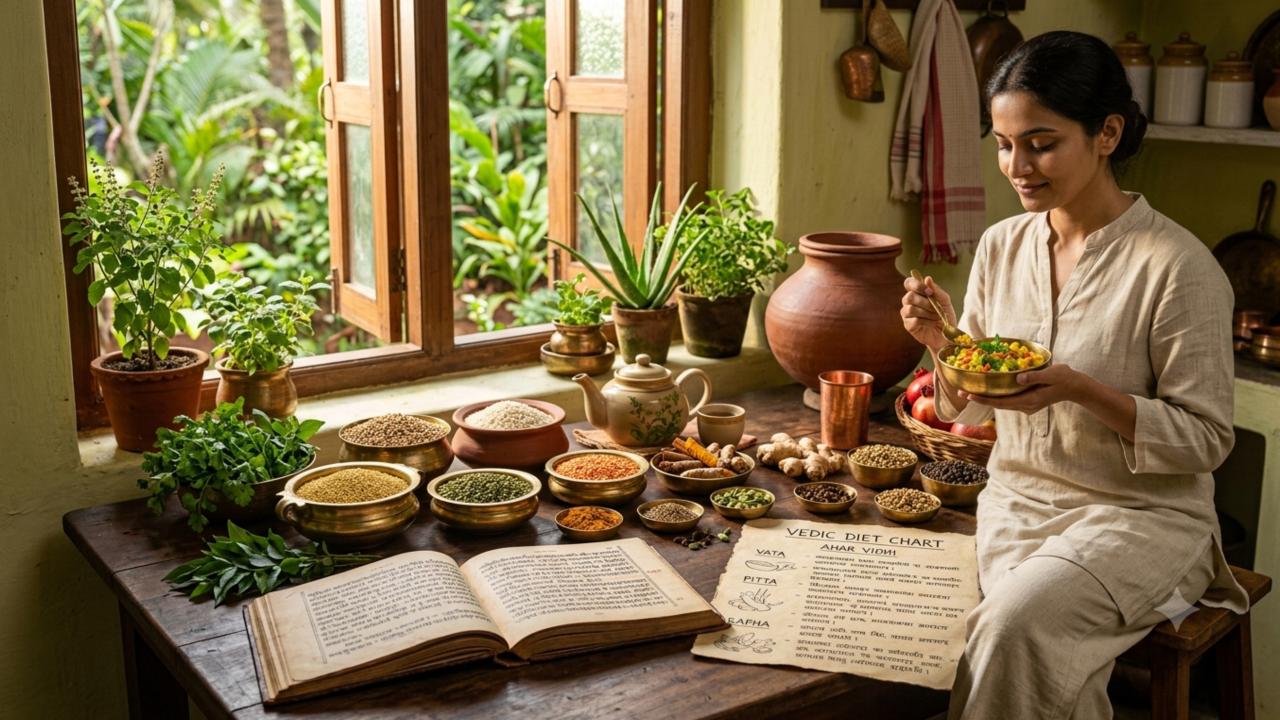 Unlike modern diets that mainly count calories and nutrients, Ayurveda evaluates food by its natural qualities, energy, and effects on digestion. Every meal is selected to nourish the body while maintaining internal balance and promoting long-term wellness.
A key principle of the Ayurvedic diet is that every person has a unique body constitution, known as a dosha. Foods are chosen according to Vata, Pitta, or Kapha characteristics, helping maintain harmony and reduce the risk of disease.
Ayurveda considers digestion the foundation of good health. A strong digestive fire, or Agni, allows the body to absorb nutrients effectively and eliminate toxins. Ignoring digestive discomfort may contribute to various health issues over time.
Growing global interest in Ayurveda has renewed attention toward traditional diet plans, healthy eating habits, and daily routines. Ancient texts like the Caraka Samhita continue to inspire modern research and provide valuable guidance for balanced nutrition.
Understanding the Foundation: Doshas and Digestion
Before diving into the specific foods, one must understand the engine of the Ayurvedic diet: the doshas and agni. Every human being is born with a unique combination of three fundamental energies that govern all physical and mental processes:
- Vata (Air and Ether): Governs movement, circulation, and the nervous system.
- Pitta (Fire and Water): Governs digestion, metabolism, and transformation.
- Kapha (Water and Earth): Governs structure, lubrication, and stability.
An Ayurvedic diet is prescribed based on an individual’s dominant dosha. If a person has a Vata imbalance, they are given warm, grounding, and oily foods. A Pitta imbalance requires cooling, less spicy foods. A Kapha imbalance calls for light, dry, and stimulating foods.
However, none of this matters if the Agni (digestive fire) is weak. Ayurveda states that food is only as good as your body’s ability to break it down and assimilate it. This is why the ancient texts meticulously categorized foods and their preparations.
Types of Food Described in Carak Samhita
The Caraka Samhita, a foundational Ayurvedic text, provides detailed guidance on food classification and explains how specific preparations support healing, digestion, and overall health.
Traditional Ayurvedic foods such as Yavagu, Krisara, Manda, Peya, and Yusha are light, nourishing porridges and broths designed to be easily digested while delivering essential nutrition.
These therapeutic preparations are commonly recommended after Panchakarma and during illness, helping the body recover by providing maximum nourishment with minimal strain on the digestive system.
Below are the details of the 12 fundamental groups (Vargas) in the Vedic diet plan and chart:
1. Suka Dhanya Varga (Group of Grains)
This food group mainly includes cereals, the foundation of the traditional Indian diet and a key source of daily nourishment. These grains provide lasting energy and support overall health.
Important cereals include Rice (Sali), Sastika Rice, Yava (Barley), and Godhuma (Wheat). Sastika Rice is especially valued in Ayurveda because it matures within 60 days and offers excellent nutritional benefits.
These grains have a naturally sweet taste and help nourish body tissues while balancing Vata and Pitta doshas. They are considered essential for maintaining strength, vitality, and healthy digestion.
2. Shamidhanya Varga (Group of Legumes)
This group mainly includes lentils, pulses, and legumes, which are important sources of plant-based protein in the Ayurvedic diet. They help nourish the body and support muscle strength.
Common examples include Mudga (green gram), Masa (black gram), Rajamasa (kidney beans), Kulattha (horse gram), Kabuli Chana (chickpeas), Masura (red lentils), leguminous plants, and Tila (sesame).
Although highly nutritious, legumes are generally heavier to digest than cereals. Ayurveda recommends cooking them with digestive spices such as ginger, cumin, asafoetida, and turmeric to improve digestion and reduce gas.
3. Mamsa Varga (Groups of Various Types of Meat)
Ancient Ayurvedic texts classify meat for therapeutic purposes rather than regular consumption. Different animal sources are believed to have unique healing properties and are prescribed only in specific health conditions.
These classifications include Prasaha (predatory animals and birds), Ambucarina (water-dwelling animals), Anupa (marshland animals), and Pratuda (pecking birds such as chickens). Each category has distinct qualities and medicinal applications.
Ayurveda recommends these foods only under expert guidance for severe weakness or recovery. Their selection depends on an individual’s condition, digestive strength, and dosha balance, with strict dietary guidelines governing their use.
4. Saka Varga (Group of Vegetables)
Ayurveda describes vegetables according to the specific parts used, their natural qualities, and their therapeutic benefits. Different vegetables are recommended based on individual health conditions and dosha balance.
For example, Kusmanda (ash gourd) is valued for its ripe fruit, which is considered light, mildly sweet, cooling, diuretic, and beneficial for balancing all three doshas when consumed appropriately.
Vegetables are rich in essential vitamins, minerals, and dietary fiber that support healthy digestion. Regular consumption helps cleanse the digestive tract, improve nutrient absorption, and promote overall wellness.
5. Phala Varga (Fruit Group)
In Ayurveda, fruits are regarded as Amrit (nectar) because they provide natural energy, are easy to digest, and nourish the body with essential vitamins, minerals, and antioxidants.
Common Ayurvedic fruits include Draksa (grapes), Karjura (dates), Narikela (coconut), Jambu (black plum), Amalaki (Indian gooseberry), Dadima (pomegranate), and Vrksamla (kokum), among others.
Each fruit has unique cooling, warming, or balancing properties. Ayurveda recommends choosing fruits according to an individual’s dosha, digestive strength, seasonal changes, and specific health needs for optimal wellness.
6. Harit Varga (Group of Salads and Herbs)
This group includes raw vegetables, roots, and aromatic herbs used to stimulate digestion. Ginger and lemon enhance appetite while supporting healthy digestive function through natural medicinal food properties in Ayurveda.
Examples include radish, ajwain, coriander, onion, and garlic. These ingredients improve metabolism, balance bodily functions, and assist nutrient absorption while promoting overall wellness through regular dietary use and traditional practice.
Each ingredient is described with its effects on the Tridoshas and the entire body, acting as medicine disguised as everyday food while maintaining health, preventing disease, and supporting holistic well-being.
7. Madya Varga (Group of Fermented Liquors)
Ayurveda considers alcohol primarily as medicine rather than recreation. Sura, a fermented liquor, benefits starvation, urinary obstruction, malabsorption syndrome, piles, anemia, lactation deficiencies, and helps relieve aggravated Vata effectively.
Classical Ayurvedic texts describe numerous medicinal liquors, including Madira, Jagala, Arista, Sarkara, Pakwasara, Sitarasika, Gauda, Surasava, Madhvasva, Maireya Asava, Madhu, Sura Madhulika, and Sauviraka preparations.
Each medicinal liquor possesses unique preparation methods, therapeutic properties, and clinical applications. Their carefully prescribed use addresses specific disorders while maintaining balance according to Ayurvedic principles and individualized treatment.
8. Jala Varga (Group of Several Types of Water)
Ayurveda regards water as the essence of life, considering rainwater the purest form. Fresh rainfall possesses natural qualities that promote health, vitality, digestion, and overall bodily balance effectively.
Rainwater acquires distinct properties after contact with the moon, air, and Sun. Depending on time and location, it becomes cold, warm, mellow, or non-mellow, influencing therapeutic value.
Rainwater naturally possesses six qualities: cold, pure, integral, tasty, clean, and bright. Water from rivers, wells, and lakes reflects environmental characteristics, determining its suitability and medicinal importance.
9. Gorasa Varga (Group of Milk and Milk Products)
Ayurveda regards milk as a complete and nourishing food. Milk from cows, buffaloes, camels, mares, goats, sheep, and female elephants possesses unique properties and health benefits.
Cow’s milk is cooling, nourishing, and rejuvenating, whereas goat’s milk is light and easily digestible. Each variety differs in potency, supporting specific constitutions and therapeutic requirements effectively.
Ayurveda also classifies yogurt, buttermilk, ghee, and butter according to their medicinal value. Their consumption depends on proper dosage, timing, geographical location, and individual health conditions.
10. Ikshu Varga (Sugar and Honey Group)
Ayurveda classifies natural sweeteners according to their medicinal properties. Important examples include sugarcane juice, jaggery, sugar candy, and honey, each offering unique therapeutic benefits and physiological effects.
Jaggery possesses a heating nature that supports strength and digestion, whereas honey has drying and scraping properties, making it valuable for reducing excess Kapha and improving metabolism.
Ayurveda strictly advises against heating honey because it forms toxic Ama within the body. Proper use of sweeteners depends on their qualities, preparation, and individual health conditions.
11. Kritanna Varga (Group of Dietary Preparations)
Ayurveda describes therapeutic recipes designed to restore digestion and strength during illness. Preparations include Peya, Vilepi, Manda, and Sattu, each serving distinct nutritional and medicinal purposes effectively.
Peya is a thin rice gruel, Vilepi a thicker porridge, Manda the strained rice water, and Sattu roasted flour. Each preparation supports gradual digestive recovery and nourishment.
Classical texts provide precise preparation methods and therapeutic indications for these recipes. Their careful use strengthens digestion, improves hydration, restores energy, and promotes faster recovery during convalescence naturally.
12. Aharayogi Varga (Group of Adjuncts for Food)
Ayurveda describes cooking mediums as essential components that enhance nourishment and therapeutic value. Common examples include sesame oil, mustard oil, and Priyala oil, each offering distinct health benefits.
These oils and fats serve as cooking attachments, improving flavor, digestion, and nutrient absorption. Their selection depends on individual constitution, digestive strength, seasonal conditions, and therapeutic requirements.
Ayurvedic texts emphasize flexibility in choosing cooking mediums rather than fixed rules. Appropriate oil selection balances the doshas, supports overall health, and enhances the medicinal value of food.
What Types of Foods are Best to Eat?
Having categorized the foods, the Carak Samhita provides strict guidelines on how to select the best quality items from these groups. The Vedic diet chart is not just about what you eat, but the quality and state of what you eat.
- The Aging of Grains: Cereals and lentils are highly recommended to eat when they are one year old. The older grain is generally lighter in terms of digestive load (it possesses more roughage), while the newly harvested grain is heavy, sticky, and harder to digest, often aggravating Kapha. The harvest that comes soon is considered heavier.
- Processing Legumes: Legumes that have been shelled and fried (like dry-roasted chickpeas) become significantly lighter and easier to digest than when boiled into a heavy stew.
- Strict Rules for Meat: The texts are unequivocally strict about meat hygiene. The meat of animals that die of a natural death, animals that are famished, excessively oily, too old, too young, killed by poisoning, or those that have suffered bites from snakes, tigers, etc., must absolutely never be eaten. The meat of animals that do not fall into these categories is healthy, promotes healthy body volume, and strengthens the body.
- The Elixir of Meat Soup: Meat soup (Mamsa Rasa) is highly nutritious and described as Hrdya (beneficial to the heart). It is considered literal nectar for those who suffer from phthisis (wasting diseases like tuberculosis), during convalescence, for the starving, and for those who have decreased semen and want strengthening and a healthy luster.
- Selecting Vegetables: Vegetables affected by insects, harsh wind, and excessive sun, as well as those that are dry, out of season, not cooked with fat (ghee/oil), or are unhygienic, should be strictly discarded.
- Post-Meal Drinks: Drinks taken after the meal should have properties that are contrary to the properties of the food consumed, but they must not act antagonistically toward the dhatus (body tissues). For example, after eating a heavy, sweet meal, a sharp, pungent drink might be suggested to aid digestion, but it must not be so harsh that it damages the tissues.
What are Bad Food Combinations? (Viruddha Ahara)
One of the most fascinating and clinically relevant aspects of the Ayurvedic diet is the concept of Viruddha Ahara, or incompatible food combinations. Substances contrary to deha dhatus (body tissues) behave with virodha (antagonism) toward them.
This antagonism can exist in terms of properties, combination, processing, place, time, dose, or the natural composition (antagonists as part of the food that is generally used).
Ayurveda outlines 18 types of food antagonism. Here are the most critical ones:
- Antagonism in Combination (Samyoga Viruddha): The most famous example: You should not eat fish with milk. The combination of the two is Madhura rasa (sweet taste) and Madhura Vipaka (sweet post-digestive effect), but it is Mahabhisyandi (a great obstructor of the bodily channels). This is due to Sita (the cooling nature of milk) and Usna (the heating nature of fish), creating Viruddha Virya (antagonistic potency). Due to the conflict in viryas, the blood is vitiated, and due to the mahabhisyandi property, severe obstruction is created in the channels. The drug or whole diet that excites the dosha but does not eliminate it from the body becomes highly harmful.
- Antagonism in Place (Desha Viruddha): For people living in arid zones (Jangala Desa), consuming harsh, dry, and sharp substances is antagonistic. For those living in swampy, humid areas (Anupa Desa), consuming excessively sweet and cold substances is antagonistic to the environment.
- Antagonism in Time (Kala Viruddha): If one takes roughage and cold foods in the freezing winter, or extremely spicy, hot foods in the peak of summer, it is antagonistic to the seasonal time.
- Antagonism in Dose (Matra Viruddha): Honey and Ghrita (clarified butter) are both incredibly medicinal. However, if taken together in equal amounts by weight, they become highly toxic and antagonistic.
- Antagonism in Habit/Constitution (Satmya Viruddha): If a person has been accustomed to spicy, hot, sweet, or cold things their entire life, suddenly forcing them to eat the exact opposite is antagonistic in terms of viability and will cause shock to the system.
- Antagonism to Doshas (Dosha Viruddha): Diet, drugs, and behaviors that are similar to the doshas in properties but adverse to the natural balance of the person are antagonistic. For example, feeding a highly anxious Vata person dry, cold, raw salads.
- Antagonism in Processing (Sanskar Viruddha): When edible foods become poisonous by particular processes. For example, peacock meat is generally acceptable, but when it is cooked attached to a castor stem, it becomes lethally antagonistic.
- Antagonism in Wealth/Quality (Rashi Viruddha): This exists when there is an immature, overripe, or damaged rasa (taste/juice) in a substance.
- Antagonism in Rules of Hygiene (Vidhi Viruddha): There is antagonism in the rules if the food is not taken in a clean, hygienic, and peaceful environment. Eating in a dirty place turns good food into a toxin.
What are the Side Effects of Wrong Food Combining?
Ayurveda does not take Viruddha Ahara lightly. The side effects of antagonistic food or wrong food combining are not just mild indigestion; they are systemic and severe.
Continuous consumption of incompatible foods causes the formation of Ama (toxic, undigested food sludge), which permeates the tissues and blocks the body’s channels (Srotas).
According to the texts, wrong food combining can cause:
- Impotence and infertility
- Blindness
- Erysipelas (a severe skin infection)
- Ascites (fluid accumulation in the abdomen)
- Madness and mental instability
- Fistula-in-ano
- Fainting and loss of consciousness
- Necrosis (tissue death)
- Tympanitis (severe bloating and gas)
- Spasms in the throat
- Anemia
- Amavisa (a specific type of food-generated toxicity)
- Leucoderma (vitiligo)
- Leprosy
- Grahani Roga (Sprue / Malabsorption syndrome / Irritable Bowel Syndrome)
- Oedema (severe swelling)
- Acidic gastritis and ulcers
- Chronic fever
- Rhinitis and chronic sinusitis
- Genetic disorders (by corrupting the reproductive tissue, Shukra Dhatu)
- And ultimately, even death.
How to Design a Diet for Your Eating?
To prevent the aforementioned disasters and achieve optimal health, Ayurveda provides a brilliant, individualized framework.
There are eight specific factors (known as Ahara Vidhi Visheshayatana) that must be taken into account before designing the diet for a person in order to obtain optimal results.
- The Nature of Food (Prakriti): These are the fundamental properties of the food. For example, by their very nature, green chickpeas (Mudga) are light to digest, as is the meat of the gray partridge (Teetur). Knowing the inherent heaviness or lightness of a food dictates who should eat it.
- Processing of Food (Karana): By processing food, the heavy ones can become light and vice versa. For example, raw rice (Vrihi) is heavy, but it becomes light when transformed into Slab (dried grains/puffed rice) after frying. Conversely, roasted chickpea flour (Sattu) is light, but when processed with water and ghee to form a cooked bolus (Laddu), it becomes heavy.
- Combination (Samyoga): You must carefully eat different combinations of dietary things, ensuring they do not possess antagonistic properties as discussed above.
- Quantity (Rashi): You must calculate the single amount of an individual food item, as well as the total amount of the food as a whole, based on your digestive capacity.
- Place (Desha): You must eat the food according to that particular place where you live. A person living in a cold, dry mountainous region needs heavier, oilier foods than someone on a tropical coast.
- Time (Kala): You must eat seasonal food and at the correct time of day, aligning your meals with the natural rhythms of the sun and your digestive fire.
- User Feasibility (Upayoga Samstha): The selection of the food must be based on viability or non-viability for the user. What is your current state of health? Are you sick or well? Is your digestion strong or weak? The diet must match the user’s current reality.
What is the Healthiest Way to Eat?
Even if you have the perfect food, perfectly combined, and tailored to your dosha, the way you eat it determines whether it turns into nourishment or poison. Ayurveda provides strict behavioral guidelines for consumption:
- Wait for Digestion: One should eat only after the previous meal has been completely digested. Eating before the last meal is digested leads to the mixing of raw and digested food, creating immediate Ama. You know your previous meal is digested when you feel a genuine hunger, your breath is fresh, and you feel light.
- Eat in Adequate Amounts: In Ayurveda, the amount of food varies between people and is strictly determined by their digestive capacity (Agni). There is no universal “serving size.”
- The 1/3rd Rule: Immense importance is given to the physical form of the food and the stomach’s capacity. One must take solids and liquids in the amount of 1/3rd each of the total stomach capacity. The remaining 1/3rd must be left completely empty. This empty space allows for the correct movement of food, the mixing of digestive enzymes, and space for the Tridoshas to act upon the food efficiently.
- Warm and Soft Food: One should eat warm (freshly prepared) and soft food. Cold, hard, or stale food dulls the digestive fire and is difficult to break down.
- Choose Wisely: Non-antagonistic combinations must always be selected to protect the channels of the body.
- Hygiene and Environment: One should ensure the absolute hygiene of the place before eating, together with all favorable adjuncts (like fresh ginger, salt, and lemon to stimulate digestion).
- Pacing is Key: One should not eat too fast (which leads to overeating and choking) or too slow (which leads to the food becoming cold and losing its energetic properties).
- Mindful Consumption: You should eat with total concentration. Avoid talking, laughing, watching television, or looking at your phone when eating. The act of eating is a sacred ritual. When your mind is distracted, your body diverts energy away from digestion.
Vedic Diet Plan Guide for Everyday Wellness
Understanding the ancient wisdom of the Carak Samhita and the principles of Ayurveda is the first step. But how do you translate 5,000-year-old texts into a practical, day-to-day meal plan?
This Vedic Diet Plan Guide bridges the gap between ancient theory and modern application. It is designed to help you structure your meals, choose the right ingredients for your unique body type (Dosha), and adopt the eating habits that will transform your digestion and overall health.
Step 1: Identify Your Dosha (Your Metabolic Blueprint)
In the Vedic diet, there is no “one-size-fits-all.” Your ideal diet depends entirely on your Prakriti (your natural, born constitution).
- Vata (Air + Ether): Thin frame, cold hands/feet, restless mind, prone to constipation and anxiety. Goal: Grounding, warming, and hydrating.
- Pitta (Fire + Water): Medium, athletic build, warm body temperature, sharp intellect, prone to acid reflux, inflammation, and irritability. Goal: Cooling, calming, and mildly dry.
- Kapha (Water + Earth): Sturdy frame, gains weight easily, smooth skin, calm demeanor, prone to sluggishness, mucus, and lethargy. Goal: Stimulating, lightening, and warming.
(Note: Many people are a mix of two doshas, such as Vata-Pitta or Pitta-Kapha. Adjust by balancing the dominant traits).
Step 2: The Vedic Daily Schedule (Eating with the Clock)
Ayurveda aligns eating with the natural cycles of the sun, which dictates the strength of your digestive fire (Agni).
- Morning (6:00 AM – 10:00 AM): Kapha Time. Digestion is sluggish as the world is waking up. Keep meals light.
- Midday (10:00 AM – 2:00 PM): Pitta Time. The sun is highest, and your digestive fire is at its peak. This is when you should eat your heaviest, largest meal.
- Evening (6:00 PM – 10:00 PM): Vata Time. Digestion is winding down. Eat a light, early dinner so food is fully digested before sleep.
Step 3: Constructing the Vedic Plate (The 1/3rd Rule)
As mentioned in the ancient texts, how you fill your stomach is just as important as what you put in it. Apply this strict Vedic geometry to every main meal:
- 1/3 Solid Food: Grains, vegetables, proteins (legumes or meats).
- 1/3 Liquid Food: Dal (lentil soup), gravies, or warm water.
- 1/3 Empty Space: Leave this space completely empty to allow the Tridoshas (Vata, Pitta, Kapha) to churn, mix, and digest the food properly. Overeating is considered the root of Ama (toxins).
Dosha-Specific Vedic Diet Charts
Here is a breakdown of what to favor and what to avoid based on your primary dosha, using the 12 categories from the Carak Samhita.
The Vata Balancing Chart (Warm, Oily, Grounding)
Vata digestion is irregular and sensitive. Food must be warm, well-cooked, and spiced.
- Grains (Suka Dhanya): Basmati rice, wheat, oats. (Avoid dry, cold cereals).
- Legumes (Shamidhanya): Mung beans (easiest to digest). Avoid harder beans like kidney beans unless heavily spiced and cooked.
- Vegetables (Saka Varga): Cooked root veggies (sweet potatoes, carrots, beets), squash, asparagus. (Avoid raw salads and cruciferous veggies like raw broccoli/cabbage, as they create gas).
- Fruits (Phala Varga): Bananas, avocados, mangoes, dates, grapes. (Avoid dry fruits like crackers and raw apples).
- Dairy (Gorasa Varga): Warm milk with turmeric or ghee. (Avoid cold milk and ice cream).
- Oils/Fats (Aharayogi): Ghee, sesame oil, olive oil.
- Sweeteners (Ikshu Varga): Jaggery, raw sugar, honey (added to warm water only, never boiled).
- Spices (Harit Varga): Ginger, cumin, cinnamon, cardamom, black pepper, sea salt.
The Pitta Balancing Chart (Cool, Sweet, Bitter)
Pitta digestion is strong but easily inflamed. Food should be cooling, moderately heavy, and avoid extreme spices.
- Grains (Suka Dhanya): Basmati rice, wheat, barley (excellent for Pitta). (Avoid corn, millet, and dry rye).
- Legumes (Shamidhanya): Mung beans, chickpeas, lentils.
- Vegetables (Saka Varga): Cucumbers, zucchini, leafy greens (spinach, cilantro), celery, broccoli. (Avoid hot peppers, onions, garlic, tomatoes, and raw radishes).
- Fruits (Phala Varga): Sweet grapes, melons, pomegranates, coconut, apples, pears. (Avoid sour fruits like grapefruits, lemons, and sour berries).
- Dairy (Gorasa Varga): Ghee (the best fat for Pitta), milk, cottage cheese, butter. (Avoid yogurt/sour cream, as sour taste aggravates Pitta).
- Oils/Fats (Aharayogi): Ghee, coconut oil, sunflower oil. (Avoid mustard oil and sesame oil, which are too heating).
- Sweeteners (Ikshu Varga): Maple syrup, raw sugar, honey. (Avoid jaggery/molasses as they are heating).
- Spices (Harit Varga): Cilantro, coriander, fennel, turmeric, mint, saffron. (Avoid chili powder, cayenne, black pepper, ginger, and mustard seeds).
The Kapha Balancing Chart (Light, Dry, Stimulating)
Kapha digestion is slow and heavy. Food must be light, warm, and stimulating to kickstart metabolism.
- Grains (Suka Dhanya): Barley, millet, corn, buckwheat. (Avoid wheat and rice, which are heavy and sweet).
- Legumes (Shamidhanya): All legumes are great for Kapha, especially red lentils (Masura), black gram, and kidney beans.
- Vegetables (Saka Varga): Bitter gourd, leafy greens (kale, chard), radishes, onions, garlic, celery. (Avoid sweet, watery veggies like zucchini, sweet potatoes, and cucumbers).
- Fruits (Phala Varga): Apples, pomegranates, cranberries, figs, apricots. (Avoid heavy, sweet, watery fruits like bananas, melons, coconuts, and dates).
- Dairy (Gorasa Varga): Goat’s milk (in small amounts). (Avoid cow’s milk, butter, cheese, and yogurt entirely, as they are highly Kapha-producing).
- Oils/Fats (Aharayogi): Mustard oil, sunflower oil, almond oil. Use very sparingly. (Avoid ghee and sesame oil).
- Sweeteners (Ikshu Varga): Raw honey is the best sweetener for Kapha (it scrapes fat and toxins). (Avoid all sugar, jaggery, and molasses).
- Spices (Harit Varga): Ginger (excellent for Kapha), black pepper, cayenne, mustard seeds, clove, turmeric. (Avoid salt, as it causes water retention).
A Sample 1-Day Vedic Diet Plan (Tridoshic / Balancing for all 3)
If you are unsure of your dosha or are cooking for a family with mixed doshas, a Tridoshic (tri-dosha balancing) meal plan is the safest and most traditional approach.
Morning Routine (Upon Waking)
- Drink a glass of warm water. (Vata can add a squeeze of lime; Kapha can add a teaspoon of raw honey; Pitta can add a pinch of fennel seeds or cool water).
Breakfast (Light, around 7:30 AM)
- Option 1: A small bowl of stewed apples or pears with a pinch of cinnamon and cardamom.
- Option 2: 1 cup of warm Manda (rice water) or a thin, watery oatmeal with a dash of ghee.
Mid-Morning (10:00 AM)
- A cup of herbal tea (Fresh ginger for Vata/Kapha, Cumin-Coriander-Fennel tea for Pitta).
- Soak 4-5 almonds overnight; peel and eat them in the morning (excellent brain food).
Lunch (The Heaviest Meal, between 12:00 PM – 1:30 PM)
- Grain: 1/2 to 1 cup of freshly cooked Basmati rice or 2-3 whole wheat chapatis.
- Protein: 1/2 cup of Mudga (Mung bean dal) cooked with turmeric, cumin, and a pinch of asafoetida (hing) to prevent gas.
- Vegetable: 1/2 cup of seasonal, cooked vegetables (e.g., spinach, carrots, or green beans) sautéed in a little ghee.
- Salad (Optional): A small side of fresh grated carrots or cucumber with a squeeze of lemon (skip the raw salad if it is winter or if you have high Vata).
- Drink: Sip warm water or Takra (buttermilk) spiced with roasted cumin powder and black salt during the meal.
Afternoon Snack (3:30 PM – Skip if not hungry)
- A small cup of sweet tea or a few soaked dates (Vata/Pitta) or a handful of roasted pumpkin seeds (Kapha).
Dinner (Light and Early, between 6:00 PM – 7:00 PM)
- Soup/Grain: A bowl of Yavagu (a thin rice or barley porridge) or a light vegetable soup.
- Vegetable: Steamed vegetables or a light khichdi (1 part rice, 1 part mung bean).
- Rule: Dinner should be easily digestible. Avoid heavy meats, heavy curds, or deep-fried foods at night.
Before Bed (9:00 PM)
- A small cup of warm milk (add nutmeg for sleep, or turmeric for inflammation). Note: Do not drink milk if you have a cold, cough, or high Kapha.
The Vedic Quick-Reference Golden Rules
To make this diet successful, keep these rules from the ancient texts posted in your kitchen:
- Cook with Ghee: Ghee is a Sattvic (pure) fat that stimulates Agni without aggravating Pitta. It is the ultimate Vedic cooking medium.
- No Ice Water: Never drink ice-cold water with meals. It extinguishes the digestive fire. Drink small sips of warm or room-temperature water.
- The Golden Milk Rule: Never heat honey. Never mix equal parts honey and ghee.
- The Fish & Milk Rule: Strictly avoid eating fish and milk (or dairy products like cheese/curd) in the same meal or sequentially.
- Eat in Silence: Treat eating as a meditation. Do not watch TV, read, or argue while eating. Your mind must be at peace for your body to digest properly.
- Eat Until You Are 75% Full: Stop eating just before you feel the urge to burp or feel completely full. This honors the 1/3rd empty space rule.
- Respect the Leftovers: Ayurveda prefers freshly prepared food (Sattvic). Avoid eating leftovers that are more than 24 hours old, as they lose their Prana (vital life force) and become Tamasic (dulling to the mind).
By following this Vedic Diet Plan Guide, you are not just changing what is on your plate; you are changing your relationship with food.
You shift from eating mindlessly to eating with intention, aligning your internal biological rhythms with the great rhythms of nature, just as the Vedic sages intended.
Ayurvedic diet principles offer a timeless approach to health by emphasizing balance, awareness, and harmony with nature. Understanding food qualities, preparation, and consumption helps nurture the body, mind, and overall well-being through conscious nourishment.
References:
- Charaka Samhita – Classical Ayurvedic text explaining Ahara (diet), Annapana Vidhi (food and drink guidelines), Viruddha Ahara (incompatible foods), Ahara Vidhi Visheshayatana (eight factors of diet), Agni (digestive fire), Doshas, and principles of healthy nutrition. (1)
- Sushruta Samhita – Ancient Ayurvedic surgical and medical text describing food qualities, dietary classifications, digestion, therapeutic nutrition, and lifestyle practices for maintaining health. (2)
- Ashtanga Hridayam by Vagbhata – Classical Ayurvedic compendium discussing Doshas, Agni, Ama, Ahara (diet), Dinacharya (daily routine), Ritucharya (seasonal regimen), and principles of balanced living. (3)
- Ashtanga Sangraha by Vagbhata – Classical Ayurvedic text explaining food properties, preparation methods, dietary rules, digestion, and the relationship between nutrition and disease prevention. (4)
- Bhavaprakasha Nighantu (Dr. K.C. Chunekar Edition) – Ayurvedic materia medica describing grains, fruits, vegetables, spices, herbs, milk products, and their traditional properties and effects on Doshas. (5)
- Dravyaguna Vijnana by Prof. Priyavrat Sharma – Reference text explaining Ayurvedic principles of food and medicinal substances, including Rasa (taste), Guna (qualities), Virya (potency), Vipaka (post-digestive effect), and therapeutic actions. (6)
- The Yoga of Herbs by David Frawley and Vasant Lad – Modern Ayurvedic herbal guide explaining traditional uses of medicinal plants, food energetics, Dosha balancing, and herbal formulations. (7)
- Textbook of Ayurveda: Fundamental Principles of Management by Vasant Lad – Modern explanation of Doshas, Agni, Ama, Ojas, Rasayana, and individualized Ayurvedic dietary approaches. (8)
- Ayurvedic Cooking for Self-Healing by Usha Lad and Vasant Lad – Practical reference explaining Ayurvedic meal planning, cooking methods, spices, food combinations, and Dosha-specific diets. (9)
- Ministry of AYUSH, Government of India – Official information on Ayurveda, traditional medicine systems, research initiatives, and healthcare practices. (10)
- World Health Organization (WHO) – Resources on traditional medicine, complementary healthcare, nutrition, and evidence-based approaches to traditional health systems. (11)
- National Center for Complementary and Integrative Health (NCCIH) – Scientific information on Ayurveda, complementary medicine, herbal products, safety considerations, and research updates. (12)
- Journal of Ayurveda and Integrative Medicine (J-AIM) – Peer-reviewed research articles on Ayurveda, medicinal plants, nutrition, traditional medicine, and integrative healthcare. (13)
- Ancient Science of Life Journal – Research publications on Ayurvedic concepts, diet, lifestyle practices, medicinal plants, and traditional healthcare knowledge. (14)
- PubMed – Medical research database containing studies on Ayurveda, nutrition, digestion, herbal medicine, traditional dietary practices, and integrative health research. (15)