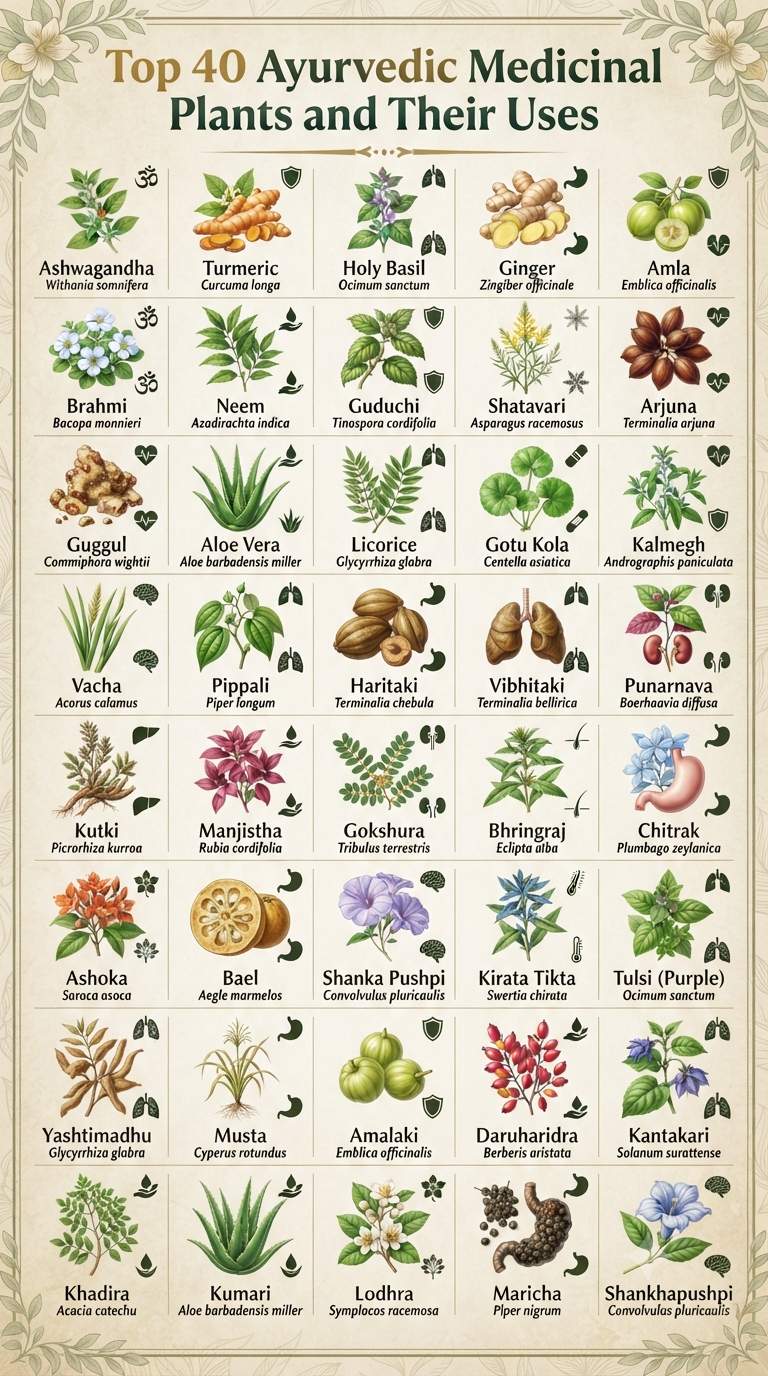
Top 40 Ayurvedic Medicinal Plants and Their Uses

Medicinal plants have supported traditional medicine for centuries. They are valued for their healing properties and remain important in many cultures worldwide. Ayurvedic medicine and Traditional Chinese Medicine use these plants to treat various health conditions naturally. They contain beneficial compounds like alkaloids, flavonoids, and essential oils.
Medicinal plants also inspire modern pharmaceutical research. They provide affordable, natural healthcare options and continue to play a vital role in improving human health and well-being.
Among all plant parts, medicinal plant leaves hold a special place in holistic healing.
Why Are Medicinal Plant Leaves So Powerful?
In Ayurveda and herbal medicine, leaves are considered highly potent sources of healing. They are incredibly versatile—easily transformed into herbal teas, potent extracts, healing poultices, and therapeutic oils.
Because they are exposed to sunlight, medicinal leaves are rich in:
- Vitamins and Minerals essential for cellular function.
- Antioxidants that protect against cellular damage.
- Phytonutrients that balance the body’s natural processes.
As more people seek natural alternatives to synthetic drugs, the timeless relevance of plant leaves in supporting immunity, improving digestion, and reducing inflammation is experiencing a massive resurgence.
General Benefits of Medicinal Plant Leaves
Medicinal plant leaves offer a wide range of health benefits:
1. Antioxidant Properties: Many leaves are rich in antioxidants, which help fight free radicals, slow aging, and protect against chronic diseases. Examples include green tea, moringa, and neem.
2. Antibacterial and Antifungal Properties: Leaves like tulsi, neem, and eucalyptus have natural antibacterial and antifungal properties, helping treat infections and improve skin health.
3. Detoxification: Certain leaves, such as dandelion, mint, and papaya, support detoxification by cleansing the liver, kidneys, and digestive system, promoting better overall health.
4. Stress Relief: Leaves like chamomile, lavender, and ashwagandha have calming effects, reducing stress and anxiety while improving relaxation and sleep quality.
40 Medicinal Plant Leaves and Their Uses
Below are the 40 medicinal plant leaves and their uses, each explained in two concise, informative lines.
Learn about their traditional Ayurvedic benefits, healing properties, and how they support natural health and everyday wellness.
1. Adusa (Vasaka)
A trusted respiratory remedy, Adusa clears excess mucus, soothes inflamed airways, and provides lasting relief from persistent coughs, asthma, and bronchial congestion.
- English Name: Malabar Nut
- Botanical Name: Adhatoda vasica Nees
- Ayurvedic Properties: Kaphapittahara (balances Kapha and Pitta); bronchodilator, expectorant, anti-inflammatory, and antitussive.
- Uses: Cough, Asthma, Bronchitis
- How to Use: Boil leaves in water for a decoction, or consume as syrup or powder.
2. Ananas
A tropical digestive aid, Ananas contains bromelain to break down proteins, supports heart health, helps regulate blood sugar, and assists in weight management.
- English Name: Pineapple
- Botanical Name: Ananas comosus
- Ayurvedic Properties: Vatapittahara (balances Vata and Pitta); digestive stimulant, anti-inflammatory, diuretic, and cardioprotective.
- Uses: Sore Throat, Diabetes, Heart Disease, Obesity
- How to Use: Consume fresh fruit or juice regularly; add to salads or smoothies.
3. Babool
An astringent herb for oral care, Babool strengthens gums, stops bleeding, accelerates wound healing, and provides effective antimicrobial protection.
- English Name: Indian Gum Plant
- Botanical Name: Acacia arabica Willd
- Ayurvedic Properties: Kaphapittahara (balances Kapha and Pitta); astringent, styptic, antimicrobial, and wound-healing.
- Uses: Oral Care, Bleeding Gums, Wounds
- How to Use: Use powder as a tooth powder or make a paste for wound application.
4. Brahmi
A renowned brain tonic, Brahmi sharpens memory, enhances cognitive function, reduces anxiety, calms the mind, and promotes overall neurological wellness.
- English Name: Thyme-leafed Gratiola
- Botanical Name: Bacopa monniera Pennel
- Ayurvedic Properties: Tridoshahara (balances all doshas); medhya (cognitive enhancer), nervine, adaptogenic, and anxiolytic.
- Uses: Memory Enhancement, Anxiety
- How to Use: Mix powder with water or honey, or brew leaves as a calming tea.
5. Dhaniya
A common culinary herb, Dhaniya eases indigestion, reduces flatulence, relieves spasmodic abdominal pain, and harmonizes digestive fire naturally.
- English Name: Coriander
- Botanical Name: Coriandrum sativum Linn
- Ayurvedic Properties: Tridoshahara (balances all doshas); carminative, digestive, antispasmodic, and appetizer.
- Uses: Indigestion, Flatulence, Spasmodic Pain
- How to Use: Use seeds in cooking or prepare coriander water by boiling seeds in water.
6. Kalmegh
- A potent bitter tonic, Kalmegh detoxifies the liver, boosts immune function, treats acne and diarrhea, and promotes overall systemic vitality.
- English Name: King of Bitters
- Botanical Name: Andrographis paniculata
- Ayurvedic Properties: Kaphapittahara (balances Kapha and Pitta); liver stimulant, immunomodulator, antipyretic, and digestive tonic.
- Uses: Indigestion, Acne, Diarrhea
- How to Use: Consume as powder, capsules, or decoction for digestive issues.
7. Lashun
A powerful antimicrobial herb, Lashun fights infections, lowers cholesterol, promotes heart health, aids digestion, and accelerates wound healing.
- English Name: Garlic
- Botanical Name: Allium sativum
- Ayurvedic Properties: Kaphavatahara (balances Kapha and Vata); antimicrobial, hypolipidemic, rasayana (rejuvenative), and cardioprotective.
- Uses: Ringworm, Dysentery, Wounds
- How to Use: Eat raw or cooked; make garlic oil for topical application on skin.
8. Nagarmotha
A cooling metabolic herb, Nagarmotha helps manage fever and diabetes, soothes skin inflammation, and supports overall systemic balance.
- English Name: Nut Grass
- Botanical Name: Cyperus rotundus Linn
- Ayurvedic Properties: Pittakaphahara (balances Pitta and Kapha); anti-inflammatory, antipyretic, blood-purifying, and hypoglycemic.
- Uses: Fever, Diabetes, Solar Dermatitis
- How to Use: Use powder or oil for skin, or consume in tea to regulate blood sugar.
A powerful rejuvenative herb, Punarnava supports kidney and liver function, treats anemia, promotes vitality, and restores systemic balance.
- English Name: Spreading Hogweed
- Botanical Name: Boerhaavia diffusa Linn
- Ayurvedic Properties: Tridoshahara (balances all doshas); diuretic, hepatoprotective, rasayana (rejuvenative), and kidney tonic.
- Uses: Anemia, Liver Diseases, Wounds, Kidney Health
- How to Use: Consume juice, powder, or decoction from roots or leaves.
10. Shalparni
- Valued for its analgesic properties, Shalparni alleviates joint pain, reduces inflammation, relaxes muscles, and works as a general tonic.
- English Name: Shal Leafed Bush
- Botanical Name: Desmodium gangetium DC
- Ayurvedic Properties: Vatakaphahara (balances Vata and Kapha); anti-inflammatory, analgesic, muscle relaxant, and nervine.
- Uses: Analgesic, Anti-Inflammatory
- How to Use: Take as powder or decoction to relieve pain and inflammation.
11. Tulsi
Revered as the “Queen of Herbs,” Tulsi boosts immunity, relieves respiratory distress, supports heart health, and combats stress effectively.
- English Name: Holy Basil
- Botanical Name: Ocimum sanctum Linn
- Ayurvedic Properties: Kaphavatahara (balances Kapha and Vata); adaptogenic, antimicrobial, cardiotonic, and expectorant.
- Uses: Indigestion, Heart Health, Respiratory Diseases
- How to Use: Drink tulsi tea, chew fresh leaves, or add to food for flavor and benefits.
12. Vridhadaru
A medicinal climber, Vridhadaru helps regulate blood sugar, heals wounds, treats skin diseases, and promotes overall metabolic health.
- English Name: Elephant Creeper
- Botanical Name: Argyreia speciosa Sweet
- Ayurvedic Properties: Vatakaphahara (balances Vata and Kapha); hypoglycemic, wound-healing, dermatological, and anti-inflammatory.
- Uses: Diabetes, Skin Diseases, Wounds
- How to Use: Use leaves in decoctions or apply topically for wounds and skin conditions.
13. Agarkasth
An aromatic urinary tonic, Agarkasth helps control bed-wetting and urinary incontinence by soothing the bladder and strengthening urinary function.
- English Name: Eagle Wood
- Botanical Name: Aquilaria agallocha Roxb
- Ayurvedic Properties: Vatakaphahara (balances Vata and Kapha); urinary tonic, astringent, cooling, and bladder strengthener.
- Uses: Bed-Wetting, Urinary Incontinence
- How to Use: Take as powder or decoction to improve urinary health.
14. Ankol
Used traditionally as an antidote, Ankol neutralizes venom from snake, scorpion, and dog bites, providing rapid relief and protection.
- English Name: Sage Leaf Alangium
- Botanical Name: Alangium salvifolium
- Ayurvedic Properties: Vatakaphahara (balances Vata and Kapha); anti-venom, analgesic, anti-inflammatory, and detoxifying.
- Uses: Snakebite, Scorpion Bite, Dog Bite
- How to Use: Crush leaves into a paste for topical use or take powder orally.
15. Badi Elaichi
This aromatic spice enhances digestion, relieves bronchitis and asthma, stimulates appetite, and promotes respiratory and gastrointestinal health.
- English Name: Greater Cardamom
- Botanical Name: Amomum subulatum Pennel
- Ayurvedic Properties: Kaphapittahara (balances Kapha and Pitta); digestive, respiratory stimulant, carminative, and appetizer.
- Uses: Bronchitis, Asthma, Appetizer, Digestant
- How to Use: Use powder in cooking or add seeds to tea for relief.
16. Chirchita
A detoxifying herb, Chirchita purifies the blood, treats cough and asthma, supports liver function, and relieves digestive complaints.
- English Name: Prickly Chaff Flower
- Botanical Name: Achyranthes aspera
- Ayurvedic Properties: Kaphavatahara (balances Kapha and Vata); liver tonic, expectorant, diuretic, and blood purifier.
- Uses: Indigestion, Cough, Asthma, Liver Health
- How to Use: Consume as decoction or powder for respiratory and digestive issues.
17. Elaichi
A fragrant digestive aid, Elaichi relieves nausea, vomiting, and dry cough while soothing stomach discomfort and promoting healthy digestion.
- English Name: Lesser Cardamom
- Botanical Name: Elettaria cardamomum Maton
- Ayurvedic Properties: Tridoshahara (balances all doshas); carminative, digestive, antiemetic, and aromatic stimulant.
- Uses: Nausea, Vomiting, Dry Cough
- How to Use: Add seeds to tea or consume powder to soothe the stomach.
18. Kanghi
A strengthening herb, Kanghi acts as a nervine tonic, supports joint health, boosts physical strength, and promotes overall vitality.
- English Name: Country Mallow
- Botanical Name: Abutilon indicum
- Ayurvedic Properties: Vatakaphahara (balances Vata and Kapha); nervine, anti-inflammatory, strength-promoting, and joint tonic.
- Uses: Nervine Tonic, Joint Disorders, Strength Enhancement
- How to Use: Take as decoction or powder for joint issues and vitality.
19. Malakangini
Known for relieving muscle cramps and backache, Malakangini supports joint health, nourishes hair, and promotes musculoskeletal wellness.
- English Name: Staff Tree
- Botanical Name: Celastrus paniculatus Willd
- Ayurvedic Properties: Vatakaphahara (balances Vata and Kapha); analgesic, neuroprotective, hair tonic, and anti-inflammatory.
- Uses: Muscle Cramps, Backache, Osteoarthritis, Hair Care
- How to Use: Use seeds in preparations or as oil for topical application.
20. Neem
A versatile healing tree, Neem combats skin disorders, eye infections, intestinal worms, purifies blood, and promotes overall detoxification.
- English Name: Margosa Tree
- Botanical Name: Azadirachta indica A. Juss
- Ayurvedic Properties: Kaphapittahara (balances Kapha and Pitta); antibacterial, antifungal, blood purifier, and detoxifier.
- Uses: Skin Health, Eye Disorders, Nosebleed, Intestinal Worms
- How to Use: Apply paste, drink decoction, or use neem oil topically.
21. Pyaj
A kitchen staple with medicinal value, Onion aids prostate health, improves digestion, offers anti-inflammatory benefits, and boosts immunity.
- English Name: Onion
- Botanical Name: Allium cepa Linn
- Ayurvedic Properties: Vatakaphahara (balances Vata and Kapha); digestive, antiseptic, prostate-supportive, and anti-inflammatory.
- Uses: Prostate Health, Digestive Disorders
- How to Use: Consume raw or cooked for digestive and immune support.
22. Shatavari
A premier women’s health herb, Shatavari supports fertility, lactation, uterine health, hormonal balance, and overall female vitality.
- English Name: Asparagus
- Botanical Name: Asparagus racemosus Willd
- Ayurvedic Properties: Pittavatahara (balances Pitta and Vata); galactagogue, female reproductive tonic, adaptogenic, and cooling.
- Uses: Infertility, Libido Loss, Uterine Health, Lactation Support
- How to Use: Take powder with milk or water to balance hormones and enhance vitality.
23. Ulatkambal
A uterine tonic, Ulatkambal helps regulate menstrual cycles, addresses gynecological concerns, and supports overall female reproductive health.
- English Name: Devil’s Cotton
- Botanical Name: Abroma augustum
- Ayurvedic Properties: Vatapittahara (balances Vata and Pitta); uterine stimulant, menstrual regulator, and antispasmodic.
- Uses: Gynecological Problems, Irregular Periods
- How to Use: Consume as a decoction or powder for menstrual health.
24. Yavasa
A cooling anti-inflammatory herb, Yavasa relieves rheumatism, stomachaches, constipation, and vomiting while supporting digestive health.
- English Name: Camel Thorn
- Botanical Name: Alhagi camelorum
- Ayurvedic Properties: Pittakaphahara (balances Pitta and Kapha); anti-inflammatory, laxative, digestive, and cooling.
- Uses: Rheumatism, Vomiting, Stomachache, Constipation
- How to Use: Take powder in Ayurvedic preparations for joint and digestive health.
25. Akarkara
A stimulating analgesic, Akarkara relieves toothache, throat dryness, catarrh, restores libido, and boosts nervous system function.
- English Name: Pellitory
- Botanical Name: Anacyclus pyrethrum
- Ayurvedic Properties: Kaphavatahara (balances Kapha and Vata); analgesic, sialagogue, nerve stimulant, and aphrodisiac.
- Uses: Toothache, Mouth Dryness, Throat Issues, Libido Loss
- How to Use: Apply powder to gums or consume in small doses.
26. Ashgandh (Ashwagandha)
A powerful adaptogen, Ashwagandha combats stress, enhances immunity, relieves joint pain, promotes vitality, and supports overall wellness.
- English Name: Winter Cherry
- Botanical Name: Withania somnifera Dunal
- Ayurvedic Properties: Vatakaphahara (balances Vata and Kapha); adaptogenic, immunomodulatory, rasayana (rejuvenative), and nervine.
- Uses: Stress Management, Immunity, Joint Pain, Skin Health
- How to Use: Take powder with milk or water for mental and physical well-being.
27. Bael
A cooling digestive tonic, Bael treats dysentery, diarrhea, and diabetes, promotes gut health, and soothes the digestive system.
- English Name: Bengal Quince
- Botanical Name: Aegle marmelos Corr.
- Ayurvedic Properties: Tridoshahara (balances all doshas); digestive, antidiarrheal, hypoglycemic, and cooling.
- Uses: Dysentery, Diabetes, Cooling, Gut Health
- How to Use: Consume as juice, powder, or decoction for digestive support.
28. Chitrak
A potent digestive stimulant, Chitrak aids weight loss, treats skin diseases, relieves arthritis, and addresses menstrual disorders.
- English Name: Leadwort
- Botanical Name: Plumbago zeylanica Linn
- Ayurvedic Properties: Kaphavatahara (balances Kapha and Vata); digestive stimulant, anti-inflammatory, detoxifier, and carminative.
- Uses: Arthritis, Skin Diseases, Menstrual Disorders, Obesity
- How to Use: Take powder in small doses for digestion and inflammation.
29. Ghee Kunwar (Aloe Vera)
A soothing gel-rich plant, Aloe Vera heals burns, ulcers, acne, and jaundice while supporting women’s health and digestion.
- English Name: Aloe Vera
- Botanical Name: Aloe vera Tourn ex. Linn
- Ayurvedic Properties: Pittakaphahara (balances Pitta and Kapha); cooling, wound-healing, digestive, and dermatological.
- Uses: Ulcers, Burns, Jaundice, Acne, Women’s Health
- How to Use: Apply gel topically or drink juice internally for detoxification.
30. Ketaki
This metabolic herb aids weight management, reduces hyperlipidemia, helps regulate blood sugar, and supports healthy metabolic function.
- English Name: Crepe Ginger
- Botanical Name: Costus speciosus
- Ayurvedic Properties: Kaphavatahara (balances Kapha and Vata); hypolipidemic, hypoglycemic, metabolic stimulant, and anti-obesity.
- Uses: Obesity, Hyperlipidemia, Diabetes
- How to Use: Use root powder in Ayurvedic formulations for metabolic health.
31. Mandukparni (Gotu Kola)
A brain-boosting herb, Mandukparni enhances memory, supports hair health, rejuvenates the nervous system, and promotes mental clarity.
- English Name: Gotu Kola
- Botanical Name: Centella asiatica Urban
- Ayurvedic Properties: Vatakaphahara (balances Vata and Kapha); medhya (cognitive enhancer), nervine, hair tonic, and rejuvenative.
- Uses: Memory, Brain Health, Hair Care
- How to Use: Take powder with water or milk; use topically for hair and skin.
32. Palasha
A vibrant tree with medicinal bark, Palasha improves skin complexion, treats worm infestations, and supports digestive and menstrual health.
- English Name: Flame of Forest
- Botanical Name: Butea monosperma Kuntze
- Ayurvedic Properties: Kaphapittahara (balances Kapha and Pitta); anthelmintic, skin tonic, astringent, and digestive.
- Uses: Skin Complexion, Worm Infestations, Roundworm
- How to Use: Use bark powder or decoction for skin and parasitic issues.
33. Ratti
This herb treats joint pain, fungal skin infections, and alopecia, with astringent, wound-healing, and anti-inflammatory properties.
- English Name: Rosary Pea
- Botanical Name: Abrus precatorius
- Ayurvedic Properties: Vatakaphahara (balances Vata and Kapha); antifungal, anti-inflammatory, hair restorative, and astringent.
- Uses: Joint Pain, Fungal Infections, Alopecia
- How to Use: Use seed powder or decoction for inflammation and infections.
34. Shirish
A valuable respiratory herb, Shirish eases bronchial asthma, detoxifies the body, reduces inflammation, and promotes respiratory comfort.
- English Name: Siris Tree
- Botanical Name: Albizia lebbeck
- Ayurvedic Properties: Kaphavatahara (balances Kapha and Vata); bronchodilator, anti-inflammatory, sedative, and detoxifier.
- Uses: Bronchial Asthma, Detoxification
- How to Use: Use bark powder in formulations or apply topically for relief.
35. Bach
Bach relieves flatulent colic, dyspepsia, and ulcers with strong antimicrobial, anti-inflammatory, and digestive-supporting actions.
- English Name: Sweet Flag
- Botanical Name: Acorus calamus
- Ayurvedic Properties: Kaphavatahara (balances Kapha and Vata); antimicrobial, digestive, nervine, and anti-inflammatory.
- Uses: Flatulent Colic, Atonic Dyspepsia, Ulcers
- How to Use: Take root powder or decoction for digestive and respiratory health.
36. Amaltas
A mild laxative, Amaltas relieves constipation, heals ulcers, soothes wounds, and provides cooling relief for digestive discomfort.
- English Name: Indian Laburnum
- Botanical Name: Cassia fistula Linn
- Ayurvedic Properties: Pittakaphahara (balances Pitta and Kapha); mild laxative, anti-ulcer, wound-healer, and cooling.
- Uses: Mild Laxative, Ulcers, Wounds
- How to Use: Consume fruit pulp internally or apply externally for healing.
37. Ashok
A key herb for female reproductive health, Ashok regulates menstruation, strengthens uterine muscles, and supports overall gynecological wellness.
- English Name: Sorrowless Tree
- Botanical Name: Saraca indica
- Ayurvedic Properties: Vatapittahara (balances Vata and Pitta); uterine tonic, menstrual regulator, astringent, and hemostatic.
- Uses: Menstrual Irregularities, Uterine Stimulant
- How to Use: Use bark or flowers in Ayurvedic formulations for uterine health.
38. Bharangi
This respiratory herb effectively treats colds, chronic sinusitis, allergic rhinitis, and boosts overall immune system function.
- English Name: Bharangi
- Botanical Name: Clerodendron serratum Moon
- Ayurvedic Properties: Kaphavatahara (balances Kapha and Vata); expectorant, immunomodulatory, anti-allergic, and decongestant.
- Uses: Common Cold, Chronic Sinusitis, Allergic Rhinitis
- How to Use: Take as decoction or powder for respiratory relief.
39. Chitvan
Chitvan heals skin ulcers, reduces fever, promotes lactation, and provides astringent and anti-inflammatory therapeutic benefits.
- English Name: Dita
- Botanical Name: Alstonia scholaris
- Ayurvedic Properties: Kaphapittahara (balances Kapha and Pitta); anti-inflammatory, antipyretic, galactagogue, and astringent.
- Uses: Skin Ulcers, Fever, Lactation Support
- How to Use: Use leaves or bark as powder or decoction.
40. Guggulu
A revered anti-inflammatory resin, Guggulu lowers cholesterol, supports joint health, manages heart disease, and promotes rejuvenation.
- English Name: Indian Bdellium
- Botanical Name: Commiphora mukul Engl
- Ayurvedic Properties: Vatakaphahara (balances Vata and Kapha); hypolipidemic, anti-inflammatory, rasayana (rejuvenative), and joint tonic.
- Uses: Joint Disorders, Heart Diseases, Hypolipidemic
- How to Use: Take resin in tablet or capsule form for joint and cardiovascular health.
FAQ’s
1. What are Ayurvedic medicinal plants?
Ayurvedic medicinal plants are herbs and natural botanicals used in Ayurveda to help support overall health, wellness, and balance. They have been traditionally used for digestion, immunity, skin care, stress management, and other health concerns.
2. Which is the most powerful Ayurvedic medicinal plant?
There isn’t a single “most powerful” herb because each serves different purposes. Popular Ayurvedic herbs include Ashwagandha, Tulsi, Neem, Giloy, Turmeric, and Amla, each known for unique health-supporting properties.
3. What is Ashwagandha used for?
Ashwagandha is traditionally used to support stress management, energy levels, healthy sleep, and overall vitality. It is classified as an adaptogenic herb in Ayurveda.
4. What are the health benefits of Tulsi?
Tulsi (Holy Basil) is commonly used to support respiratory health, immunity, digestion, and overall wellness. It is also valued for its antioxidant properties.
5. Why is Neem called a medicinal tree?
Neem has been traditionally used for skin care, oral hygiene, and overall wellness. Various parts of the tree, including leaves, bark, and seeds, are used in Ayurvedic practices.
6. What is Giloy used for in Ayurveda?
Giloy is traditionally used to support immune function, digestion, and general wellness. It is often consumed as juice, powder, or tablets.
7. What are the benefits of Turmeric in Ayurveda?
Turmeric is known for its antioxidant and anti-inflammatory properties. It is widely used to support joint health, digestion, skin wellness, and immunity.
8. Is Aloe Vera an Ayurvedic medicinal plant?
Aloe Vera is commonly used in Ayurveda for skin care, digestive support, and maintaining healthy hydration.
9. What is Amla used for?
Amla (Indian Gooseberry) is rich in Vitamin C and antioxidants. It is traditionally used to support immunity, hair health, skin health, and digestion.
10. Which Ayurvedic herbs help improve digestion?
Popular digestive herbs include:
- Triphala
- Fennel
- Ajwain
- Ginger
- Coriander
- Mint
- Cumin
11. Which Ayurvedic plants support immunity?
- Common immunity-supporting herbs include:
- Giloy
- Tulsi
- Amla
- Turmeric
- Ashwagandha
- Neem
Guduchi
12. What are the best Ayurvedic herbs for skin health?
Neem, Aloe Vera, Turmeric, Manjistha, Sandalwood, and Licorice are traditionally used to support healthy skin.
13. Which Ayurvedic medicinal plants are good for hair care?
Amla, Bhringraj, Hibiscus, Brahmi, Neem, and Fenugreek are commonly used in Ayurvedic hair care products.
14. Can Ayurvedic herbs help with stress?
Certain herbs such as Ashwagandha, Brahmi, Jatamansi, and Shankhpushpi have traditionally been used to support relaxation and stress management.
15. What is Brahmi used for?
Brahmi is traditionally used to support memory, concentration, learning, and overall cognitive wellness.
16. What is Triphala?
Triphala is a classic Ayurvedic herbal blend made from Amla, Haritaki, and Bibhitaki. It is commonly used to support digestive health.
17. Are Ayurvedic medicinal plants safe?
Many Ayurvedic herbs have long histories of traditional use, but safety depends on the specific herb, dosage, preparation, and individual health conditions. It is advisable to consult a qualified healthcare professional before starting herbal supplements.
18. Can Ayurvedic herbs be taken daily?
Some herbs are traditionally used daily, while others are recommended only for limited periods. Daily use should follow guidance from a qualified Ayurvedic practitioner or healthcare provider.
19. What are adaptogenic herbs in Ayurveda?
Adaptogenic herbs are traditionally believed to help the body adapt to stress. Ashwagandha is one of the best-known Ayurvedic adaptogens.
20. What is the difference between medicinal plants and Ayurvedic herbs?
Medicinal plants are broadly any plants used for therapeutic purposes across different medical traditions. Ayurvedic herbs specifically refer to plants used within the Ayurvedic system of medicine.
21. Which Ayurvedic herbs support liver health?
Traditionally used herbs include:
- Bhumyamalaki
- Kalmegh
- Kutki
- Turmeric
22. Which Ayurvedic herbs are rich in antioxidants?
Amla, Turmeric, Tulsi, Moringa, and Guduchi are known for their antioxidant content.
23. Is Moringa used in Ayurveda?
Moringa is valued for its nutrient-rich leaves and is traditionally used to support overall health and vitality.
24. What are the uses of Licorice (Mulethi) in Ayurveda?
Licorice is traditionally used to support throat comfort, digestive health, and respiratory wellness.
25. Which Ayurvedic herbs support respiratory health?
Tulsi, Vasaka, Mulethi, Ginger, and Pippali are commonly used in traditional Ayurvedic formulations for respiratory wellness.
26. What is Bhringraj known for?
Bhringraj is traditionally associated with supporting healthy hair growth and scalp health.
27. Which medicinal plant is best for skin problems?
Neem and Aloe Vera are among the most widely used Ayurvedic plants for maintaining healthy skin.
28. What are the benefits of Shatavari?
Shatavari is traditionally used in Ayurveda to support women’s reproductive health and overall vitality.
29. What is Manjistha used for?
Manjistha is traditionally used to support healthy skin and natural detoxification processes.
30. Which Ayurvedic herbs support heart health?
Arjuna, Garlic, Amla, and Guggul are traditionally used in Ayurvedic wellness practices for cardiovascular support.
31. What is Arjuna bark used for?
Arjuna bark has traditionally been used to support cardiovascular health and healthy circulation.
32. Can Ayurvedic medicinal plants support healthy blood sugar levels?
Some herbs like Gudmar, Fenugreek, and Jamun have traditionally been used to support healthy glucose metabolism. They should not replace prescribed medical treatment.
33. Which Ayurvedic herbs are commonly used for joint health?
Turmeric, Shallaki (Boswellia), Guggul, and Ginger are traditionally used to support joint comfort and mobility.
34. What is Gudmar known for?
Gudmar is traditionally used in Ayurveda to support healthy blood sugar metabolism.
35. Which Ayurvedic plants are used for oral care?
Neem, Clove, Babool, and Licorice have traditionally been used in herbal oral care.
36. Are Ayurvedic medicinal plants scientifically studied?
Many Ayurvedic herbs have been studied for their phytochemicals and potential health effects. However, evidence varies by herb and intended use, and more high-quality clinical research is needed for many traditional claims.
37. Can Ayurvedic herbs interact with medicines?
Some herbs may interact with prescription medications or be unsuitable for certain medical conditions. Consult a healthcare professional before combining herbs with medicines.
38. How should Ayurvedic herbs be consumed?
They may be used as powders (churna), tablets, capsules, teas, decoctions (kadha), oils, or fresh plant preparations, depending on the herb and traditional practice.
39. What are the top 40 Ayurvedic medicinal plants?
Popular Ayurvedic medicinal plants include Ashwagandha, Tulsi, Neem, Giloy, Turmeric, Amla, Aloe Vera, Brahmi, Shatavari, Bhringraj, Manjistha, Arjuna, Gudmar, Moringa, Kalmegh, Licorice, Vasaka, Ginger, Fenugreek, Hibiscus, Haritaki, Bibhitaki, Pippali, Cinnamon, Clove, Cardamom, Coriander, Fennel, Ajwain, Cumin, Bael, Guggul, Shallaki, Shankhpushpi, Jatamansi, Kutki, Babool, Jamun, Curry Leaves, and Sandalwood.
40. Where can I find authentic Ayurvedic medicinal plants?
Purchase Ayurvedic herbs from reputable herbal suppliers, certified Ayurvedic pharmacies, or trusted manufacturers that provide quality testing and proper labeling. Always verify authenticity and follow recommended usage instructions.
Medicinal plant leaves have been used for centuries in traditional medicine to support health and promote natural healing. From boosting immunity and improving digestion to enhancing skin, hair, and respiratory health, these leaves offer a wide range of therapeutic benefits.