Dhathryarishtam (Amalakarishtam): Ingredients, Uses & Dosage

Ayurveda values balance between mind, body, and spirit. Among its herbal medicines, Dhathryarishtam is a respected fermented liquid preparation known for improving absorption and supporting overall health naturally every day.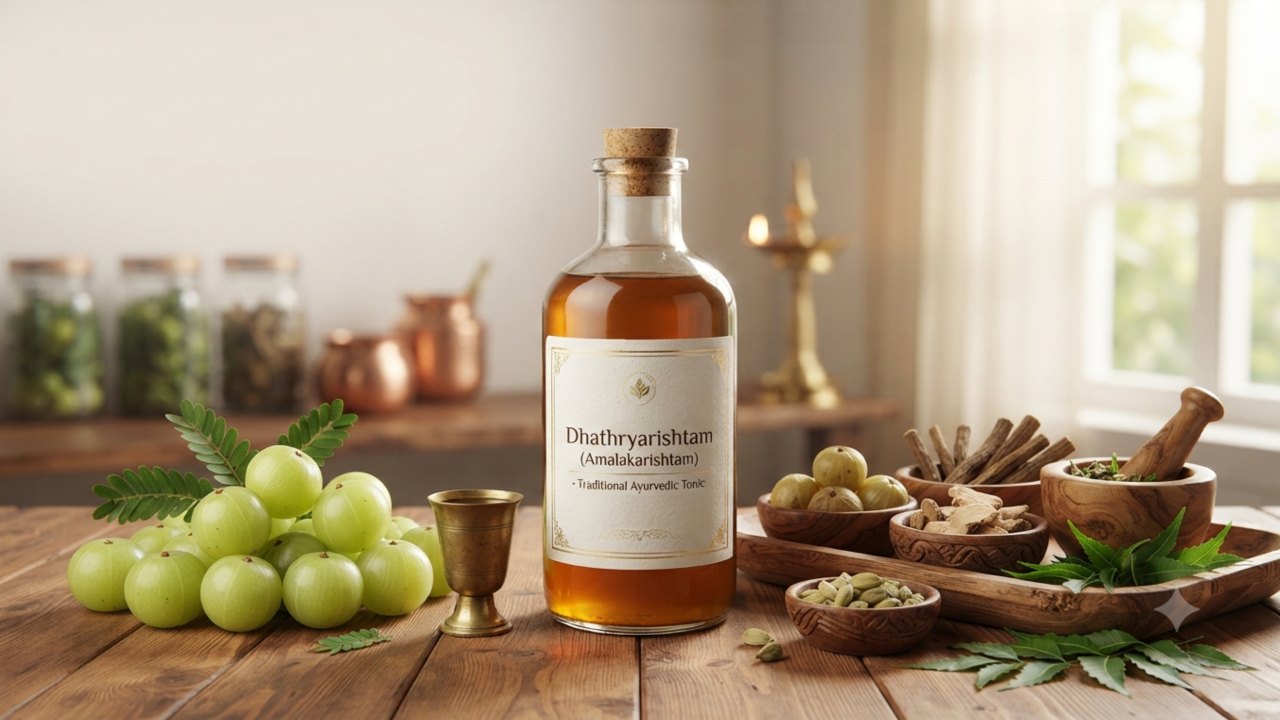 Dhathryarishtam, also called Dhatryarishta, is prepared mainly from Amla, a nutrient-rich fruit. This traditional remedy is widely used to support healthy blood, liver, heart, and digestive functions naturally.
The formulation develops natural alcohol during fermentation, helping preserve the medicine while improving herbal absorption. This process allows beneficial plant compounds to reach the body’s tissues more effectively and safely.
This article explains Dhathryarishtam’s ingredients, benefits, preparation method, recommended dosage, traditional uses, and important safety precautions, providing a simple guide for anyone interested in this trusted Ayurvedic herbal tonic.
What is Dhathryarishtam? The Science of “Sandhana Kalpana”
Dhathryarishtam belongs to Sandhana Kalpana, a group of Ayurvedic fermented medicines. Fermentation preserves herbs while improving their therapeutic value, making these traditional formulations effective, stable, and easy to absorb.
Herbs are mixed with natural sugars and allowed to ferment under controlled conditions. This process creates natural alcohol, which preserves the medicine and enhances the extraction of beneficial plant compounds.
The self-generated alcohol dissolves both water-soluble and alcohol-soluble herbal compounds. As a result, Dhathryarishtam delivers a wider range of active ingredients, improving its overall therapeutic effectiveness and absorption.
Fermentation also increases the medicine’s stability and shelf life. These unique properties make Dhathryarishtam a trusted Ayurvedic formulation that remains effective while supporting faster absorption and long-lasting medicinal quality.
Key Ingredients and Classical Preparation
The profound beauty of Dhathryarishtam lies in its stark simplicity and the immense, concentrated power of its few ingredients.
As per classical texts like the Charaka Samhita, the preparation is based on a highly specific ratio of ingredients, demonstrating the precise mathematical approach of ancient Ayurvedic pharmaceutics.
The Core Ingredients
Here is a detailed breakdown of the primary components that go into making this classical remedy:
1. Amalaki (Indian Gooseberry)
- Sanskrit / Botanical Name: Dhatri (Emblica officinalis / Phyllanthus emblica)
- Quantity: Juice extracted from 1000 fruits
Role & Key Benefits: Amalaki is the absolute cornerstone of this formulation. In Ayurveda, it is considered a potent Rasayana (rejuvenative) that is uniquely capable of balancing all three Doshas (Vata, Pitta, and Kapha), though it is particularly revered for pacifying Pitta.
Botanically, it is acclaimed as the world’s richest natural source of Vitamin C. Unlike synthetic Vitamin C, the natural ascorbic acid in Amla is stabilized by the presence of tannins, which prevent its oxidation, allowing it to survive the heat of processing and digestion.
It actively supports liver health, improves hemoglobin levels, and acts as a powerful antioxidant.
2. Pippali (Long Pepper)
- Sanskrit / Botanical Name: Krishna (Piper longum)
- Quantity: 96 grams powder
Role & Key Benefits: Pippali is a master bio-enhancer. In Ayurvedic terms, it is a Deepana (kindles digestive fire) and Pachana (digests metabolic toxins, or Ama).
In modern pharmacology, piperine (its active compound) is well-documented to increase the bioavailability of various nutrients and drugs.
It is highly useful in respiratory disorders and plays a crucial role in the management of anemia by ensuring the nutrients extracted from food are properly metabolized and assimilated.
3. Madhu (Honey)
- Sanskrit / Botanical Name: Madhu
- Quantity: 1/8th part of the Amalaki juice volume
Role & Key Benefits: Honey acts as a natural base for fermentation and a therapeutic agent. It is classified as a Yogavahi—a substance that carries the properties of other herbs deep into the tissues.
Additionally, honey soothes the respiratory tract, helps in expectoration, and improves the overall taste of the formulation.
4. Sharkara (Jaggery)
- Sanskrit / Botanical Name: Sharkara / Guda
- Quantity: 2.4 kg
Role & Key Benefits: Jaggery provides the essential carbohydrate substrate required for the yeast to act upon during the fermentation process.
Beyond its role in generating alcohol, it acts as a natural sweetener that offsets the sourness of the Amla, provides a warming energy to the body, and itself contains trace minerals like iron and magnesium.
The Method of Preparation
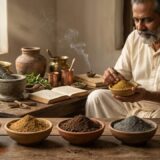
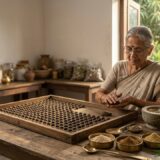
The traditional method of preparing Dhathryarishtam is a meticulous, time-honored process passed down through generations of Vaidyas (Ayurvedic physicians):
- Extraction (Swarasa): Exactly 1000 fresh, ripe Amla fruits are meticulously cleaned. The juice is then carefully extracted, traditionally using a mechanical press or by crushing the fruits and straining the liquid through a fine cloth.
- Mixing: The fresh Amla juice is combined with the specified quantity of honey and jaggery in a large vessel. To this homogeneous mixture, the fine, sifted powder of Pippali (96 grams) is added and stirred continuously until it is completely dissolved and integrated.
- Preparation of Vessel: A traditional clay pot (or in modern times, a food-grade stainless steel or glass fermenter) is cleaned, dried in sunlight, and often fumigated with medicinal herbs like Guggulu to create a sterile environment and prevent unwanted bacterial growth. The inside of the pot is traditionally smeared with a thin layer of pure cow’s ghee.
- Fermentation (Sandhana): The liquid mixture is poured into the prepared vessel. The mouth of the vessel is tightly sealed with a clean cloth smeared with wet clay (Multani Mitti) to create an absolutely airtight environment. This ensures anaerobic fermentation. It is then placed in a dark, dry, temperature-controlled room (a fermentation cellar) and left entirely undisturbed.
- Maturation: The fermentation is allowed to proceed for a specific period, traditionally around 15 to 30 days. During this time, the wild yeast present on the Amla skin and in the honey converts the jaggery sugars into alcohol. The herbal properties are infused into the liquid matrix. The ancient texts note that the process is complete when the characteristic sweet-sour-alcoholic smell develops and the sound of bubbling effervescence ceases.
- Filtration and Storage: After successful fermentation, the supernatant liquid is carefully decanted, leaving the settled herbal marc (residue) behind. It is filtered through a multi-layered cloth to obtain a clear, translucent fluid. This final product, Dhathryarishtam, is then bottled and allowed to mature further for a few months before being dispensed, which significantly enhances its taste and therapeutic efficacy.
Crucial Scientific Note: Modern pharmaceutical research has confirmed that for the successful preparation of authentic Dhathryarishtam, the use of fresh Amalaki Swarasa (juice) is absolutely essential.
Attempts by some manufacturers to use a decoction (Kwatha) of dried Amla have been shown to fail entirely, often leading to fungal growth and spoilage.
This is because fresh Amla provides the correct pH and the necessary wild yeast flora required to initiate the specific fermentation process outlined in the classical texts.
Therapeutic Benefits and Traditional Uses
Dhathryarishtam is a multi-dimensional formulation. While its core action is aggressively targeted toward Pandu Roga (anemia) and disorders of the Rakta Dhatu (blood tissue) and Rasa Dhatu (plasma/nutrients), its holistic nature allows it to heal several interconnected bodily systems.
1. The Primary Use: Management of Anemia (Pandu Roga)
The classical, primary indication for Dhathryarishtam is Pandu Roga, a condition that correlates closely with Iron Deficiency Anemia (IDA) in modern medicine.
The word “Pandu” literally translates to pallor, referring to the distinctive yellowish-whitish paleness of the skin, eyes, and nails that is the hallmark symptom of anemia.
A pivotal clinical study published in the Journal of Research in Traditional Medicine investigated the efficacy of Dhatryarishta in children suffering from Iron Deficiency Anemia.
The results were highly encouraging. The study concluded that the formulation had a “highly significant effect in relieving almost all the clinical features of IDA within the duration of 60 days.”
It was noted that Hemoglobin levels, Red Blood Cell (RBC) counts, and Mean Cell Indices showed a statistically significant positive response, with the maximum number of children achieving a normal blood picture after the trial.
How does a non-iron formulation work so effectively in anemia?
This is perhaps the most fascinating aspect of Dhathryarishtam. Unlike modern allopathic iron supplements, which directly load the body with elemental iron (often causing constipation, nausea, and blackened stools), Dhathryarishtam contains virtually no iron itself. Instead, it cures anemia by optimizing the body’s internal environment:
- Amalaki’s Role: As the richest natural source of Vitamin C, Amalaki provides the crucial cofactor required for the reduction of dietary ferric iron to ferrous iron, which is the only form of iron that can be absorbed by the gut. It dramatically enhances the absorption of dietary iron from the food the patient eats.
- Pippali’s Role: Pippali acts as a Deepana and Pachana herb. It strengthens the digestive fire (Agni) and clears the gut of metabolic waste (Ama). This ensures that the iron absorbed is effectively transported and utilized in the bone marrow for the synthesis of hemoglobin.
- Rakta Dhatu Poshan: The formulation acts as a powerful Rasayana for the blood, directly nourishing and purifying the Rakta Dhatu, addressing the root cause of the disease rather than just patching the deficiency.
2. Liver Health and Jaundice (Kamala)
In Ayurveda, the liver (Yakrit) is the primary seat of Pitta Dosha, and its health is directly linked to the quality of the blood it produces.
Dhathryarishtam is highly regarded in classical practice for treating Kamala (Jaundice) and various other hepatic disorders. Amalaki, the dominant ingredient, is a powerful hepatoprotective agent. Clinical observations show it helps in:
- Protecting hepatocytes (liver cells) from damage caused by toxins, viruses, or free radicals.
- Promoting the regeneration of healthy liver tissue.
- Improving the liver’s metabolic functions, specifically enhancing the conjugation and excretion of bilirubin, thereby helping in the rapid resolution of jaundice and the associated fatigue.
3. Heart Health (Hridroga)
The formulation is also indicated for Hridroga (Heart diseases) in the ancient texts. Amalaki is well-documented for its cardioprotective properties.
Rich in potent antioxidants like tannins and flavonoids, it helps in reducing oxidative stress, which is a primary driver in the development of atherosclerosis (plaque buildup in arteries).
By purifying the blood and reducing lipid peroxidation, it helps in strengthening the heart muscles, maintaining healthy cholesterol levels, and preventing the oxidation of LDL cholesterol.
Other Classical Indications
Beyond its primary triad of uses, Dhathryarishtam is beneficial for a range of other conditions, owing to its blood-purifying and Agni-kindling properties:
- Gout (Vatasruk): Gout is caused by the accumulation of uric acid crystals in the joints, linked in Ayurveda to impure blood and vitiated Vata-Pitta. By purifying the Rakta Dhatu, Dhathryarishtam helps manage the underlying systemic toxicity of gout.
- Chronic Fever (Vishama Jwara): Conditions like malaria or chronic low-grade fevers leave the body depleted. Its ability to improve immunity, nourish the tissues (Rasayana), and remove residual metabolic toxins makes it an excellent convalescent medicine.
- Respiratory Health: It is traditionally used for Kasa (Cough), Hikka (Hiccups), and Shwasa (Asthma/Chronic Respiratory Diseases). The bio-enhancing properties of Pippali, combined with the soothing effect of honey and the anti-inflammatory nature of Amla, help in clearing the respiratory tract and strengthening the lungs.
- Anorexia (Aruchi): By dramatically kindling the digestive fire (Agni) and clearing the tongue of accumulated Ama (toxins), it stimulates appetite and restores the natural taste of food.
Scientific Backing and Modern Research
While Ayurvedic texts provide thousands of years of empirical evidence, modern science is increasingly validating these traditional claims, bridging the gap between ancient wisdom and contemporary clinical practice.
The aforementioned clinical trial on Iron Deficiency Anaemia in children provides robust clinical evidence for its primary use as a hematinic (a substance that increases hemoglobin).
Beyond proving efficacy, the study highlighted the formulation’s excellent safety profile and high palatability—which is a major breakthrough in pediatric care, as children often reject traditional medicines due to bitter tastes. The sweet-sour taste of Dhathryarishtam makes it highly acceptable to young patients.
Furthermore, pharmaceutical research analyzing the preparation methods of Dhatryarishta has confirmed the absolute necessity of the classical method using fresh Amalaki juice.
This research underscores the precision and advanced understanding of the ancient Ayurvedic sages, proving that altering the traditional methodology (such as using dried herbs or boiled decoctions) fundamentally breaks the biochemical process required to create the medicine.
Dosage and How to Take Dhathryarishtam
Because Dhathryarishtam is a potent, bio-enhanced formulation, its dosage must be calibrated to the individual. The ideal dose varies based on the person’s age, the severity of the condition, their digestive strength (Agni), and their Prakriti (constitutional type). It is always best to consult a qualified Ayurvedic practitioner for a personalized prescription.
General Dosage Guidelines
- Adults: The typical recommended dose is 10 – 20 ml (approximately 2 to 4 teaspoons), taken once or twice a day.
- Children: The dose is proportionally lower and must be determined by a physician. The clinical trial on children successfully utilized a dose of 10-15 ml, carefully adjusted according to the child’s age and weight.
- Duration: Because it is a Rasayana and acts on deep tissue levels (like blood and liver), it is usually prescribed for a sustained period of 1 – 2 months, or until normal blood parameters are achieved, as advised by the doctor.
How to Consume
With Water (Anupana): Measure the prescribed dose and mix it with an equal quantity of lukewarm or room-temperature water. This dilutes the alcohol content slightly and aids in ingestion.
Timing: The timing of administration is highly specific in Ayurveda and depends on the condition being treated:
For general purposes, respiratory issues, and improving digestion: It is often taken shortly after food.
In cases of anemia and liver disorders: It is traditionally advised to be taken on an empty stomach (early morning).
Food should only be consumed after the medicine has been fully digested (usually after 30-45 minutes).
Taking it on an empty stomach allows for maximum, unimpeded absorption of the Vitamin C and bio-enhancers directly into the gut lining.
Shake Well: Always shake the bottle vigorously before use. Because it is a natural, unfiltered product, some fine herbal sediments and active precipitates settle at the bottom. Shaking ensures you get a uniform dose of the medicine.
Interaction with Other Medicines
In today’s world of polypharmacy, understanding how Ayurvedic medicines interact with other systems is crucial for patient safety.
1. With Western (Allopathic) Medicines: Some herbs can potentiate or interfere with modern drugs. It is essential to inform both your Ayurvedic doctor and your allopathic doctor about all the medications you are taking.
If both are prescribed, a general safety guideline is to take the allopathic medicine first, wait for 30 to 45 minutes, and then take the Ayurvedic medicine.
This temporal separation minimizes any potential physical or chemical interaction in the gastrointestinal tract.
Note: If taking modern iron supplements, taking Dhathryarishtam concurrently can massively boost iron absorption; however, this should be monitored by a doctor to prevent iron overload.
2. With Homeopathic Medicine: There are no known negative interactions between Dhathryarishtam and homeopathic remedies. They are generally considered safe to use alongside one another.
3. With Dietary Supplements (Multivitamins, Omega-3, etc.): Dhathryarishtam generally pairs well with most dietary supplements.
However, if you are taking multiple products, it is always prudent to space them out and consult a healthcare professional to avoid redundancy (e.g., taking high-dose synthetic Vitamin C alongside Dhathryarishtam is usually unnecessary).
Safety, Side Effects, and Precautions
Dhathryarishtam is remarkably safe when taken in the prescribed dosage and for the recommended duration. The pediatric clinical trial explicitly reported “no adverse drug reaction” and noted that the drug was “well tolerated” by all participants.
However, because it is a potent fermented medicine, certain precautions are absolutely necessary.
Possible Side Effects
Overdosage: Taking significantly more than the recommended dose may cause a slight burning sensation in the stomach, mild gastric irritation, acidity, or loose stools.
This is primarily due to the 5-10% alcohol content and the intense potency of Pippali, which can overly stimulate gastric acid production if taken in excess.
If this occurs, the dose should be immediately reduced, the medicine should be taken strictly after food, or it should be discontinued, followed by a consultation with a doctor.
Who Should Exercise Caution?
- Pregnant and Lactating Women: Due to the self-generated alcohol content and the deep-acting, potent nature of the herbs—which can alter the fundamental metabolic heat of the body—pregnant and breastfeeding mothers should strictly avoid self-medication. It should only be taken under the direct, strict supervision of a qualified Ayurvedic physician, and only if the benefits clearly outweigh the risks.
- Children: While it is exceptionally safe and highly effective for children when prescribed, it must never be given as an over-the-counter supplement. It must be given under medical supervision in the exact dosage calibrated for the child’s weight and age.
- Diabetics: This requires careful consideration. Although the fermentation process consumes much of the initial jaggery, converting it to alcohol, the final product still contains a notable amount of residual unfermented sugars. Diabetic patients, especially those with poorly controlled blood sugar levels, should consult their doctor before taking this medicine and may need regular blood sugar monitoring while on the course.
- Individuals with Severe Liver Disease or Alcohol Dependency: While Dhathryarishtam is used to treat certain liver conditions (like jaundice), those with severe, end-stage liver disease (like cirrhosis) have a compromised ability to metabolize even small amounts of alcohol. Furthermore, individuals with a history of alcohol use disorder or those in recovery should avoid all Aristhas, as the presence of alcohol, though minor and medicinal, can act as a psychological trigger.
Shelf Life and Storage
- Shelf Life: One of the most remarkable properties of the Sandhana Kalpana (fermented formulations) is their incredible longevity. The alcohol acts as a perfect natural preservative. Dhathryarishtam has a classical shelf life of up to 10 years from the date of manufacture if kept unopened.
- Storage: Store the bottle in a cool, dry place, strictly away from direct sunlight and heat sources, which can degrade the volatile components. Keep the bottle tightly closed when not in use to prevent oxidation and evaporation of the alcohol. Once the seal is broken, it is best to consume the contents within 3 to 6 months for maximum efficacy.
The Classical Reference and Reputable Manufacturers
The classical reference for Dhathryarishtam is elegantly documented in the Charaka Samhita (Chikitsasthana 16/111-112).
The ancient Shloka describes the precise method of taking 1000 Amalaki fruits, extracting their fresh juice (Swarasa), and mixing it with honey, Pippali powder, and jaggery to prepare this potent Arishta specifically for the treatment of Pandu (anemia).
Given its classical nature, several trusted and GMP-certified (Good Manufacturing Practices) Ayurvedic pharmacies manufacture Dhathryarishtam.
When purchasing, it is crucial to choose a reputable brand to ensure authenticity, correct ingredient sourcing (specifically fresh Amla juice), and adherence to traditional fermentation timelines.
Some well-known, highly respected manufacturers include:
- Amrita Life
- Ashoka Pharmaceuticals
- Sitaram Ayurveda Pharmacy
- Baidyanath (widely known for a vast and reliable range of classical Aristhas)
- Kottakkal Arya Vaidya Sala (renowned for strict adherence to classical texts)
Dhathryarishtam is one of Ayurveda’s most trusted fermented herbal formulations, valued for its time-tested benefits and balanced approach to health. Prepared mainly with Amla and other carefully selected herbs, it supports healthy blood, liver, heart, and digestive functions while promoting overall vitality.
Reference List
- Agnivesha. (2017). Charaka Samhita: Chikitsa Sthana (R. K. Sharma & Bhagwan Dash, Trans.). Chaukhambha Sanskrit Series Office.(1)
- Ministry of AYUSH, Government of India. (n.d.). The Ayurvedic Formulary of India (AFI).(2)
- Pharmacopoeia Commission for Indian Medicine & Homoeopathy (PCIM&H). (n.d.). Ayurvedic Pharmacopoeia and Formulary Resources.(3)
- Central Council for Research in Ayurvedic Sciences (CCRAS). (n.d.). Research Publications and Clinical Studies.(4)
- National Center for Biotechnology Information (NCBI). (n.d.). Phyllanthus emblica (Amla): Research Articles. PubMed.(5)
- National Center for Biotechnology Information (NCBI). (n.d.). Piper longum (Pippali): Pharmacological Studies. PubMed.(6)
- National Center for Biotechnology Information (NCBI). (n.d.). Asava-Arishta and Ayurvedic Fermented Medicines. PubMed.(7)
- Journal of Research in Traditional Medicine. (n.d.). Dhatryarishta and Iron Deficiency Anaemia Research.(8)
- Google Scholar. (n.d.). Dhatryarishta Research Publications.(9)
- World Health Organization (WHO). (n.d.). Traditional, Complementary and Integrative Medicine.(10)
- National Center for Biotechnology Information (NCBI). (n.d.). Ayurvedic Fermented Medicines: Research Database. PubMed.(11)
- National Center for Biotechnology Information (NCBI). (n.d.). Phyllanthus emblica and Liver Health. PubMed.(12)