Pragbhakta Aushadha Sevana Kala – Taking Medicines Before Food

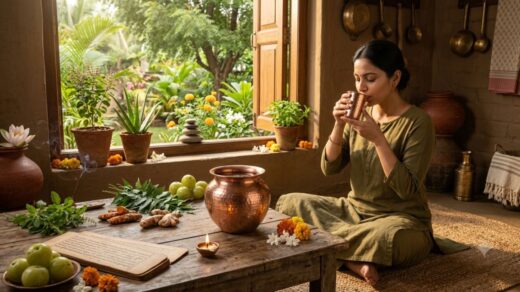
In Ayurveda, medicine timing plays an important role in treatment. Aushadha Sevana Kala describes the appropriate time for taking medicines, considering food intake, digestion, daily routines, disease conditions, and individual patient requirements.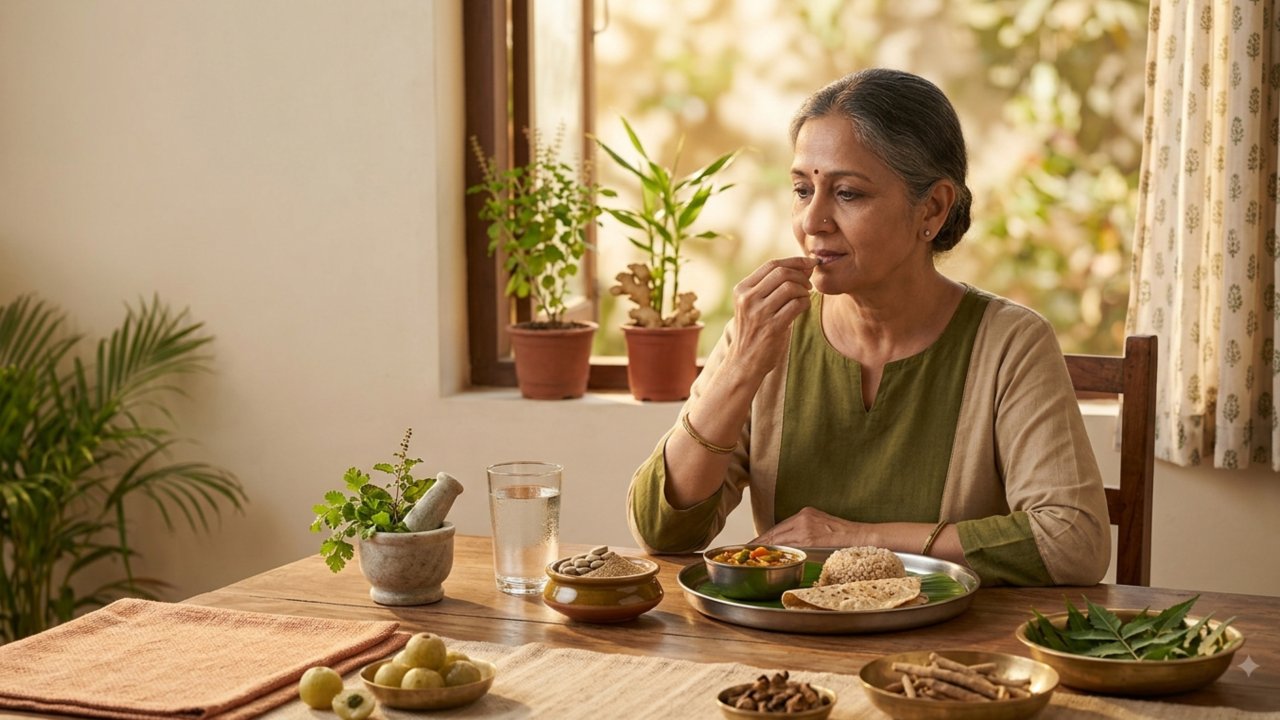 Pragbhakta Aushadha Sevana Kala is an important Ayurvedic medicine schedule. The term Pragbhakta means taking medicine before food. In this method, medicine is administered before the patient begins a meal.
Taking medicine before food generally means the stomach is empty at that moment. However, it does not necessarily indicate complete fasting, as timing may vary according to treatment, digestion, disease, and patient needs.
Pragbhakt Etymology and Synonyms
The Sanskrit language is highly precise, and Ayurvedic terminology often carries multiple synonyms that highlight different facets of the same concept.
Pragbhakta is no exception. The word is a composite of two Sanskrit roots: Prak (meaning ‘before’) and Bhakta (meaning ‘food’ or ‘that which is eaten’).
To convey the exact same timing, ancient Acharyas (teachers) have utilized other synonymous terms:
- Purvabhakta: This is formed by Purva (before) + Bhakta (food). Since Prak and Purva are synonymous in Sanskrit, the meaning remains identical to Pragbhakta.
- Bhaktadau: This is formed by Bhakta (food) + Adau (at the beginning of). Here, the words have simply swapped their positions, and Prak has been replaced by Adau, both conveying the sense of “prior to.”
- Annadau: Formed by Anna (food) + Adau (at the beginning of). Since Bhakta and Anna both mean food, this term is semantically equivalent to Bhaktadau.
The existence of these synonyms across different classical texts demonstrates that various schools of ancient Ayurvedic thought unanimously recognized and utilized this specific temporal window for healing.
Abhakta vs Pragbhakta: Understanding the Key Differences
A common point of confusion in Ayurvedic pharmacology is differentiating Pragbhakta from Abhakta Aushadha Sevana Kala. Although both involve administering medicine on an empty stomach, they differ significantly in their timing, clinical application, and physiological intent.
1. Abhakta Aushadha Sevana Kala
Abhakta is typically administered early in the morning, immediately after waking. At this time, the stomach is empty, with minimal digestive activity, and the patient has not yet developed a sensation of hunger.
- Absolute Fasting State: Abhakta represents a state of complete fasting. Since the medicine reaches an empty and sensitive gastric environment, its action can be comparatively intense and direct.
- Suitable for Strong Individuals: Therefore, Abhakta is generally considered appropriate for individuals with good strength (Purusha Balavan) who can tolerate the potent and unbuffered action of strong medicines, including therapies such as Vamana and potent Virechana drugs.
Because there is no food to moderate the medicine’s action, individuals with weak constitutions may be more susceptible to nausea, gastric irritation, or other adverse effects.
2. Pragbhakta Aushadha Sevana Kala
Pragbhakta, in contrast, refers to administering medicine shortly before food, generally just a few minutes prior to the meal. It is therefore not restricted to early-morning administration.
- Empty Stomach, but Approaching Food: Although the stomach is technically empty, the physiological anticipation of food has already begun. Digestive activity is preparing for the upcoming meal, and the digestive fire (Agni) is being stimulated in preparation for digestion.
- Gentler Clinical Action: The food taken shortly after the medicine provides a buffering effect, making Pragbhakta comparatively gentler than Abhakta. Consequently, it may be suitable for a broader range of individuals, including those with relatively delicate constitutions.
Key Distinction
The essential difference can therefore be understood through timing and physiological context:
- Abhakta: Medicine is administered in a completely fasting state, typically immediately after waking, before hunger or food-related digestive preparation.
- Pragbhakta: Medicine is administered shortly before a meal, when the stomach is empty but food intake is imminent.
Thus, while both may involve an empty stomach, Abhakta emphasizes an unbuffered and potentially stronger medicinal action, whereas Pragbhakta allows the forthcoming meal to moderate the medicine’s effect.
The Apana Kala Connection: Understanding the Ideal Timing
Although the classical texts describe Pragbhakta medicine as being administered before food, they do not explicitly specify whether this should be before breakfast, lunch, or dinner.
However, Ayurvedic scholars can derive a clinically meaningful interpretation by considering the therapeutic purpose of this Aushadha Sevana Kala.
Pragbhakta is particularly associated with the action of Apana Vata, the subtype of Vata Dosha responsible for downward-moving functions such as defecation, urination, menstruation, and ejaculation.
Its primary site is the pelvic region and colon, making the timing of medicine administration especially relevant when treating disorders involving these functions.
The Influence of Apana Kala
According to Ayurvedic concepts of daily biological rhythms, the evening and early night correspond to the period of Vata predominance, with the later part of the day favoring the natural downward movement associated with Apana Vata.
This provides a reasonable clinical hypothesis: when Pragbhakta medicine is intended to act predominantly on Apana Vata, administering it shortly before the evening meal may help align the therapeutic action with the body’s natural physiological rhythm.
Why Evening Administration May Be Preferred
Administering the medicine before dinner places its action in proximity to the period when Vata and the functions of Apana are considered particularly relevant. This may theoretically support the medicine’s movement toward the lower abdomen, pelvic region, and colon.
However, this should be understood as a therapeutic inference rather than an explicit classical rule. The texts specify Pragbhakta as administration before food, but they do not universally mandate dinner as the required meal.
Can Pragbhakta Be Given Before Other Meals?
Yes. Depending on the disease, doshic involvement, therapeutic objective, and patient’s condition, Pragbhakta may theoretically be administered before breakfast or lunch as well.
For disorders predominantly involving Apana Vata, however, evening administration before dinner may be considered a logical and clinically relevant choice based on the Ayurvedic understanding of Apana Kala.
Pragbhakta defines the relationship between medicine and food—not necessarily a fixed time of day.
The preference for evening administration in Apana Vata disorders arises from the therapeutic alignment between Pragbhakta, Apana Vata, and the natural daily rhythm, rather than from an absolute classical prescription that Pragbhakta must always be given before dinner.
The Physiological Mechanism: Why Pragbhakta Works
The clinical success of Pragbhakta lies in its brilliant manipulation of gastrointestinal physiology. When a medicine is taken before food on an empty stomach, a specific sequence of events unfolds:
- Direct Contact with Agni: The medicine enters the stomach and immediately encounters the primary digestive fire (Pachaka Pitta and Samana Vata). Without food acting as a barrier, the medicine is exposed directly to the full force of Agni.
- The Food Buffer: Shortly after the medicine is ingested, the patient consumes their meal. The food enters the stomach and sits directly on top of the medicine.
- Prevention of Regurgitation: Many Ayurvedic medicines, particularly Kashaya (decoctions) and Churna (powders), possess intensely bitter (tikta) or astringent (kashaya) tastes. When taken on an empty stomach without subsequent food, these medicines have a tendency to reflux back into the esophagus and mouth, causing a lingering, unpleasant taste and potentially triggering nausea. In Pragbhakta, the food acts as a physical lid or weight, pressing the medicine down and preventing its upward regurgitation.
- Prolonged Gastric Retention: Because the food prevents the medicine from moving up and the stomach begins its churning process, the medicine is trapped in the gastric cavity for an optimal amount of time.
- Total Utilization: As Acharya Kashyapa explains, this prolonged retention ensures that the medicine is thoroughly digested by Agni. No part of the medicine is expelled undigested. The result is the proper, total, and optimum utilization of the medicinal properties.
Acharya Sushruta’s Perspective: Shigra Vipaka
Acharya Sushruta offers an important pharmacological perspective on Pragbhakta Aushadha Sevana Kala. He describes medicines administered at this time as undergoing Shigra Vipaka, suggesting a rapid manifestation of their post-digestive effects.
- Understanding Shigra Vipaka: Vipaka refers to the post-digestive transformation and effect of a substance after it has undergone digestion by the body’s metabolic processes. The term Shigra means swift or rapid. Thus, Shigra Vipaka indicates that the medicine is processed relatively quickly, allowing its post-digestive effects to become evident sooner.
- Clinical Significance of Rapid Action: This characteristic gives Pragbhakta a potential advantage when rapid therapeutic action is desired. The timing may be particularly relevant in conditions where prompt relief is required or where the therapeutic target involves the stomach and lower abdominal region.
- The relatively rapid manifestation of the medicine’s post-digestive effect may therefore help explain why Pragbhakta is considered a clinically significant Aushadha Sevana Kala.
- A Therapeutic Perspective: From Sushruta’s perspective, the importance of Pragbhakta extends beyond simply administering medicine before food. Its association with Shigra Vipaka provides a pharmacological rationale for selecting this timing when a comparatively swift therapeutic response is intended.
Pragbhakta, through its association with Shigra Vipaka, may be understood as a timing that favors the relatively rapid manifestation of a medicine’s post-digestive action.
Key Therapeutic Benefits of Pragbhakta
Based on the classical descriptions and physiological mechanisms, the administration of medicines as Pragbhakta yields several distinct therapeutic advantages:
1. Zero Bala Kshaya (No Deterioration of Strength)
A major concern in Ayurvedic treatment is that strong medicines, while destroying pathogens (doshas), might also deplete the patient’s vital strength (bala).
Pragbhakta medicine is digested efficiently without adversely affecting the strength of the person.
Because the medicine is promptly followed by food, the body is nourished simultaneously, preventing the weakness that can accompany aggressive empty-stomach therapies.
2. Optimum Absorption and Utilization
Because the medicine is pressed down by food and directly acted upon by Agni, its absorption in the gastric mucosa is maximized. The therapeutic action targets the desired doshas with high precision, leaving no medicinal residue wasted.
3. Targeting Local Gastric Doshas
Acharya Kashyapa explicitly states that Pragbhakta destroys the doshas present in the Amashaya (stomach).
The stomach is the primary seat of Kledaka Kapha (the lubricating watery subtype of Kapha), Samana Vata (the balancing air that aids digestion), and Pachaka Pitta (the digestive fire).
Pragbhakta acts as a localized treatment, pacifying imbalances directly at the site of digestion.
4. Ama Pachana (Digestion of Toxins)
Ama (undigested metabolic waste/toxins) is primarily formed in the stomach due to weak Agni.
Since Pragbhakta medicine resides in the stomach for a long time and directly stimulates Agni, it is highly effective in digesting Ama and curing Ama-related diseases.
It acts as an excellent Pachana (digestive) and Dipana (appetizer) therapy.
Pragbhakta: Weight Loss and Weight Gain
Pragbhakta can be useful in Sthoulya (obesity) and Medoroga when medicines with Deepana, Pachana, and Lekhana properties are selected.
Drugs such as Guggulu and Trikatu may help improve weakened Agni and reduce excess Kapha and Meda.
Administering them before food allows the medicine to act first, followed by the meal, which can then be properly digested.
Pragbhakta in Krishanga
In contrast, for Krishanga (emaciation), nourishing medicines with Brimhana and Balya properties may be administered as Pragbhakta.
Herbs such as Ashwagandha, Shatavari, and Bala can support digestion, assimilation, and tissue nourishment. When digestion and absorption are improved, nutrients can be better utilized for the development of the Dhatus, supporting healthy weight gain.
The Key Principle
The important point is that Pragbhakta itself does not cause either weight loss or weight gain.
The outcome depends on the properties of the medicine, the patient’s Dosha and Agni, and the therapeutic objective.
Thus, the same Aushadha Sevana Kala can be used for opposite goals by selecting medicines appropriately.
Clinical Indications: Diseases Cured by Pragbhakta
The clinical scope of Pragbhakta Aushadha is vast. By understanding its actions on Apana Vata, the Amashaya, and Agni, we can deduce its application in numerous modern and classical disease paradigms.
1. Diseases of the Stomach and Digestive Disorders: Because Pragbhakta directly targets the Amashaya, it is the first line of treatment for conditions like:
- Ajinna (Indigestion)
- Agnimandya (Hypo-digestion / weak digestive fire)
- Amashayagata Vata (Vata localized in the stomach causing gastric pain and bloating)
- Amajirna (Indigestion specifically caused by the formation of Ama)
2. Diseases of the Colon, Rectum, and Anus Since Pragbhakta has a special affinity for Apana Vata (which governs the lower GI tract), it is highly effective for:
- Gudagata Vata (Vata vitiation in the rectum/anus, often presenting as proctalgia or fissures)
- Pakvashayagata Vata (Vata vitiation in the colon, akin to Irritable Bowel Syndrome)
- Arshas (Hemorrhoids / Piles)
- Udavarta (Upward movement of Vata, causing bloating and reverse peristalsis)
- Atopa (Severe gurgling sounds in the intestines due to gas)
- Anaha (Flatulence and severe constipation)
- Adhmana (Distension of the abdomen)
- Jirna Atisara and Pravahika (Chronic diarrhea and dysentery)
3. Pelvic and Genitourinary Disorders The domain of Apana Vata encompasses the urinary and reproductive tracts. Pragbhakta medicines descend into the pelvic cavity, making them ideal for:
- Mutraghata (Urinary obstruction)
- Mutrakrichra (Dysuria / painful urination)
- Pelvic Inflammatory Diseases (PID)
- Erectile Dysfunction and Premature Ejaculation (conditions often rooted in Apana Vata depletion or vitiation)
4. Gynecological Disorders: Female reproductive health is heavily dependent on the unobstructed downward flow of Apana Vata. Pragbhakta is indicated in:
- Kashtartava / Dysmenorrhea (Painful menstruation)
- Raktapradara / Menorrhagia (Excessive menstrual bleeding)
- Irregular menstrual cycles caused by pelvic congestion or Vata imbalance.
5. Neurological and Musculoskeletal Disorders of the Lower Body: Pragbhakta medicines are renowned for their Balya (strengthening) role in the lower portions of the body. They enhance the strength of muscles, bones, and joints in the pelvis and lower limbs. Therefore, they are indicated in:
- Weakness and fatigue in the lower limbs (associated with conditions like hemiplegia, paraplegia, or poliomyelitis)
- Loss of muscle bulk in the thighs, calves, and pelvic girdle
- Chronic low back pain (Katishula), especially of a Vata nature
- Osteoarthritis of the knee and hip joints
6. Metabolic Disorders As discussed in the context of its paradoxical effect on weight, Pragbhakta is highly effective in treating:
- Obesity and excessive weight gain
- Hypothyroidism (which Ayurveda often correlates with Medo-Avrita Pitta or Kapha-dominant channel blockage)
- Errors of fat metabolism and high cholesterol.
Special Demographics: Who Should Opt for Pragbhakta?
While Pragbhakta is broadly applicable, Acharya Sushruta specifically highlights certain demographics for whom this timing is not just beneficial, but necessary (Su.Ut. 64/69). He recommends Pragbhakta for:
- Aged Persons (Vridha): Elderly individuals often have delicate digestive fires and weakened tissues. Giving them medicine as Abhakta (early morning fasting) might shock their system. Pragbhakta provides the medicine with the immediate support of food, preventing gastric irritation and weakness.
- Children (Bala): Children have immature Agni and are highly sensitive to tastes. The bitter medicines might cause them to vomit if given on a completely empty stomach. Pragbhakta ensures the medicine is pushed down by food, keeping the treatment palatable and safe.
- Ladies (Stri): Women, particularly due to the natural physiological variations they undergo (menstrual cycle, pregnancy, postpartum), often have varying levels of strength and digestive capacity. Pragbhakta offers a gentle, strength-preserving method of drug delivery.
- Cowards / Timid Individuals (Bhiru): In the classical context, this refers to individuals who are psychologically sensitive, highly anxious about medicines, or have low pain and taste tolerance. For people who are hyper-conscious about the bitter taste of medicine or fear its side effects, Pragbhakta is ideal because the immediate intake of food masks the taste and prevents the anxiety associated with medicine regurgitation.
Practical Guidelines for Administering Pragbhakta Medicine
To translate this ancient knowledge into modern clinical or home practice, certain practical guidelines should be observed:
- The Time Gap: The medicine should be taken approximately 15 to 30 minutes before the meal. This gives the medicine enough time to reach the stomach and interact with the initial secretions of Agni, but not enough time to be completely absorbed or expelled before the food arrives.
- The Vehicle (Anupana): The choice of liquid used to swallow the medicine (water, warm water, honey, ginger water, etc.) should be decided by the treating physician based on the dosha involved. Warm water, for instance, enhances the Apana Vata and Ama Pachana effects.
- Quantity of Food: The patient should eat a measured, appropriate amount of food after taking the medicine. Eating too little will fail to create the necessary “lid” to prevent regurgitation; eating too much might dilute the medicine’s concentration.
- Consistency: Like all Ayurvedic treatments, Pragbhakta works best when administered consistently at the same time (e.g., every evening before dinner) to synchronize with the body’s circadian rhythms.
FAQ’s
1. What is Pragbhakta Aushadha Sevana Kala?
Pragbhakta Aushadha Sevana Kala means taking Ayurvedic medicine before food. The medicine is taken when the stomach is relatively empty, followed by a meal.
2. Is Pragbhakta the same as taking medicine on an empty stomach?
Pragbhakta is taken before food, so the stomach is generally empty. However, it specifically means that food is taken shortly after the medicine.
3. What is the difference between Pragbhakta and Abhakta?
Pragbhakta means medicine is taken just before food, while Abhakta means medicine is taken without food, generally in a fasting state.
4. What are the benefits of Pragbhakta?
Pragbhakta may support effective action of the medicine, proper digestion, and reduce unpleasant regurgitation. It is also traditionally associated with Apana Vata and lower-body disorders.
5. Who can take medicine as Pragbhakta?
Classical Ayurvedic texts describe Pragbhakta as suitable for certain individuals, including children, elderly people, women, and weak or sensitive individuals, depending on their condition.
6. Is Pragbhakta useful for Apana Vata disorders?
Yes. Pragbhakta is traditionally associated with Apana Vata and may be selected when the therapeutic target involves the lower abdomen, colon, urinary, or reproductive functions.
7. Can Pragbhakta be used for weight management?
Yes. Depending on the medicine selected, Pragbhakta may be used in conditions involving excess weight or emaciation. The medicine and treatment plan should be individualized.
8. Should Pragbhakta medicine always be taken before dinner?
No. Pragbhakta means before food, not specifically before dinner. The appropriate timing depends on the medicine, disease, digestion, and individual needs.
9. Why is food taken after Pragbhakta medicine?
The subsequent meal is traditionally considered to help carry the medicine downward and reduce the chance of unpleasant regurgitation.
10. What is the main principle of Pragbhakta?
The basic principle is simple: take the medicine before a meal and then consume food shortly afterward. The exact timing should be selected according to the patient’s condition and the medicine being used.
Pragbhakta Aushadha Sevana Kala reflects the precision of Ayurvedic medicine. Giving medicine on an empty stomach just before food helps the medicine act effectively while reducing irritation and unpleasant taste. It also supports quick digestion through Shigra Vipaka and helps direct the therapeutic action toward Amashaya and the Apana Vata region.
References
- Vāgbhaṭa. Aṣṭāṅga Hṛdaya, Sūtra Sthāna, Doshopakramaniya Adhyāya, 13/37–38. Describes Pragbhakta (Annādau) and its relationship with Apāna Vāta. The text explains the different timings of medicine administration in relation to food. Aṣṭāṅga Hṛdaya – Sūtra Sthāna
- Vāgbhaṭa. Aṣṭāṅga Saṅgraha, Sūtra Sthāna, Bhaiṣajyāvacāraṇīya Adhyāya, Chapter 23. Describes the classification of Aushadha Sevana Kāla, including Pragbhakta, and provides the classical framework for medicine administration according to food and disease conditions. Aushadha Sevana Kala – Charak Samhita Online
- Suśruta. Suśruta Saṃhitā, Uttara Tantra, Svasthopakrama Adhyāya, 64/65–69. Describes the ten Aushadha Sevana Kāla, including Abhakta and Pragbhakta. Suśruta further explains the suitability of Pragbhakta for elderly persons, children, women, and timid individuals. Suśruta Saṃhitā – Uttara Tantra 64
- Agniveśa, Caraka, and Dṛḍhabala. Caraka Saṃhitā, Cikitsā Sthāna, Yonivyāpac Cikitsā Adhyāya, 30/297–301. Describes the appropriate timing of medicines, including administration before, during, and after food, and relates particular timings to different types of Vāta and disease conditions. Aushadha Sevana Kala – AyurMedia
- Kāśyapa. Kāśyapa Saṃhitā, Khila Sthāna, Bhaishajyopakramanīya Adhyāya, Chapter 3. Relevant to the discussion of Aushadha Sevana Kāla, including the action of medicine in relation to the Amāśaya and digestion. The specific verse numbering should be checked against the edition being used. Aushadha Sevana Kala – Classical References
- Śārṅgadhara. Śārṅgadhara Saṃhitā, Pūrvakhaṇḍa, Chapter 2. Provides a later classical classification of Bhaiṣajya Kāla, including administration at sunrise, during the daytime meal, during the evening meal, repeatedly, and at night. Aushadha Sevana Kala – AyurMedia
- Charak Samhita Online. Aushadha Sevana Kala – Time of Administration of Medicine. Provides a comparative compilation of classical references from Caraka Saṃhitā, Suśruta Saṃhitā, Aṣṭāṅga Hṛdaya, Aṣṭāṅga Saṅgraha, Kāśyapa Saṃhitā, and Śārṅgadhara Saṃhitā. Charak Samhita Online