Oromandibular Dystonia: Ayurvedic Causes, Symptoms & Treatment

In Ayurveda, Oromandibular Dystonia is primarily classified under Vata Vyadhi—disorders caused by a severely aggravated Vata dosha. Because Vata governs all bodily movements and nervous system signals, its derangement causes hyperactive muscle contractions, tremors, and severe local spasms.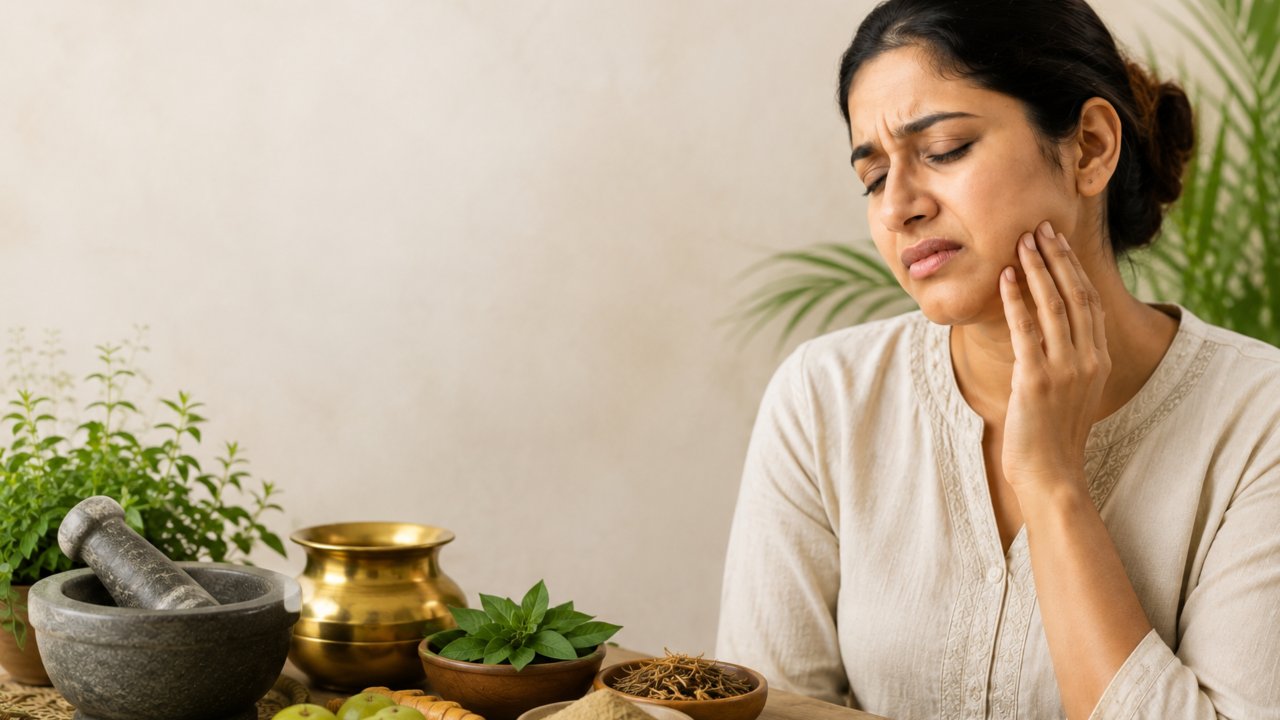 The condition closely mirrors classical Ayurvedic ailments like Hanugraha (lockjaw), Jihvastambha (tongue paralysis), and Mukhadushika (facial distortions). These conditions develop when hyperactive Vata settles into the jaw joint (Hanubandhana), facial nerves, and surrounding oral tissues, restricting normal movement.
Pathologically, aggravated Vata invades the muscle tissue (Mamsa Dhatu) and fat channels (Medovaha Srotas). This dry, cold energy starves the facial tissues of lubrication, causing the micro-channels (Srotas) to constrict, trap metabolic toxins, and trigger involuntary movements.
Treating OMD through Ayurveda requires deep internal and external nourishment (Snehana), localized heat therapy (Swedana), and specialized nasal administration (Nasya). This holistic approach clears clogged pathways, calms the central nervous system, and restores normal jaw function.
Ayurvedic Understanding of OMD
In Ayurveda, the body is governed by Vata, Pitta, and Kapha. Vata, composed of air and space, controls all kinetic force, motor actions, nerve signaling, and muscle movements.
Neurological conditions are categorized as Vata Vyadhi. Because OMD involves hyperactive muscle spasms and involuntary movements, it is recognized as a classical Vata-dominant neurological disorder affecting motor control.
When triggers like trauma or stress aggravate Vata, it invades muscle (Mamsa) and nervous (Majja) tissues. This creates dryness and hyperexcitability, leading to uncoordinated jaw contractions and muscle spasms.
Correlating OMD with Classical Ayurvedic Conditions
To formulate an effective treatment protocol, Ayurveda focuses on the specific manifestation of a deranged dosha within a precise anatomical location. OMD can be directly correlated with three classical Vata conditions:
- Mukhagata Mamsa-Gata Vata (Vata Lodged in Facial Muscles): Mamsagata Vata occurs when vitiated Vata settles within muscle tissue (Mamsa Dhatu). In OMD, it selectively lodges in the facial and mandibular muscles (Mukhagata). This localized accumulation explains the involuntary contractions of the masseter and temporalis muscles, focal dystonic spasms, and restricted jaw movement.
- Pakshavadha / Ekanga Vata (Localized Neurological Dysfunction): Pakshavadha describes conditions where aggravated Vata impairs one section of the body (Ekanga), causing joint destabilization (Sandhi Bandhan) and nerve depletion (Sira Snayu Vishoshya). In OMD, uneven muscle pulling destabilizes the temporomandibular joint (TMJ), while depleted neural pathways lead to continuous, uncoordinated nerve firing.
- Ardita (Facial Distortion): While OMD involves hypertonia rather than flaccid paralysis, its clinical presentation aligns closely with Ardita. Specific OMD subtypes—such as jaw deviation, involuntary tongue protrusion, and facial grimacing—mirror the classical descriptions of facial motor disruption documented in Ardita.
The ancient texts provide a granular breakdown of Ardita symptoms that align directly with the clinical manifestations of OMD:
- ‘Sankochayati ardhe mukham jihvam karoti cha’: Constriction of half the face and tongue. In OMD, this appears as unilateral pulling of the facial and lingual muscles.
- ‘Vakri karoti nasa bhru lalata akshi hanustatha’: Distortion of the nose, eyebrows, forehead, eyes, and lower jaw (Hanu). Jaw deviation is a hallmark feature of OMD.
- ‘Tato vakram vrajati asye bhojanam…’: Structural distortion leading to difficulty swallowing food, directly describing dystonic dysphagia.
- ‘Vakram nasikam stabdham netram kathayatah’: Difficulty speaking (dysphonia), accompanied by fixed eyes or abnormal facial movements when attempting to talk.
- ‘Kshavathuh cha nigruhyate’: Inability to sneeze normally, signaling a breakdown in coordinated orofacial muscle control.
- ‘Dina jihma samutkshipta kalaa sajjati cha asya vak’: Speech that is faint, slurred, interrupted, or distorted, mirroring dystonic dysphonia.
- ‘Dantah chalayanti badhyate shravanau bhidhyate svaraha’: Dental discomfort, ear blockages (a frequent secondary result of TMJ strain), and voice hoarseness.
- ‘…Akshi…shankha shravana ganda ruk’: Pain in the eyes, temples, ears, and cheeks. This reflects the chronic myofascial pain and tension headaches caused by persistent dystonic spasms.
Because OMD causes severe difficulty with speaking and swallowing—drastically reducing quality of life in the same manner as Ardita—the treatment principles validated for Ardita offer a highly effective blueprint for managing OMD.
Hanugraha / Hanu Stambha (Lockjaw / TMJ Disorder)
Hanugraha translates directly to jaw stiffness or lockjaw. This condition is the closest Ayurvedic equivalent to severe OMD, trismus, and advanced TMJ dysfunction.
As a classical Vata Vyadhi, it causes the jaw to remain locked either open or tightly shut, producing intense stiffness and excruciating movement that closely mirrors the tonic phase of oromandibular dystonia.
Meige’s Syndrome
In modern neurology, OMD frequently presents alongside blepharospasm (involuntary eyelid closure) and upper facial spasms—a combination known as Meige’s Syndrome.
In Ayurveda, when vitiated Vata simultaneously afflicts both the upper face (eyes/forehead) and lower face (jaw/mouth), it falls squarely within the broader Ardita Varga (the spectrum of facial Vata disorders), proving that ancient sages recognized segmental dystonia.
Modern Triggers vs. Ayurvedic Causes
The correlation between OMD and Ayurvedic pathology extends deeply into the causes and triggers of the condition.
Key Analytical Insights
- Structural Integrity (Marma): Dental work and head/neck injuries disrupt the Marmas (vital nerve-vascular nodes), mirroring modern neurology’s focus on cranial nerve lesions.
- Functional Wear (Kshaaya): Demanding fine motor control from a compromised jaw continuously drains local tissue strength, triggering sharp spasms.
- Mind-Body Dynamic (Manas): Emotional distress isn’t just an aggravating factor; in Ayurveda, mental agitation directly drives physical Vata imbalance.
Ayurvedic Treatment Principles for Oromandibular Dystonia
Rather than offering temporary symptom suppression via muscle relaxants, Ayurveda manages OMD by correcting the underlying neurological imbalance, nourishing depleted tissues, and restoring proper motor function.
Clinical Takeaways
- Targeted Root Remediation: Removing daily triggers prevents continual Vata aggravation, laying a stable foundation for therapeutic recovery.
- Tissue Rejuvenation (Dhatu Poshana): Warm oils and lipid-rich diets nourish compromised neuromuscular pathways and calm hyperactive nerve impulses.
- Systemic vs. Local Action: Protocols like Basti address Vata at its primary systemic seat (the colon), which indirectly soothes localized cranial and jaw spasms.
Beneficial Therapies
Ayurveda uses targeted Panchakarma procedures to calm hyperactive cranial nerves, relieve muscle rigidity, and pacify local Vata derangement.
External Ayurvedic Therapies (Bahya Chikitsa) for OMD
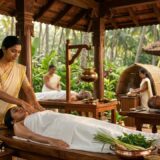
1. Snehana (Oleation): External massage (Abhyanga) using specialized oils like Ksheerabala Taila (nourishes nerves), Mahamasha Taila (strengthens tissues), or Balashwagandha Taila. Applying these generously over the face, jaw joints (TMJ), neck, and scalp enhances local blood circulation, reduces muscle stiffness, and directly calms hyperactive Vata.
2. Swedana (Sudation): Thermal fomentation softens rigid jaw muscles and opens tissue pores for deeper oil absorption.
- Nadi Sweda: Directs targeted herbal steam specifically at the jaw.
- Pinda Sweda: Employs boluses filled with medicated rice or herbs cooked in milk.
- Upanaha Sweda: Uses warm, therapeutic poultice applications.
3. Lepa (Anointment): Topical application of warm herbal pastes, such as Dashamula Lepa, placed directly over the jaw joints to soothe acute inflammation and localized twitches.
4. Murdni Taila (Cranial Oil Therapies): Deeply targeted brain and cranial nerve interventions designed to regulate neurological function:
- Shiro Dhara: A continuous stream of warm medicated oil poured over the forehead to profoundly quiet the central nervous system and blunt stress-induced triggers.
- Shiro Abhyanga: Therapeutic scalp massage.
- Shiro Vasti: Retaining warm medicated oil on the crown within a secure leather cap.
- Shiro Pichu: Placing an oil-soaked cotton pad over the crown of the head.
5. Upanaha (Poultice): Warm, heavy poultices applied directly to affected jaw joints. Classically, poultices made with Anupa Mamsa (meat of marshland animals) are recommended due to their heavy, sweet, and deeply unctuous properties, which effectively ground severe Vata in deep muscle tissue.
Clinical Mechanics
- Direct Neuromuscular Calming: Sustained cranial oil therapies (Shiro Dhara) reduce central nervous system excitability, dampening stress-driven dystonic spasms.
- Tissue Softening: Combining thermal sudation (Swedana) with lipid-rich oils breaks down localized tissue rigidity (Stambha) and eases involuntary muscle contractions.
Internal Ayurvedic Therapies (Abhyantara Chikitsa) for OMD
Internal and systemic Panchakarma procedures directly access the central nervous system and gut-brain axis to reverse neurological degradation, flush metabolic toxins, and restore long-term motor control.
1. Nasya (Nasal Errhines): Because the nasal passage is recognized as the direct doorway to the head (Dwaram Nasyasya), administering nourishing nasal drops (Bruhana Nasya) is the primary intervention for cranial and facial disorders. Oils such as Mahamasha Taila, Ksheerabala Taila 101, Karpasastyadi Taila, or Shadbindu Taila directly stimulate cranial nerves, clear blocked facial channels, and fortify motor neurons governing jaw movement.
2. Basti (Medicated Enemas): Considered the premier treatment for root Vata disorders, enema therapy purifies body channels (Vasthihi Shodhanam Dhamani) and becomes essential for chronic, treatment-resistant OMD.
- Anuvasana / Matra Basti (Lipid-Based): Oil-based enemas using Ksheerabala Taila, Mahamasha Taila, Guggulutiktaka Ghrita, or Mahasneha provide deep, systemic lubrication to the entire nervous system.
- Asthapana Basti (Decoction-Based): Herbal decoction enemas like Erandamuladi Kashaya, Dashamula Ksheera Basti (processed with milk), and Mustadi Yapana Basti remove accumulated metabolic toxins (Ama) across the gut-brain axis, eliminating a key hidden trigger for muscular spasms.
3. Tarpana (Nourishing & Rebuilding Therapies): Chronic dystonia inevitably induces tissue depletion (Dhatu Kshaya). Tarpana saturates both the whole body and local tissues with heavy, unctuous, and sweet substances—such as medicated ghritas, milk, and herbal preparations—to rebuild worn nerve and muscle tissues, strengthening them to resist involuntary motor signals.
Clinical Mechanics
- Direct Cranial Access: Nasya bypasses systemic digestion to deliver lipid-soluble herbal compounds directly to the cranial nerve roots controlling facial and jaw dynamics.
- Gut-Brain Axis Modulation: Basti treats Vata at its primary anatomical seat (the large intestine), clearing systemic metabolic waste (Ama) and stabilizing the neural pathways connected to the brain.
Integrating Protocols & Classical Formulations for OMD
An effective Ayurvedic strategy expands beyond a static protocol by synthesizing frameworks from related neurological conditions.
Oral formulations sustain the structural and systemic improvements initiated by Panchakarma, preventing relapse and offering long-term neuromuscular stability.
1. Integration of Related Classical Protocols: Depending on whether jaw-locking, pain, or pure motor spasm dominates, treatment integrates principles from several disease frameworks:
- Ardita (Facial Palsy) & Ekanga Vata (Focal Neuropathy): Provides targeted protocols for cranial nerve stimulation, facial muscle rehabilitation, and localized nerve damage.
- Pakshavadha (Hemiplegia) & Mukhagata Mamsa-Gata Vata (Facial Muscle Derangement): Directs intensive tissue-nourishing and motor-relearning strategies to stop severe involuntary muscle twitching.
- Hanugraha (Lockjaw) & Sandhigata Vata (TMJ Degeneration/Osteoarthritis): Focuses on structural joint lubrication, releasing spasm-induced lockjaw and improving the range of motion in the temporomandibular joint.
- Vatarakta (Vascular-Inflammatory Pathology): Utilized when severe, burning pain or localized inflammatory vascular involvement accompanies the muscular dystonia.
2. Kashayams (Herbal Decoctions): Concentrated water-soluble extracts that penetrate deep tissues to soothe irritable nerves and clear circulatory blockages.
- Maharasnadi Kashayam: A premier broad-spectrum decoction for complex neurological and musculoskeletal Vata disorders; highly effective at easing chronic facial pain and systemic stiffness.
- Rasonadi Kashayam: Formulated with garlic and digestive herbs to cut through heavy, cold Vata-Kapha blockages, specifically reducing jaw rigidity and severe lockjaw symptoms.
- Gandharvahastadi Kashayam: Clears lower-gastrointestinal Vata and promotes downward movement (Anulomana), which indirectly reduces pressure and tension in the neck, jaw, and lower face.
- Mustadi Marma Kashayam: Explicitly targets and repairs injured or hyper-reactive Marmas (vital nerve-vascular junctions), making it uniquely suited for cranial nerve dystonia.
3. Gulikas & Rasayanas (Herbo-Mineral Formulations): Potent, fast-acting oral medications designed to cross cell membranes and reset central nervous system signaling.
- Vayu Gulika: Acts as an immediate emergency remedy to interrupt acute Vata spikes, sudden facial twitches, and spasms in the throat or jaw.
- Dhanwantaram Gulika: Regulates erratic internal wind (Vata) and restores smooth neuro-motor coordination, particularly when OMD stems from old trauma or long-standing neurological degradation.
- Mahavata Vidhwans Ras: A heavy-duty herbo-mineral compound containing purified metals and mineral salts designed to forcefully disrupt and “destroy” severe, recalcitrant Vata spasms.
- Ekangavira Rasa: Classical formulation specifically indicated for single-limb or localized neurological conditions (Ekanga Vata), directly addressing focal dystonia in the jaw and lip muscles.
4. Arishtas (Fermented Medicated Liquids): Naturally fermented herbal wines containing micro-quantities of self-generated alcohol, allowing active botanical compounds to be rapidly absorbed into the bloodstream and nervous tissue.
- Balarishta: Formulated around Bala (Sida cordifolia), a premier nerve tonic that fortifies motor neurons, repairs damaged nerve sheaths, and restores strength to weakened jaw muscles.
- Ashwagandharishta: Utilizes adaptogenic Ashwagandha to calm the central nervous system, blunt stress-induced twitching, enhance mood, and counter the physical muscle wasting (Dhatu Kshaya) common in chronic OMD sufferers.
Clinical Mechanics & Therapeutic Action
- Synergistic Cross-Mapping: Blending Ardita (nerve focus) with Hanugraha (joint/muscle focus) protocols allows the clinician to simultaneously calm hyperactive cranial motor neurons and unbind the physical temporomandibular joint.
- Sustained Neuromuscular Fortification: While Panchakarma physically clears the channels and relaxes tight muscles, daily oral administration of heavy Kashayams and mineral-rich Rasayanas ensures the central nervous system remains grounded, preventing dystonic spasms from returning once external therapies conclude.
FAQ’s
1. How is Oromandibular Dystonia (OMD) understood in Ayurveda?
OMD is categorized as a Vata Vyadhi (neurological/musculoskeletal disorder driven by vitiated Vata dosha). Specifically, it manifests when aggravated Vata lodges in the facial muscles and cranial nerve junctions (Marmas), causing involuntary muscle contractions, jaw tremors, and rigidity.
2. Which classical Ayurvedic conditions resemble OMD?
While OMD is a modern neurological diagnosis, its clinical presentation aligns closely with several classical Ayurvedic conditions:
- Hanugraha / Hanustambha: Lockjaw, jaw stiffness, and temporomandibular joint rigidity.
- Ardita: Facial paralysis or localized facial muscle spasms.
- Ekanga Vata: Focal neurological disorders affecting a specific body region.
- Jihvastambha: Lingual dystonia, tongue stiffness, or speech distortion.
3. What causes OMD according to Ayurveda?
Primary causative factors include Abhighata (direct physical trauma), Marmaghata (injury to vital cranial nerve nodes, often via invasive dental procedures or head trauma), and chronic overuse or excessive jaw strain. These factors derange local Vata and deplete tissue strength (Kshaaya).
4. Can psychological stress aggravate OMD?
Yes. Ayurveda explains this via Manodoshaja Vata Prakopa—a mechanism where anxiety, emotional distress, and mental strain directly vitiate Vata dosha. This systemic aggravation cascades into localized neuromuscular pathways, exacerbating involuntary jaw twitches and spasms.
5. How does Ayurvedic treatment for OMD differ from modern medicine?
Modern care relies heavily on botulinum toxin injections or systemic muscle relaxants to temporarily mask symptoms. In contrast, Ayurveda targets the root cause by reversing Vata aggravation, purging metabolic toxins (Ama), nourishing depleted nerve and muscle tissues (Dhatu Poshana), and restoring long-term central nervous system regulation.
6. What Panchakarma and external therapies are most effective for OMD?
A comprehensive clinical protocol combines both external (Bahya) and internal (Abhyantara) therapies:
- Nasya (Nasal Errhines): Delivers medicated oils (e.g., Ksheerabala Taila 101) directly through the nasal passage to calm hyperactive cranial motor neurons.
- Shiro Dhara & Murdni Taila: Sustained application of warm medicated oil to the scalp and forehead to soothe central nervous system excitability and blunt stress triggers.
- Basti (Medicated Enemas): Lipid (Anuvasana) and herbal decoction (Asthapana) enemas that eliminate Vata at its primary anatomical seat (the colon), balancing the gut-brain axis.
- Local Snehana & Swedana: Facial oil massage (Abhyanga) followed by targeted herbal steam (Nadi Sweda) or poultices (Upanaha) to soften rigid jaw muscles and restore mobility.
7. Which oral Ayurvedic medicines help sustain OMD recovery?
To preserve the neurological stability achieved through Panchakarma, specific classical formulations are prescribed:
- Decoctions (Kashayams): Maharasnadi Kashayam, Rasonadi Kashayam, and Mustadi Marma Kashayam to reduce deep nerve pain, ease jaw locking, and protect vital cranial Marmas.
- Herbo-Mineral Pills (Gulikas/Rasas): Ekangavira Rasa (indicated for focal neuropathies) and Mahavata Vidhwans Ras (to interrupt severe, acute involuntary muscle contractions).
- Nerve Tonics (Arishtas): Balarishta and Ashwagandharishta to fortify motor neurons, rebuild muscle tone, and prevent muscle wasting (Dhatu Kshaya).
8. What dietary and lifestyle changes (Pathya-Apathya) are recommended for OMD?
Because OMD is a Vata disorder, patients must strictly avoid cold, dry, raw foods, excessive fasting, staying awake late, and exposure to cold winds. The recommended diet consists of warm, grounding, and nourishing meals enriched with healthy fats like cow’s ghee and sesame oil to continuously lubricate the nervous system.
9. How long does Ayurvedic treatment take to show results for OMD?
OMD is a chronic, deep-seated neurological condition, meaning recovery is gradual. While localized therapies like Snehana and Nasya may provide early symptomatic relief from spasms, meaningful structural and neurological repair typically requires several months of consistent Panchakarma cycles combined with daily oral formulations.
10. Can Ayurvedic therapies be used alongside modern treatments like Botox?
Yes. An integrative approach is common. Ayurvedic therapies can be safely administered alongside conventional treatments to extend the symptom-free window between injections, counteract the systemic side effects of muscle relaxants, and gradually restore natural neuromuscular function, which may eventually reduce dependency on botulinum toxin.
Modern medicine offers limited options for Oromandibular Dystonia, relying on temporary botulinum toxin injections or side-effect-heavy muscle relaxants. Ayurveda targets the root cause instead. Rather than treating OMD as an isolated muscle twitch, it treats it as Mukhagata Mamsa-Gata Vata—a neurological disorder linked to Ardita (facial palsy) and Hanugraha (lockjaw)—to restore lasting neuromuscular.
References
- Saraf U, Chandarana M, Divya KP, Krishnan S. Oromandibular Dystonia – A Systematic Review. Annals of Indian Academy of Neurology. 2022;25(1):26–34. PubMed
- France K, Stoopler ET. The American Academy of Oral Medicine Clinical Practice Statement: Oromandibular Dystonia. Oral Surgery, Oral Medicine, Oral Pathology and Oral Radiology. 2018;125(4):283–285. PubMed
- Charak Samhita Research, Training and Development Centre. Vata Dosha. Institute of Teaching and Research in Ayurveda, Jamnagar. Charak Samhita Online
- Charak Samhita Research, Training and Development Centre. Basti (Therapeutic Enema). Institute of Teaching and Research in Ayurveda, Jamnagar. Charak Samhita Online
- Sushruta Samhita. Ardita – Facial Vata Disorder. In: Nidana Sthana. Classical Ayurvedic description of facial disorders and associated Vata manifestations. Sushruta Samhita