Dhanwantaram 101 Thailam: Uses, Benefits, Ingredients & Dosage

In Ayurvedic science, optimal health relies on balancing the three doshas: Vata, Pitta, and Kapha. When Vata—governing movement and the nervous system—becomes imbalanced, it triggers severe neurological, muscular, and skeletal disorders.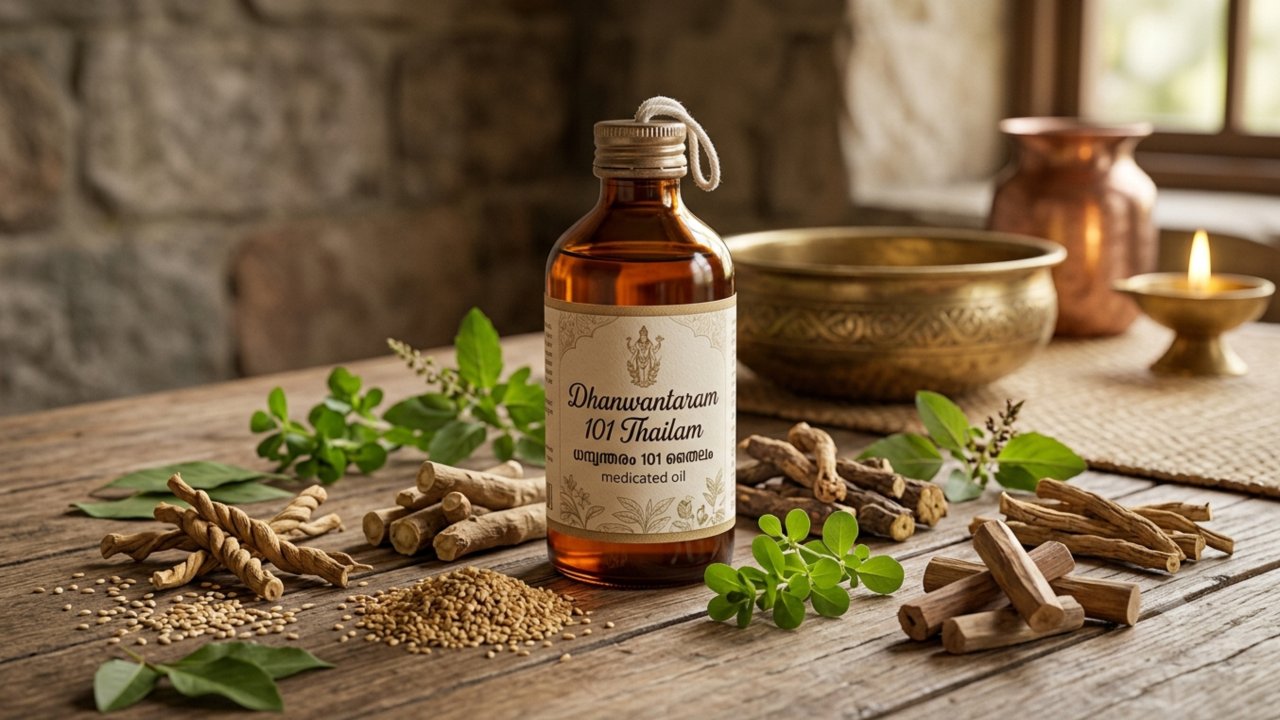 To counter these debilitating issues, ancient Ayurvedic scholars crafted Dhanwantaram 101 Thailam. This masterclass remedy is a highly concentrated, time-tested classical oil engineered specifically to pacify aggravated Vata and restore internal structural stability.
The unique production process involves repeating the traditional oil-fortifying method 101 times. This painstaking cycle dramatically increases its potency, allowing the herbal active compounds to penetrate deeply into the body’s subtle tissues (Dhatus).
Renowned for its restorative properties, this cornerstone remedy rejuvenates the nervous system and strengthens weakened joints. It is widely used to manage chronic arthritis, facilitate postpartum recovery, and treat severe neuromuscular conditions.
What is Dhanwantaram 101 Thailam?
The name Dhanwantaram 101 Thailam carries deep tradition. Dhanwantari” honors the divine deity of medicine in Hindu tradition—regarded as the original propagator of Ayurveda—while “Thailam” is Sanskrit for medicated oil.
The number “101” represents a rigorous, highly specialized manufacturing process. The base sesame oil is repeatedly boiled and infused with a precise mix of herbal decoctions (Kashayam) and pastes (Kalka) exactly 101 times.
This painstaking cycle concentrates the oil’s therapeutic properties, transforming it into a potent formulation capable of penetrating deeply into the body’s tissues (Dhatus).
Rooted in classical texts like the Sahasrayoga and Ashtanga Hridayam, the oil is processed with a milk-based decoction. This technique gives it a rich, deeply nourishing texture (Snigdha) designed specifically to calm severe Vata imbalances.
Uses and Benefits of Dhanwantaram 101 Thailam
Dhanwantaram 101 Thailam is a versatile remedy with a broad spectrum of applications. Its primary action is on the Majja Dhatu (bone marrow and nervous tissue) and Mamsa Dhatu (muscle tissue). Below are its primary therapeutic uses:
1. Neurological Disorders (Vata Vyadhis)
Because Vata dosha governs all nerve impulses and movements in the body, an aggravated Vata leads to neuro-muscular dysfunction. Dhanwantaram 101 Thailam is considered a Rasayana (rejuvenative) for the nervous system. It is highly indicated in:
- Hemiplegia (Pakshaghata): Paralysis of one side of the body, often following a stroke. The oil helps in restoring motor functions by nourishing damaged nerves.
- Facial Palsy (Ardita): Drooping or paralysis of the facial muscles. Nasya (nasal administration) of this oil is particularly effective here.
- Paraplegia: Paralysis of the lower half of the body.
- Neuropathy and Neuralgia: Nerve pain, tingling, and numbness. The oil helps repair the nerve sheath and reduces inflammatory responses around the nerves.
- Tremors: Involuntary shaking, often associated with Parkinson’s disease or severe Vata imbalance, can be managed with regular external and internal use of this oil.
2. Musculoskeletal and Arthritic Conditions
The oil’s anti-inflammatory and analgesic properties make it a go-to remedy for joint and bone issues:
- Osteoarthritis: It lubricates dry, degenerating joints, reducing friction and pain.
- Rheumatoid Arthritis (Amavata): While Rheumatoid arthritis has an Ama (toxic) component, this oil helps pacify the severe Vata pain associated with it.
- Spondylosis: Both cervical and lumbar spondylosis benefit immensely from the oil’s ability to reduce disc degeneration and strengthen spinal ligaments.
- Degenerative Spinal Disorders: It halts the progressive wear and tear of the vertebral column.
- Frozen Shoulder: Restores the range of motion by softening hardened, inflamed shoulder capsules.
- Sciatica: Soothes the inflamed sciatic nerve, reducing the shooting pain that travels down the leg.
3. Pre-Natal and Post-Natal Care
Perhaps one of the most celebrated uses of Dhanwantaram 101 Thailam is in women’s health, specifically surrounding pregnancy.
- Pre-Natal Care: When applied externally as a gentle massage oil, it helps relieve the physical stress of carrying a baby, prevents stretch marks, and prepares the pelvic muscles and birth canal for a smoother delivery. (Note: Internal use during pregnancy must strictly be under medical supervision).
- Post-Natal Recovery (Sutika Kala): After childbirth, a woman’s body is left depleted, and the Vata dosha skyrockets due to the sudden empty space in the womb. Dhanwantaram 101 Thailam is the gold standard for postpartum Abhyanga (oil massage). It relieves back pain, strengthens the abdominal muscles, promotes lactation, helps the uterus shrink back to its normal size, and prevents postpartum depression and joint pains.
4. General Strengthening and Rejuvenation
Beyond treating disease, this oil is used to build strength:
- It significantly increases the strength of bones, muscles, and nerves.
- It improves the general vitality and energy levels of the body, making it excellent for the elderly or those recovering from chronic illnesses.
How to Use Dhanwantaram 101 Thailam
The administration of Dhanwantaram 101 Thailam varies greatly depending on the condition being treated. It can be used externally for massage, internally as plain oil or capsules, or via the nasal route (Nasya).
1. Oral Intake (Plain Oil Form)
If you are using the traditional plain oil formulation indicated for oral consumption:
- Dosage: The standard dose is 8 to 10 drops.
- Frequency: Once or twice a day.
- Timing: It can be taken before or after food, depending on your digestive strength and your doctor’s advice. Ideally, maintain a 15-minute gap between your meal and the oil.
- Crucial Step: The patient must drink a glass of warm water immediately after taking the oil. Warm water acts as an Anupana (carrier), which helps emulsify the fat, leading to quick absorption and preventing a feeling of heaviness in the stomach.
2. Oral Intake (Capsule Form)
For those who find the taste or texture of raw medicated oil unpalatable, modern Ayurvedic pharmacies offer Dhanwantaram 101 in soft gelatin capsules.
- Dosage: The usual dose is 2 capsules, 2 times a day.
- Timing: Before or after food.
- Administration: Just like the plain oil, these capsules should be swallowed with hot water to aid in rapid digestion and absorption.
3. Nasya (Nasal Administration)
Nasya is an Ayurvedic Panchakarma procedure where medicine is instilled into the nasal passages. This is the primary route for treating conditions above the clavicle, such as facial palsy, migraines, and neurological issues of the head.
- Dosage: 6 to 10 drops.
- Method: The person should lie down with their head slightly tilted back. The drops are instilled into each nostril. After instillation, the person should gently sniff the oil inward and massage the nasal bridge and sinus areas.
4. External Application (Abhyanga / Massage)
For arthritis, spondylosis, and postpartum care, external application is highly effective.
- Method: Warm the oil slightly. Apply it generously over the affected areas or the entire body. Massage with firm, upward strokes for 15 to 20 minutes.
- Post-Massage: It is highly recommended to take a warm shower or bath about an hour after the massage to wash off the residual oil, but allowing the skin to absorb the oil for as long as possible yields the best results.
Ingredient in Dhanwantaram 101 Thailam
The potency of Dhanwantaram 101 Thailam lies in its meticulously crafted ingredient list. Each 10 ml of the finished oil is prepared using a complex matrix of herbs, processed in a base of Sesame oil and Milk. Let us break down the key ingredients and their roles:
1. The Base
Tailam (Sesamum indicum – Sesame Oil): Sesame oil is the king of oils in Ayurveda for Vata pacification. It is heavy, unctuous, and penetrates deep into the tissues.
- Paya (Milk – 240.000 ml): Milk acts as a cooling, nourishing, and sweet counterbalance to the heating nature of some herbs. It enhances the rejuvenative (Rasayana) properties of the oil.
2. The Primary Herb
- Bala (Sida cordifolia – 1515.000 g): Notice the massive quantity of Bala compared to other ingredients. “Bala” literally translates to “strength.” It is the premier herb for Vata disorders, acting as a potent nerve tonic, muscle relaxant, and anti-inflammatory agent.
3. The Dashamula Group (The Ten Roots)
A significant portion of the formula consists of the classical Dashamula, a highly revered anti-inflammatory and Vata-pacifying combination of ten roots:
- Panchakantaka (Five tree roots): Vilva (Gmelina arborea), Agnimandha (Premna corymbosa), Patala (Stereospermum colais), Shyonaka (Oroxylum indicum), and Kasmari (Aegle marmelos).
- Panchamula (Five shrub roots): Brihati (Solanum anguivi), Nidigdhika (Solanum virginianum), Salaparni (Pseudarthria viscida), Prisniparni (Desmodium gangeticum), and Gokshura (Tribulus terrestris).
- Function: Together, these roots excel at reducing inflammation, relieving pain, and correcting the downward-moving Vata (Apana Vayu) in the pelvis and lower back.
4. The Nourishing and Rejuvenating Herbs (Rasayanas)
- Asvagandha (Withania somnifera) & Dvikakoli (Withania somnifera sub.): Ashwagandha is a powerful adaptogen that strengthens muscles, reduces stress, and supports nerve regeneration.
- Vari / Dvimeda (Asparagus racemosus – Shatavari): Shatavari is a cooling, nourishing herb that is excellent for the female reproductive system, making it vital for the postpartum benefits of this oil.
- Kshirasukla (Ipomoea mauritiana): A potent rasayana used for vitality and strength.
- Yasti (Glycyrrhiza glabra – Licorice): Soothes inflammation, heals mucous membranes, and harmonizes the effects of other herbs.
5. The Triphala Group (Detoxification and Gentle Laxative)
- Haritaki (Terminalia chebula), Amalaki (Phyllanthus emblica), and Vibhitaki (Terminalia bellirica): The three fruits of Triphala are included to ensure that while the oil is heavy and nourishing, it does not cause blockages in the body channels (Srotas). They gently detoxify the system and provide high levels of Vitamin C and antioxidants.
6. The Supporting Cast (Specific Action Herbs)
- Daru (Cedrus deodara – Deodar Cedar): Highly effective for joint pain and bone strength.
- Manjishta (Rubia cordifolia): A powerful blood purifier that helps clear toxins from the tissues.
- Chandana (Santalum album – Sandalwood): Provides a cooling effect, calming the nervous system.
- Sariva (Hemidesmus indicus): Nourishes the blood and has a soothing, demulcent action.
- Kustha (Saussurea costus): Though used in a very minute quantity (0.026 g), it is a potent herb for respiratory and nervous system health.
- Tagara (Valeriana jatamansi): A well-known nervine sedative that helps with tremors, spasms, and insomnia.
- Punarnava (Boerhavia diffusa): Excellent for reducing edema (swelling) around joints and kidneys.
- Vacha (Acorus calamus): A powerful brain tonic that stimulates intellect and clears the sensory channels (crucial for Nasya therapy).
- Grains and Salts: Yava (Barley), Kola (Ziziphus), Kulattha (Horse gram), Saindhava (Rock Salt), and Kalanusari (Fenugreek) provide essential minerals, aid in digestion, and help in the bio-availability of the active compounds.
- Aromatics: Ela (Cardamom), Twak (Cinnamon), and Patra (Cinnamomum tamala) improve the aroma, taste, and digestibility of the oil.
- Rasa (Commiphora myrrha – Myrrh): A resin that excels at reducing deep-seated joint and bone pain.
Potential Side Effects and Precautions
Dhanwantaram 101 Thailam is incredibly safe when used correctly under the guidance of a qualified Ayurvedic practitioner. However, like all potent medicines, there are specific precautions to keep in mind:
External Application
- There are no known side effects when this oil is applied externally. It is safe for topical use on adults and children alike (though children should be supervised).
Oral Intake Precautions
- Cholesterol and Blood Pressure: People with high cholesterol and high blood pressure should take extra precaution while taking high dosages of this medicine orally. Because the base is sesame oil, taking massive doses over a long period could theoretically impact lipid profiles. However, in the prescribed normal doses (8-10 drops), it does not increase cholesterol and is perfectly safe.
- Digestive Overload (Over-dosage): Taking too much oil internally can overwhelm the digestive fire (Agni), leading to indigestion, nausea, or loose stools. Stick strictly to the prescribed dose.
- The “Frozen Food” Rule: Frozen food, cold drinks, and ice cream should be strictly avoided soon after, or before, taking this oil orally. Cold substances counteract the warming, mobilizing action of the oil and will directly cause indigestion and an aggravation of Vata.
- The “Hot Water” Rule: Always follow oral ingestion with a glass of hot water. Skipping this can lead to a heavy feeling in the stomach and poor absorption.
- Pregnant Women: While it is widely used externally during pregnancy, oral intake of Dhanwantaram 101 Thailam by pregnant women should be done only under strict medical supervision.
- Children: Oral intake for children should be determined and monitored by a pediatric Ayurvedic doctor.
Drug Interactions: Can You Combine It With Other Medicines?
One of the most common questions patients have is how Ayurvedic oils interact with their existing modern medications or supplements. Here is the breakdown:
1. With Western (Allopathic/Modern) Medicines
Seek your doctor’s advice if you are taking this product along with other western medicines. While Dhanwantaram 101 Thailam is generally safe, some Ayurvedic herbs can interact with modern medicines (for example, enhancing or diminishing the efficacy of drugs for blood pressure or blood sugar).
- The Golden Rule of Timing: If both Ayurvedic and allopathic medicines are advised together, it is best to take the allopathic medicine first. Wait for 30 minutes, and then, after a gap of another 15-30 minutes, take the Ayurvedic medicine. This prevents any chemical interaction in the digestive tract. Always follow the specific intervals directed by your physician.
2. With Homeopathic Medicine
Yes, it is safe. This product does not react with homeopathic medicine. Because homeopathy utilizes highly diluted energetic signatures and Ayurveda relies on physical phytochemicals, they operate on different pathways and do not contradict one another. However, if you are sensitive, maintaining a brief time gap is a good habit.
3. With Dietary Supplements (Multivitamins, Omega 3, etc.)
Yes, generally safe. This product goes well with most dietary supplements like Omega-3 fatty acids, calcium, or multivitamin tablets.
- Caution: If you are taking multiple supplements containing heavy oils or fats (like large doses of Omega-3, fish oil, or Vitamin E) alongside the oral use of this oil, please consult your doctor for an opinion to avoid fat malabsorption or digestive discomfort.
Where to Buy and How to Choose the Right Brand
When looking to purchase Dhanwantaram 101 Thailam, quality is paramount. Because the “101 times” processing is labor-intensive and expensive, the market is flooded with cheap imitations that are processed only a handful of times and lack the true therapeutic potency.
1. Look for Classical Text References
Authentic brands will always print the classical reference on the label. Look for “Sahasrayoga Tailayoga Prakarana 1” or “Ashtanga Hridayam” on the packaging. This proves the manufacturer is adhering to the exact traditional recipe, not a proprietary, diluted version.
2. Check for GMP Certification
Ensure the brand manufactures the oil in a Good Manufacturing Practices (GMP) certified facility. This guarantees hygiene, quality control, and the absence of heavy metals or microbial contamination.
3. Trusted Ayurvedic Brands
While availability may vary by country, some of the most reputable classical Ayurvedic pharmacies that produce authentic Dhanwantaram 101 Thailam include:
- Kottakkal Arya Vaidya Sala: Perhaps the most trusted name in classical Ayurveda worldwide.
- Vaidyaratnam Oushadhasala: Known for strict adherence to classical texts.
- SNDT Ayurveda Pharmacy: Highly respected for their Panchakarma oils.
- AVP (Arya Vaidya Pharmacy): Widely available and rigorously tested.
- Kerala Ayurveda: Excellent for high-quality massage and therapeutic oils.
4. Form Factor
Decide whether you want the traditional liquid oil or the modern capsule form. The liquid oil is versatile (can be used for massage, Nasya, and oral intake) and is more cost-effective. The capsule form is best if you only plan to take it orally and want to avoid the taste.
Where to Buy?
You can purchase these from the official websites of the brands mentioned above, from specialized Ayurvedic clinics, or from reputable online herbal pharmacies like 1mg, Pure Herbal Ayurved Clinic, or Amazon (ensure you are buying directly from the brand’s official storefront to avoid fakes).
Dhanwantaram 101 Thailam represents the pinnacle of classical Ayurveda, delivering intense nourishment (Snehana) deep into the body’s tissues (Dhatus) to pacify severe Vata imbalances. By soothing the nervous system, relieving chronic joint pain, and accelerating postpartum recovery, this potent formulation remains an irreplaceable cornerstone for restoring physical strength, mobility, and long-term vitality.
Disclaimer: This article is for educational purposes only and is not intended to replace professional medical advice, diagnosis, or treatment. Always seek the advice of your physician or other qualified health provider with any questions you may have regarding a medical condition or before starting any new medication or supplement.
References
- Vagbhata. Ashtanga Hridayam, Sharira Sthana, Garbhavyapad Prakarana. Classical reference for Dhanwantharam Tailam and its traditional indications. Sahasrayoga – Dhanwantharam Thailam
- Sahasrayoga, Tailayoga Prakarana, 1. Classical Ayurvedic formulation reference for Dhanwantharam Thailam, including its ingredients, preparation and traditional uses. Sahasrayoga – Dhanwantharam Thailam
- Ayurved Bharati. In-Depth Profile: Dhanwantharam Thailam. Discussion of the classical formulation, Ayurvedic uses, ingredients and references to Sahasrayogam and Ashtanga Hridayam. Ayurved Bharati
- Kottakkal Arya Vaidya Sala. Dhanwantharam (101). Product information relating to the 101-avartana preparation and traditional Ayurvedic formulation. Kottakkal Arya Vaidya Sala
- Arya Vaidya Pharmacy (AVP). Dhanwantharam 101. Product information on the Dhanwantharam 101 preparation, ingredients and traditional processing method. Arya Vaidya Pharmacy
- Arya Vaidya Pharmacy (AVP). Dhanwantharam 101 Capsules. Product information and manufacturer-provided guidance for the capsule formulation. Arya Vaidya Pharmacy
- Art of Vedas. Dhanwantharam Thailam – Classical Ayurvedic Vata Oil. Overview of the classical formulation, ingredients, traditional indications and references to Ashtanga Hridayam and Sahasrayogam. Art of Vedas
- Art of Vedas. Dhanwantharam Thailam | Pregnancy Oil. Information concerning the traditional use of Dhanwantharam Thailam in pregnancy and postnatal Ayurvedic care, including its classical references and ingredients. Art of Vedas
- National Library of Medicine, National Center for Biotechnology Information. Ayurvedic formulations and their traditional indications. Reference material documenting Dhanwantaram Tailam as an external Ayurvedic formulation and its traditional Vata-related applications. PubMed Central