Trikatu Churna: Benefits, Ingredients, Dosage, Uses & Side Effects

Ayurveda views optimal health as a delicate balance between body, mind, and nature. Central to this state is Agni, the internal digestive fire. A strong Agni protects the body, boosting immunity and ensuring mental clarity.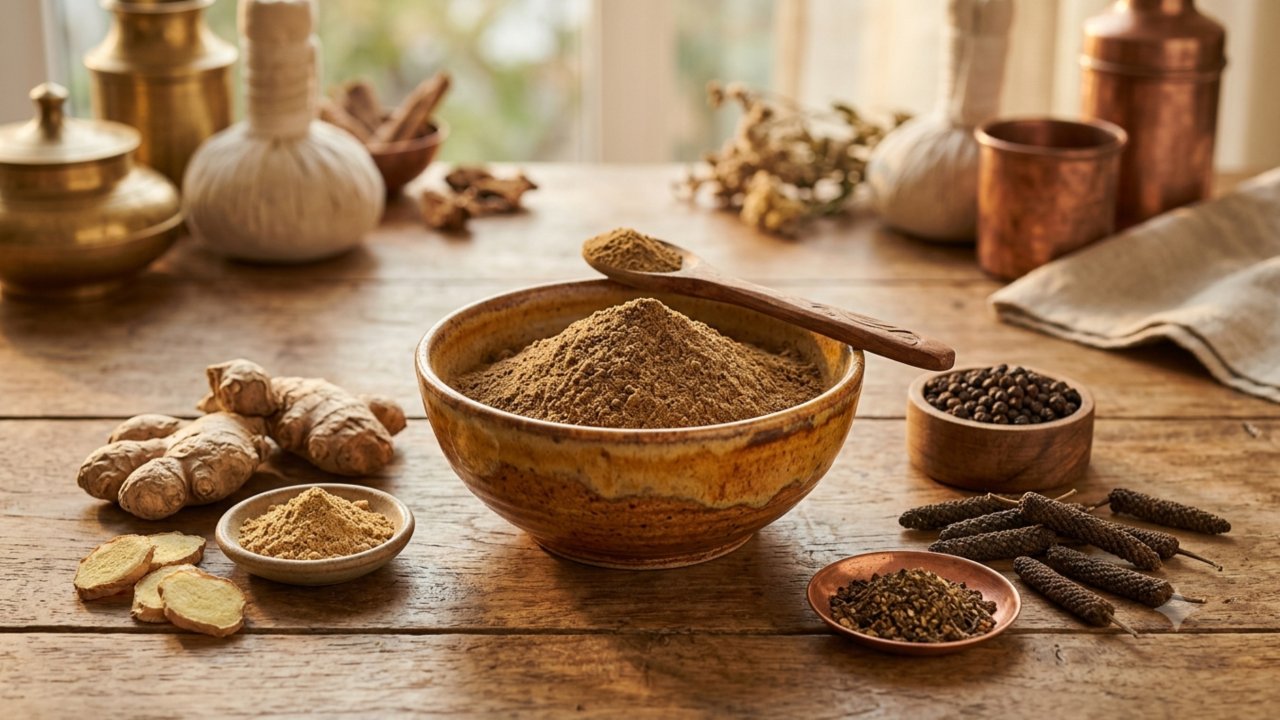 Conversely, when Agni becomes sluggish or weak, digestion fails. The body then accumulates Ama, a toxic metabolic waste product. This build-up disrupts internal harmony, creates imbalances, and ultimately acts as the primary seed for disease.
To combat sluggish digestion, Ayurveda relies heavily on Trikatu Churna. This famous, highly potent polyherbal blend stands out in traditional pharmacopeia for its ability to clear stagnation, restore metabolic balance, and vigorously revitalize body systems.
Translating from Sanskrit as “three pungents,” Trikatu combines three fiery herbs. Working together synergistically, they rekindle the digestive fire, clear congested respiratory pathways, and dramatically increase the bioavailability and absorption of other therapeutic herbal formulations.
What Is Trikatu?
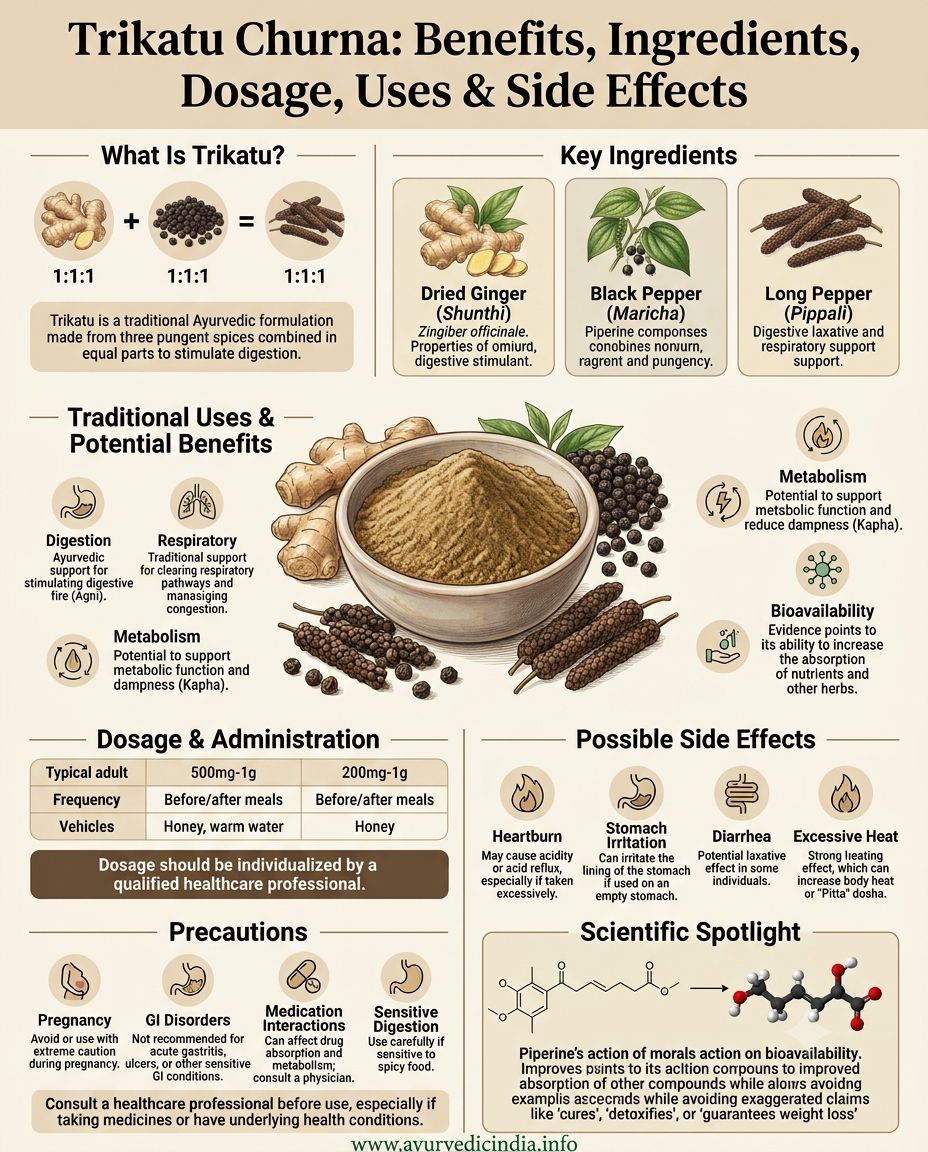
Trikatu—often called the “Power Trinity” or “Three Pungents”—is a traditional Ayurvedic formulation made of equal parts black pepper (Piper nigrum), long pepper (Piper longum), and dry ginger (Zingiber officinale).
Known by names like Katutraya churna or Trikatukam churnam, it acts as a rejuvenative tonic designed to balance Kapha and Vata doshas. By stimulating Agni (the digestive fire), it enhances nutrient absorption, clears metabolic toxins (Ama), and serves as a bio-enhancer for other herbal treatments.
The Ingredients of Trikatu Churna
The brilliance of Trikatu lies in its simplicity. It consists of exactly three dried spices, each contributing its unique phytochemical profile and energetic properties to the blend. In traditional Ayurvedic formulations, these three ingredients are combined in equal parts (1:1:1 ratio).
1. Shunthi (Zingiber officinale) – Dried Ginger
While fresh ginger (Ardraka) is renowned for its own medicinal properties, it is the dried form (Shunthi or Nagara) that is used in Trikatu. The drying process fundamentally alters the chemical composition of the root. Fresh ginger contains gingerols, which are converted into shogaols upon drying. Shogaols are significantly more pungent and possess stronger anti-inflammatory and digestive properties.
- Ayurvedic Properties: Guna (Quality) – Laghu (light), Ruksha (dry); Rasa (Taste) – Katu (pungent); Virya (Potency) – Ushna (hot); Vipaka (Post-digestive effect) – Madhura (sweet).
- Role in Trikatu: Shunthi acts as a primary stimulant for the gastrointestinal tract. It kindles Agni, helps in the assimilation of nutrients, and effectively targets respiratory congestion by expelling mucus.
2. Maricha (Piper nigrum) – Black Pepper
Often referred to as the “King of Spices,” black pepper is a staple in kitchens worldwide, but its medicinal value in Ayurveda is unparalleled. The key bioactive alkaloid in black pepper is piperine, which is responsible for its characteristic pungency.
- Ayurvedic Properties: Guna – Laghu (light), Teekshna (sharp); Rasa – Katu (pungent); Virya – Ushna (hot); Vipaka – Katu (pungent).
- Role in Trikatu: Maricha is the ultimate Yogavahi—a bioavailability enhancer. Piperine inhibits certain enzymes in the liver and intestines that break down drugs and nutrients, thereby allowing more of the active compounds to enter the bloodstream. It also directly stimulates the secretion of digestive enzymes.
3. Pippali (Piper longum) – Long Pepper
Pippali looks like a tiny, caterpillar-like spike and is slightly sweeter and more heating than black pepper. Its primary active constituent is piperlongumine. Pippali is unique because, unlike other pungent herbs that can be drying, Pippali has a Snigdha (unctuous/oily) quality and a Madhura (sweet) Vipaka.
- Ayurvedic Properties: Guna – Laghu (light), Snigdha (unctuous); Rasa – Katu (pungent); Virya – Anushna (slightly hot/warm); Vipaka – Madhura (sweet).
- Role in Trikatu: Pippali is a powerful rejuvenator (Rasayana), specifically for the respiratory and digestive systems. It excels at dilating the bronchioles, making breathing easier. Furthermore, its sweet post-digestive effect ensures that while it burns away toxins, it does not deplete the body’s essential tissues (Dhatus).
The Synergistic Magic: When combined, these three herbs do not just add their individual effects together; they multiply them. Shunthi provides the foundational heat, Maricha ensures the active compounds are absorbed, and Pippali directs the energy toward rejuvenation and respiratory clearance.
Ayurvedic Pharmacology and Mechanism of Action
From an Ayurvedic perspective, Trikatu operates by adjusting the three biological energies (doshas) through its core mechanisms:
Agni Deepana (kindling the metabolic fire) and Ama Pachana (metabolizing accumulated toxins). By restoring optimal digestive function, it prevents the formation of new metabolic waste while actively clearing old deposits from the tissues.
Its pharmacological profile is defined by four core attributes: Katu (pungent taste), Ushna (hot potency), Laghu (lightness), and Ruksha (dryness). These qualities determine its specific action on each dosha:
1. Kapha Dosha (Pacified): Kapha is naturally heavy, cold, slow, and moist—governing mucus, body mass, and structural fluids. Trikatu’s intense heat, lightness, and drying attributes directly counter these qualities.
It acts systematically to cut through dense Kapha, melt excess adipose tissue (fat), scrape away arterial stagnation, and dry up chronic mucus accumulation in the lungs and sinuses.
2. Vata Dosha (Pacified): Vata is defined by cold, dry, light, and erratic properties, often causing sluggish or irregular digestion, trapped gas, and cold extremities.
The strong Ushna (warming) effect of Trikatu counters Vata’s coldness, while its sharp nature directs the downward flow of Vata energy (Vata Anulomana), easing abdominal distension, intestinal cramping, and bloating.
3. Pitta Dosha (Aggravated): Pitta consists of fire and water, giving it hot, sharp, and acidic characteristics. Because Trikatu shares these exact fiery, pungent properties, it can easily over-stimulate Pitta.
Unmonitored or excessive use can trigger acid reflux, heartburn, internal heat, hyperacidity, skin rashes, or inflammatory conditions in Pitta-dominant individuals.
Method of Preparation: How to Make Trikatu Churna at Home
While Trikatu Churna is widely available in Ayurvedic pharmacies and online, preparing it at home ensures absolute purity and potency, provided you source high-quality raw ingredients.
Ingredients:
- High-quality dried ginger powder (Shunthi): 100 grams
- Freshly ground black pepper powder (Maricha): 100 grams
- Dried long pepper powder (Pippali): 100 grams
Note: It is highly recommended to buy whole dried Shunthi, whole black peppercorns, and whole dried Pippali, and grind them yourself. Pre-ground spices lose their volatile oils and pungency rapidly.
Equipment Needed:
- A clean, dry grinding machine (blender or spice grinder)
- A fine mesh sieve (preferably a muslin cloth or a fine stainless steel sieve with tiny holes)
- An airtight glass jar for storage
Step-by-Step Method:
- Inspection and Cleaning: Inspect the whole spices for any impurities, small stones, or mold. Do not wash them, as moisture will ruin the churna. Simply wipe them with a dry cloth if needed.
- Sun-Drying (Optional but recommended): Even if the spices seem dry, placing them in direct sunlight for 2-3 hours ensures absolutely zero moisture content, which is critical for a long shelf life.
- Grinding: Grind each spice individually. Start with dried ginger as it is the hardest. Grind it to a fine powder. Repeat this process separately for black pepper and long pepper.
- Sifting: This is a crucial step. Pass each individually ground powder through the fine mesh sieve. The particles that do not pass through the sieve should be collected and ground again. Repeat this process until almost all the spice passes through the sieve, yielding a very fine, silky powder.
- Mixing: Weigh the three finely sifted powders to ensure you have equal proportions (e.g., 100g each). Combine them in a large, dry, clean bowl.
- Blending: Mix the powders thoroughly using your dry hands or a dry wooden spoon. Mix for at least 10-15 minutes to ensure the three powders are homogeneously blended. The color should be a uniform light brownish-grey.
- Storage: Transfer the final Trikatu Churna into an airtight glass jar. Keep it away from direct sunlight, heat, and moisture. When stored properly, Trikatu Churna can retain its potency for up to 6 to 12 months.
Health Benefits of Trikatu Churna
Trikatu is classified as a Yogavahi and an Anulomana (that which takes the downward path, promoting excretion). Its benefits span across multiple physiological systems.
1. Gastrointestinal Health and Digestion
This is the primary domain of Trikatu. It is prescribed for Mandagni (sluggish digestion).
- Stimulates Enzymatic Secretion: It stimulates the liver and pancreas to secrete digestive enzymes, bile, and gastric juices, facilitating the smooth breakdown of proteins, fats, and carbohydrates.
- Relieves Flatulence and Bloating: By improving digestion, it prevents the fermentation of food in the gut, thereby stopping the formation of gas.
- Treats Constipation: Because it kindles the digestive fire in the intestines (Samjna Agni), it promotes peristalsis and helps in effortless evacuation.
- Appetite Stimulant: A pinch of Trikatu taken before meals acts as an excellent appetizer, particularly for individuals recovering from illness who have lost their desire to eat.
2. Respiratory System Health
In Ayurveda, most respiratory issues (like asthma, bronchitis, and chronic cough) are rooted in Kapha accumulation in the lungs. Trikatu is a primary ingredient in famous Ayurvedic respiratory formulations like Talisadi Churna and Sitopaladi Churna.
- Expectorant Action: The hot and sharp qualities liquefy thick, sticky mucus (Kapha), making it easier to cough up and expel.
- Bronchodilation: Pippali, in particular, helps relax the smooth muscles of the bronchioles, easing breathing in asthmatic patients and reducing wheezing.
- Treats Rhinitis and Sinusitis: Trikatu helps clear the nasal passages and reduces the inflammation of the mucous membranes in the sinuses.
3. Weight Management and Anti-Obesity
Obesity in Ayurveda is known as Medoroga or Sthoulyya, primarily caused by sluggish digestion and an excess of Kapha and Meda (fat) dhatu.
- Lipid Metabolism: Trikatu enhances the body’s basal metabolic rate (BMR). It helps in the breakdown of adipose tissue (fat) and prevents the accumulation of new fat.
- Scraping Action (Lekhana Karma): Its dry and light qualities have a “scraping” effect on the fat tissues, aiding in weight loss.
- Detoxification of Fat Tissues (Meda Dhatu Agni): It burns the toxins stored within the fat cells, which is often the underlying cause of stubborn weight gain.
4. Enhances Bioavailability (The Yogavahi Effect)
This is perhaps Trikatu’s most scientifically validated benefit. The piperine in Maricha inhibits human P-glycoprotein and CYP3A4 enzymes in the intestines and liver. These enzymes are responsible for metabolizing and excreting drugs and nutrients.
- Turmeric (Curcumin): Curcumin has poor bioavailability on its own. Taking it with Trikatu (or just black pepper) increases its absorption by up to 2,000%.
- Other Herbs: Ayurvedic practitioners almost always add a pinch of Trikatu to other herbal formulations—whether it is Ashwagandha for stress, Guggulu for joints, or Shatavari for reproduction—to ensure the active ingredients reach the target tissues in therapeutic concentrations.
5. Metabolic Health and Blood Sugar Regulation
By enhancing cellular metabolism, Trikatu plays a role in managing metabolic syndrome.
- Insulin Sensitivity: Some studies suggest that piperine and gingerol can help improve insulin sensitivity, aiding in the better utilization of glucose by the cells.
- Lipid Profile: Regular use under supervision has been shown to lower LDL (bad cholesterol) and triglycerides while maintaining or slightly boosting HDL (good cholesterol), largely due to its effect on fat metabolism in the liver.
6. Immunity and Detoxification
A strong digestive fire is the root of strong immunity (Vyadhikshamatva).
- Clears Ama: By digesting the undigested metabolic waste (Ama), Trikatu removes the root cause of most autoimmune and inflammatory diseases.
- Anti-microbial: The essential oils in these spices possess natural antibacterial, antiviral, and antifungal properties, helping the body fight off mild infections.
7. Pain Relief and Anti-Inflammatory Action
Despite being heating, Trikatu is an excellent anti-inflammatory agent, particularly for conditions rooted in cold and dampness.
- *Joint Pain and Arthritis: In Amavata (Rheumatoid arthritis), where undigested toxins (Ama) accumulate in the joints, Trikatu helps digest these toxins, thereby reducing swelling, stiffness, and pain.
- Headaches: For headaches caused by sinus congestion or indigestion, Trikatu powder mixed with water and applied as a paste on the forehead can provide rapid relief.
8. Reproductive Health
Trikatu is beneficial for female reproductive health, particularly when symptoms are triggered by Kapha or cold.
- Dysmenorrhea: It can relieve painful menstruation caused by sluggish circulation and cold uterus by improving blood flow and inducing warmth.
- PCOS Management: Polycystic Ovary Syndrome often presents with obesity, insulin resistance, and Kapha dominance. Trikatu’s role in weight management and metabolic enhancement makes it a supportive adjunct therapy.
9. Skin Health
Skin diseases in Ayurveda (like eczema, psoriasis, and acne) are often seen as an outward manifestation of internal toxicity (Ama) and impaired digestion.
- Blood Purification: By correcting digestion and liver function, Trikatu indirectly purifies the blood (Rakta shodhana), leading to clearer skin.
- Fungal Infections: Its antifungal properties make it useful in treating certain topical fungal issues when used in pastes, though internal use is more common for systemic skin health.
Dosage & Administration
Because Trikatu is potent and heating, proper dosing and vehicle selection (Anupana) are critical to target specific conditions and prevent irritation.
- Standard Adult Dosage: 125 mg to 500 mg (approx. 1/4 to 1/2 tsp) once or twice daily.
- Child Dosage (Ages 5+): 60 mg to 125 mg (a pinch) once daily, strictly under medical supervision.
Timing & Duration
- Before Meals (15–30 mins): Best for weight loss, sluggish appetite, and boosting low digestive fire (Agni).
- After Meals: Ideal for immediate post-meal heaviness, flatulence, or throat congestion.
- Acute Conditions (Cold/Cough): Use for 3 to 7 days (up to 3 times daily).
- Chronic Conditions (Obesity/High Cholesterol): Use for 4 to 8 weeks maximum. Take a 1-week break every 4–6 weeks to prevent Pitta aggravation and excessive tissue dryness.
Potential Side Effects and Precautions
Potential Side Effects & Precautions
Despite being a natural polyherbal formulation, Trikatu’s intense heat (Ushna) and sharpness (Teekshna) make it a potent medicine that can cause adverse reactions if misused, taken in excess, or used for prolonged periods.
Common Side Effects (Overdose or Prolonged Use)
- Gastrointestinal Irritation: Excessive acid production leading to acid reflux, severe heartburn, gastritis, or a burning sensation in the stomach, chest, or throat.
- Elimination & Urinary Burning: A distinct burning sensation during bowel movements or urination; excessive doses may act as a harsh purgative causing loose stools, diarrhea, and abdominal cramps.
- Skin & Blood Reactions: Excess heat in the blood (Rakta Pitta) can trigger hives, redness, itching, skin breakouts, or aggravate bleeding disorders (e.g., nosebleeds, bleeding gums, menorrhagia).
- Systemic Dryness: Extended use depletes body fluids, leading to dry mouth, cracked lips, dehydrated skin, and brittle hair.
Absolute Contraindications (Who Should Avoid Trikatu)
Critical Drug Interactions
Trikatu contains natural bio-enhancers (like piperine) that dramatically increase intestinal absorption and serum concentration of pharmaceuticals.
- High-Risk Medications: Blood thinners (e.g., Warfarin), anti-diabetic drugs, anti-hypertensives, and immunosuppressants. Increased absorption can inadvertently lead to a pharmaceutical overdose.
- Safety Protocol: Maintain a minimum 1- to 2-hour gap between consuming Trikatu and taking any allopathic medication, and always consult a healthcare provider before combining them.
The Scientific Perspective: Modern Research on Trikatu
Modern pharmacological research increasingly validates the traditional Ayurvedic applications of Trikatu, attributing its therapeutic mechanisms to key active compounds like piperine (from peppers) and gingerols/shogaols (from dry ginger).
Key Scientific & Clinical Findings
1. Bioavailability Enhancement (The Bio-Enhancer Effect):
Piperine is widely recognized in nutraceutical science for its ability to alter intestinal epithelial cell membrane permeability and inhibit drug-metabolizing enzymes.
This significantly increases the absorption and serum concentrations of co-administered nutrients and bioactive compounds, such as curcumin, resveratrol, and CoQ10.
2. Gastrointestinal & Metabolic Support:
Research published in biomedical literature (including the Journal of Ethnopharmacology) confirms that Trikatu stimulates gastric secretions, accelerates digestive transit time, and exhibits anti-emetic (anti-nausea) properties.
Clinical trials measuring metabolic outcomes report noticeable reductions in Body Mass Index (BMI), total cholesterol, and triglycerides, alongside improvements in HDL cholesterol over 8- to 12-week intervention periods.
3. Respiratory & Airway Function:
In vivo and animal model studies indicate that the volatile oils and phytochemicals in Trikatu exert bronchodilatory and anti-inflammatory effects on bronchial pathways.
This helps relax airway smooth muscle and clear congestion, providing a scientific basis for its traditional use in managing respiratory conditions.
FAQ’s
1. What is Trikatu Churna?
Trikatu Churna is a traditional Ayurvedic herbal formulation made from equal parts of dried ginger (Zingiber officinale), black pepper (Piper nigrum), and long pepper (Piper longum).
2. What are the main benefits of Trikatu Churna?
Traditionally, Trikatu is used to support digestion, appetite, respiratory health, and metabolism. Some of its ingredients, particularly piperine and ginger constituents, have also been investigated for their pharmacological effects.
3. What are the ingredients in Trikatu Churna?
The traditional formulation contains three ingredients: Shunthi (dried ginger), Maricha (black pepper), and Pippali (long pepper), generally combined in equal proportions.
4. How does Trikatu Churna support digestion?
In Ayurveda, Trikatu is traditionally described as stimulating Agni, or digestive fire. Modern research on its individual ingredients suggests effects on gastrointestinal function, although evidence for Trikatu as a whole remains limited.
5. Can Trikatu Churna help with weight loss?
Trikatu is traditionally used to support metabolism and manage excess Kapha and Meda. However, there is insufficient high-quality clinical evidence to consider Trikatu a proven weight-loss treatment.
6. Does Trikatu Churna improve the absorption of other substances?
Piperine, a major compound in black pepper, can increase the bioavailability of certain substances. A human study found that piperine substantially increased curcumin bioavailability, but this should not be interpreted as proof that Trikatu increases absorption of every medicine or supplement.
7. What is the usual dosage of Trikatu Churna?
Dosage varies according to the formulation, individual health status, age, and intended use. Because Trikatu is pungent and heating, it is best to follow the recommendation of a qualified Ayurvedic practitioner or healthcare professional rather than relying on a universal dose.
8. What are the possible side effects of Trikatu Churna?
Excessive or unsuitable use may cause heartburn, stomach irritation, abdominal discomfort, diarrhea, or a burning sensation. People who are sensitive to spicy foods may be particularly prone to gastrointestinal irritation.
9. Who should avoid Trikatu Churna?
People with conditions such as significant acid reflux, peptic ulcers, or sensitivity to pungent spices should seek professional advice before using it. Pregnant or breastfeeding individuals and people taking prescription medicines should also consult a healthcare professional.
10. Can Trikatu Churna interact with medicines?
Yes. Piperine can affect drug-metabolizing enzymes and transport proteins, potentially changing the exposure to some medicines. Anyone taking prescription medication should consult a healthcare professional before using concentrated Trikatu preparations.
11. Can Trikatu Churna be taken every day?
Daily use should not automatically be assumed to be appropriate. The suitable duration depends on the person’s health, dose, formulation, and purpose of use. Professional guidance is recommended for prolonged use.
12. Is Trikatu Churna scientifically proven?
Research supports biological effects of individual Trikatu ingredients, particularly ginger and piperine. However, evidence for Trikatu Churna itself is more limited, and traditional Ayurvedic concepts such as Agni and Ama should not be presented as established biomedical mechanisms.
Trikatu Churna is a masterclass in ancient herbal science. It elevates three everyday kitchen staples into an extraordinary wellness tool through the power of strategic synergy. From blowing away winter sluggishness and firing up a slow metabolism for weight loss, to supercharging the absorption of other remedies, Trikatu’s versatility makes it an indispensable Ayurvedic essential.
References
- Shoba G, Joy D, Joseph T, Majeed M, Rajendran R, Srinivas PS. Influence of piperine on the pharmacokinetics of curcumin in animals and human volunteers. Planta Medica. 1998;64(4):353–356. PubMed
- Bhardwaj RK, Glaeser H, Becquemont L, Klotz U, Gupta SK, Fromm MF. Piperine, a major constituent of black pepper, inhibits human P-glycoprotein and CYP3A4. Journal of Pharmacology and Experimental Therapeutics. 2002. PubMed
- Han HK. Piperine-mediated drug interactions and formulation strategy for piperine: recent advances and future perspectives. Expert Opinion on Drug Metabolism & Toxicology. 2018. PubMed
- Semwal RB, Semwal DK, Combrinck S, Viljoen AM. Gingerols and shogaols: Important nutraceutical principles from ginger. Phytochemistry. 2015;117:554–568. PubMed
- Dalsasso RR, Valencia GA, Monteiro AR. Impact of drying and extraction processes on the recovery of gingerols and shogaols, the main bioactive compounds of ginger. Food Research International. 2022;154:111043. PubMed
- Mao QQ, Xu XY, Cao SY, et al. Bioactivities and pharmacological effects of 6-shogaol: A review. Frontiers in Pharmacology. 2019. PubMed
- Maghraby YR, Labib RM, Sobeh M, Farag MA. Gingerols and shogaols: A multi-faceted review of their extraction, formulation, and analysis in drugs and biofluids to maximize their nutraceutical and pharmaceutical applications. Food Chemistry: X. 2023;20:100947. PubMed