
Boswellia Serrata (Shallaki): Ayurvedic Benefits & Uses

Boswellia serrata, known as Shallaki in Ayurveda, is a medicinal tree found in India’s arid regions. Its aromatic resin has been valued for centuries in traditional Ayurvedic practices and natural wellness therapies.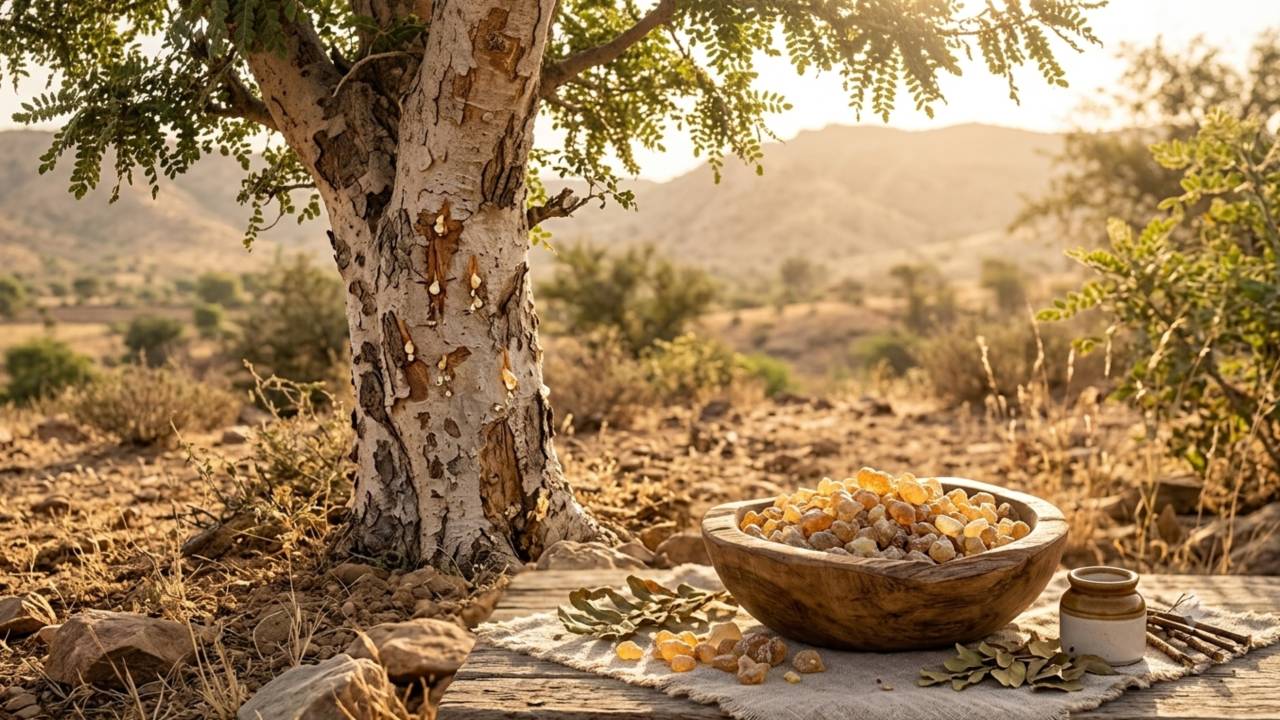 Commonly called Indian Frankincense, Shallaki contains bioactive compounds that have attracted scientific interest. Modern research continues exploring its traditional uses, botanical properties, and potential role in supporting overall health and balance.
This comprehensive guide examines Boswellia serrata’s botanical origin, Ayurvedic significance, chemical composition, traditional benefits, and practical applications. Learn how this ancient resin continues to connect traditional wisdom with modern herbal knowledge.
From classical Ayurvedic texts to contemporary wellness practices, Shallaki remains a respected botanical. Explore its history, unique characteristics, and importance as a natural ingredient in holistic health approaches.
Botanical Background and Origins
Boswellia serrata belongs to the Burseraceae family, known for aromatic resin-producing trees. This deciduous tree features peeling bark, compound leaves, and a valuable resin traditionally used in Ayurvedic medicine.
The resin, known as oleo gum resin or “tears,” emerges when the bark is carefully cut. It hardens into amber-colored masses after exposure to air through natural drying.
Traditional resin harvesting is an ancient practice carried out by tribal communities. Resin quality depends on harvesting methods, climate conditions, timing, and the tree’s geographical origin.
Although various Boswellia species grow across the Middle East and Africa, Boswellia serrata remains especially significant in Ayurveda for its unique therapeutic value and traditional applications.
Boswellia Serrata (Shallaki) in Classical Ayurvedic Texts
Ayurveda, meaning the “Science of Life,” is an ancient Indian healing system focused on maintaining harmony between the body, mind, and spirit through natural therapies and balanced living.
According to Ayurveda, health depends on the balance of the three Doshas—Vata, Pitta, and Kapha. Imbalances and the buildup of Ama, or metabolic toxins, are believed to contribute to disease.
Shallaki is a highly respected herb in Ayurvedic medicine and is mentioned in classical texts such as the Charaka Samhita and Sushruta Samhita for its traditional therapeutic importance.
In Ayurveda, Shallaki is traditionally classified as a Vedanasthapana (pain-relieving) and Shothahara (anti-inflammatory) herb, making it a valued ingredient in holistic wellness and herbal formulations.
Ayurvedic Properties (Rasa Panchaka) Boswellia Serrata (Shallaki)
To understand how an herb works in Ayurveda, practitioners analyze it through the Rasa Panchaka—its five taste and action profiles:
- Rasa (Taste): Tikta (bitter), Kashaya (astringent), and Madhura (sweet). The bitter and astringent tastes are crucial for scraping away toxins and reducing inflammation.
- Guna (Qualities): Laghu (light) and Ruksha (dry). These qualities help counteract the heavy, sticky, and damp qualities of aggravated Kapha dosha and Ama.
- Virya (Potency): Ushna (hot). The heating potency helps to melt frozen toxins and stimulate circulation in stagnant areas of the body, particularly the joints.
- Vipaka (Post-digestive effect): Katu (pungent). This indicates that its long-term effect is to stimulate metabolism and further clear out metabolic waste.
- Prabhava (Special or unexplainable effect): Its unique ability to penetrate deep into joint tissues and bone (Asthi dhatu).
Dosha Balancing: Because of its light, dry, and heating nature, Shallaki is highly effective at pacifying aggravated Kapha and Vata doshas.
- Kapha aggravation in the joints leads to heaviness, swelling, and stiffness (akin to Osteoarthritis). Shallaki’s light and dry qualities counteract this.
- Vata aggravation leads to dryness, cracking, and severe pain (akin to Rheumatoid Arthritis or Gout). While Shallaki is dry, its special action (Prabhava) combined with its heating potency and sweet post-digestive effect allows it to nourish and lubricate the joints, soothing Vata without aggravating it. It is generally used cautiously with Pitta dosha due to its heating nature, though in inflammatory conditions driven by Ama, it can be used with cooling herbs to balance the effect.
The Science Behind the Resin: Boswellic Acids
Boswellia serrata resin contains a unique blend of essential oils, polysaccharides, and powerful triterpenic compounds called boswellic acids.
These natural compounds have attracted significant scientific interest for their role in supporting the body’s normal inflammatory response.
1. Key Active Compound: AKBA
Among the many boswellic acids identified, Acetyl-11-keto-beta-boswellic acid (AKBA) is considered the most extensively studied.
Researchers have investigated AKBA for its unique biological activity and its contribution to the therapeutic potential of Boswellia serrata.
2. Understanding the 5-LOX Pathway
Inflammation involves several biological pathways. One important pathway is the 5-Lipoxygenase (5-LOX) pathway, which produces leukotrienes—chemical messengers involved in inflammatory responses.
Excessive leukotriene production has been associated with chronic inflammatory conditions affecting the joints, lungs, and digestive system.
3. How Boswellia Serrata Works
Laboratory studies suggest that AKBA can interact with the 5-LOX enzyme, helping regulate leukotriene production.
This mechanism has made Boswellia serrata a subject of ongoing research for its potential role in supporting joint comfort and overall inflammatory balance.
While research is promising, more high-quality clinical studies continue to evaluate its long-term effectiveness and safety.
4. A Different Mechanism from Conventional NSAIDs
Unlike many conventional non-steroidal anti-inflammatory drugs (NSAIDs), which primarily target the cyclooxygenase (COX) pathway, Boswellia’s proposed mechanism focuses on the 5-LOX pathway.
This distinct mode of action has generated scientific interest, but Boswellia should not be considered a substitute for prescribed medications without guidance from a qualified healthcare professional.
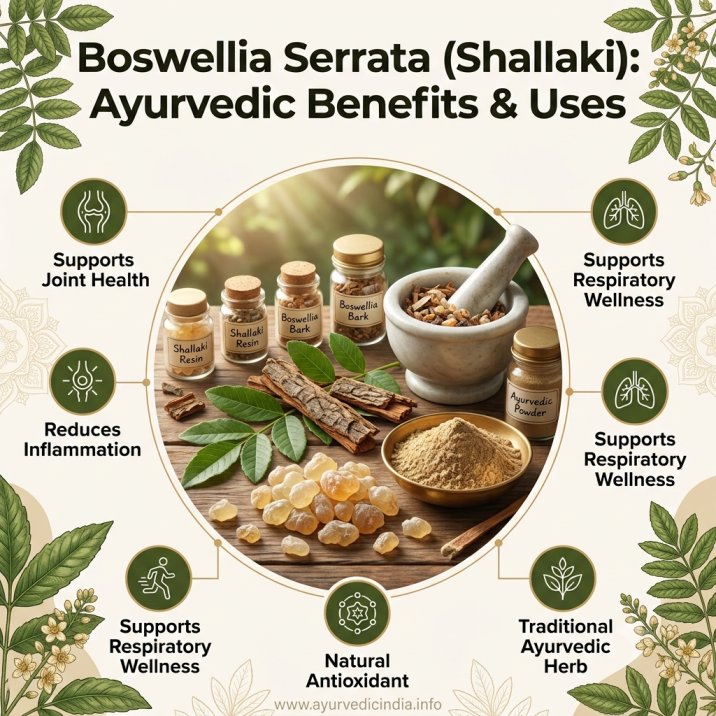
Therapeutic Uses and Health Benefits
The therapeutic applications of Shallaki are vast, spanning multiple organ systems. Here is a detailed look at its primary health benefits.
1. Musculoskeletal Health: The Ultimate Joint Protector
In Ayurveda, joint pain is often referred to as Amavata (a condition where Ama or toxins are driven by aggravated Vata into the joints). Shallaki is the premier herb for this condition.
- Osteoarthritis (OA): Numerous double-blind, placebo-controlled studies have shown that Boswellia extract significantly reduces pain, stiffness, and swelling in knee osteoarthritis. Patients report improved joint flexion and the ability to walk longer distances. MRI studies have even shown that Boswellia can slow down the degradation of cartilage.
- Rheumatoid Arthritis (RA): By inhibiting leukotrienes and tumor necrosis factor-alpha (TNF-α), Shallaki reduces the autoimmune-driven inflammatory cascade that destroys joint linings in RA.
- Muscle Recovery and Sports Injuries: For athletes, Shallaki reduces delayed onset muscle soreness (DOMS) and speeds up the healing of sprains, strains, and tendonitis by improving blood flow to the injured area without increasing swelling.
2. Respiratory Health: Clearing the Breath
In Ayurveda, respiratory conditions like asthma and bronchitis are often linked to a buildup of Kapha in the lungs. The ancient texts specifically mention Shallaki for Tamaka Shwasa (asthma).
- Asthma: Because leukotrienes are the primary chemicals responsible for bronchoconstriction (the tightening of airway muscles) and mucus production in asthma, Boswellia’s 5-LOX inhibition makes it a powerful bronchodilator.
- Chronic Bronchitis and COPD: Shallaki helps reduce the thick, sticky mucus characteristic of Kapha-type respiratory issues, making it easier to expel and improving overall lung capacity.
3. Gastrointestinal Health: Soothing the Gut
The digestive tract is highly susceptible to leukotriene-mediated damage. Ayurveda views conditions like Irritable Bowel Syndrome (IBS) and Inflammatory Bowel Disease (IBD) as a vitiation of Pachaka Pitta and Samana Vayu, leading to inflammation and impaired digestion.
- Ulcerative Colitis and Crohn’s Disease: Clinical trials have demonstrated that Boswellia serrata extract is as effective as the drug sulfasalazine in maintaining remission in patients with ulcerative colitis. It heals the mucosal lining of the intestines and reduces bloody diarrhea.
- Gastroprotective Effects: While NSAIDs damage the stomach, Boswellia actually protects it. It enhances mucus production in the gastric lining, helping to prevent and heal peptic ulcers.
4. Neurological and Cognitive Health: Protecting the Brain
Ayurveda classifies herbs that benefit the brain as Medhya Rasayanas. While Shallaki is not traditionally the primary Medhya herb (that title goes to Bacopa or Gotu Kola), modern research is uncovering impressive neuroprotective benefits.
- Microglial Inhibition: In the brain, immune cells called microglia can become overactive, releasing inflammatory cytokines that lead to neurodegeneration (Alzheimer’s, Parkinson’s). Boswellic acids, particularly AKBA, cross the blood-brain barrier and calm these microglial cells.
- Edema Reduction: In cases of brain tumors or traumatic brain injury, cerebral edema (brain swelling) is a life-threatening complication. Shallaki has been shown to effectively reduce peritumoral brain edema, often allowing patients to reduce their dose of corticosteroids.
- Mood and Anxiety: By reducing systemic inflammation, which is now known to be a root cause of depression and anxiety, Shallaki indirectly supports mental well-being.
5. Skin Health and Wound Healing
Ayurveda praises Shallaki as a Vranaropaka (wound healer). Its astringent and anti-inflammatory properties make it excellent for the skin.
- Acne and Eczema: Applied topically or taken internally, it reduces the redness, swelling, and bacterial colonization associated with acne. It also helps soothe the itchy, inflamed patches of eczema and psoriasis.
- Wound Healing: Traditionally, the resin was powdered and applied to wounds to prevent infection, reduce pus formation, and promote the healthy regeneration of skin tissue.
- Anti-Aging: Boswellia essential oil is increasingly used in high-end cosmetics for its ability to inhibit the degradation of collagen and elastin, thereby reducing wrinkles and improving skin elasticity.
6. Oral and Dental Health
In Ayurveda, maintaining oral health is paramount, as the mouth is considered the gateway to the body.
- Gingivitis and Periodontitis: Chewing on raw Shallaki resin or using mouthwashes containing Boswellia extract significantly reduces gum inflammation, bleeding, and plaque accumulation due to its potent antibacterial and anti-inflammatory actions.
Ayurvedic Formulations and Synergies
A fundamental tenet of Ayurveda is that herbs are rarely used in isolation. The concept of Samyoga (combination) dictates that herbs are mixed to enhance their primary action, mitigate side effects, and target multiple pathways of a disease simultaneously.
Shallaki features prominently in several classical Ayurvedic formulations:
- Yogaraj Guggulu: This is perhaps the most famous Ayurvedic formula for joint pain and paralysis. It combines Shallaki with Guggulu (Commiphora mukul), Triphala, Pippali, and various other herbs. While Guggulu scrapes toxins from the channels, Shallaki directly reduces the inflammation in the joints.
- Mahayogaraj Guggulu: A more potent version of the above, used for severe rheumatoid arthritis and neurological conditions.
- Shallaki Guggulu: A specific formulation where Shallaki is processed with Guggulu, specifically targeting Amavata (rheumatoid arthritis) and cervical spondylosis.
- Kaishore Guggulu: Used for skin conditions, gout, and deep-seated inflammation, combining the cooling effects of Guduchi and Triphala with the targeted action of Guggulu and sometimes Shallaki.
Modern Synergistic Combinations: In modern phytotherapy, Shallaki is frequently combined with:
- Curcumin (Turmeric): Curcumin inhibits the COX-2 pathway, while Shallaki inhibits the 5-LOX pathway. Together, they provide a complete “dual inhibition” of inflammation, making them a powerhouse pair for chronic pain.
- Ashwagandha: While Shallaki handles the physical inflammation, Ashwagandha calms the nervous system, reduces cortisol, and helps rebuild weakened muscles and bones.
- Ginger and Bromelain: These proteolytic enzymes and spices enhance the absorption of boswellic acids and provide additional anti-inflammatory support.
Dosage, Forms of Administration, and Anupana
How Shallaki is taken dictates its efficacy. In Ayurveda, the concept of Anupana (the vehicle or medium used to take a medicine) is crucial, as it carries the herb to the target tissue.
Forms of Shallaki:
- Standardized Extracts: The most common and effective form for modern use. High-quality extracts are standardized to contain 30% to 65% boswellic acids, with a specific focus on ensuring high AKBA content (usually 10% to 30%).
- Churna (Powder): The raw, dried resin is ground into a fine powder. This is the traditional method but may be harder to digest and has variable potency.
- Capsules/Tablets: Convenient forms containing either raw powder or standardized extracts.
- Essential Oil: Distilled from the resin, used topically for pain relief, massage, and aromatherapy.
- Pure Resin: Can be chewed raw for oral health or dissolved in warm water.
Dosage Guidelines:
- For Joint Pain/Osteoarthritis: 300 mg to 500 mg of a standardized extract (containing at least 30% AKBA) taken two to three times a day.
- For Respiratory Health: 300 mg taken three times a day.
- For Digestive Issues: 400 mg taken three times a day after meals. (Note: Dosages should always be determined by a qualified healthcare practitioner based on individual constitution and severity of disease).
The Ideal Anupana for Shallaki:
- Warm Water: The best general vehicle for Shallaki, as its heating nature is balanced by the hydrating quality of warm water, helping it reach the joints.
- Warm Milk: For conditions where Vata is severely aggravated (e.g., extreme dryness, insomnia, or osteoporosis accompanied by pain), taking Shallaki with warm milk and a pinch of turmeric or ginger acts as a powerful rejuvenative.
- Honey: For respiratory conditions or when weight loss is desired, taking the powder with a teaspoon of raw honey helps scrape out Kapha toxins.
- Topical Application: For localized pain, Boswellia essential oil should be mixed with a carrier oil (like sesame oil for Vata/Kapha or coconut oil for Pitta) and massaged into the affected area.
Safety, Side Effects, and Contraindications
One of the greatest advantages of Shallaki is its excellent safety profile. Unlike NSAIDs and corticosteroids, which wreak havoc on the liver, kidneys, and gastrointestinal tract over time, Boswellia is generally very well tolerated.
Possible Side Effects
In rare cases, high doses of Shallaki can cause mild gastrointestinal discomfort, including nausea, acid reflux, or diarrhea.
This is usually due to taking the herb on an empty stomach or using a low-quality extract that contains unnecessary fillers.
Contraindications:
- Pregnancy and Lactation: Shallaki is strictly contraindicated during pregnancy. Its traditional Ushna virya (heating potency) and ability to stimulate blood flow to the pelvic region can act as an abortifacient. It should also be avoided while breastfeeding.
- Pitta Aggravation: Individuals with severe hyperacidity, peptic ulcers (active phase), or bleeding disorders should use Shallaki with caution and only under the guidance of an Ayurvedic doctor, often combining it with cooling herbs.
- Autoimmune Conditions: While Shallaki modulates the immune system, in certain autoimmune conditions (like Lupus), it is best used under professional supervision.
Drug Interactions:
While Shallaki does not have severe drug interactions, its ability to enhance the body’s breakdown of certain medications should be noted. It may interact with:
- Anticoagulants/Antiplatelets: Because it may slightly inhibit platelet aggregation, it should be used cautiously with blood thinners like Warfarin, Plavix, or daily aspirin to prevent excessive bleeding.
- Cytochrome P450 Substrates: Boswellia can moderately affect liver enzymes that process certain pharmaceutical drugs. If you are on chronic medication for heart disease, blood pressure, or psychiatric conditions, consult your doctor before adding high-dose Boswellia.
How to Shop Sustainably
As consumers and practitioners of Ayurveda, it is our ethical duty to protect the sources of our medicine. When purchasing Shallaki, look for:
- Fair-Trade and Wildcrafted Certifications: Companies that adhere to fair-trade practices ensure that harvesters are paid well, which reduces the economic desperation that leads to over-tapping.
- Sustainable Harvesting Programs: The best supplement brands invest in the communities that harvest the resin, training them in sustainable tapping techniques and replanting initiatives.
- High-Quality Extracts: Because the tree population is threatened, it is more important than ever to buy high-AKBA extracts. This ensures you are getting maximum efficacy from a smaller amount of raw resin, reducing the overall environmental footprint of your purchase.
Boswellia serrata (Shallaki) is a rare gem in the world of natural medicine—a botanical that not only boasts thousands of years of empirical use but also stands tall under the rigorous scrutiny of modern clinical science. It represents the perfect synergy between Ayurvedic philosophy and modern pharmacology.
Disclaimer: This article is for educational and informational purposes only. It is not intended to diagnose, treat, cure, or prevent any disease. The information provided herein should not be used as a substitute for professional medical advice. Always consult a qualified healthcare provider or a trained Ayurvedic practitioner before starting any new herbal supplement, especially if you are pregnant, nursing, taking medications, or have a medical condition.
References
References (with links)
- Charaka Samhita (R. K. Sharma & Bhagwan Dash, Trans.). Chaukhambha Sanskrit Series Office.
https://archive.org/search?query=Charaka+Samhita+Sharma+Dash - Sushruta Samhita (P. V. Sharma, Trans.). Chaukhambha Vishvabharati.
https://archive.org/search?query=Sushruta+Samhita+P.+V.+Sharma - Bhavaprakasha Nighantu. Chaukhambha Bharati Academy.
https://archive.org/search?query=Bhavaprakasha+Nighantu - The Ayurvedic Pharmacopoeia of India. Ministry of AYUSH.
https://ayush.gov.in - Siddiqui, M. Z. (2011). Boswellia serrata, a potential anti-inflammatory agent: An overview. Indian Journal of Pharmaceutical Sciences, 73(3), 255–261.
https://pmc.ncbi.nlm.nih.gov/articles/PMC3210001/ - Ammon, H. P. T. (2016). Boswellic acids and their role in chronic inflammatory diseases. Planta Medica, 82(8), 667–674.
https://pubmed.ncbi.nlm.nih.gov/?term=Boswellic+acids+and+their+role+in+chronic+inflammatory+diseases - Sengupta, K., et al. (2008). A double-blind, randomized, placebo-controlled study of Boswellia serrata extract in osteoarthritis of the knee. Arthritis Research & Therapy, 10(4), R85.
https://arthritis-research.biomedcentral.com/articles/10.1186/ar2461 - Kimmatkar, N., et al. (2003). Efficacy and tolerability of Boswellia serrata extract in treatment of osteoarthritis of the knee. Phytomedicine, 10(1), 3–7.
https://pubmed.ncbi.nlm.nih.gov/12622457/ - Ernst, E. (2008). Frankincense: Systematic review of its therapeutic effects. Journal of Dietary Supplements, 5(4), 389–394.
https://pubmed.ncbi.nlm.nih.gov/?term=Frankincense+Systematic+review+of+its+therapeutic+effects - Roy, N. K., et al. (2019). Boswellia serrata in chronic diseases: Pharmacological actions and therapeutic potential. Phytotherapy Research, 33(10), 2667–2686.
https://pubmed.ncbi.nlm.nih.gov/31332881/ - Abdel-Tawab, M., Werz, O., Schubert-Zsilavecz, M., et al. (2011). Boswellia serrata: An overall assessment of in vitro, preclinical, pharmacokinetic and clinical data. Clinical Pharmacokinetics, 50(6), 349–369.
https://pubmed.ncbi.nlm.nih.gov/21553931/ - World Health Organization. (2002). WHO Monographs on Selected Medicinal Plants (Vol. 2).
https://iris.who.int/handle/10665/42052 - National Center for Complementary and Integrative Health. Herbs at a Glance: Frankincense.
https://www.nccih.nih.gov/health/herbsataglance - Ministry of AYUSH. Ayurvedic medicinal plant resources and pharmacopoeial standards.
https://ayush.gov.in - IUCN SSC Global Tree Specialist Group. Reports on conservation and sustainable harvesting of Boswellia species.
https://www.iucn.org/our-union/commissions/group/iucn-ssc-global-tree-specialist-group


















Hi,
These days most papers, pill sellers, etc refer to extracts. Could you please tell me whether traditionally the whole resin was used and safe? If so was it dissolved, eg: in acohol/water, such as vodka? I find the resulting paste easy and even pleasant to take. Pure ground resin sticks to the teeth though. I intend to try using glycerine next.
Any info appreciated. Thanks.
very informative